Beesewege Megalithic Tombs: Neolithic Burial Monuments in Germany
Site at a Glance
- Popularity
- Very Low
- Country
- Germany
- Primary era
- Stone Age
- Eras represented
- Stone Age
- Civilizations
- Unclassified
- Site type
- Burial
- Remains
- Burial Mound
On this page6 sections
History
The Beesewege Megalithic Tombs are two Neolithic burial monuments near Hohenwulsch, Germany, built between 3700 and 3350 BC by people of the Deep-Incised Pottery culture, a Neolithic culture named for pottery decorated with deep incisions. A field name meaning “by the giant stones” also suggests the possibility of a third tomb.
Early Records
Johann Christoph Bekmann mentioned the surviving tomb in 1751. During a systematic survey of the Altmark, a historic region in what is now northern Saxony-Anhalt, Johann Friedrich Danneil found the tomb in good condition in 1843. He also recorded a second tomb that was already largely destroyed.
Stone Reuse and Survey
After 1870, most stones from the surviving tomb were used to build an underpass for the Bremen-to-Berlin railway, known as the Amerikalinie, and probably remain in the structure. In the early 1890s, Eduard Krause and Otto Schoetensack found that the second tomb had been completely destroyed and the surviving one was in very poor condition.
In 2003 and 2004, the State Office for Heritage Management and Archaeology of Saxony-Anhalt, the Johann-Friedrich-Danneil Museum in Salzwedel, and the Young Archaeologists of the Altmark, a local archaeological association, jointly surveyed and measured the region’s surviving megalithic tombs.
Remains
Surviving Tomb
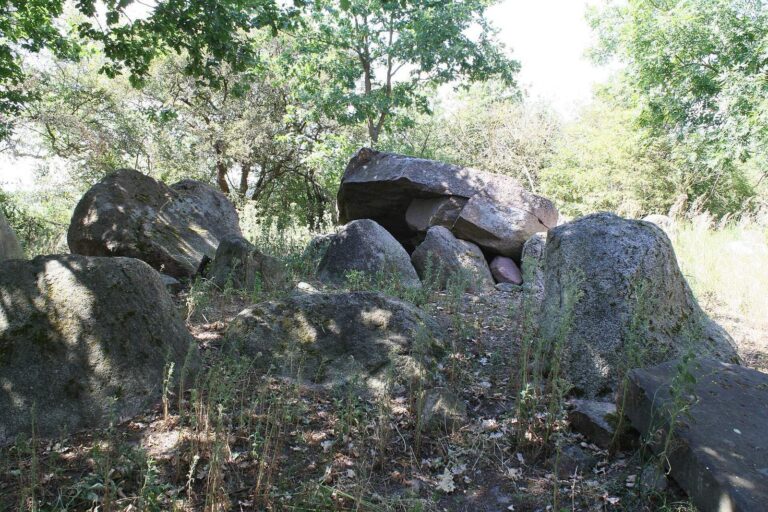
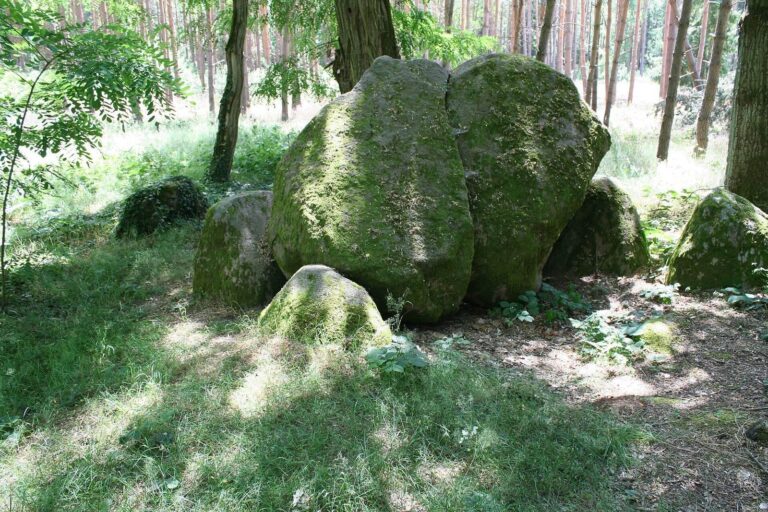
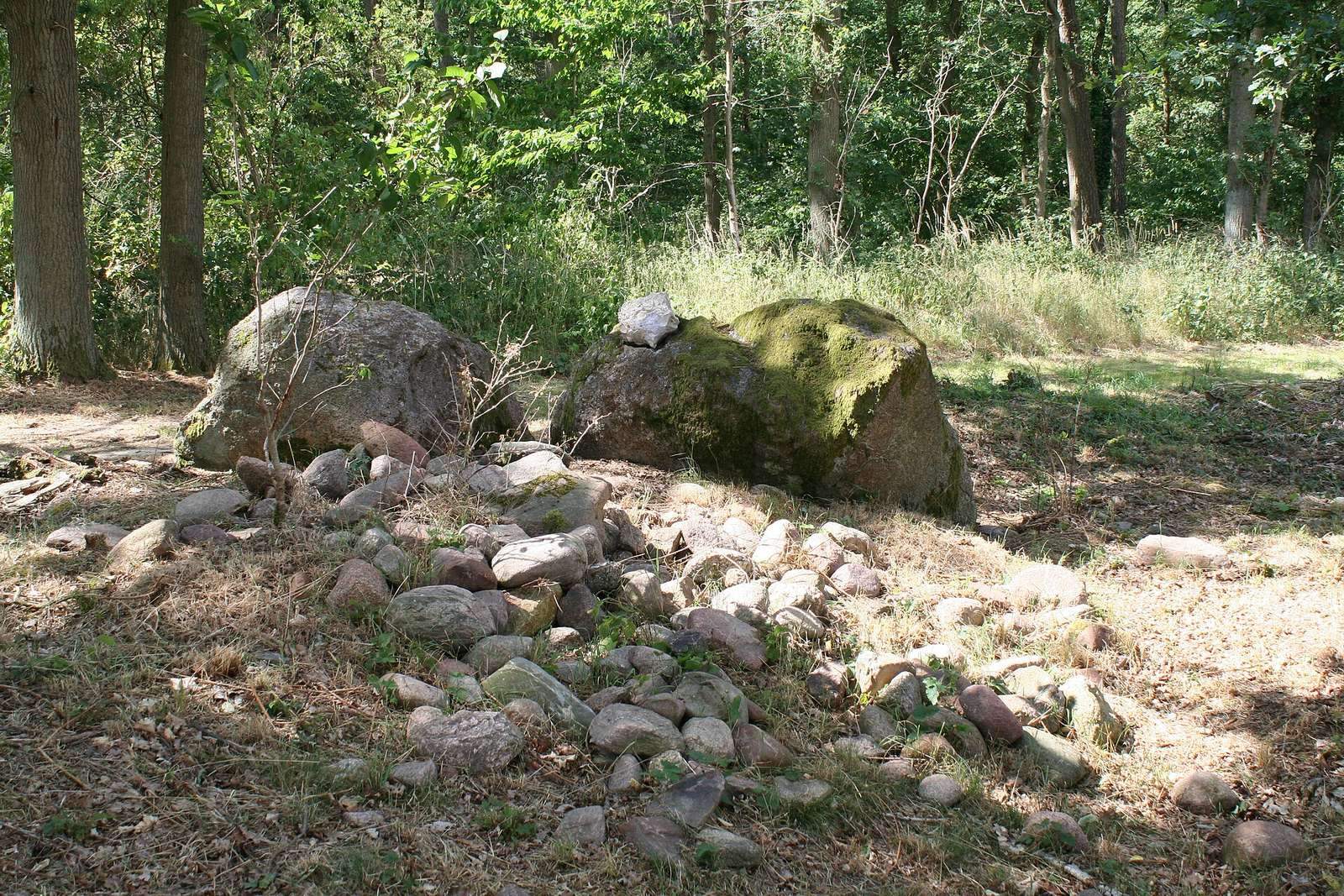
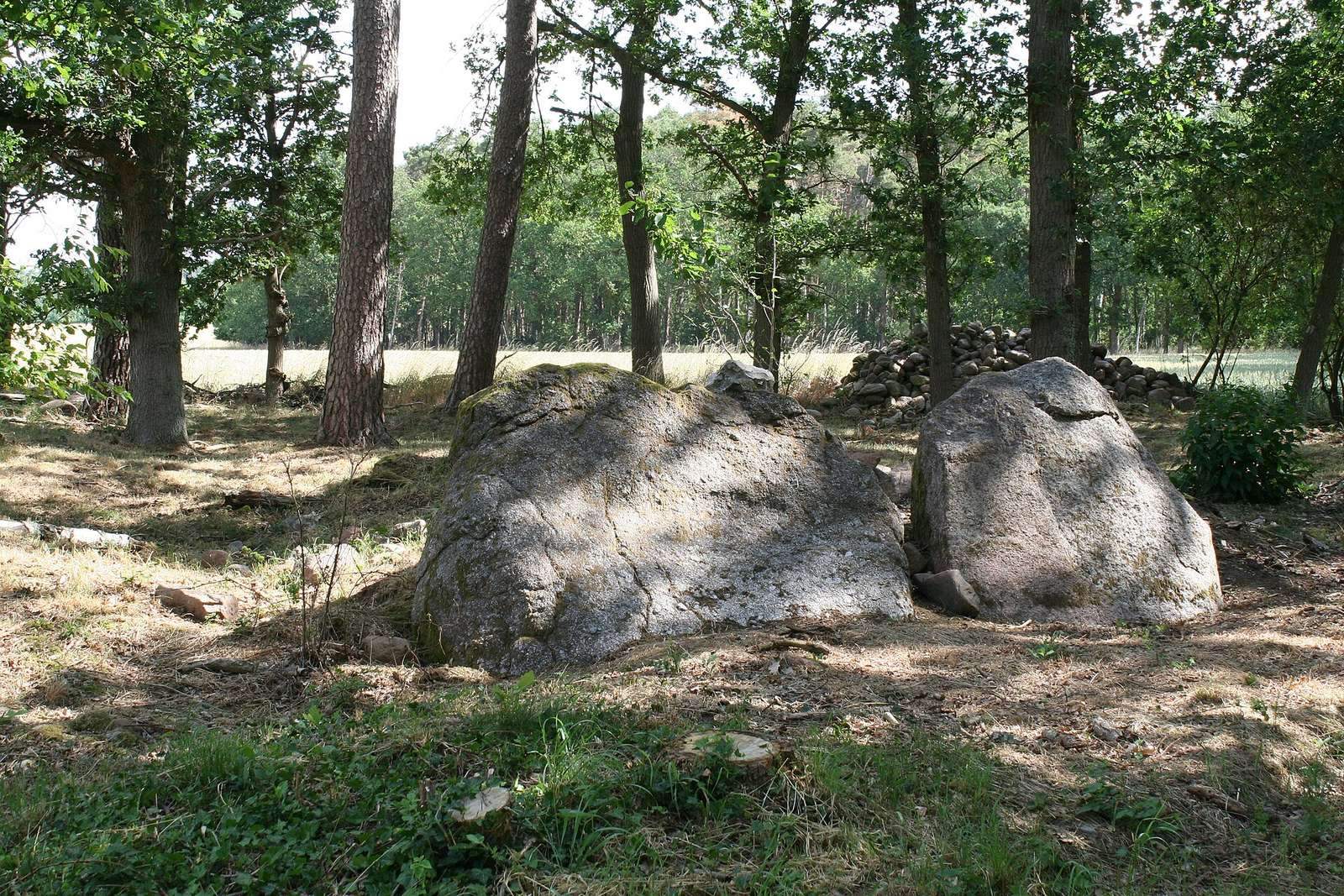
The surviving tomb lies about 800 m southeast of Beesewege, on the boundary with Kläden. Its recognizable mound marks a trapezoidal enclosure of large stones, probably aligned east to west and measuring 39 m long by 8.2 to 12.5 m wide. Numerous depressions may mark former positions of the chamber supports. Two chamber stones remain, along with one broken stone, the last surviving part of the enclosure. Bekmann counted 15 stones along one long side and 11 along the other, and recorded all the stones at one short end. The chamber had a covering stone measuring 3.2 by 2.2 m, resting on five wall stones, with seven more wall stones exposed. Hartmut Bock, Barbara Fritsch, and Lothar Mittag classify the structure as a large dolmen, a megalithic chamber tomb. Hans-Jürgen Beier instead considers it a passage grave, a tomb with a chamber reached by a passage.
Second Tomb
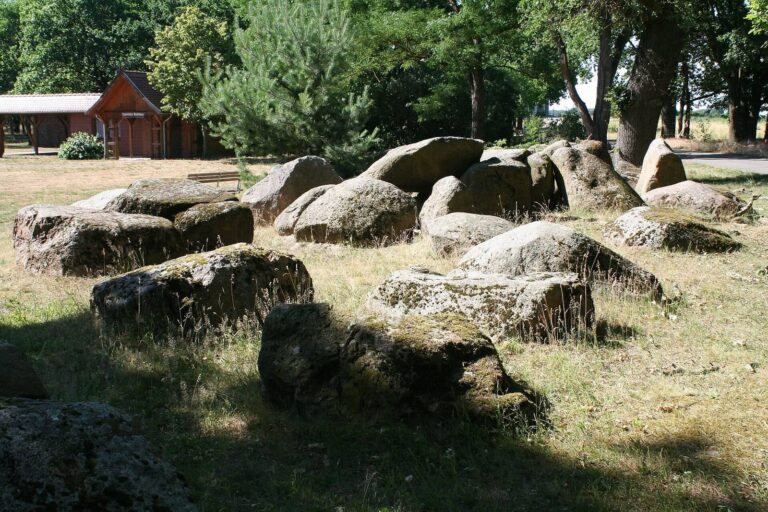
The second tomb stood about 750 m east of Beesewege. Danneil measured its chamber at 6.6 m long and 3.5 m wide. On the eastern side, a large stone described as a ring stone leaned inward, with another stone resting against it. The first stone may have belonged to the outer enclosure or formed part of the chamber wall.