Hohenwulsch-Friedrichsfleiß Megalithic Tomb: A Neolithic Burial Site in Germany
Site at a Glance
- Popularity
- Very Low
- Country
- Germany
- Primary era
- Stone Age
- Eras represented
- Stone Age
- Civilizations
- Unclassified
- Site type
- Burial
- Remains
- Tomb
On this page7 sections
History
Neolithic Origins
The Hohenwulsch-Friedrichsfleiß Megalithic Tomb, also known as the Grassau tomb, is a Neolithic burial monument in Saxony-Anhalt, Germany, dated to 3700–3350 BCE. It belongs to the deep-stroke pottery culture, named for pottery decorated with deep impressions, and is classified as a great dolmen, a megalithic tomb with a relatively large stone burial chamber.
Surveys and Recording
In 1843, German educator and antiquarian Johann Friedrich Danneil overlooked the tomb while trying to record the megalithic monuments of the Altmark, a historic region in present-day Saxony-Anhalt. Eduard Krause, an archaeologist, and Otto Schoetensack, an anthropologist and prehistorian, described it during a renewed survey in the early 1890s.
The tomb was measured again in 2003–04 during a joint inventory of surviving megalithic tombs in the Altmark. The work involved the Saxony-Anhalt State Office for Heritage Management and Archaeology, the Johann Friedrich Danneil Museum in Salzwedel, and the Young Archaeologists of the Altmark association.
Remains
Layout and Setting
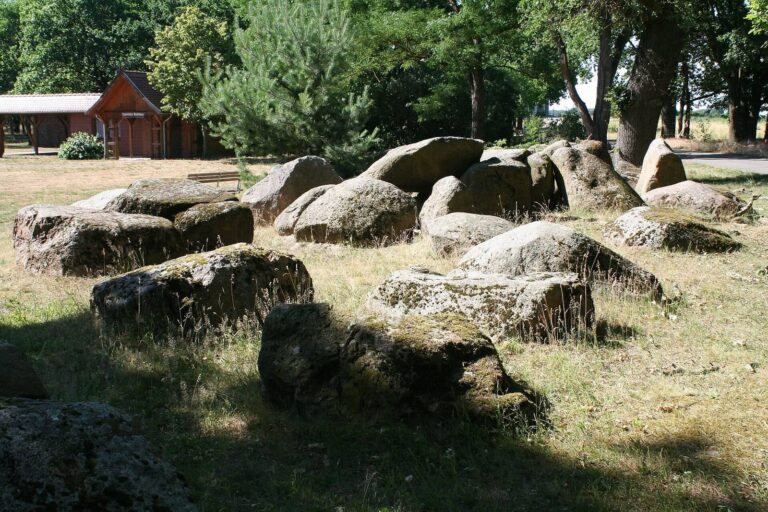
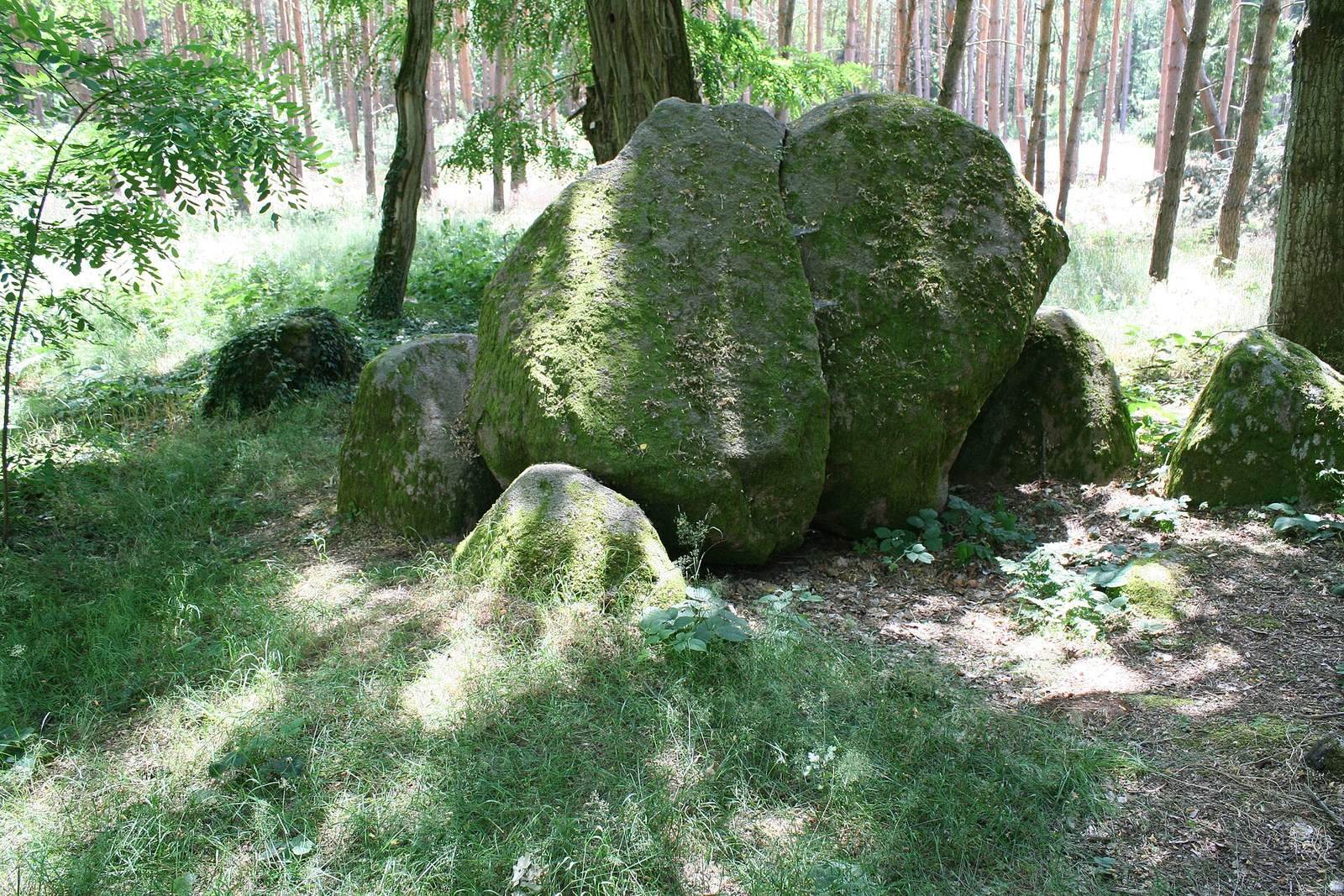
The tomb lies in a forest between Friedrichsfleiß and Grassau, localities of Bismark in the Stendal district. It is about 1.5 kilometres east of Friedrichsfleiß and a similar distance west of Grassau, within Grassau’s cadastral district. The surviving remains comprise an oval burial mound, traces of an enclosure, and an east–west-oriented stone chamber.
Burial Mound and Enclosure
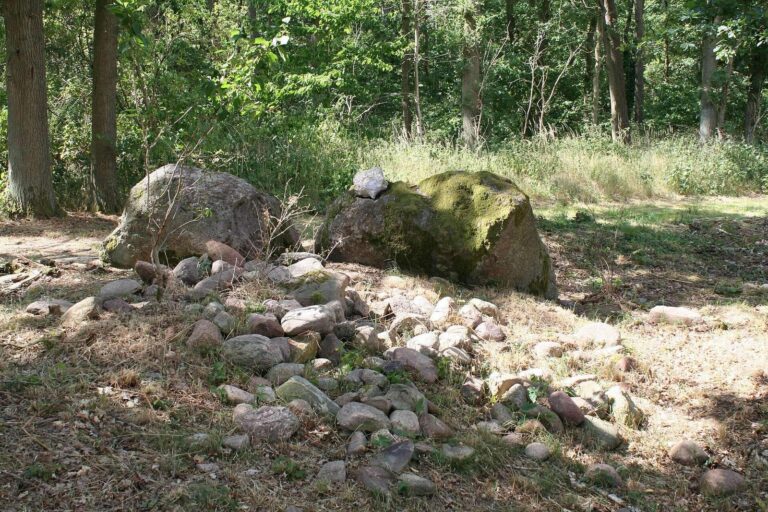
The oval mound measures 22 by 15 metres and stands 0.9 metres high. Six stones survive from its original enclosure. Their positions indicate a round or oval boundary measuring 13.3 metres across from east to west.
Burial Chamber
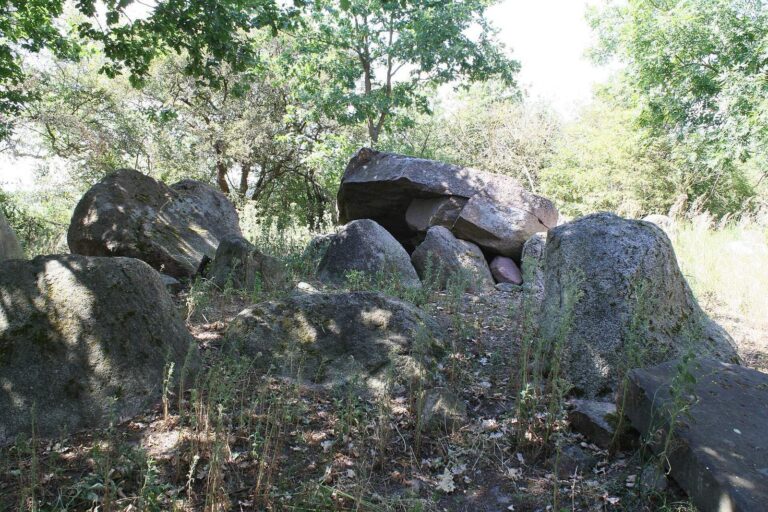
The trapezoidal chamber is 7.4 metres long, 1.8–2.0 metres wide, and 0.8 metres high. Fourteen of its original 16 wall stones remain, along with four of its five capstones. The largest capstone is broken and has fallen into the chamber; it measures 2.6 by 2.0 by 1.2 metres.