Reichwald Mill: A Historic Watermill at Wiepke
Site at a Glance
- Popularity
- Very Low
- Country
- Germany
- Primary era
- Early Modern
- Eras represented
- Early Modern, Modern
- Civilizations
- Brandenburg-Prussia, German, Holy Roman Empire, Kingdom of Prussia
- Site type
- Economic
- Remains
- Watermill
On this page12 sections
History
Reichwald Mill is a historic watermill at the western edge of Wiepke, Saxony-Anhalt, Germany. Its mill building dates to around 1680, and the site today operates as a technical demonstration mill.
Early Mill History
A fief charter issued on 11 January 1472 by Albrecht Achilles mentions mills at Wiepke. Achilles was Elector of Brandenburg, a prince entitled to take part in choosing the Holy Roman Emperor. A fief charter recorded a landholding granted as a fief.
By at least the seventeenth century, the Reichwald Mill was in existence. A 1688 church register calls it the Baum Mill and names master miller Gercke as a church elder, a lay member with responsibilities in the congregation’s governance. Gercke and his wife Anna had eight children.
Closure and Revival
A waterworks built upstream in the 1930s reduced the flow reaching the mill. The last miller, Richard Reichwald, retired in the early 1960s and closed it. Lower water power and a lack of orders hindered further operation. Agricultural collectivization in the German Democratic Republic, the East German state that governed eastern Germany from 1949 to 1990, meant local residents no longer grew grain for their own use.
The mill received state monument protection in 1978. After the last miller’s widow died, Friedrich-Wilhelm Gille bought it in 1986 for residential use and worked to preserve it. Repairs began the following year. Shortages of building materials made self-help and traditional, conservation-compatible methods necessary; political change after 1989 brought new funding opportunities that supported the effort.
A local mill association began with 22 members on 10 September 1995 and had grown to 70 members ten years later. The mill resumed operation in 1997, for the first time in more than 30 years, and the complex was added to Saxony-Anhalt’s monument register that year.
Remains
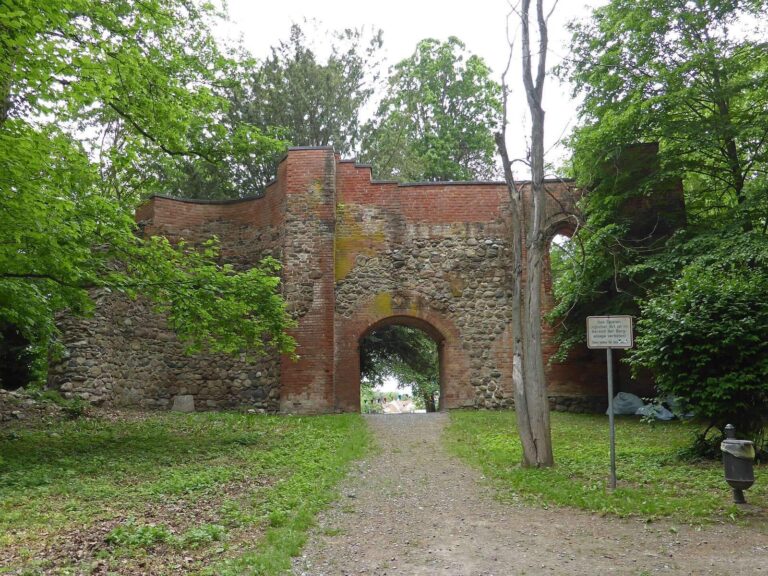
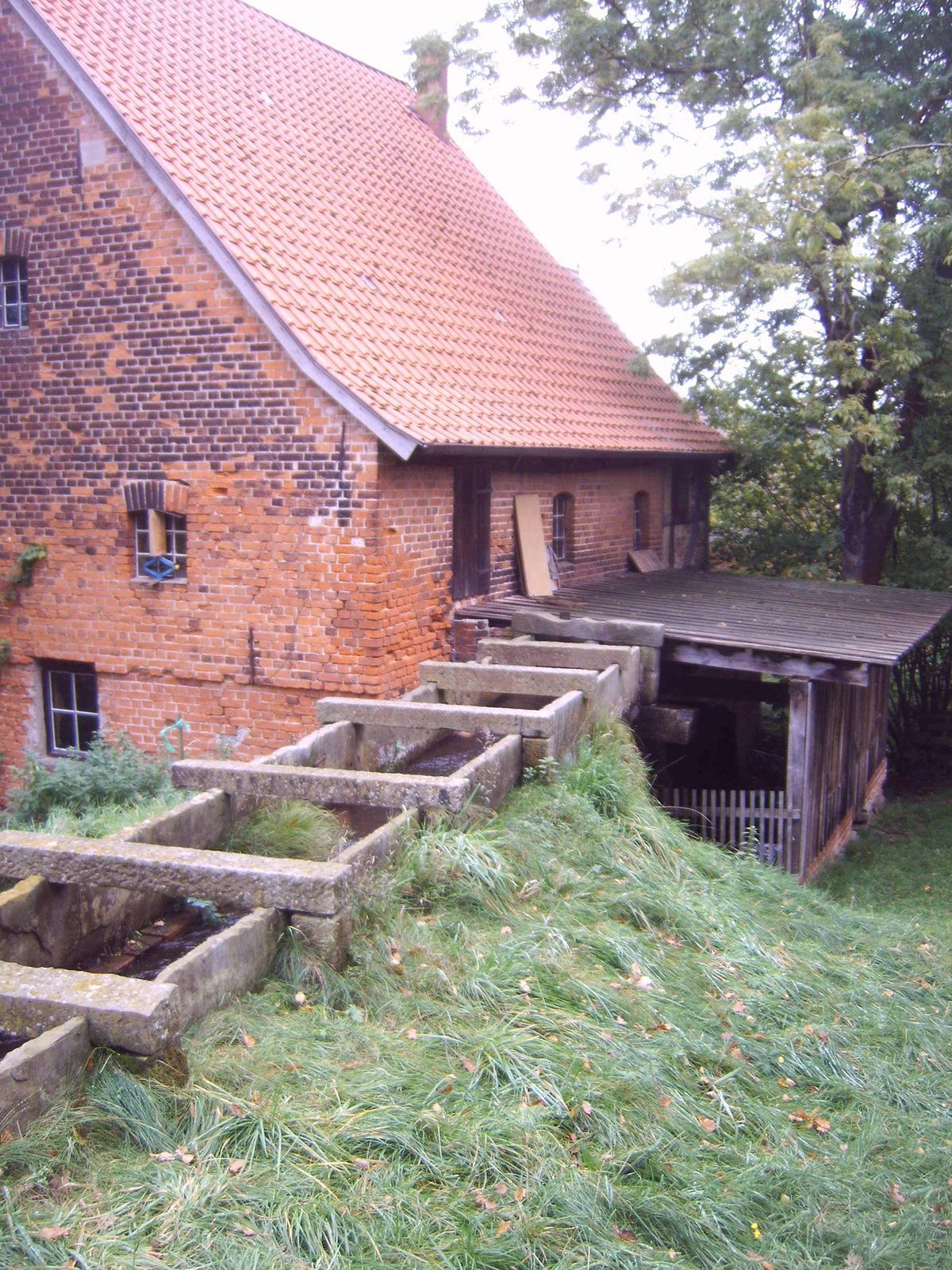
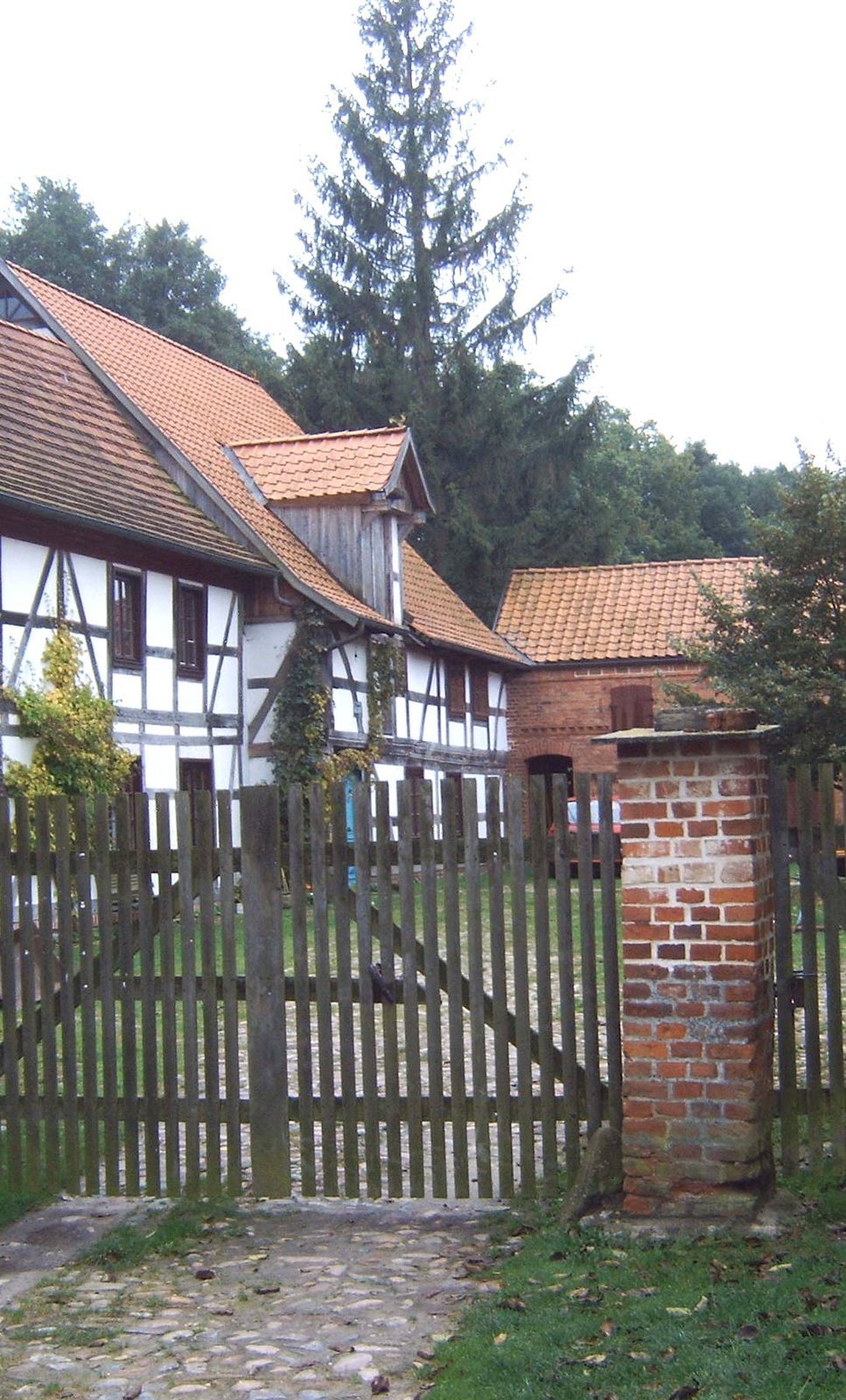
The mill complex stands beside the Wiepker Bach, which rises farther west at the Elf Quellen spring fen in the Hellberge. Its principal buildings are an oak-framed mill and residence, together with a barn made using rammed-earth construction, in which earth is compacted within a form. A sandstone water-supply channel serves the site.
Buildings
Mill Building
The mill building has an oak-timber frame. Its attic contains a flour bin, a six-sided sifter, a sack hoist and transmission shafts. Elevators link the floors, while the uppermost loft holds equipment for cleaning grain and sifting it before milling.
Residence
The residence, built in 1722, uses a construction method similar to the mill’s oak framing.
Barn
Built in 1874, the barn uses rammed earth and is the largest building of its type in the region.
Water Supply and Machinery
Water Channel and Wheel
The sandstone water-supply channel and the buildings were reconstructed beginning in 1988. The ensemble underwent comprehensive restoration and reconstruction between 1988 and 1996. An inscription dated 1693 marks the water inlet and is associated with Gercke and his wife Anna. It reads, “ANNA REINICKENMJOHANN JOCHIMGERCKE ANNO 1693.”
An overshot waterwheel, driven by water flowing over its top, powers the mill. The wheel and its oak drive shaft were newly made in 1996. The shaft rests on a wooden bearing built by the original method.
Milling Equipment
The machinery has remained practically unchanged since the mid-nineteenth century. Three milling units produce flour and coarse meal using sandstone or quartzite stones. A Wetzig roller mill, which crushes grain between rollers, was installed in 1890; one coarse-grinding unit was made operational again in 1997.
Additional Drive
An electric motor in the attic supplements the waterwheel because the stream no longer provides enough power for effective milling on its own.