Jurisics Castle: A Historic Fortress in Kőszeg, Hungary
Visitor Information
Google Rating: 4.6
Popularity: Medium
Official Website: jurisicsvar.hu
Country: Hungary
Civilization: Early Modern, Medieval European
Site type: Military
Remains: Castle
History
Jurisics Castle is situated in the town of Kőszeg, within modern-day Hungary. Its origins trace back to the early Middle Ages and were developed by local medieval builders who capitalized on the strategic position near Király Valley.
The earliest known reference to the site dates to the year 802, when it was called “castellum Guntionis” in the chronicles of Einhard, an early medieval historian. Following the traumatic Tatar invasion that ravaged the region in 1242, new construction efforts focused on the Lower Castle near the valley settlement. This Lower Castle gradually became the main center of manorial authority during the Middle Ages, eclipsing the earlier Upper Castle.
Ownership of the castle shifted frequently. In the late 13th century, it was under the Héder family before Duke Albert seized it in 1289. Shortly after, in 1291, King Andrew III ordered the demolition of the Old Castle, adhering to terms set by the Hainburg peace treaty. Control returned to Charles Robert in 1327 after he wrested it from the Kőszegi family, and he subsequently granted privileges to the town in 1336. The castle later passed to the Garai family in 1392, then to the Habsburg rulers in 1445. In 1482, King Matthias Corvinus retook the site, which reverted again to Habsburg hands in 1492.
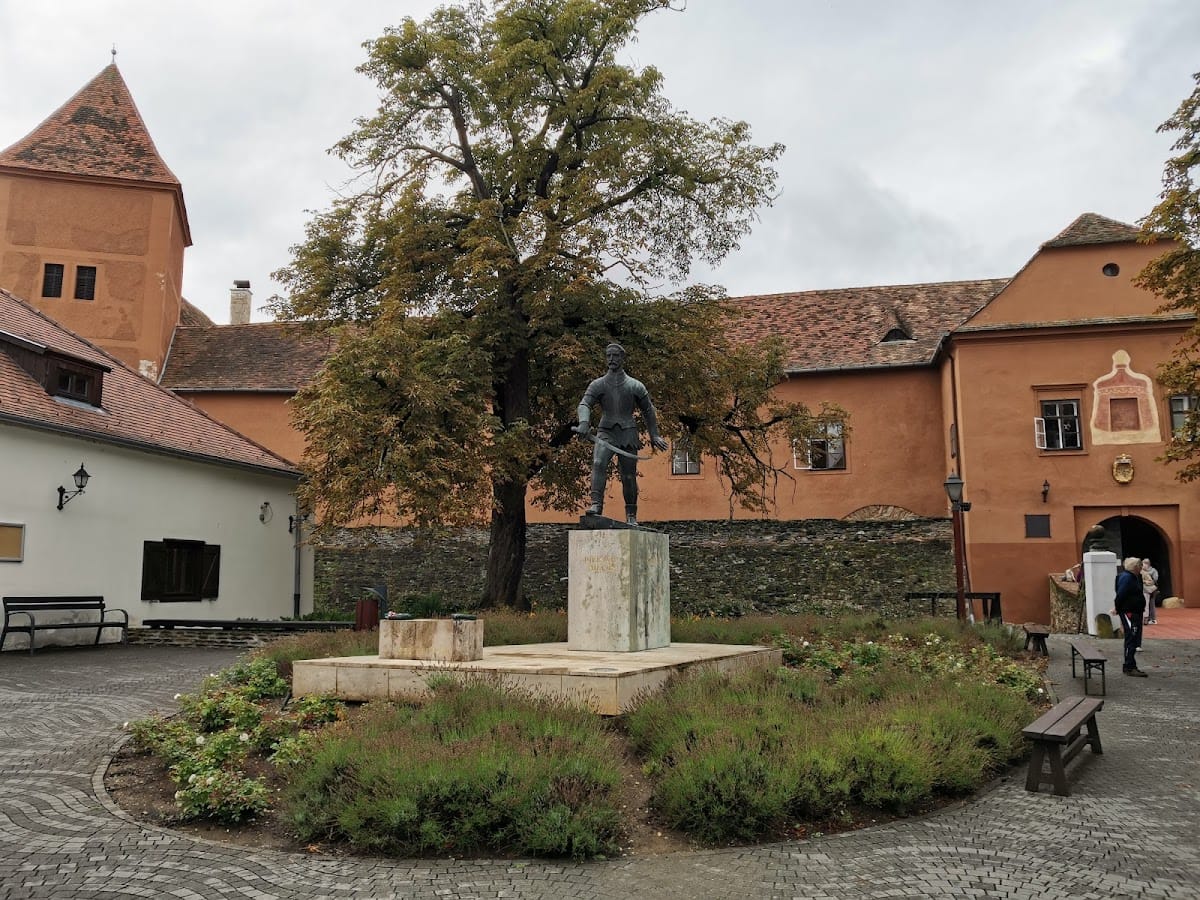
The castle’s most famous episode came in 1532 during the Habsburg-Ottoman wars. Captain Miklós Jurisics led a defense of roughly 1,000 men, mainly local peasants, against the advancing army of Suleiman the Magnificent. Despite being heavily outnumbered, the defenders resisted for 25 days. The siege concluded not with conquest but with a negotiated, symbolic victory for the Ottomans, who withdrew while agreeing to mark their flags on the castle’s towers as a token of triumph. This event elevated Jurisics’ reputation and led to his ennoblement and the granting of the town by Emperor Ferdinand I. Jurisics died without male heirs, resulting in the castle’s return to royal ownership.
In 1695, Palatine Pál Esterházy acquired the castle and estate, keeping them within the Esterházy family until 1931. Throughout its long history, the castle faced adversity, including a major fire in 1777 that damaged much of its fortifications and required demolition of weakened parts. The site transitioned to military use after being sold in the 20th century, remaining so until 1955. This era was followed by extensive restoration work, transforming the castle into a center for cultural activities. A comprehensive renovation starting in 2011 modernized exhibition spaces, enriching the presentation of its history through 1945 and emphasizing the 1532 siege. The restoration also included plans for a rotating exhibition of valuable local treasures.
Remains
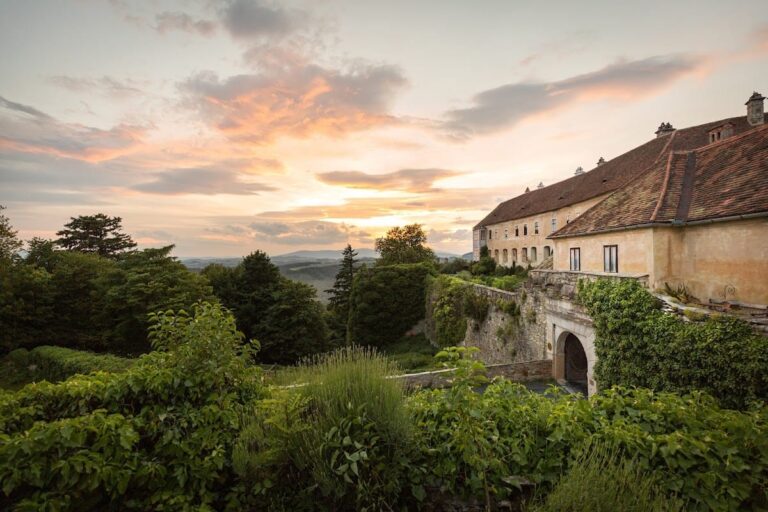
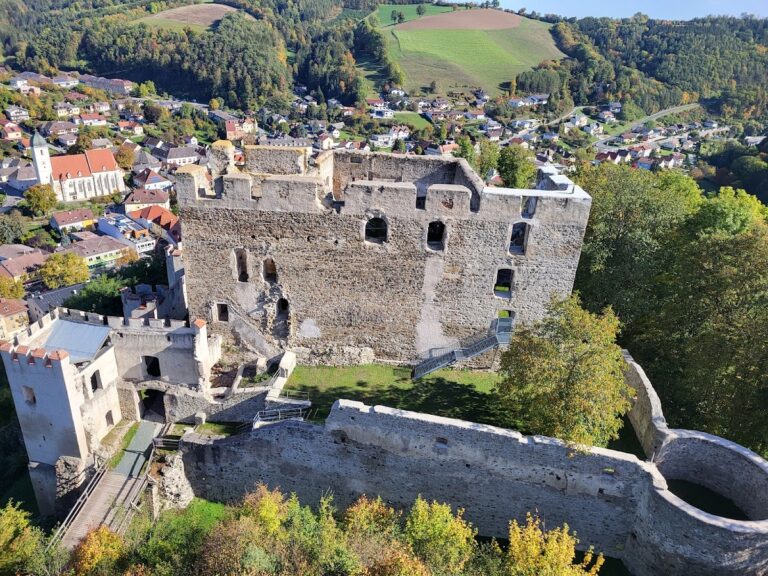
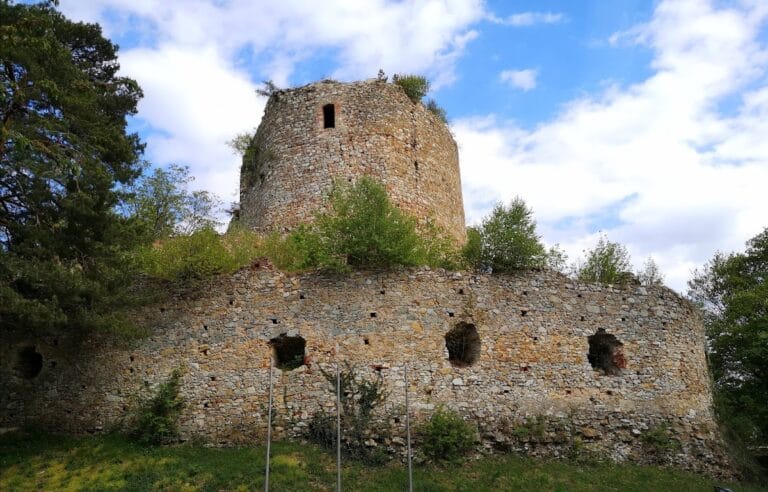
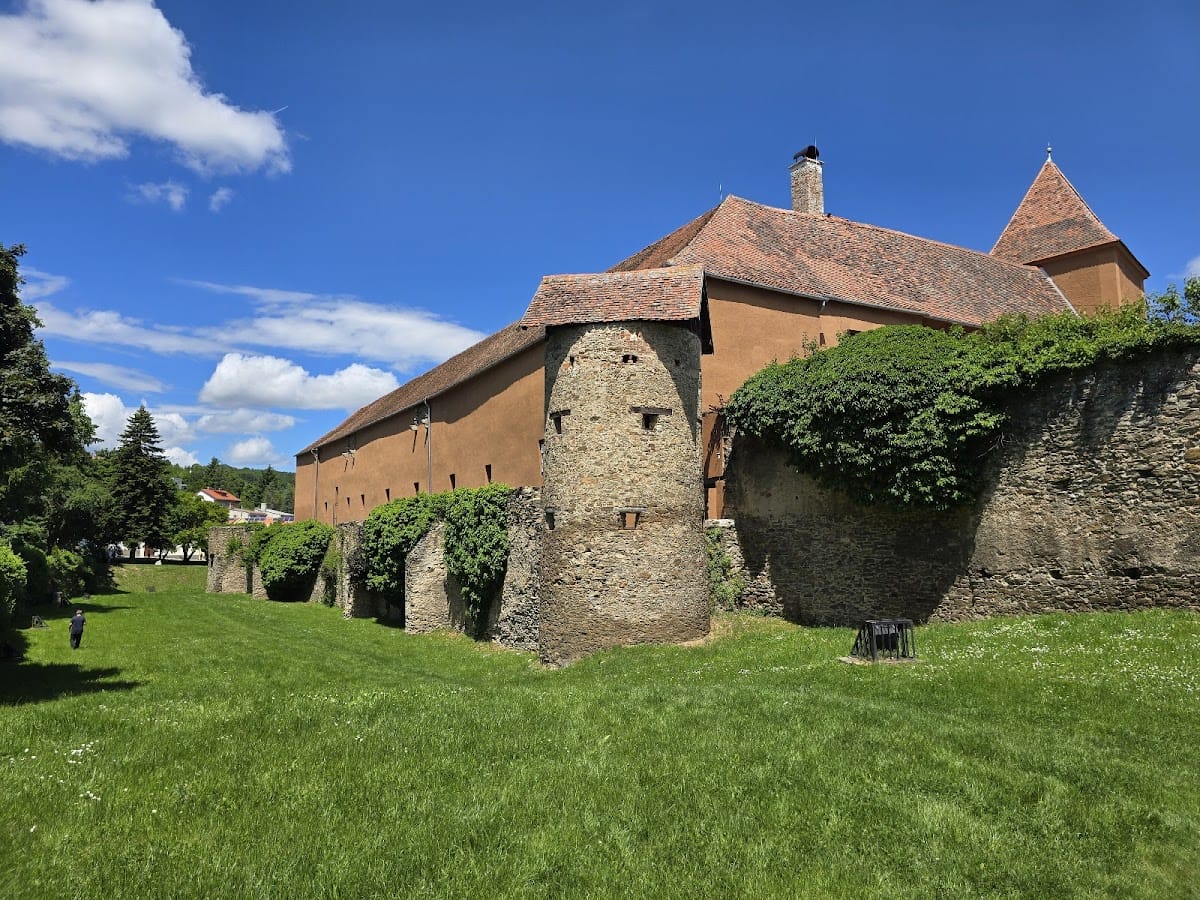
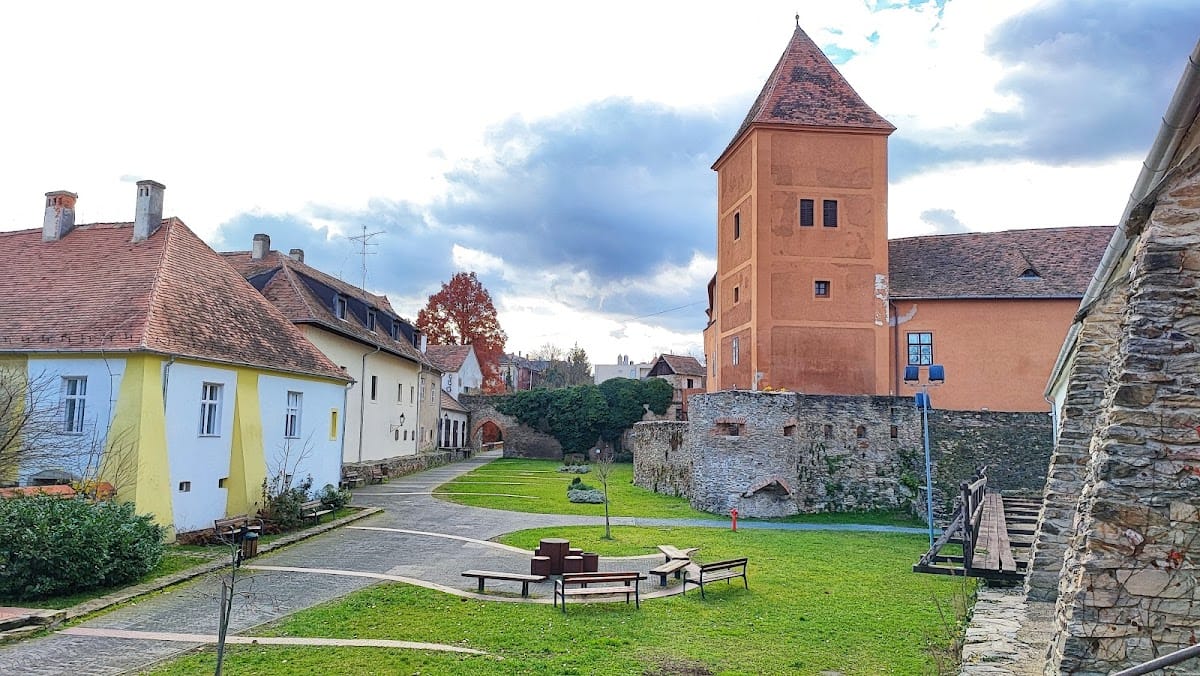
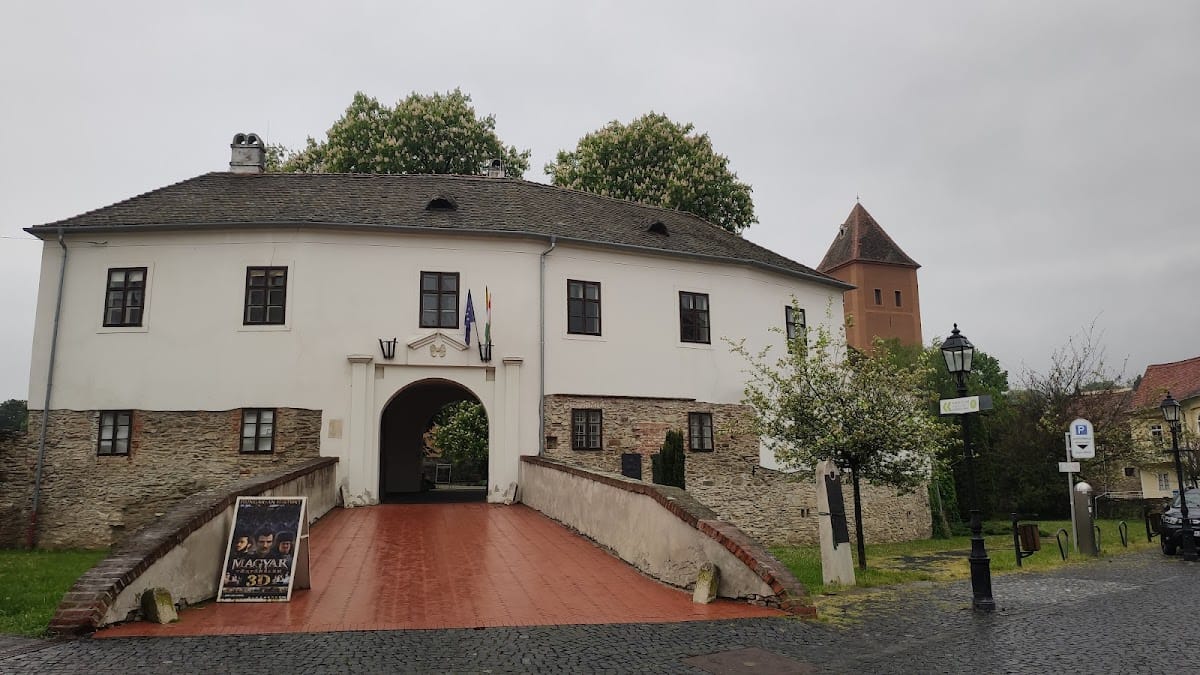
Jurisics Castle comprises a complex featuring distinct inner and outer sections, with the Lower Castle constructed beside the valley settlement and replacing the original Upper Castle as the main manorial hub. The overall fortification system was strengthened over time, with defensive walls extended and supported by robust towers. Moats surrounded the castle, replenished by water diverted from the nearby Gyöngyös stream, contributing to the site’s defenses.
Among the inner castle’s notable features is the Esterházy altar, created in 1771 under the patronage of Miklós József Esterházy. This altar prominently displayed a central figure of the Madonna. Renovations in 1903 and a restoration completed during the 1963 conservation program preserved its form, though wooden dowels originally used were replaced by nails when the altar was reassembled. In 2009, archaeological investigations led to the altar’s careful dismantling for preservation. A later, extensive restoration costing some 30 million forints saw its full reinstallation by May 2018.
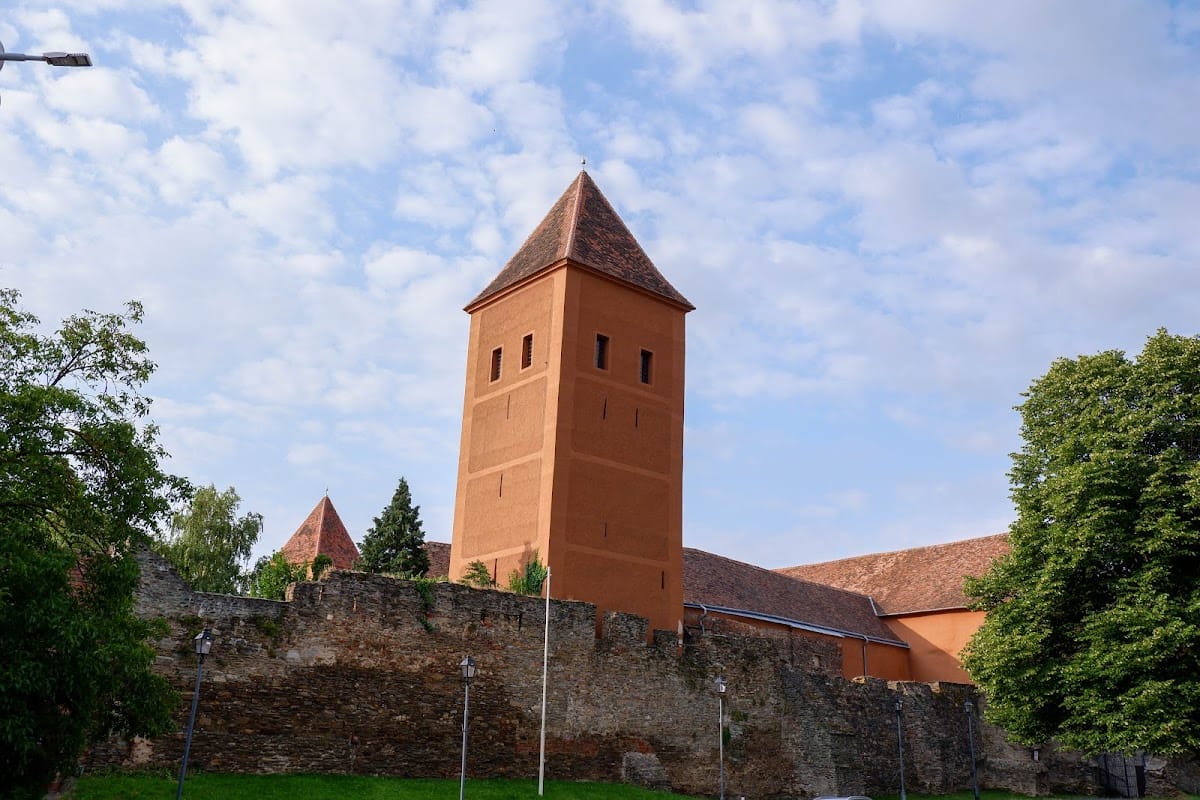
The castle’s layout includes eight towers, which played a tactical role during the 1532 siege. As part of the siege’s negotiated end, Ottoman forces were permitted to raise their flags atop these towers, creating the appearance of conquest. Nearby lies the Sultan’s Hill (Szultán-domb), an elevated area from which Suleiman observed the siege, located between Király Valley and Kálvária Hill.
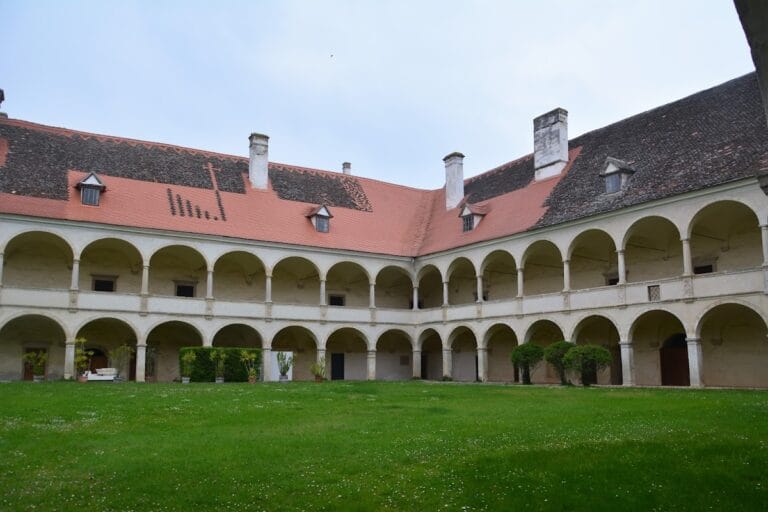
Restorations have modernized courtyards, walls, and interior spaces, incorporating features such as climate-controlled display cases and interactive exhibition rooms that preserve and showcase the castle’s long history. Since the 1960s, the site has hosted various cultural institutions, including a theater established in 1982 to commemorate the anniversary of the 1532 siege. Additionally, the castle has served as a scenic backdrop for multiple Hungarian and international film productions.
Nearby sites