Jōmyō-ji Temple: A Rinzai Zen Temple in Kamakura


Site at a Glance
- Rating
- 4.2
- Popularity
- Medium
- Country
- Japan
- Primary era
- Early Modern
- External website
- Open
- Eras represented
- Medieval, Early Modern, Modern
- Civilizations
- Ashikaga shogunate, Japanese, Tokugawa
- Site type
- Religious
- Remains
- Monastery
On this page18 sections
History
Jōmyō-ji Temple is a Buddhist temple in Kamakura, Japan, traditionally founded in 1188 by Ashikaga Yoshikane. It belongs to the Kenchō-ji branch of the Rinzai school, a major Zen tradition emphasizing disciplined meditation and direct religious insight, and is ranked fifth among the Kamakura Five Mountains, the network of leading Zen temples that organized major Buddhist institutions in Kamakura and the Kantō region.
Foundation and Early Buddhist Affiliation
The temple’s founding priest was Taikō Gyōyū, and its original name was Gokuraku-ji. At that stage it was a Mikkyō temple, meaning a center of esoteric Buddhism associated especially with Shingon ritual traditions. In 1198, Yoshikane is traditionally said to have commissioned images of Kōjin and Fudō based on treasured works attributed to Kōbō Daishi. After Yoshikane and Minamoto no Yoritomo died in 1199, Hōjō Masako is said to have placed the images in Honjaku-dō, a small wooded elevation beside the temple gate.
In 1212, Minamoto no Sanetomo reportedly ordered Ashikaga Yoshiuji to enlarge the temple. Images of Amida carved from white sandalwood for Hōjō Masako, together with a newly made image of Shaka, were then enshrined there. These traditions connect the temple’s early development with the Minamoto, Hōjō, and Ashikaga families.
Conversion to Rinzai Zen
Between approximately 1257 and 1288, Geppō Ryōnen, a disciple of Rankei Dōryū, the founding priest of Kenchō-ji, changed the temple’s affiliation to Rinzai Zen and gave it the name Jōmyō-ji. The name derives from Jōmyōjiden, the posthumous name of Ashikaga Sadauji.
Sadauji, the father of the future shogun Ashikaga Takauji, supported the temple and helped it expand in size and importance. Jōmyō-ji was the only one of the Kamakura Five Mountains not founded by a member of the Hōjō clan. Instead, it maintained strong Ashikaga connections and served as one of the family’s bodaiji, or family memorial temples.
In 1323, fifty Jōmyō-ji priests took part in a memorial ceremony for Hōjō Sadatoki. At that time, the temple held tenth place among Kamakura’s temples. Its Ashikaga associations grew stronger during the Muromachi period, the era of Ashikaga rule conventionally dated from the fourteenth to the sixteenth century. The Ashikaga Kubō residence stood east of the temple, and Ashikaga Takauji and his descendants lived there. The nearby Daikyū-ji ruins belonged to the family temple of Ashikaga Tadayoshi, while the Enpuku-ji ruins belonged to a temple founded by Ashikaga Takayoshi for memorial rites for his mother.
Rank, Conflict, and Decline
Ashikaga Tadayoshi was confined at Enpuku-ji, within the Jōmyō-ji grounds, in 1351. He died suddenly on February 26 of the following year. The Taiheiki tradition states that he was imprisoned and poisoned there.
Jōmyō-ji was provisionally associated with the fifth rank of the Kamakura Five Mountains in 1358. On July 10, 1386, Ashikaga Yoshimitsu formally fixed its position as fifth. At its height, the temple possessed 23 subtemples and extensive temple lands.
The temple suffered fires in 1357 and 1424. A further fire in 1438 is understood in connection with fires set nearby by Miura Tokitaka during the Eikyō Rebellion. After Ashikaga Takauji moved the capital to Kyoto, Kamakura’s political importance declined, and Jōmyō-ji underwent a corresponding decline through neglect, fire, violence, and destruction. In the late fifteenth century, the poet Gyōe found the grounds overgrown with grass and moss. Further damage occurred during the Sengoku period.
Later History and Continuing Religious Associations
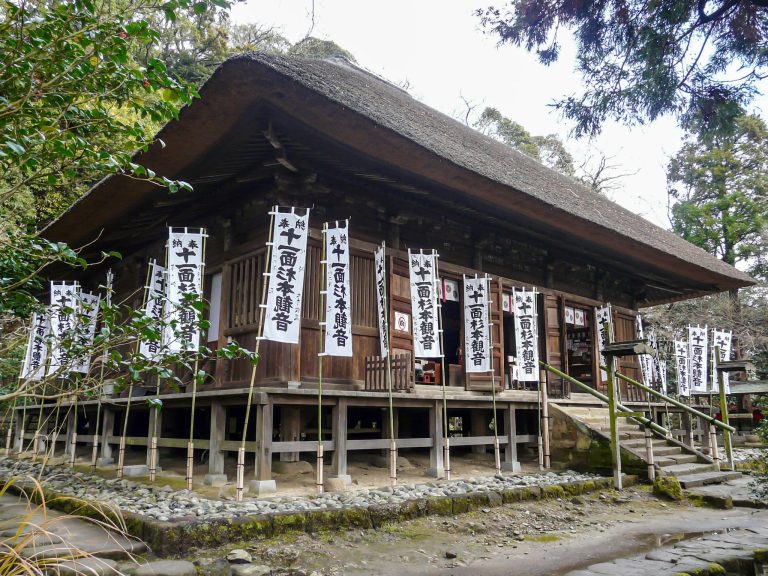
The main worship hall was rebuilt in 1754 after an eighteenth-century fire. Kisen-an, a tea house where monks formerly met for tea, was first established during the Tenshō era, from 1573 to 1591, and reconstructed in 1991. A Western-style residence adjoining the temple was built in 1922 for House of Peers member Katsutarō Inuzuka by a German architect. It is now owned by Jōmyō-ji and houses the Ishigama Garden Terrace restaurant, which opened in 2000.
Jōmyō-ji’s grounds were designated a National Historic Site and a Kanagawa Prefecture Historic Landscape Special Conservation District. On April 25, 2016, the temple became one of the component cultural properties included in a Japan Heritage designation. The surrounding district retains the temple’s name, although its written form uses the character meaning “bright” rather than the character meaning “wonderful.” The same name also survives in the surrounding residential area.
The temple is the ninth station of the Kamakura Thirty-Three Kannon pilgrimage and the second station of the Kamakura Thirteen Buddhas pilgrimage, where it is dedicated to Shaka Nyorai. Its Awashima deity image has also made Jōmyō-ji a place of prayer for women’s diseases.
Remains
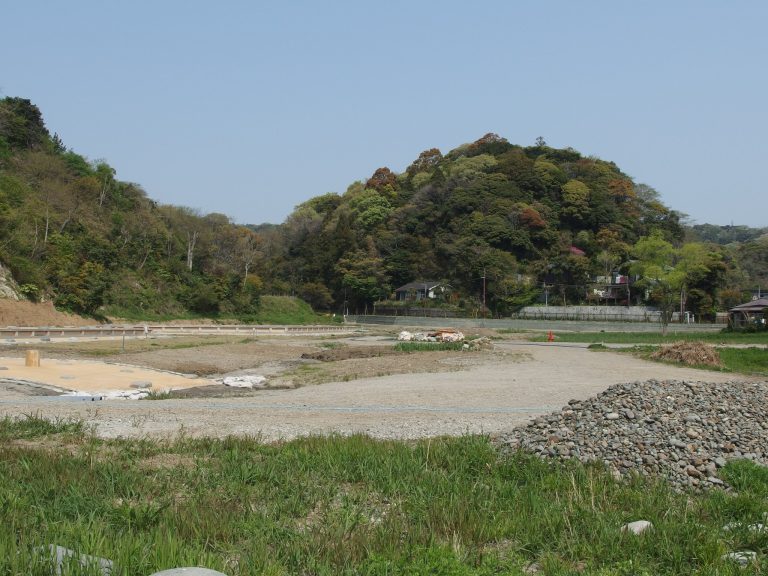
Jōmyō-ji stands in the center of a south-facing valley along the route from central Kamakura toward Kanazawa. Its approach begins at the main gate, while the Main Hall occupies the middle of a large temple garden. Mount Inari rises behind the temple, and the surrounding setting includes Sugimoto-dera and the Sugimoto Castle site to the west, Kurumigaya to the east, and Mount Kinubari to the south.
Main Temple Buildings
Main Hall
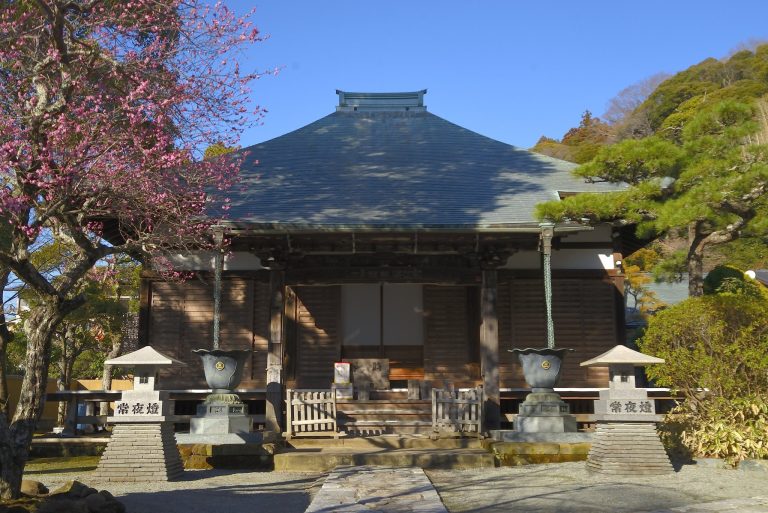
The Main Hall has a hipped roof covered with copper sheets, which replaced an earlier thatched covering. Its plan is an eight-by-six-bay hōjō, the residence and administrative form associated with a temple’s chief priest, rather than the more typical Zen butsuden, or Buddha hall. Raised floors divide the building into six rooms, and timber from the Muromachi period survives around the Buddhist altar. The hall represents the principal surviving worship space within the temple garden.
Kisen-an and Garden
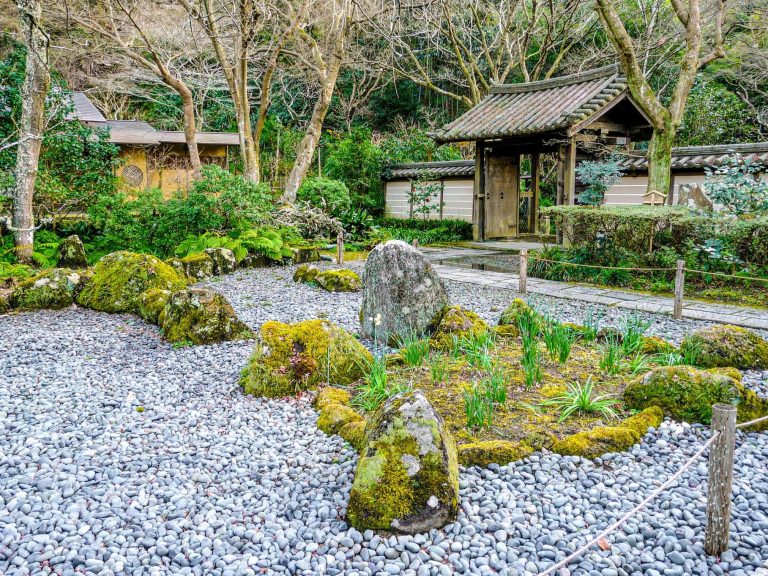
Kisen-an is a reconstructed tea house associated with the monks’ former tea gatherings. A karesansui, or dry landscape garden formed principally from stones, gravel, and arranged terrain, lies in front of it. The grounds also contain a guest hall, priest’s quarters, and a Founder’s Hall that houses important images connected with the temple’s early religious traditions.
Western-Style Residence
The adjoining Western-style building constructed in 1922 forms part of the surviving modern fabric of Jōmyō-ji. Built for Katsutarō Inuzuka by a German architect, the residence is now owned by the temple and used as the Ishigama Garden Terrace restaurant.
Mount Inari and Honjaku-dō
Kamatari Inari Shrine
Mount Inari rises directly behind the temple and contains the small Kamatari Inari Shrine. Inari is a Japanese kami, or sacred being, traditionally associated with rice, food, agriculture, and prosperity. The hill is traditionally said to be where Fujiwara no Kamatari buried a sacred sickle, linking it with one traditional explanation of the name Kamakura. The shrine’s origins are traditionally described as reaching back to the seventh century.
Honjaku-dō and Protective Images
Honjaku-dō was traditionally the sanctuary of Jōmyō-ji’s protective deities, including images of Sanbō Kōjin and Fudō associated with Ashikaga Yoshikane and Hōjō Masako. The surviving wooden standing image of Sanbō Kōjin dates from the Muromachi period and is kept in the Founder’s Hall.
Religious Images and Memorial Features
Hōkyōintō of Ashikaga Sadauji
A stone hōkyōintō, a memorial tower used in Buddhist rites for the dead and the accumulation of religious merit, stands in the cemetery behind the Main Hall. It is traditionally identified as the tomb of Ashikaga Sadauji. The inscription dates the tower to 1392 and describes it as a reverse memorial tower intended to remove sins and secure merit for the afterlife. The attribution as Sadauji’s tomb has been questioned because the date is about sixty years later than his recorded death.
Images of Shaka and Taikō Gyōyū
The principal Shaka Nyorai is a seated wooden image from the Nanboku-chō period, the fourteenth-century era of rival Northern and Southern imperial courts. The seated image of Taikō Gyōyū is a 66-centimeter joined-block sculpture and the priest’s only portrait. Its individualized face contrasts with the more conventional carving of the robes. The image was probably based on a now-lost pattern or portrait made more than a decade after Gyōyū’s death.
Amida and Other Sculptures
A standing wooden image of Amida is made from hinoki cypress using a split-and-joined construction technique. It has inserted crystal eyes and a finish powdered with gold, and dates from the formative period of Kamakura sculpture. The image is deposited at the Kamakura Museum of National Treasures.
Other associated images include a statue of Shō-Kannon, an Edo-period wooden image of Fujiwara no Kamatari, and an Edo-period wooden image of Awashima Daimyōjin formerly enshrined at the subtemple Jishin-an. Wooden images of a seated Garan deity and Daruma Daishi were made in 1731. The Awashima image was regarded as effective in prayers concerning women’s diseases.
Paintings, Objects, and Plantings
A late-Edo-period ink painting on paper presents an imaginative reconstruction of the temple. It depicts an outer gate, main gate, central gate, Buddha Hall, Dharma Hall, abbot’s quarters, meditation hall, sutra repository, and bell tower, together with other buildings. Associated objects include a pair of gilt-bronze lanterns made in 1828, a celadon incense burner deposited at the Kamakura Museum of National Treasures, a painted image of Jizō Bosatsu on paper, and three scrolls containing nine documents known as the Jōmyō-ji documents.
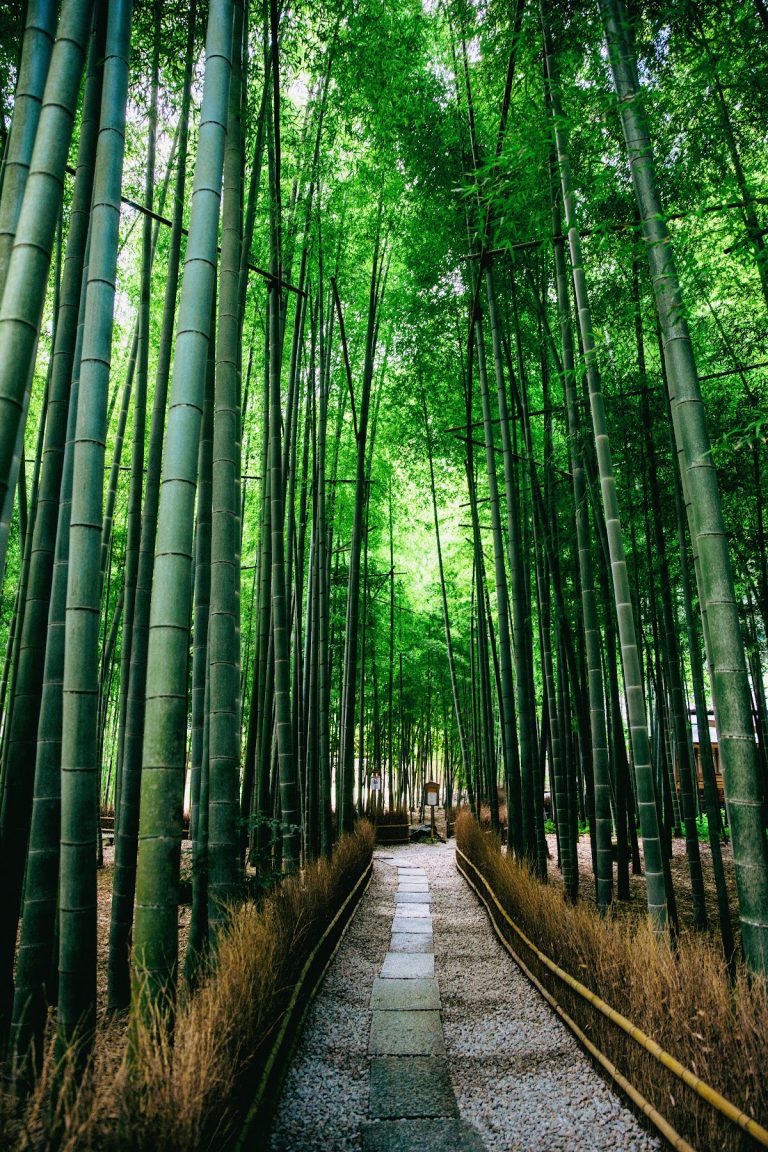
The temple grounds contain plantings of plum, camellia, peony, crape myrtle, ginkgo, and autumn foliage plants. Together with the garden, surviving timber, memorial tower, religious images, tea house, shrine, and twentieth-century residence, these features preserve the layered physical character of Jōmyō-ji.