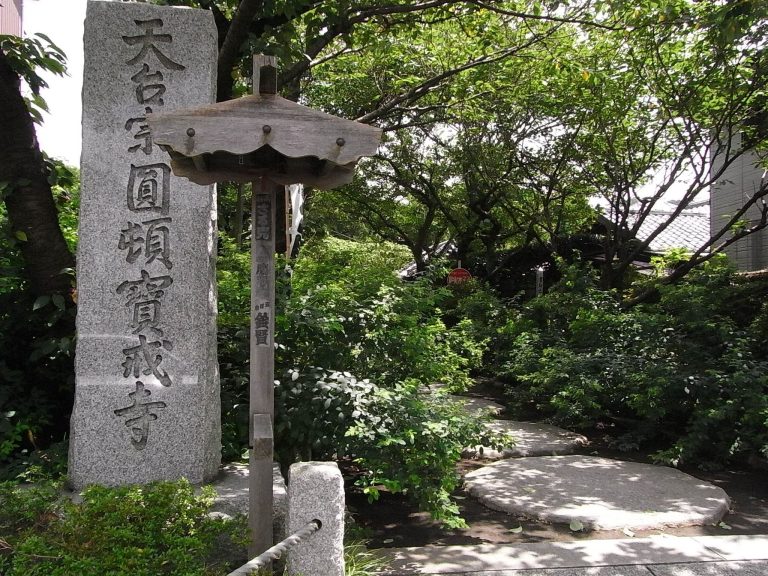
Hōkoku-ji Temple: A Rinzai Zen Family Temple in Kamakura


Site at a Glance
- Rating
- 4.4
- Popularity
- Medium
- Country
- Japan
- Primary era
- Medieval
- External website
- Open
- Eras represented
- Medieval
- Civilizations
- Ashikaga shogunate
- Site type
- Religious
- Remains
- Temple
On this page9 sections
History
Hōkoku-ji Temple is a Rinzai Zen Buddhist temple in Kamakura, Japan, established in 1334 during the Kenmu era. It belongs to the Kenchō-ji school, a branch of Zen that emphasizes disciplined monastic practice and meditation, and served as the family temple of both the Ashikaga and Uesugi warrior clans.
Foundation and Zen scholarship
The founding priest, Tengan Eko, established the temple to commemorate Ashikaga Ietoki, grandfather of Ashikaga Takauji, who founded the Ashikaga shogunate. Tengan Eko later became known by the Buddhist name Butsujo Zenji. He belonged to the Five Mountains Zen literary school, a network of major Zen monasteries associated with scholarship and literary culture. An annex behind the main hall provided a place for training and was also where Tengan Eko wrote poetry.
Ashikaga memorial traditions
Large caves on the western side of the temple are said to contain ashes of members of the Ashikaga family, including Ietoki and Yoshihisa. Both men died by seppuku, a ritualized form of suicide historically practiced by members of Japan’s warrior class. Yoshihisa was 13 years old at the time of his death.
Fire, earthquake, and preservation
A fire in 1891 destroyed a statue of Kashyap, one of the principal disciples of the Buddha, in an adjacent hall. Because the statue was made by the artist Takuma, the temple is sometimes known as Takuma-dera. The Great Kantō earthquake of 1923 destroyed most of the temple’s structures, including the original thatched roof of the main hall, and most buildings were later rebuilt. Hōkoku-ji is the tenth site on the Kamakura Thirty-Three Kannon pilgrimage. Temple works have received prefectural and municipal cultural-property designations, while several treasures are preserved at the Kamakura Museum of National Treasures. These include copies of Buddhist teachings made by Tengan Eko and wooden seals bearing the names “Tengan” and “Eko,” both designated Important Cultural Properties. Other works held there include a silk painting of Zaichū Kōen dated 1388, a Muromachi-period painting of the Arhats, and flower-and-bird paintings from Ming China.
Remains
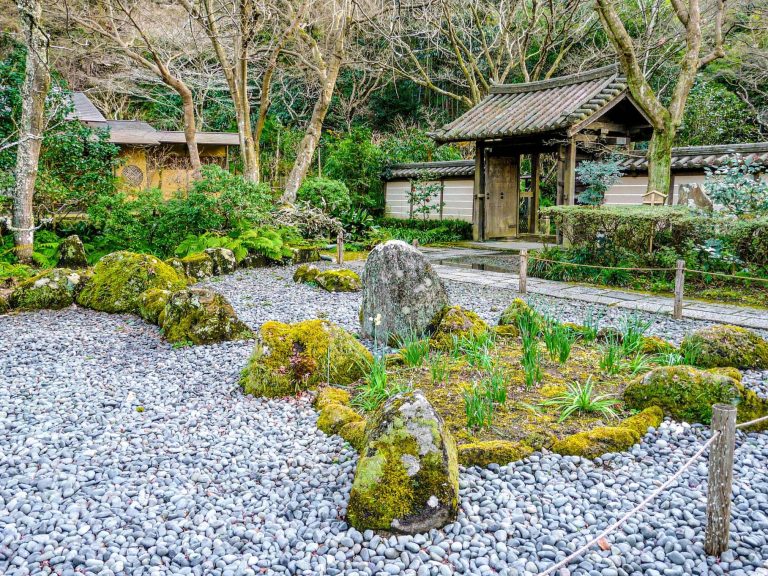
The temple grounds cover approximately 13,000 square metres in Jōmyōji, Kamakura. The surviving complex includes an entrance gate, a main hall, a bell tower, western caves, five-tier memorial towers called gorintō, and a bamboo grove. A gorintō is a Buddhist memorial monument made of five stacked tiers that symbolize traditional elements.
Temple buildings and memorial monuments
Main hall and bell tower
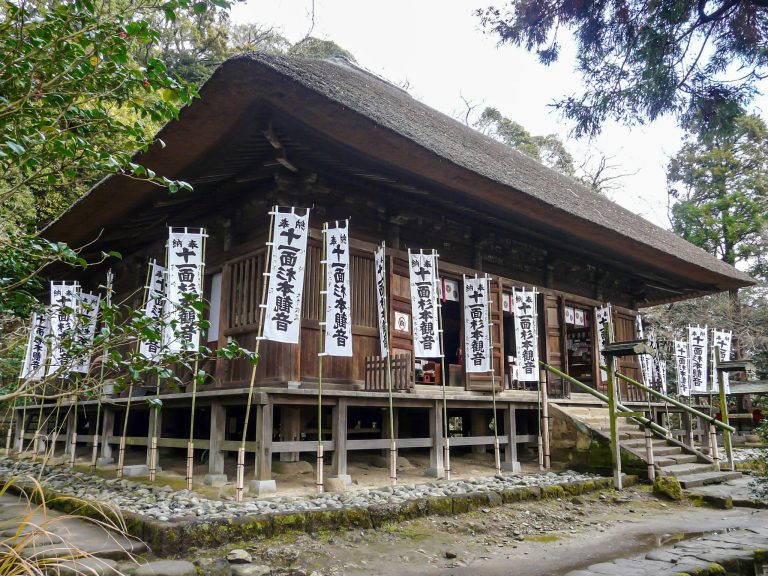
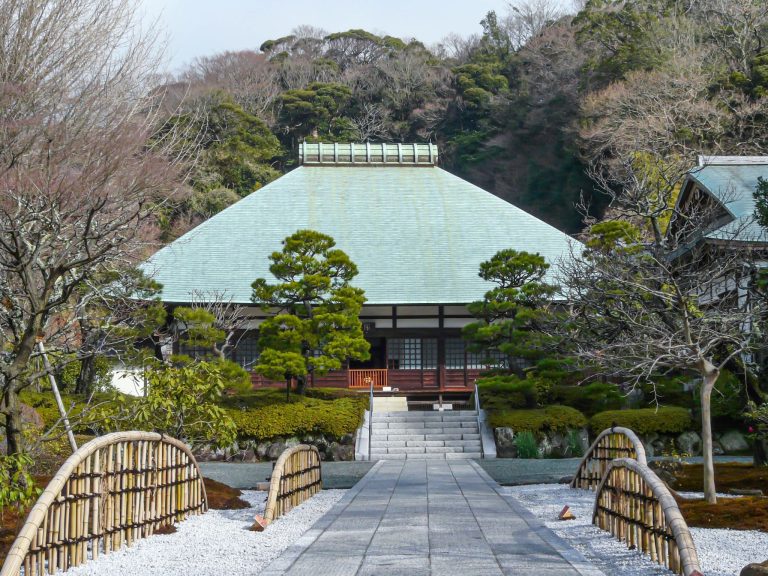
The main hall forms part of the reconstructed temple complex and houses the temple’s principal image, a statue of Gautama Buddha known as Shaka Nyorai. The bell tower retains a thatched roof similar to the roof destroyed on the original main hall during the 1923 earthquake.
Western caves and gorintō
Large caves extend along the western side of the grounds, where the Ashikaga memorial tradition associates the buried ashes of Ietoki and Yoshihisa with the temple. Near the bell tower, five-tier gorintō commemorate the thousands of warriors killed in the 1333 battle at Kamakura, an engagement connected with the end of Hōjō-clan rule.
Sacred images and bamboo grove
The principal image of Shaka Nyorai is housed in a sacred hall. The original statue of Sho Kan’non, a form of Kannon associated with compassion, is displayed at the Kamakura Museum of National Treasures. Behind the main hall, a grove of approximately 2,000 mōsō bamboo occupies the location of the former training annex. A small tea house, or chashitsu, stands within the bamboo-grove area. The bamboo garden has given Hōkoku-ji the familiar name “Bamboo Temple.”
Nearby sites