Honpuku-ji Temple: A Shingon Buddhist Temple and the Water Temple in Japan


Site at a Glance
- Rating
- 4.3
- Popularity
- Low
- Country
- Japan
- Primary era
- Modern
- Eras represented
- Modern
- Civilizations
- Japanese
- Site type
- Religious
- Remains
- Temple
On this page8 sections
History
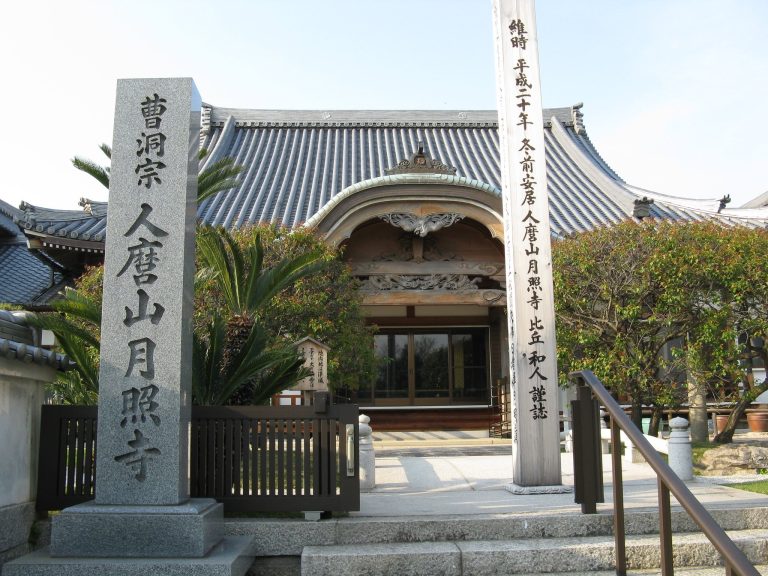
Honpuku-ji Temple is a Buddhist temple in Japan, in Awaji City, Hyogo Prefecture, on the northeastern part of Awaji Island. It was founded during the late Heian period, the final phase of Japan’s Heian era, conventionally dated from 1086 to 1185. The temple belongs to Shingon esoteric Buddhism, a tradition centered on ritual, symbolic practice, and meditation, and is affiliated with the Omuro school, a major branch of Shingon. Honpuku-ji holds the status of a special head temple and is the 59th site on the Awaji Shikoku Eighty-Eight-Site Pilgrimage.
Religious History and Associations
The temple’s principal image is a statue of Yakushi Buddha, the Buddhist Buddha of healing and medicine. The image is designated an Important Cultural Property of Awaji City, formerly known as Higashiura Town. Honpuku-ji also serves as the family mortuary temple of the founder of Sanyo Electric, and a memorial monument to that family stands within the temple grounds.
The Water Temple
Honpuku-ji’s new main hall, known as the Water Temple, was completed in 1991 to designs by the Japanese architect Tadao Ando. Known for precisely formed reinforced-concrete buildings and carefully choreographed movement through light and shadow, Ando received the Pritzker Architecture Prize in 1995. The Water Temple received the 34th Building Industry Association Award. It was conceived as a place where people could gather and experience spiritual enrichment, while its design replaced the large roof of a conventional temple with a lotus pond as the principal symbol.
The proposal initially met opposition from the temple priest and more than 300 parishioners. Ando then sought the opinion of Tachibana Daiki, a renowned Buddhist monk in Kyoto who was more than 90 years old. After Tachibana endorsed the idea of entering a temple within a lotus, the parishioners changed their position and unanimously supported construction.
Remains
Hilltop Setting and Approach
The Water Temple stands beside the pre-existing Honpuku-ji on the summit of a small, gently elevated hill. Bamboo groves, wooded areas, and rice fields occupy the sparsely built, hilly landscape, which has a view toward Osaka Bay. The approach passes through woodland before reaching a large, freestanding curved wall. This wall marks the boundary between the secular and sacred realms. A path from the older temple climbs toward the Water Temple, where a straight wall ends at a large opening. From there, the route continues between the straight wall and a curved wall that follows the shape of the pond. Small white gravel and sand cover the path.
Lotus Pond and Concrete Structure
The building is made of reinforced concrete beneath an elliptical lotus pond. The pond serves both as the main hall’s roof and as the defining form of the building. Its long axis measures approximately 40 metres and its short axis approximately 30 metres. It is a shallow, oval concrete basin containing red and white water lilies and the Oga lotus, associated with plant material found in geological strata dating to approximately 2,000 years ago. The water lilies flower from May to September, while the Oga lotus flowers approximately from June to July. Two large concrete walls protect the pond on its southeastern side.
Descent into the Main Hall
At the summit, the path turns and reveals the pond. A straight reinforced-concrete staircase cuts across the water and descends from its surface into the temple. This staircase is the stated connection between the main hall and the pond, while the hall otherwise remains separated from the exterior. Inside, a labyrinthine sequence of spaces unfolds around a circular wall and wooden frames. Concentric curved walls imitate the form of a lotus flower. The exterior is restrained, but the corridors and main hall use vermilion paint or strongly red elements, together with wooden frames, partly perforated wooden surfaces, wooden flooring, and wood wall cladding.
Light, Image, and Buddhist Symbolism
Natural light is largely excluded from the main hall. It enters through the roof at the point where the Buddha image stands. When the large doors behind the image are opened, light spreads through the interior and bathes the image in red. The sequence alternates between shadow and light, from the shaded approach to the illuminated pond and then down the staircase into the darker interior. The gravel adds sound and texture to this progression. The lotus pond and lotus-based plan express Buddhist symbolism: the lotus is associated with purity, enlightenment, paradise, and Amida Buddha, the central Buddha of Pure Land devotion. Passing down through the pond provides a symbolic movement of purification and transition into the sacred interior. The illuminated image also recalls the method associated with Jodo-ji in Ono, Hyogo Prefecture, where light and the Buddha image evoke the Pure Land.