Manpuku-ji Temple: A Soto Zen Buddhist Temple in Tokyo


Site at a Glance
- Rating
- 4.2
- Popularity
- Low
- Country
- Japan
- Primary era
- Early Modern
- External website
- Open
- Eras represented
- Early Modern
- Civilizations
- Tokugawa
- Site type
- Religious
- Remains
- Monastery
On this page13 sections
History
Manpuku-ji Temple is a Soto Zen Buddhist temple in Tokyo, Japan, traditionally founded in 1192 by the warrior Kajiwara Kagetoki at the command of Minamoto no Yoritomo, the founder of Japan’s Kamakura shogunate. The temple is said to have begun at Oi Maruyama, in the area of present-day Oi 6-chome and 7-chome, before being moved to Magome during the generation of a later Kajiwara descendant.
Origins and the Kajiwara tradition
The tradition naming Kajiwara Kagetoki as Manpuku-ji’s founder remains uncertain. Repeated periods of decline scattered the temple’s records, and geographical works of the Edo period questioned whether the connection resulted from a later mistaken tradition. An inscription in the cemetery names Kajiwara Mikawa-no-kami Kagetoki and Kajiwara Sukegoro Kagesue. These figures have been associated with retainers of the Hojo family recorded in the Odawara Shusho Ryoyaku-cho, and they may have descended from the earlier Kajiwara family.
The temple precinct became dilapidated toward the end of the Muromachi period. In 1575, the monk Myodo Bunryu restored the institution and changed its religious character from an esoteric Buddhist temple to a Soto Zen temple. Its formal name is Jigenzan Manpuku-ji, and its principal object of worship is an Amida Triad, consisting of Amitabha Buddha with two attendant bodhisattvas.
Nichiren traditions at Magome
Manpuku-ji is also associated with a tradition concerning Nichiren, the 13th-century Buddhist teacher who founded the tradition bearing his name. According to this account, Nichiren spent the night of September 18, 1282, at an Amida hall already standing at Magome while traveling toward Ikegami shortly before his death there on October 13. The resident offered lodging to Nichiren and his party, and Nichiren is said to have presented a Kishimojin image in gratitude. Kishimojin is a Buddhist protective deity especially associated with children and childbirth.
An unknown person took the Kishimojin image away at the beginning of the Showa period, and its whereabouts were then unknown. In 1987, its holder came forward and offered it to the temple, where it was again enshrined.
Another tradition holds that Nichiren promised not to spread his teaching in Magome. In keeping with this belief, the area traditionally had no Nichiren Buddhist temple until shortly before the Second World War. A further tradition concerning the seating order at Ikegami Honmon-ji places the chief priest of Manpuku-ji second, directly after the seat of the Ikegami family. At the 1987 funeral of Kaneko Nichii, the eightieth chief priest of Honmon-ji, the Manpuku-ji seat was placed above those of the heads of other Buddhist denominations and chief priests.
Magome associations in the modern period
The poet Muro Saisei built a house on land adjoining the temple precinct in 1932 and thereafter divided his time between his villa in Karuizawa and his home in Magome. He had moved from Tabata to Sanno in 1928 after the death of his friend Akutagawa Ryunosuke. He then sought higher ground near Manpuku-ji because streams and ponds around his Sanno residence made the ground unsuitable, and he feared that damp conditions contributed to his young children’s frequent colds.
After Saisei’s death, the house and garden were demolished, although local residents continued to remember the garden. The temple cemetery contains a grave associated with Kajiwara Kagetoki, one of several places linked with his burial. It also includes the graves of Kihara Yoshihisa, chief carpenter of the Tokugawa household; Kanazawa Ichiro, a Spanish scholar and professor at Tokyo University of Foreign Studies; and the first Shokyokusai Tenkatsu, a magician whose remains were divided and placed in the same grave as her husband, Kanazawa Ichiro.
Remains
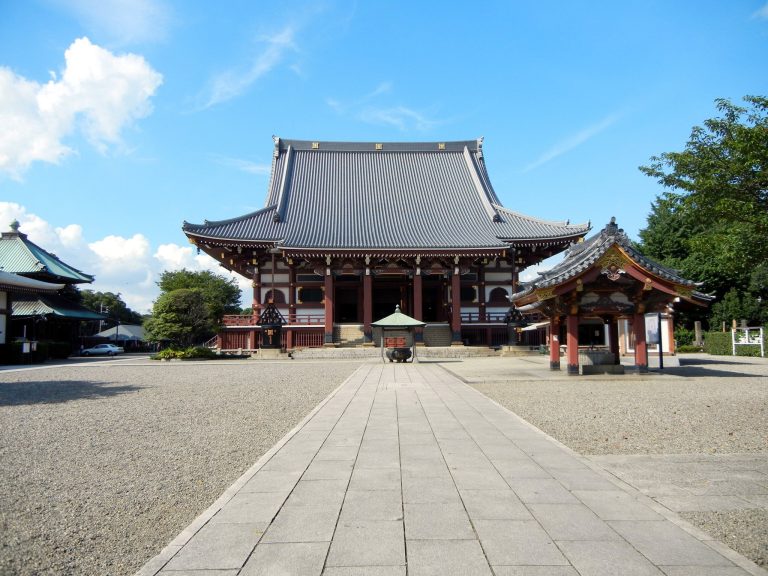
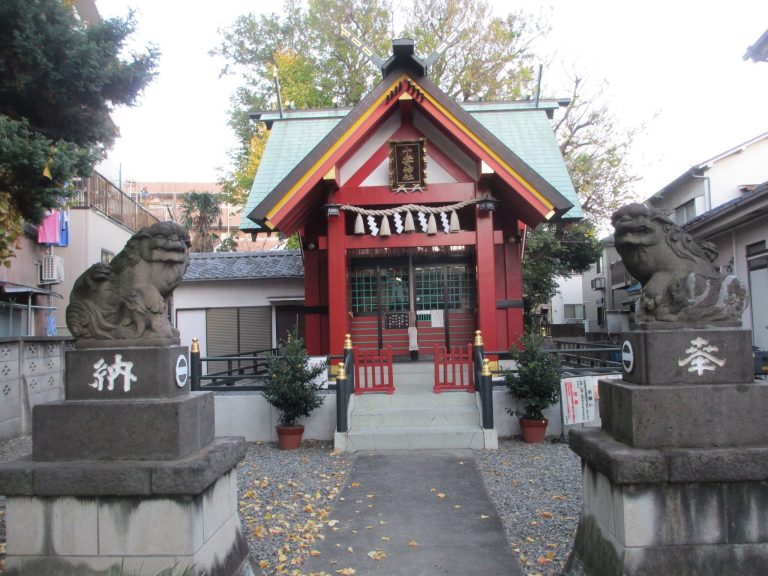
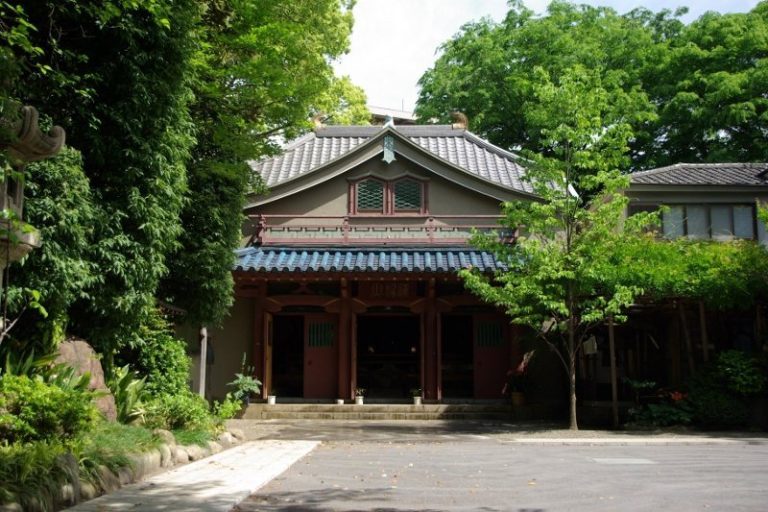
The Manpuku-ji precinct combines Buddhist buildings, stone memorials, a bronze equestrian statue, and a cemetery containing graves connected with the temple’s historical traditions. The principal worship image is an Amida Triad, while the grounds also preserve material associations with the Kajiwara family, Magome’s communal religious life, and Muro Saisei.
Gate and religious monuments
Sanmon gate and Amida Triad
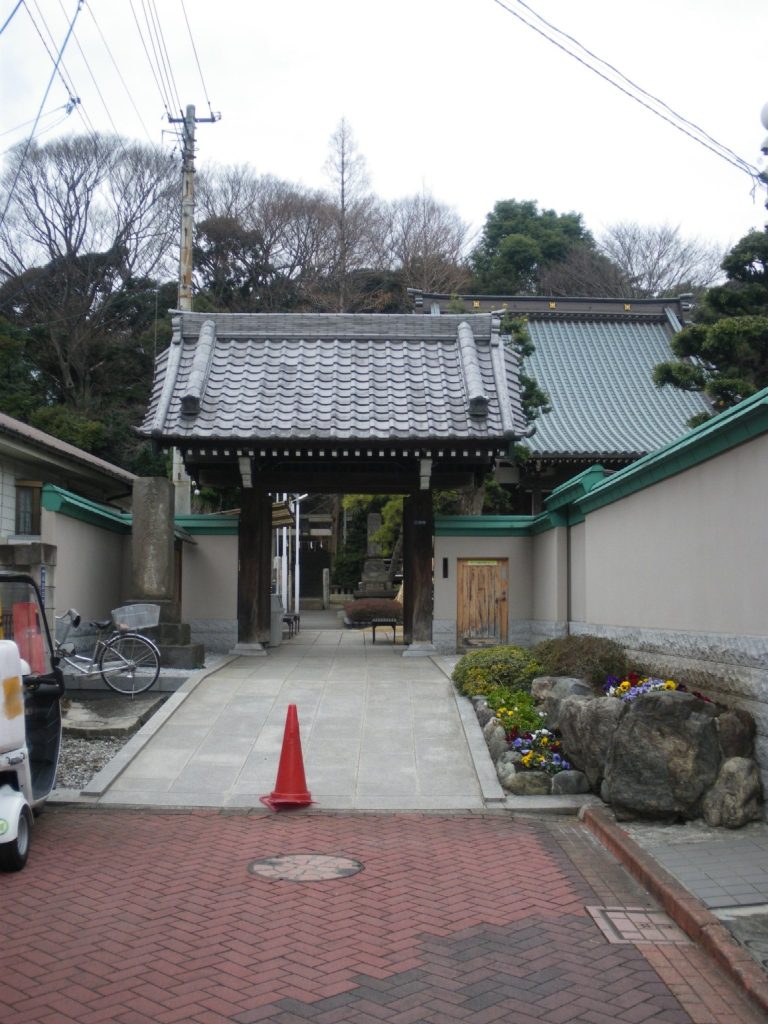
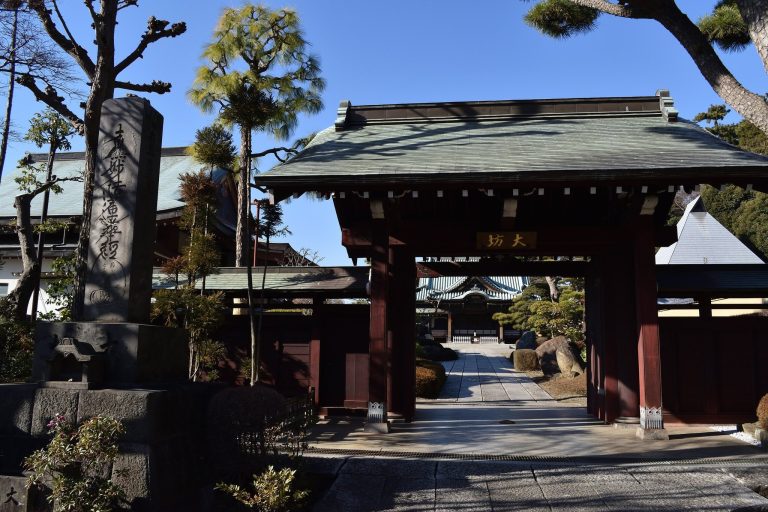
The precinct includes a Sanmon gate and the temple’s principal worship image, an Amida Triad. This Buddhist group places Amitabha Buddha with two attendant bodhisattvas and forms the central devotional focus of Manpuku-ji.
Hiyamachi devotional tower
A Hiyamachi devotional memorial tower was erected by the people of Magome Village in 1638. Hiyamachi was a communal religious observance involving prayer and an overnight vigil. The tower originally stood at Kajiwarazuka, in present-day Naka-Magome 3-chome, until approximately 1955, when it was moved into the Manpuku-ji precinct.
Muro Saisei poem monuments
Two stone monuments in the precinct commemorate poems by Muro Saisei. They bear the verses “Sasanaki ya, Magome wa kaki mo mabara nite” and “Negi no kawa, hagare shima mama ni kagiroinu,” which were recorded at the beginning of his Magome Diary.
Kajiwara memorials and cemetery
Surusumi statue
A bronze statue depicts Surusumi, the horse traditionally said to have been given by Minamoto no Yoritomo to Kajiwara Kagetoki’s son, Kajiwara Kagesue. The statue gives physical form to the Kajiwara family tradition preserved within the precinct.
Kajiwara Hall
Kajiwara Hall stands within the precinct as a multipurpose hall. Its name places it alongside the cemetery grave associated with Kajiwara Kagetoki and the other memorial features connected with the family.
Cemetery graves
The temple grounds contain the grave associated with Kajiwara Kagetoki, as well as the graves connected with Kihara Yoshihisa, Kanazawa Ichiro, and Shokyokusai Tenkatsu. Tenkatsu’s remains were divided and placed in the same grave as her husband, Kanazawa Ichiro.