Inohana Castle: A Sengoku-Period Hilltop Castle in Japan


Site at a Glance
- Rating
- 4
- Popularity
- Low
- Country
- Japan
- Primary era
- Medieval
- External website
- Open
- Eras represented
- Medieval, Modern
- Civilizations
- Japanese
- Site type
- Military
- Remains
- Castle
On this page12 sections
History
Inohana Castle, also known as Chiba Castle, is a Japanese hilltop castle in Chiba, Japan, traditionally associated with the Chiba clan and now understood primarily through its Sengoku-period earthworks. Built on a low hill in the former Shimosa Province, it was a hirayama-style castle, a fortified residence combining lowland and hilltop defenses. Its traditional history connects the site with Chiba Tsuneshige, but archaeological research has questioned whether the present hill was the Chiba clan’s Kamakura-period residence.
The Traditional Chiba Clan Foundation
According to a long-standing foundation account, Chiba Tsuneshige moved his base in 1126 from a castle in what is now Midori Ward, Chiba, and established a residence in Shimosa. The Chiba clan was traditionally believed to have used Inohana as its base for 13 generations, for about 330 years, until Chiba Tanenao was driven out in 1455. The clan was a prominent warrior lineage descended from Taira no Tadatsune. Chiba Tsunetane, an earlier leading member of the lineage, supported Minamoto no Yoritomo, the founder of the Kamakura shogunate, Japan’s first long-lasting warrior government.
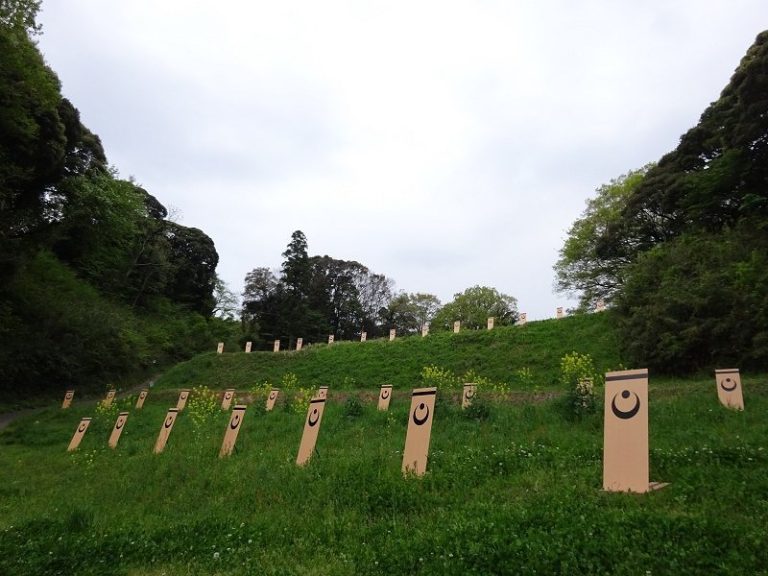
Archaeological evidence has revised this traditional account. Excavations on the hill have not found traces of the Kamakura-period residence attributed to the Chiba clan. Instead, the ramparts and dry moats resemble defenses of the Sengoku period, an era of prolonged warfare and competition among regional military powers. The clan’s residence is now more often placed in the lowland area of central Chiba, although its exact location remains uncertain.
The Soma Documents describe an attack in 1335 on “Chiba Castle” and “Chiba Tate” during an internal conflict within the clan. Because castles of the Inohana hilltop type generally appeared only from the fifteenth century, these names are interpreted as references to a lowland residence that had been temporarily strengthened with defensive structures. A cremation urn containing thirteenth-century remains was found at Inohana, while relatively few objects associated with everyday habitation have been recovered. This evidence has encouraged the theory that the hill served as a cemetery during the period of the Chiba clan’s main line before being converted into a castle site.
Hara Control and the Sengoku Castle
During the Muromachi period, the era of the Ashikaga warrior government, rivalry between the Ashikaga shogunate and the Kanto kubo, the Ashikaga-appointed military governor of the Kanto region, contributed to political instability. The Hara clan, retainers of the Chiba, gained power as a result. In 1455, Chiba Tanenao was attacked by a relative of the Chiba clan and Hara Tanefusa and retreated toward Chida Estate. He and his supporters later occupied Tako Castle and Shima Castle, but were defeated there.
A traditional reconstruction places the relative’s succession to the Chiba main line in 1457. It then identifies his son, Chiba Suketane, as the leader who moved the principal base to Moto Sakura Castle. A more recent interpretation holds that Suketane, or his son Kōtane, became head of the Chiba clan with the support of the Koga kubo, a later Kanto-based Ashikaga authority, and subsequently transferred the base from Chiba to Moto Sakura. After the attack of 1455, the Hara clan controlled the area around Inohana.
Inohana Castle may have been established under Hara Norikatsu, the son of Hara Tanefusa. In 1516, the Mikami clan attacked the castle, and a retainer identified as Hara Kurando, probably from the Yatomi-Hara branch, was killed in the fighting. The castle was destroyed or abandoned after this attack. The surviving earthworks, together with the historical circumstances, favor an interpretation in which the Hara clan constructed and maintained the hilltop castle rather than the site being the original Kamakura-period seat of the Chiba clan.
Later Memory and Public Commemoration
The hill was identified as the old Chiba clan castle only from the Edo period onward. An illustrated guide to the famous places of Narita published in 1858 included a “Diagram of the Site of the Old Castle of the Chiba Clan,” placing Inohanayama at its center. In 1861, the site was selected as “The Full Moon over Inohanayama” among the Eight Views of Chiba.
The site opened as a public park in 1909 and became the historical Inohana Park in 1959, covering 10,293 square meters. A monument commemorating the 800th anniversary of Chiba’s establishment was erected there in 1926, followed by an 850th-anniversary monument in 1976. These commemorations reflected the traditional association of the hill with Chiba Tsuneshige and the early history of Chiba.
Inohana Castle and its surviving earthworks and moats are designated as a cultural property of Chiba City. The nearby Seven Tenno Mounds share the municipal designation, although archaeological investigation has identified them as ancient burial mounds rather than medieval castle features. The Chiba City Folk Museum was built on the site in 1967 as a replica castle tower and continues the presentation of Chiba’s history and the history of the Chiba clan. It originally opened as the Chiba City Local History Museum, received its present name in 1983, underwent seismic renovation beginning in 2000, and reopened in 2001. In 2010, its former planetarium room became an exhibition room for modern and contemporary history.
Remains
Hilltop Setting and Defensive Layout
Inohana Castle occupied a hill bordered by the Miyako River to the north and a cliff on the west. The projecting form of the hill may explain the name Inohana, meaning “pig’s nose.” Another explanation connects the name with the hill’s orientation toward the direction associated with the wild boar. The probable castle area is now generally limited to the vicinity of Inohana Park. An older interpretation extended it across the present Chiba University Inohana campus toward the Central Museum bus stop, but excavations in the medical campus found very few medieval remains and identified the Seven Tenno Mounds as ancient tombs.
Main Enclosure
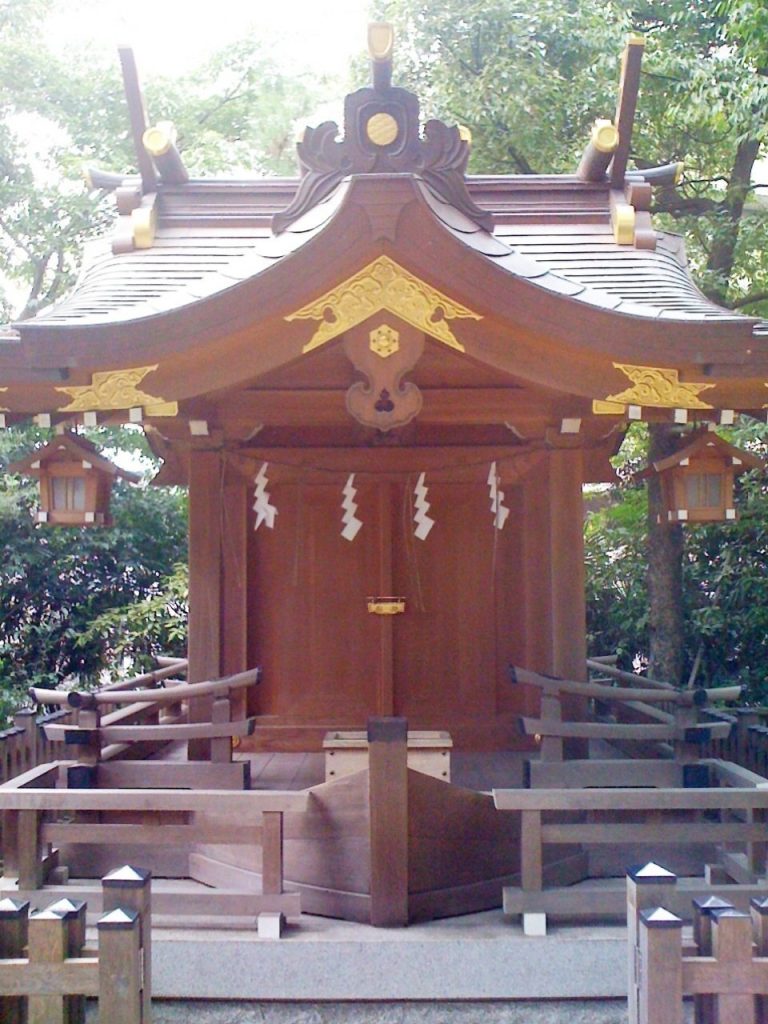
The area around Inohana Park is identified with the castle’s main enclosure. Shinmei Shrine and a monument to Inohana Castle stand at the projecting end of this enclosure, which tradition identifies as the position of an observation platform. The castle is also described as having commanded a view toward Tokyo Bay and nearby Chiba Port. The surviving defensive works consist principally of compacted-earth ramparts and dry moats, ditches built without standing water. One surviving earthwork lies between the projecting end of the hill and the folk museum.
Second Enclosure
The area occupied by the Chiba City Folk Museum is identified as the second enclosure. A statue of Chiba Tsunetane stands there. The defensive layout is represented today chiefly by the surviving embankments and ditches, which provide the main physical evidence for interpreting Inohana as a Sengoku-period castle.
Modern Structures and Historic Landscape
Chiba City Folk Museum
The museum is a modern castle-tower replica modeled on towers of the Azuchi-Momoyama period, not a surviving medieval tower. Its site covers 8,748.59 square meters, with a building footprint of 756.13 square meters, a total floor area of 2,416.29 square meters, and an exhibition area of 1,230.86 square meters. The five-story main building contains lecture, exhibition, office, storage, electrical, mechanical, and viewing spaces. Its stated floor areas are 516.99 square meters on the first floor, 468.56 on the second, 299.34 on the third, 353.28 on the fourth, and 128.34 on the fifth. An entrance wing and a separate storage wing complete the museum complex.
Ochanomizu Well
A well known as Ochanomizu lies beneath the northern side of the castle ruins. A local legend says that Chiba Tsunetane drew water from it to prepare tea for Minamoto no Yoritomo. The tradition links the well with the Chiba clan’s remembered connection to the founder of the Kamakura shogunate.
Eastern Stairs and Inohanatei
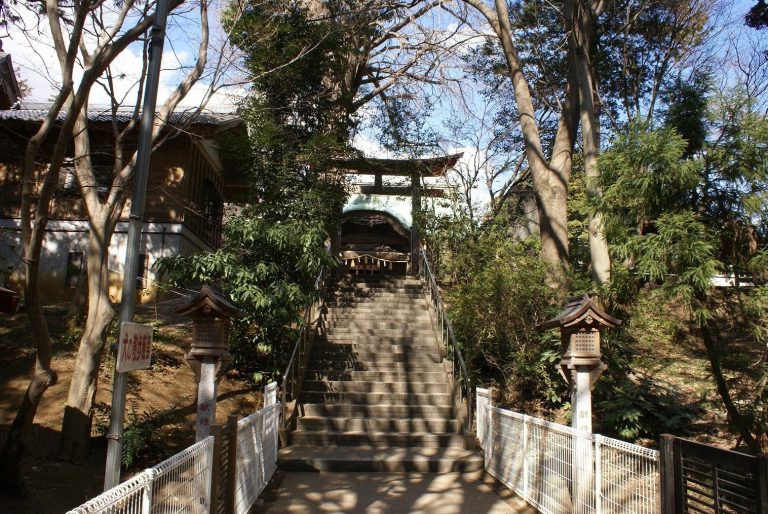
The stairs on the eastern side of the ruins were formerly called Ikedazaka and are traditionally identified as the castle’s rear entrance, or karamete. A tea house and garden called Inohanatei were constructed on the middle slope of Inohanayama in 1967. The surrounding park also contains the Seven Tenno Mounds, whose physical presence belongs to the historic landscape even though archaeological investigation identifies them as ancient burial mounds rather than castle earthworks.