Chiba-dera Temple: A Buddhist Temple and Kannon Pilgrimage Site in Japan


Site at a Glance
- Rating
- 4.1
- Popularity
- Low
- Country
- Japan
- Primary era
- Early Modern
- External website
- Open
- Eras represented
- Medieval, Early Modern, Modern
- Civilizations
- Kamakura shogunate, Tokugawa
- Site type
- Religious
- Remains
- Monastery
On this page15 sections
History
Chiba-dera Temple, also known as Senyō-ji, is a Buddhist temple in Chiba, Japan, traditionally founded in 709 during the early Nara period. It is affiliated with the Buzan-ha branch of Shingon Buddhism, an esoteric Buddhist tradition, and its principal image is the eleven-faced Kannon, the bodhisattva of compassion. The temple is also the 29th site on the Bandō Sanjūsankasho, a pilgrimage route of thirty-three Kannon temples in eastern Japan.
Foundation and early Buddhist activity
Chiba-dera’s foundation tradition connects its beginnings with the priest Gyōki, who visited the area in 709. After experiencing a vision of Kannon, he carved and enshrined two eleven-faced Kannon statues. The tradition places the event in Ikeda village, Chiba District, Shimōsa Province, during the reign of Empress Genmei, an early eighth-century sovereign whose reign preceded that of Emperor Shōmu.
Gyōki is said to have reported the vision to Emperor Shōmu, a major imperial patron of Buddhism. The emperor then ordered the creation of a complete Buddhist temple compound, including quarters for monks. The institution was given the name Kaishōzan Kanki-in Shōren Senyō-ji. Early Nara-period glazed roof tiles found at the site support the presence of Buddhist activity by the early eighth century.
During the early Heian period, the temple site was used for burials and the construction of sutra mounds, earthen deposits containing Buddhist scriptures for religious preservation. These remains produced scripture containers, fragments of white porcelain, Buddhist statuary, and glass beads made in China during the Song dynasty.
Fire, the Chiba clan, and Kamakura patronage
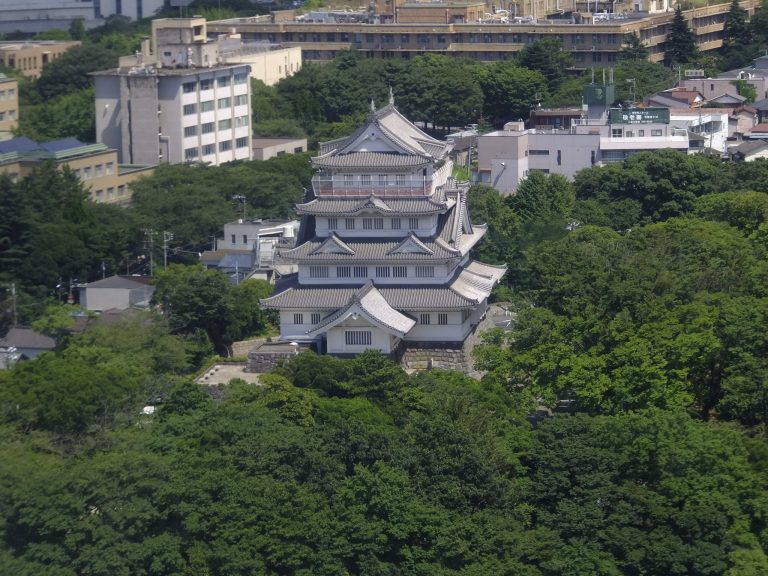
The temple buildings were destroyed by fire in 1160. Its proximity to Inohana Castle, the stronghold of the Chiba clan, then shaped its later history. The medieval Chiba clan, a warrior family controlling a local stronghold, adopted Chiba-dera as its family temple and used it for clan-related rites and rituals.
Minamoto no Yoritomo became associated with Chiba-dera after his defeat at the Battle of Ishibashiyama in 1180. While seeking allies in the Kantō region and building an alliance with the Chiba clan, he prayed daily at the temple. Following his military success and the establishment of the Kamakura shogunate in 1185, he commissioned extensive renovations in 1182.
The Chiba clan maintained a long association with the temple, commissioning buildings and Buddhist implements and inviting Buddhist priests and scholars, especially those connected with the Tendai sect. Chiba-dera consequently developed into a regional center of learning. The clan’s support ended after it sided with the Hōjō against Toyotomi Hideyoshi during the Siege of Odawara in 1590, after which the Chiba lost their position.
Tokugawa restoration and Edo-period rebuilding
Chiba-dera declined sharply after the fall of the Chiba clan. Tokugawa Ieyasu, founder of the Tokugawa shogunate in 1603, restored the temple when it was close to collapse and rebuilt buildings destroyed by fire. The Tokugawa family subsequently worshiped there, and the temple received a stipend of 100 koku in the early seventeenth century. A koku was a rice-based unit of economic assessment that could serve as an institutional allowance.
Tokugawa Hidetada, Ieyasu’s successor and the second Tokugawa shogun, commissioned a large Kannon-dō, or hall dedicated to Kannon, in 1623. Tokugawa patronage did not end the cycle of destruction and rebuilding. Major fires and successive reconstructions affected the temple during the Edo period, notably in 1689, 1806, and 1852.
Modern disruption and revival
Chiba-dera declined after the Meiji Restoration of 1868, when it lost its rice stipend, its principal source of income. In 1869, the government confiscated its property under shinbutsu bunri, the Meiji policy of separating Buddhism from Shinto. The temple lacked a resident priest for much of the Meiji period, although supporters gradually restored it during the early twentieth century.
United States aerial bombardment severely damaged Chiba City on August 6, 1945, during the wider bombing of Tokyo. Chiba-dera was nearly destroyed by the resulting fire, and Hidetada’s 1623 Kannon-dō was completely lost. The present Kannon-dō was reconstructed and opened in 1976.
The temple also preserves traditions connected with local public life. Chiba-warai was an Edo-period New Year custom held from New Year’s Eve into New Year’s Day. Masked participants from different social classes criticized local administrators, merchants, abuses of authority, and improper conduct before joining in laughter and New Year celebrations. The custom continued into the Meiji period and was described in the Sōma nikki; the poet Kobayashi Issa also composed a haiku about it. A related tradition says that Tokugawa Ieyasu tolerated Chiba-warai as a public “voice mailbox” for complaints. Revival activities have continued since fiscal year 2010, while the historical custom’s beginning date remains unknown.
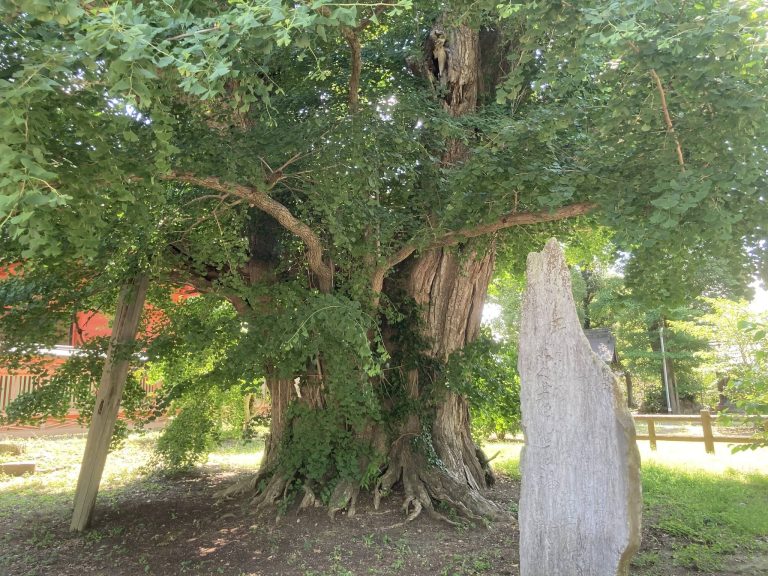
The Chiba-dera ginkgo is designated a Natural Monument of Chiba Prefecture. Several buildings and Buddhist implements commissioned by the Chiba clan are identified as National Treasures of Japan. The temple’s bell, traditionally called the “Return Bell,” is associated with an inscription dated December 22, 1261. According to tradition, the bell began ringing by itself after being sent to Edo for recasting and was consequently returned.
Remains
Early temple compound and archaeological remains
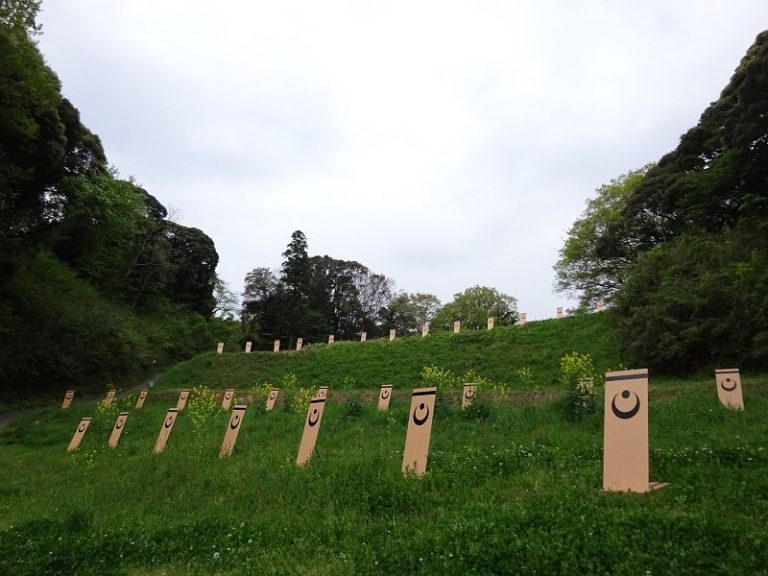
Chiba-dera preserves the remains of an early Buddhist complex whose former grounds were estimated through excavations in the 1950s at approximately 126 meters on each side. Nara-period glazed roof tiles recovered from the site indicate that a large compound stood here before the fire of 1160. The archaeological remains include burial areas and sutra mounds associated with Buddhist practice during the early Heian period.
Sutra mounds and excavated objects
The sutra mounds yielded kyōzutsu, containers for handwritten Buddhist scriptures, together with white-porcelain fragments, Buddhist statuary, and Chinese glass beads from the Song dynasty. These objects connect the physical remains with the temple’s early religious and funerary use.
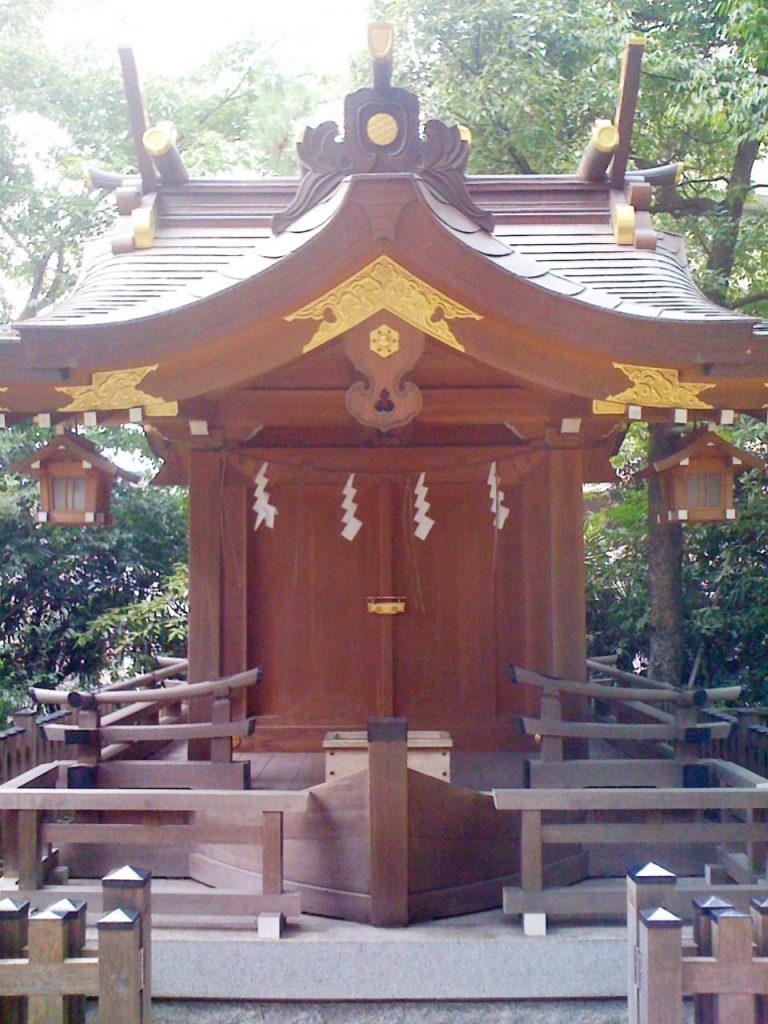
Temple buildings and surviving features
Sanmon gate
The Sanmon, the temple’s main gate, was rebuilt in 1841. It forms part of the surviving architectural fabric of the precinct and belongs to the sequence of Edo-period rebuilding that followed earlier fires and reconstructions.
Kannon-dō
The Kannon-dō was first built in 1623 on the commission of Tokugawa Hidetada and rebuilt in 1828. The Edo-period hall was destroyed in the 1945 air raid. The present hall dates from the reconstruction completed in 1976 and remains associated with Chiba-dera’s eleven-faced Kannon, the temple’s principal image.
Chiba-dera lantern
A copper hexagonal hanging lantern carries an openwork design of plum and bamboo and an inscription dated 1550. The inscription identifies it with Chiba-dera’s Aizen-dō, a hall dedicated to Aizen Myōō, a Buddhist deity associated with love, desire, and transformation. The lantern was excavated in 1910 from a bamboo grove southeast of the temple and donated by its finder to the Tokyo National Museum, where it is preserved.
Ginkgo and temple traditions
Chiba-dera ginkgo
A large ginkgo tree stands within the temple precinct. It is more than 30 meters tall, has a trunk measurement of about 8 meters, and is estimated to be approximately 1,000 years old. Its status as a Natural Monument of Chiba Prefecture recognizes the tree as part of the temple’s surviving natural and historical features.
Return Bell
The temple bell traditionally called the “Return Bell” is linked to an inscription dated December 22, 1261. Its associated tradition says that it rang by itself after being transported to Edo for recasting, prompting its return to Chiba-dera. The story forms part of the temple’s material and ritual heritage alongside its buildings, archaeological remains, and Buddhist objects.