Kasama Castle: A Mountain Castle and Domain Seat in Japan


Site at a Glance
- Rating
- 3.7
- Popularity
- Low
- Country
- Japan
- Primary era
- Early Modern
- External website
- Open
- Eras represented
- Medieval, Early Modern
- Civilizations
- Kamakura shogunate, Tokugawa, Toyotomi regime
- Site type
- Military
- Remains
- Castle
On this page14 sections
History
Kasama Castle is a mountain castle in Japan, built on Mount Sashiro during the Kamakura period, with construction of its summit stronghold beginning in 1219 and completion in 1235. It later became the administrative seat of Kasama Domain, and its mountaintop ruins preserve evidence of a long transition from medieval fortress to early-modern domain headquarters.
Medieval Foundation
In 1205, Utsunomiya Yoritsuna, a provincial military leader associated with the Utsunomiya clan, expanded into the Kasama area through his retainer Shioya Tomonari. Tomonari adopted the name Kasama, establishing the lineage that governed the area for 18 generations. A foundation tradition connects the castle with a conflict involving the warrior monks of Shofukuji and Tokuzoji. Kasama Tokitomo is said to have built a foothill stronghold against Tokuzoji, defeated its forces, and later destroyed both temples after the monks of Shofukuji also opposed him.
The main castle on the summit of Mount Sashiro began to take shape in 1219 and was completed in 1235. During the Northern and Southern Courts period, the fifth Kasama lord, Kasama Yasutomo, supported the Southern Court, the imperial side in a struggle between rival courts. He raised troops for that cause, resisted an attack by Satake Yoshiharu, and drove the attackers back after a siege.
Conquest and Reorganization
Kasama Tsunaie lost the castle after the 1590 Odawara Campaign, a major campaign that brought the Later Hojo regime to defeat. He had disobeyed a summons from his overlord, the Utsunomiya clan, and was attacked and dispossessed afterward. Tradition attributes his downfall to support for the Later Hojo, but records place Tsunaie in the campaign under Utsunomiya authority, leaving the precise reason for his removal uncertain.
The Utsunomiya clan regained control. Its retainer Tamanyu Katsumasa became lord in February 1592. After his death in November 1593, his son Tamanyu Norimasa served as castle deputy until transferring to Okamoto Castle in March 1595. In 1598, Gamo Satonari entered Kasama with a domain assessed at 30,000 koku, a traditional measure of agricultural yield and lordly income. He extensively reorganized the castle, probably creating its early-modern form. Matsudaira Yasushige took possession in 1601 after the Battle of Sekigahara, the victory that enabled Tokugawa Ieyasu to establish the Tokugawa shogunate.
Kasama Domain under the Shogunate
During the Edo period, Kasama Castle and its domain passed successively to the Matsui-Matsudaira, Ogasawara, Toda-Matsudaira, Nagai, Asano, Inoue, Honjo-Matsudaira, and again Inoue clans. These lords, including the Asano and Gamo, modified the castle as its military and administrative needs changed. In 1747, Makino Sadamichi entered with a domain assessed at 80,000 koku. The Makino, a hereditary daimyo family, governed Kasama for eight generations until the domain was abolished in the early Meiji period.
The Edo-period succession ran from Matsui-Matsudaira rule between 1601 and 1608, followed by Ogasawara in 1608–1609, Toda-Matsudaira in 1612–1617, Nagai in 1617–1622, Asano in 1622–1645, Inoue in 1645–1692, Honjo-Matsudaira in 1692–1694, Inoue again in 1694–1747, and Makino from 1747 to 1868.
Dismantling and Later Investigation
Kasama Castle was abandoned after the Meiji Restoration. The abolition of Kasama Domain in 1871 and the Castle Abolition Order of 1873 led to the dismantling of its buildings. Archaeological investigation of the ruins was announced in 2011. In 2017, the site was selected as number 112 in the Continued Top 100 Japanese Castles program. The mountaintop retains much of its former condition, while later alterations have affected some areas; the more poorly preserved foothill residence area has been developed as Sashiroyama Foothill Park.
Remains
Mountain Layout and Defensive Works
Kasama Castle followed a mountain-castle layout across the summit and the eastern and northern slopes of Mount Sashiro. Its principal compounds were the Tenshu Enclosure, Main Enclosure, Second Enclosure, and the approach to the Main Gate. The Main and Tenshu enclosures occupied adjacent summit peaks, while the Second and Third enclosures lay lower on the mountain. Additional enclosures extended along a ridge beside the northern valley and into the foothills. Stonework was used extensively, an unusual feature in the Kanto region, particularly around the Tenshu Enclosure and the main approach.
Summit Enclosures
The upper castle retains stone walls, moats, earthen ramparts, and wells. Several enclosures on the northern ridge were accompanied by lateral moats. Another lateral moat ran south of the Main Enclosure, with its eastern end continuing as a vertical moat down toward the foothills. Together, these features preserve the defensive organization of the summit and its slopes.
Keep Foundation
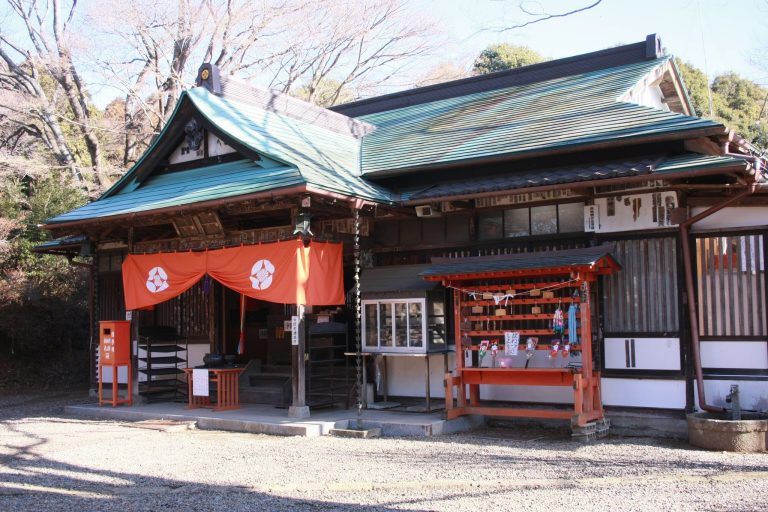
The Tenshu Enclosure contains the stone foundation of a two-tiered, two-story keep. The keep appears on the Shoho-period map titled Map of Kasama Castle in Tokiwa Province, but its precise exterior form and internal arrangement remain unknown. A shrine now occupies part of the former keep-foundation area.
Foothill Residence
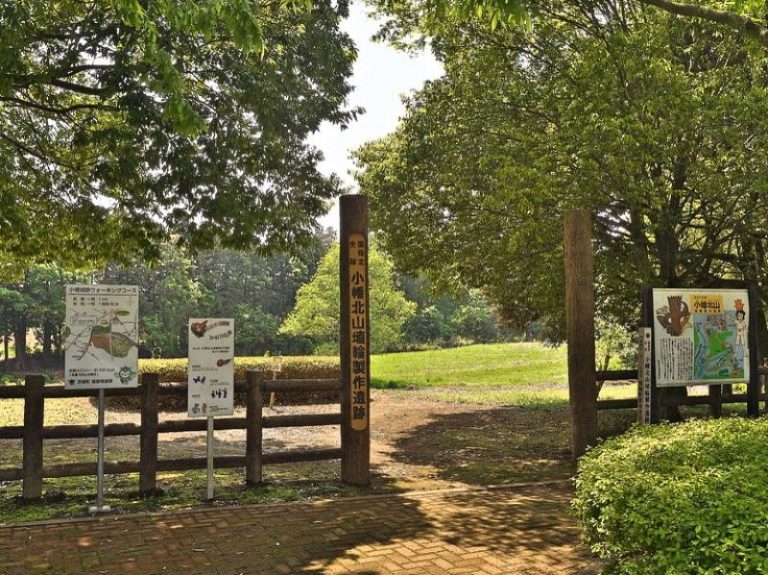
The castle residence stood at the northeastern foot of Mount Sashiro. Its preservation is poorer than that of the upper castle, although it formed part of the wider castle complex together with the summit compounds and lower enclosures. The foothill area is now Sashiroyama Foothill Park.
Relocated Castle Structures
Sashino Shrine Worship Hall
After the castle was dismantled, timber from the keep was reused in the worship hall of Sashino Shrine, which stands on the keep foundation. The condition of the reused material led historian Hitoshi Nakai to propose that the hall may have been created by remodeling the keep itself. Kasama historian Yoshihiko Tanaka further proposed that the keep had nearly the same structure as the surviving Hachimandai Yagura.
Hachimandai Yagura
The Hachimandai Yagura, a castle turret used for defense, observation, storage, or related functions, originally stood on Hachimandai in the Main Enclosure. It was moved in 1880 to Shinjō-ji Temple, where it survives as the Kasama Castle Turret.
Relocated Gates
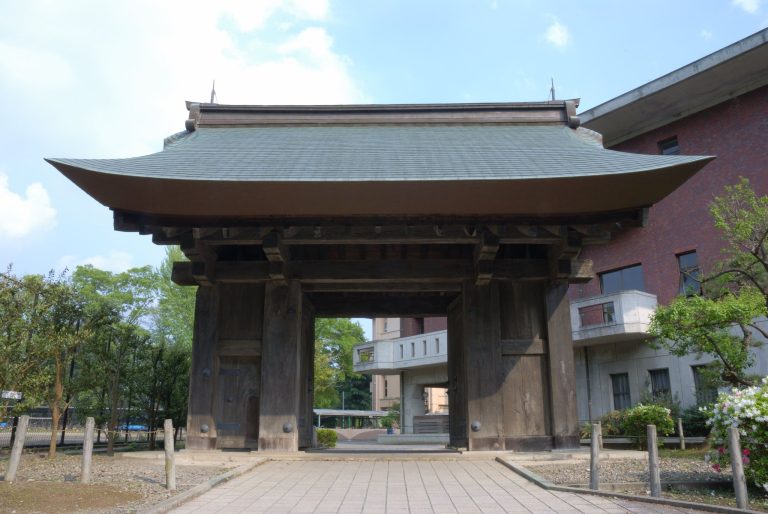
Two castle gates of the yakui-mon type, a traditional gate form with a distinctive roof structure, were also moved after the castle’s dismantling. They survive at private residences in Kasama. The surviving and reconstructed material remains of the castle therefore consist largely of its upper-castle stonework, the relocated turret, the two gates, and the shrine structure associated with the former keep foundation.