Imakumano Kannon-ji Temple: A Shingon Buddhist Temple in Kyoto


Site at a Glance
- Rating
- 4.2
- Popularity
- Medium
- Country
- Japan
- Primary era
- Early Modern
- External website
- Open
- Eras represented
- Early Modern
- Civilizations
- Japanese
- Site type
- Religious
- Remains
- Temple
On this page7 sections
History
Imakumano Kannon-ji Temple is a Buddhist temple in Kyoto, Japan, associated with the Shingon school of esoteric Buddhism and traditionally founded in 807 during the Daidō period. Its formal name is Kannon-ji, while its full name is Shin-Nachisan Kannon-ji. It is commonly called Imakumano and belongs to the Shingon-shū Sennyūji branch as a subtemple of Sennyūji.
Foundation and Imperial Patronage
The temple’s foundation date rests on temple tradition. According to its founding legend, Kūkai, the monk also known as Kōbō Daishi who established the Shingon school after studying in Tang China, saw a strange light on Higashiyama. There he met Kumano Gongen, a sacred manifestation associated with the deities of the Kumano religious complex, appearing as an old man. The figure gave Kūkai a small eleven-headed Kannon, a Buddhist bodhisattva associated with compassion, and instructed him to build a temple for it. The image was said to have been made by Amaterasu. Kūkai then carved a larger statue and placed the smaller one inside it.
With the support of Emperor Saga, work on the temple buildings began in 812. Tradition places completion during the Tenchō period, between 824 and 833, when the institution served as an imperial prayer temple. At the request of the minister Fujiwara no Otsugu, the precinct and temple complex later underwent a large expansion. After Otsugu’s death, his son Fujiwara no Harutsu continued the work as a memorial undertaking, and the enlarged institution was completed in 855 under the name Hōrin-ji.
The Kumano Tradition in the Heian and Kamakura Periods
By the late Heian period, the area was called Imakumano to distinguish it from the Kumano Sanzan, the three major Kumano shrines in Kii Province. During the reign of Emperor Shirakawa, the temple flourished as a center of Imakumano Shugendō, a religious tradition combining mountain asceticism, Buddhist practice, and local kami worship. It was also known as Higashiyama Kannon-ji. The residence of Kiyohara Motosuke, a poet of the mid-Heian period and father of Sei Shōnagon, is said to have stood near the temple grounds.
In 1160, the cloistered Emperor Go-Shirakawa, a committed follower of the Kumano cult, enshrined Kumano Gongen at the temple because the Kumano region in Kii Province was difficult to reach. He gave the temple’s principal Kannon the status of the deity’s honjibutsu, the Buddhist form understood to underlie a local kami, and granted the temple the mountain name Shin-Nachisan. He also changed its name from Higashiyama Kannon-ji to Kannon-ji and established the nearby Shin-Kumano Shrine, a Shinto shrine dedicated to the Kumano tradition.
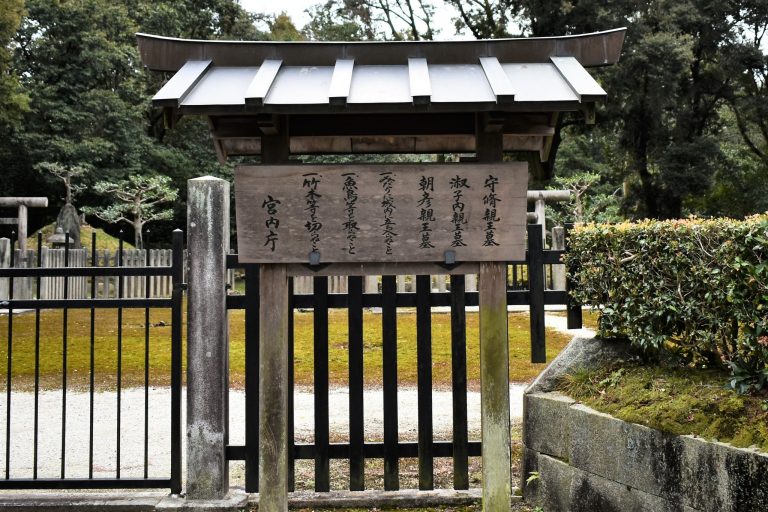
Temple tradition further holds that prayers before the Kannon cured Emperor Go-Shirakawa’s chronic headaches. This association led to the temple’s veneration as a place connected with protection from headaches and recovery from illness. The surrounding area southwest of the temple, around Toribeno and Toritono, had long served as an aristocratic burial ground. Kannon-ji consequently conducted many aristocratic funerals and memorial services. The mausoleum of Emperor Go-Horikawa adjoins the temple to the southeast.
Destruction, Restoration, and Pilgrimage
The temple was burned during conflicts of the Nanboku-chō period and again in the Ōnin War, the fifteenth-century civil conflict that caused widespread destruction in Kyoto. It was rebuilt after each fire, and a major restoration was completed in 1580.
Imakumano Kannon-ji is the fifteenth temple on the Saigoku Kannon Pilgrimage, a historic circuit of thirty-three Kannon temples in western Japan. It is also the nineteenth stop on the Rakuyō Thirty-Three Kannon Pilgrimage. Its other religious affiliations include the Kinki Dementia-Prevention Kannon Pilgrimage, the Senzan Shichifukujin Pilgrimage as its third Ebisu-associated stop, the Association of Temples Known by Popular Names under Imakumano, and the Shinbutsu Pilgrimage Route as stop 122, or Kyoto stop 42.
Remains
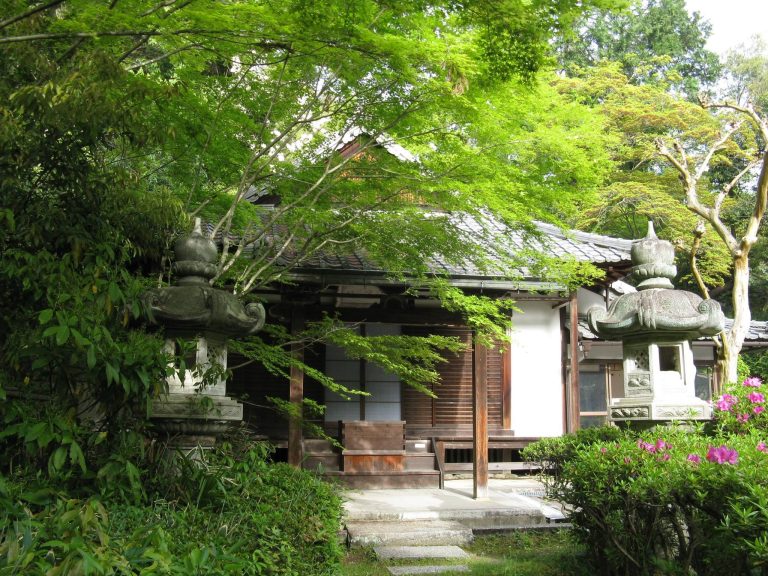
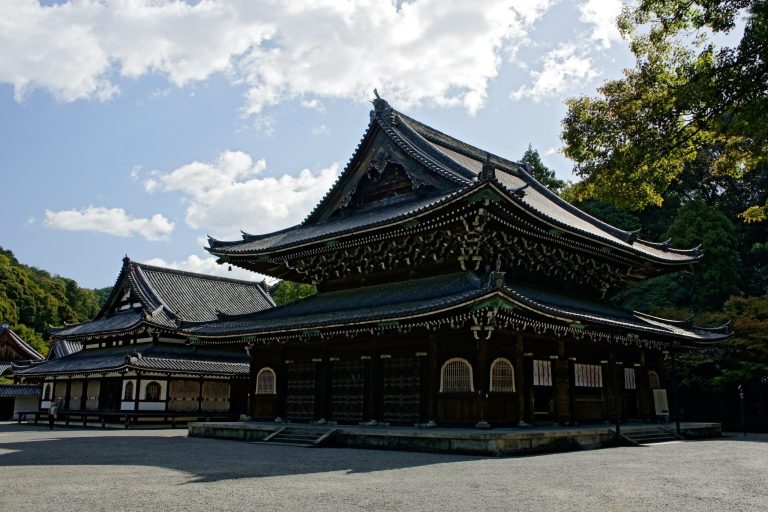
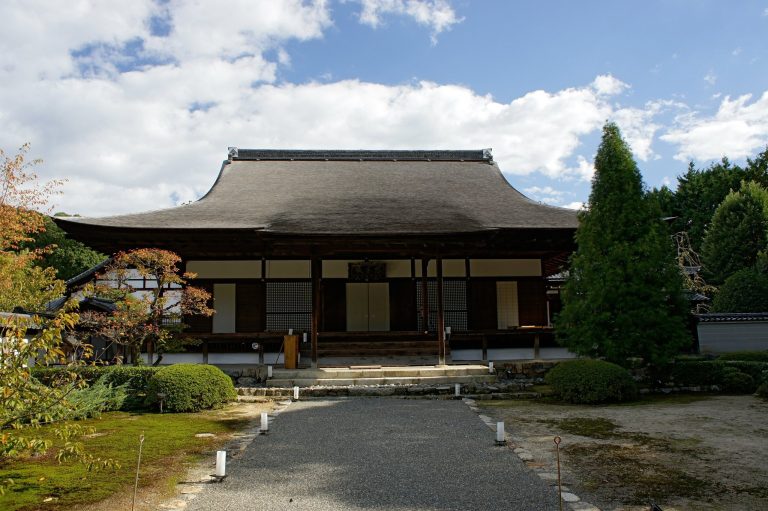
Imakumano Kannon-ji occupies part of the Sennyūji precinct area in Kyoto’s Higashiyama district. Its surviving identity is centered on the concealed eleven-headed Kannon and the main hall, while the temple’s physical and religious setting remains closely connected with neighboring Sennyūji and the mausoleum of Emperor Go-Horikawa to the southeast.
The Concealed Central Image
The temple’s honzon, or central sacred image, is an eleven-headed Kannon. The smaller figure associated with the foundation legend is enclosed within the larger image attributed to Kūkai. The arrangement expresses the temple’s combined sacred identity, joining the Kumano deity enshrined at the temple with the Kannon image recognized as that deity’s honjibutsu.
Main Hall and Temple Setting
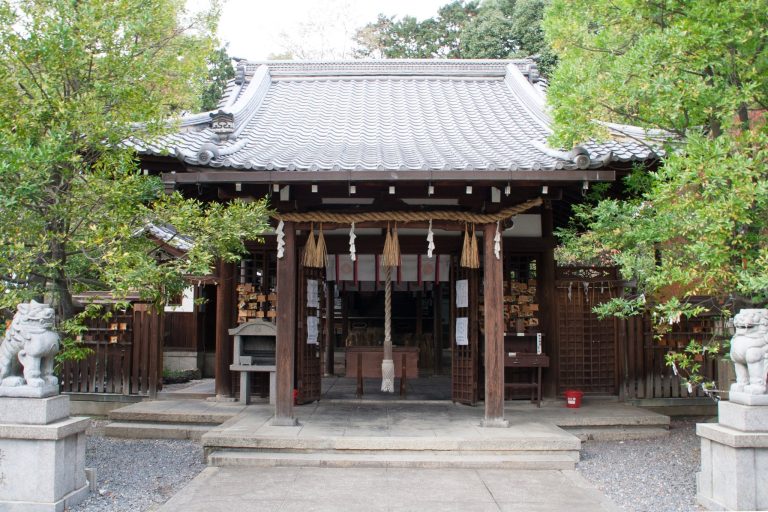
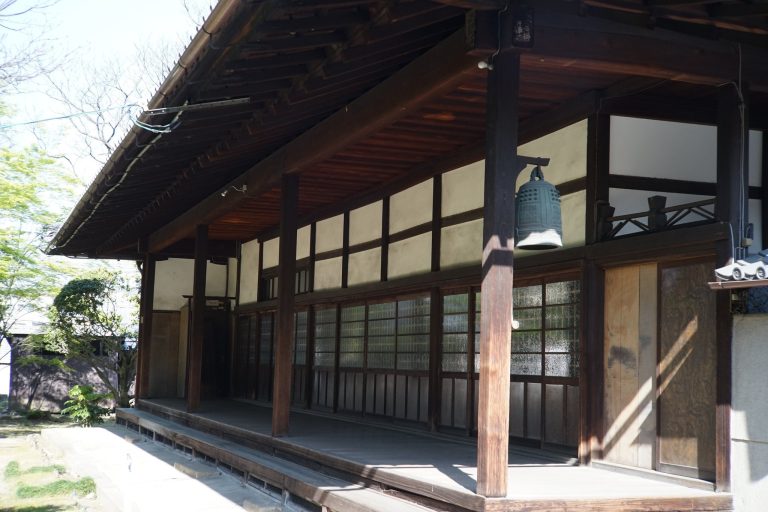
The main hall stands on the site formerly occupied by the Okunoin pilgrimage hall. A main hall was built there in 1580, and the present building was rebuilt in 1712. The hall forms the principal architectural setting for worship of the concealed Kannon image within the wider Sennyūji precinct area.
The temple’s location also preserves its relationship with the surrounding religious and funerary landscape. Sennyūji lies nearby, while the mausoleum of Emperor Go-Horikawa is immediately to the southeast. These neighboring features belong to the setting in which Imakumano Kannon-ji developed as a temple connected with imperial devotion, the Kumano tradition, and aristocratic memorial practice.