Hradec nad Moravicí Castle: A Historic Castle Complex in the Czech Republic
Visitor Information
Google Rating: 4.7
Popularity: Medium
Official Website: www.zamek-hradec.cz
Country: Czechia
Civilization: Early Modern, Medieval European, Modern
Site type: Domestic
Remains: Palace
History
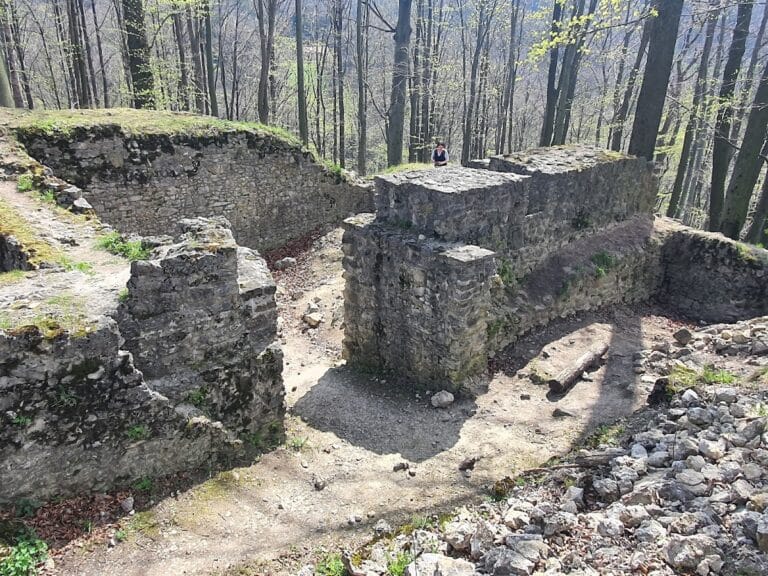
Hradec nad Moravicí Castle is located in the municipality of Hradec nad Moravicí in the modern-day Czech Republic. The site has long-standing historical roots, originally occupied by Slavic people from at least the 8th century. By the 10th century, this settlement had developed into a fortified stronghold known locally as a hradiště, an early medieval Slavic fortification.
The castle first appears in written records in the year 1060 when Polish prince Bolesław II the Bold led an unsuccessful siege against it. In the mid-13th century, after a fire destroyed the original, a large Gothic castle was built under the reign of King Přemysl Otakar II. This new fortress served as the residence for the Opava branch of the Přemyslid dynasty, founded by Mikuláš I. Opavský, the king’s illegitimate son. Over time, the castle’s political significance lessened, particularly after the 15th century, due to ongoing regional conflicts, wars involving the Hussites, and the rise of the nearby town of Opava.
Throughout the following centuries, the castle changed hands among various noble families. After another destructive fire in 1531, the Cetrys family of Kynšperk reconstructed the castle in the Renaissance style. Later, in 1581, Kašpar Pruskovský acquired the estate and initiated an extensive Renaissance renovation that transformed the fortress into a more comfortable and representative residence, a process lasting until about 1620. However, the residence suffered damage during the Thirty Years’ War, including occupation by Danish soldiers and other military conflicts.
Following the war, the Pruskovský family continued to develop the castle, completing a four-winged structure around a large courtyard by the end of the 17th century. In 1733, ownership passed to Wolf Konrád Neffzern, who enriched the estate by creating a Calvary pilgrimage path in 1764, supporting local religious activities and maintaining cultural traditions.
The castle entered a new era under the Lichnovský princely family, who bought it in 1778. After a major fire in 1796, the Lichnovskýs rebuilt the castle in the Empire architectural style, led by builder Johann Mihatsch. Their efforts included removing remaining medieval fortifications. During the 19th century, they expanded the complex by adding new structures such as the Neo-Gothic Red Castle and the White Tower. The castle became a cultural hub, known to have hosted prominent figures like Beethoven and Franz Liszt.
Following World War II, the castle was confiscated by the Czechoslovak state in 1945 and opened to the public four years later. A major restoration project took place between 1979 and 1996 to preserve the site’s historic fabric. Recognized for its cultural significance, Hradec nad Moravicí Castle was declared a national cultural monument in 2001. More recently, the Red Castle underwent comprehensive restoration between 2017 and 2019, ensuring the complex remains a well-preserved historical landmark managed by the National Heritage Institute.
Remains
The Hradec nad Moravicí Castle complex occupies a prominent hill overlooking the Moravice River and consists of two primary parts: the older White Castle and the 19th-century Neo-Gothic Red Castle. The original 13th-century Gothic fortress was built with a quadrangular layout, featuring thick defensive walls and two towers, embodying medieval fortification principles. After the fire of 1531, the Cetrys family restored the castle, though much of its fortress character remained alongside some gradual dilapidation.
Between 1585 and 1620, the Pruskovský family undertook a Renaissance-style reconstruction. The main building was formed into an orderly arrangement initially of three wings, later expanded to four wings around a spacious courtyard after the mid-17th century. This Renaissance phase transformed the site from a primarily defensive structure into a more comfortable noble residence.
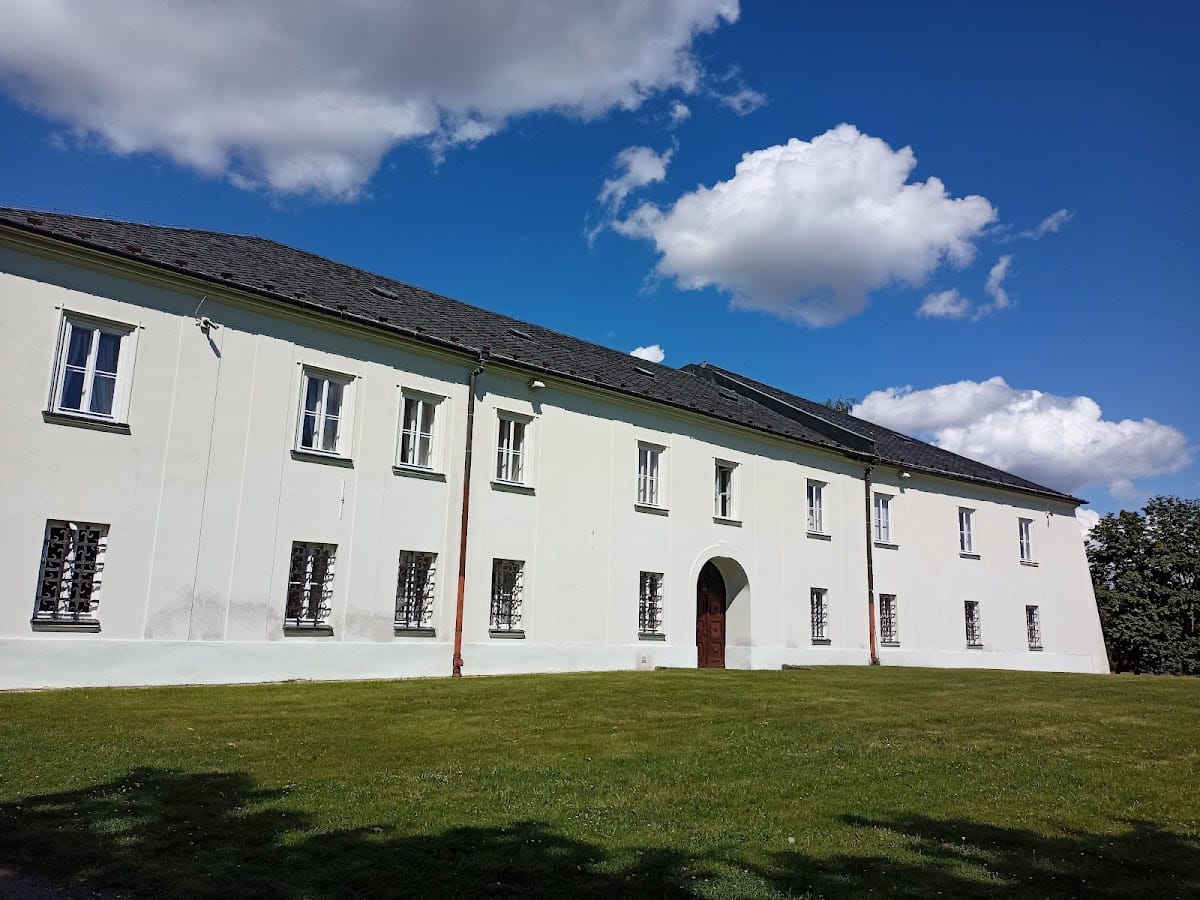
Following the large fire in 1796, the builder Johann Mihatsch led a significant early Classical-style rebuild. This included the deliberate removal of remaining medieval bastions using gunpowder, dramatically changing the silhouette of the White Castle. The building acquired a refined early 19th-century appearance, including an Ionic portico added in 1845 and an arcade wall dividing the courtyard constructed in 1861.
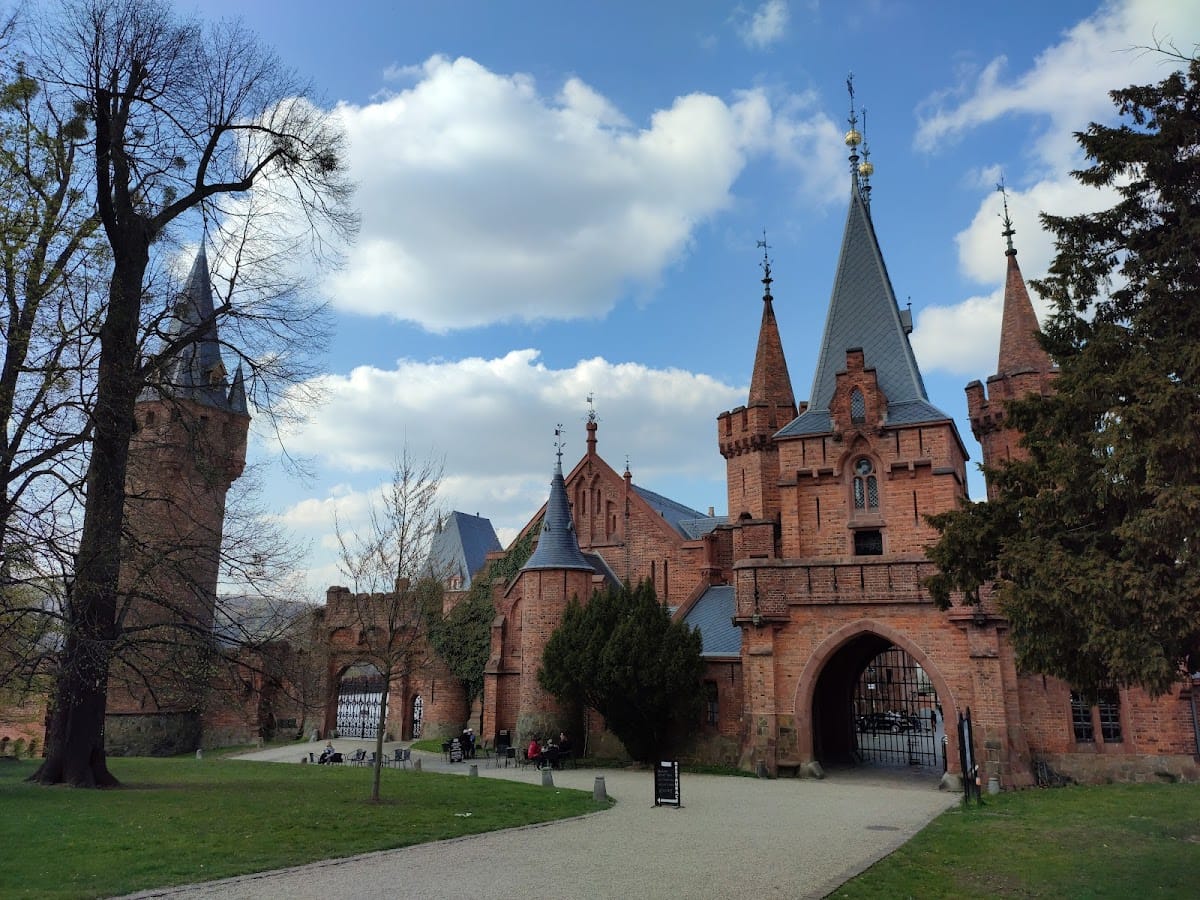
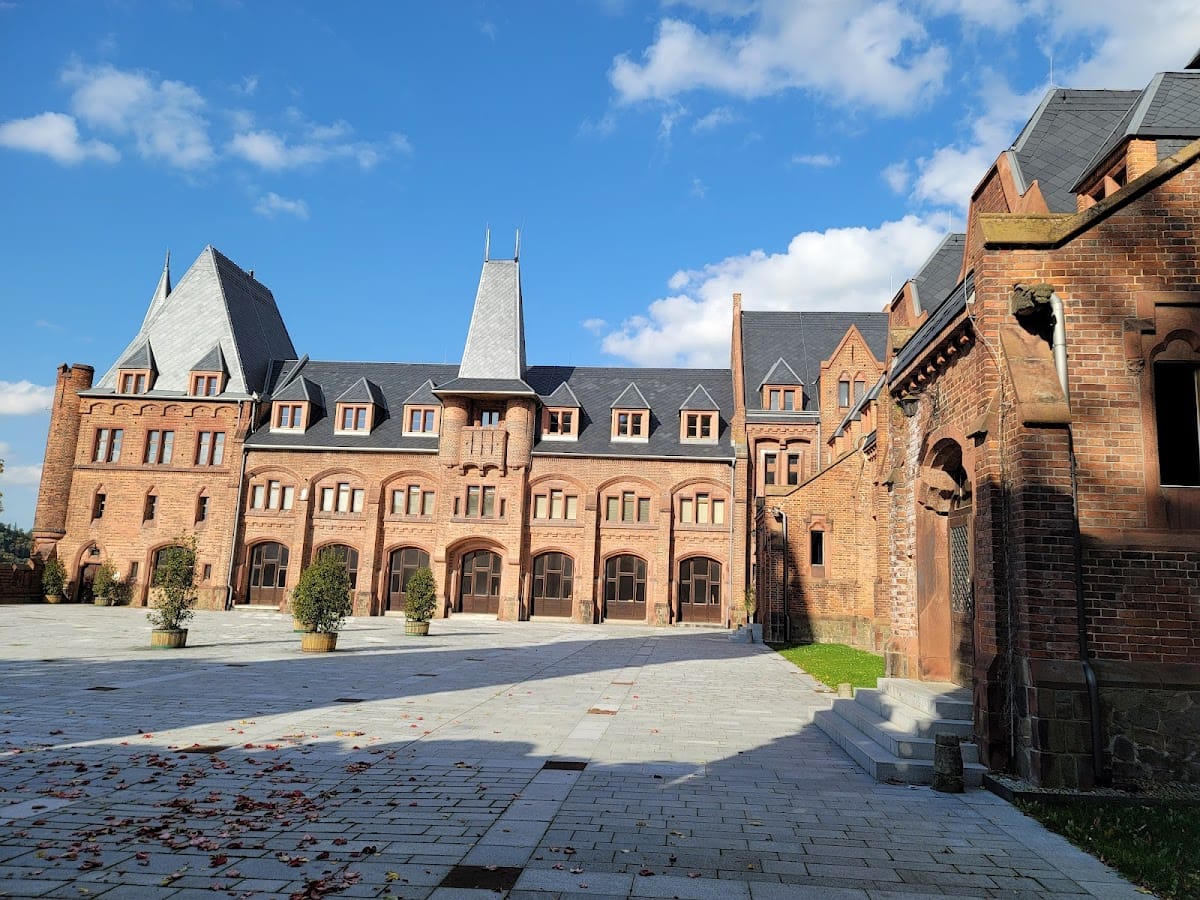
The Red Castle, erected between 1874 and 1881 by architect Ernst Händel, nearly doubled the size of the entire complex. This substantial addition employed the Neo-Gothic style typical of the period, characterized by exposed brickwork and an L-shaped floor plan. Features of the Red Castle include stables, carriage houses, and a monumental three-tower entrance gate, which emphasize its 19th-century residential and representational functions.
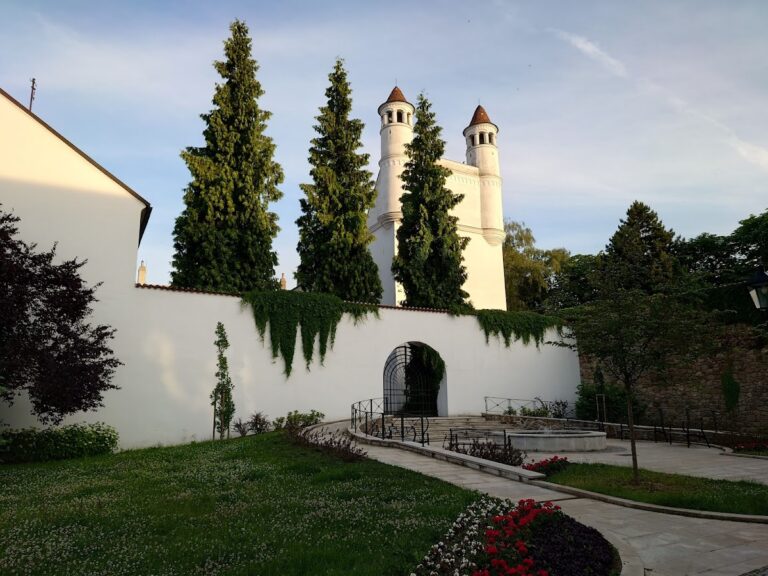
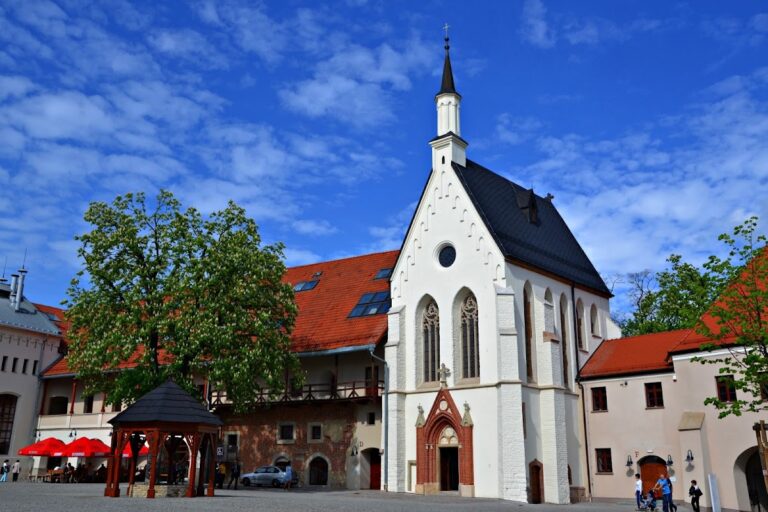
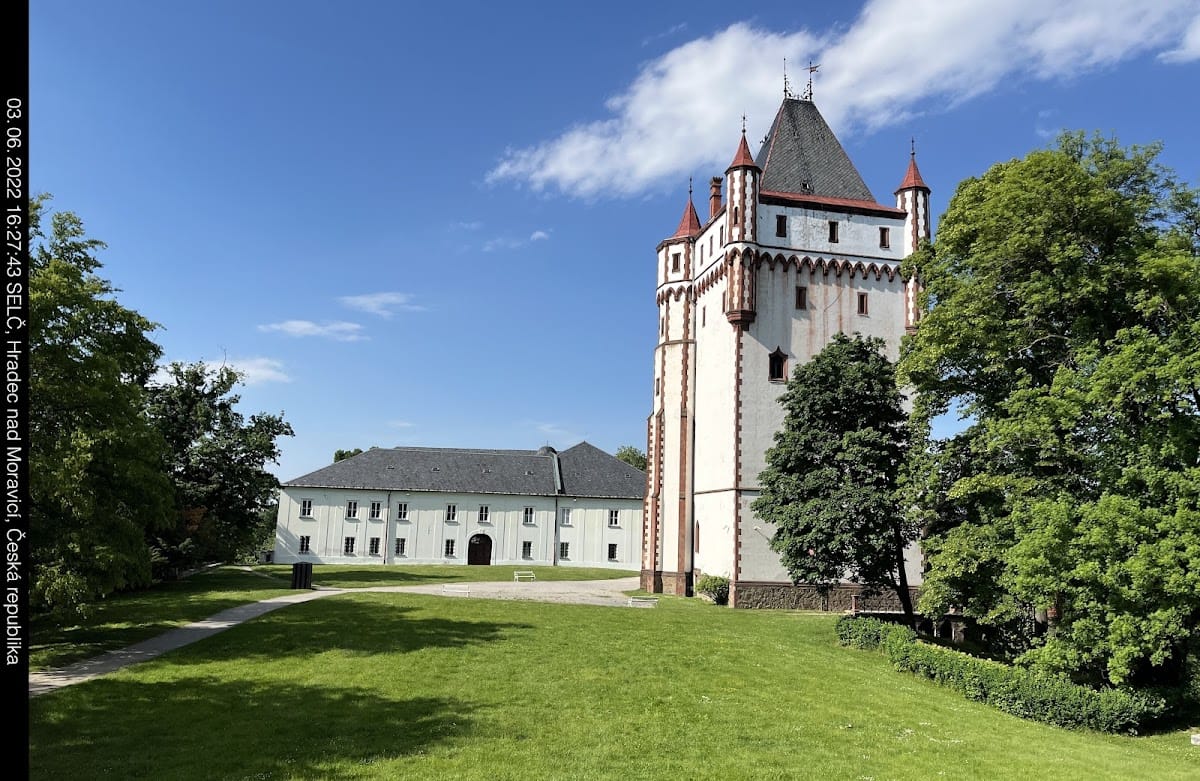
South of the White Castle stands the White Tower, completed in 1887. This prismatic tower is topped with a polygonal turret and served briefly as a water reservoir in the early 20th century. The castle grounds also include a chapel and a rusticated masonry curtain wall with a grand gate near the Red Castle, enhancing the enclosed character of the estate.
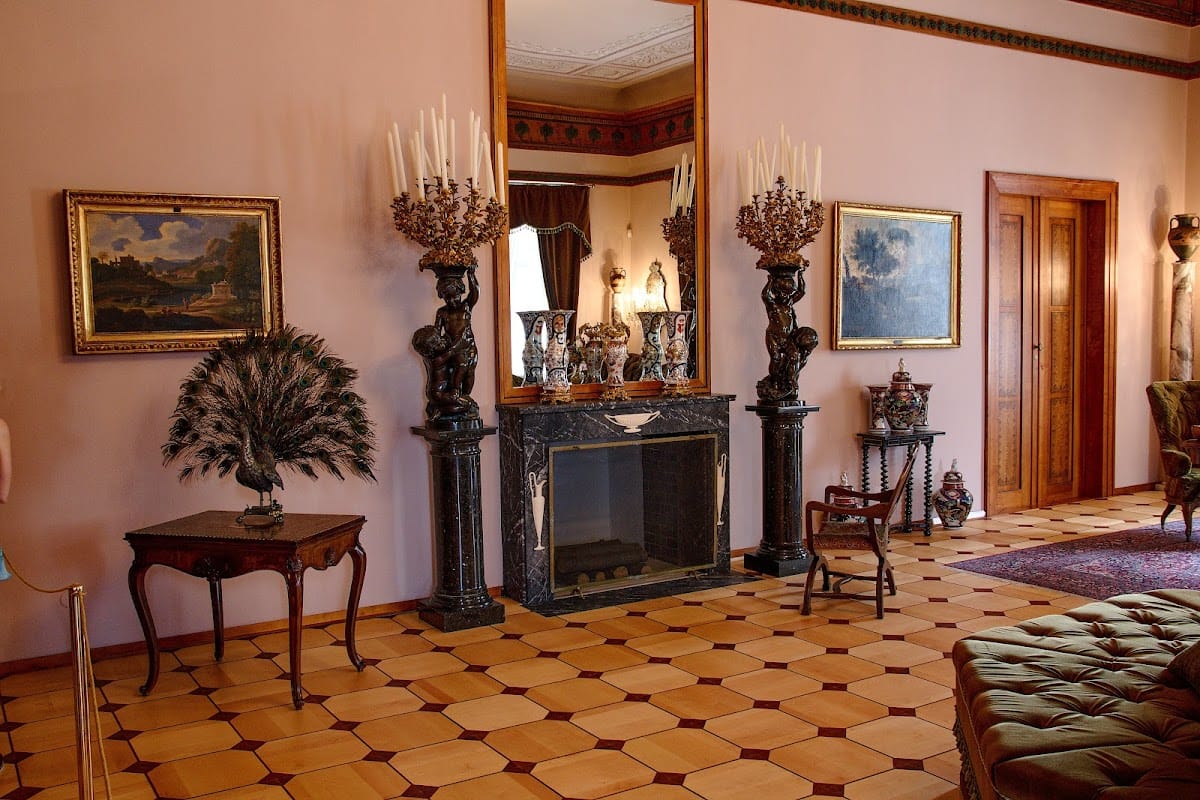
Surrounding the castle is an extensive English-style landscaped park inspired by the design principles seen in Bad Muskau, one of Europe’s famous landscape gardens. The castle itself holds rich art collections and a sizable library, preserving over 15,000 volumes. Overall, Hradec nad Moravicí Castle represents the largest historic castle complex in the Moravia-Silesia region, reflecting continuous adaptation from a medieval fortress into a refined cultural and musical center.
Nearby sites