Hostel de Verdelin: A Baroque Palace in Valletta, Malta
Site at a Glance
- Rating
- 4.7
- Popularity
- Very Low
- Country
- Malta
- Primary era
- Early Modern
- Eras represented
- Early Modern, Modern
- Civilizations
- British, Crusader, Knights Hospitaller
- Site type
- Domestic
- Remains
- Elite Residence
On this page7 sections
History
Hostel de Verdelin is a seventeenth-century palace in Valletta, Malta, built under the Order of St John for the French knight Jean-Jacques de Verdelin. Construction is generally placed in the 1650s, although dates in the 1660s, including 1662 and 1666, have also been proposed. The palace is attributed to the Italian architect Francesco Buonamici, who was associated with the early development of Baroque architecture in Malta.
Jean-Jacques de Verdelin and the Order of St John
Jean-Jacques de Verdelin was the nephew of Hugues Loubenx de Verdalle, a prominent grand master of the Order of St John. The Order was a Catholic military-religious institution that governed Malta from 1530 to 1798. Verdelin held several senior offices within it, including Commander of the Artillery, Auditor of Accounts, and Grand Commander. The latter was a high-ranking administrative office, while the Auditor of Accounts oversaw financial matters. By 1662, the property had already passed to Paul de Verdelin.
After Jean-Jacques de Verdelin died in 1678, the palace passed to his brother Jean-François de Verdelin, who was also a knight of the Order. It later became property of the Order itself and was used as a hostel. The building forms the largest of three adjacent properties associated with the Verdelin family.
French occupation and British-period uses
During the French occupation of Malta in 1798, the palace was transferred to the government. Two coats of arms on the facade were defaced during this period. Under British rule, the part of the building visible from St George Square housed Vicary’s Hotel, described as one of Malta’s first hotels. The palace later accommodated the Civil Service Sports Club and, for several years, the circle known as La Giovane Malta.
Another section was leased to the government in 1962. It had previously housed the Banco di Roma and the Malta Government Savings Bank before being converted into a police station. The building currently includes a police station and a restaurant. Part of it housed Michael’s restaurant for about two years around 2014 and later accommodated a restaurant called Gracy’s.
Ownership, protection, and restoration
Hostel de Verdelin is now divided among 12 private owners, including Marco Gaffarena, the heirs of Antonio Zammit, and B. Tagliaferro and Sons Ltd. The owners began demanding that the property be vacated in October 2014. In 2015, during the Gaffarena scandal, journalist Caroline Muscat revealed that the government had given Marco Gaffarena 1.65 million euros in land and cash for his share of another Valletta palace. The opposition alleged that the government also intended to expropriate Hostel de Verdelin, a claim denied by Home Affairs Minister Carmelo Abela. It later emerged that the Land Department had sent architects to prepare a valuation report on the palace between February and April 2015.
The facade was included in Malta’s Antiquities List of 1925, and the palace is designated a Grade 1 national monument by the Malta Environment and Planning Authority. Restoration took place from September to December 2017. The work repaired damaged limestone blocks, replaced some blocks at the upper level, renewed windows and elements of the first-floor balconies, and cleaned the entire facade.
Remains
Facade
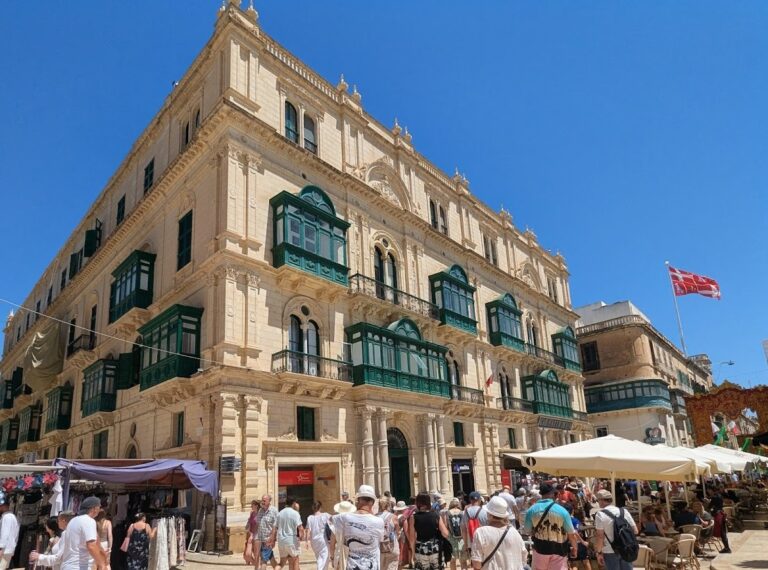
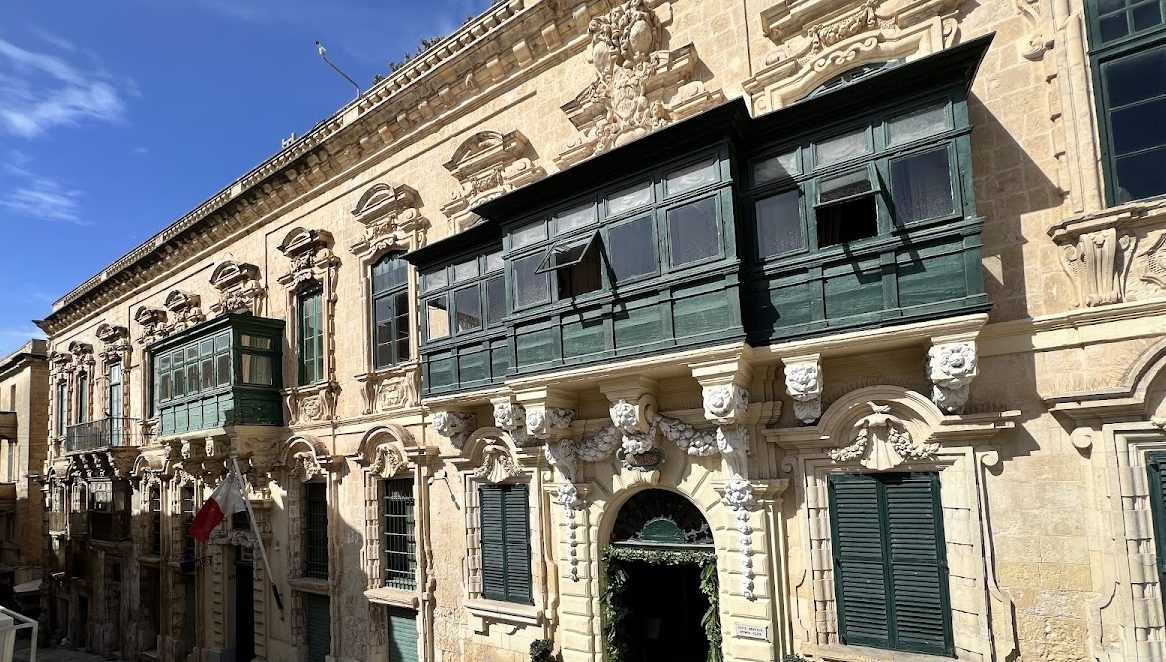
Hostel de Verdelin is a two-storey limestone palace whose ornate facade is an early example of Baroque architecture in Malta. Its design shows strong Siculo-Spanish Baroque influence, a regional form combining Sicilian and Spanish approaches to ornament and facade design. This influence is unusual in Malta, where Italian and French Baroque styles are more common. Decorated windows provide the central visual feature of the facade, which has been described as one of the finest in Valletta. The restoration repaired the limestone surface and renewed parts of the upper level.
Balconies, interior, and present fabric
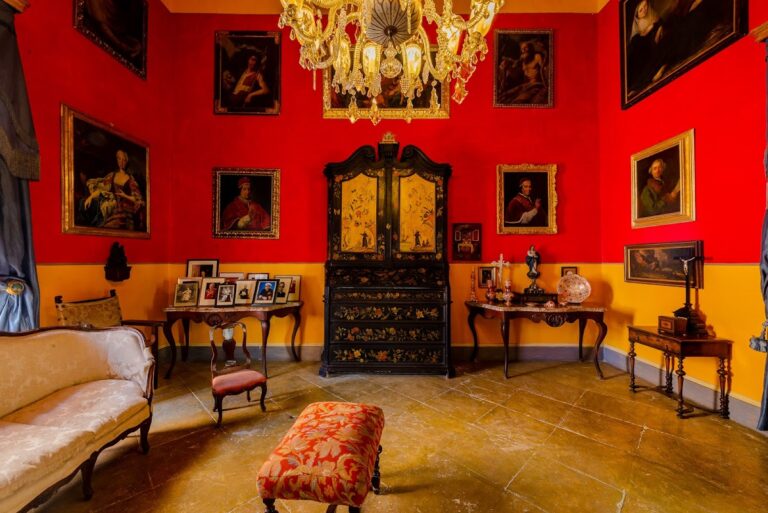
During the nineteenth-century British period, enclosed timber balconies replaced earlier stone balconies on the building. Some balcony elements on the first floor were renewed during the 2017 restoration. Inside the palace, a painted artistic interpretation of Jean-Jacques de Verdelin remains associated with the building.
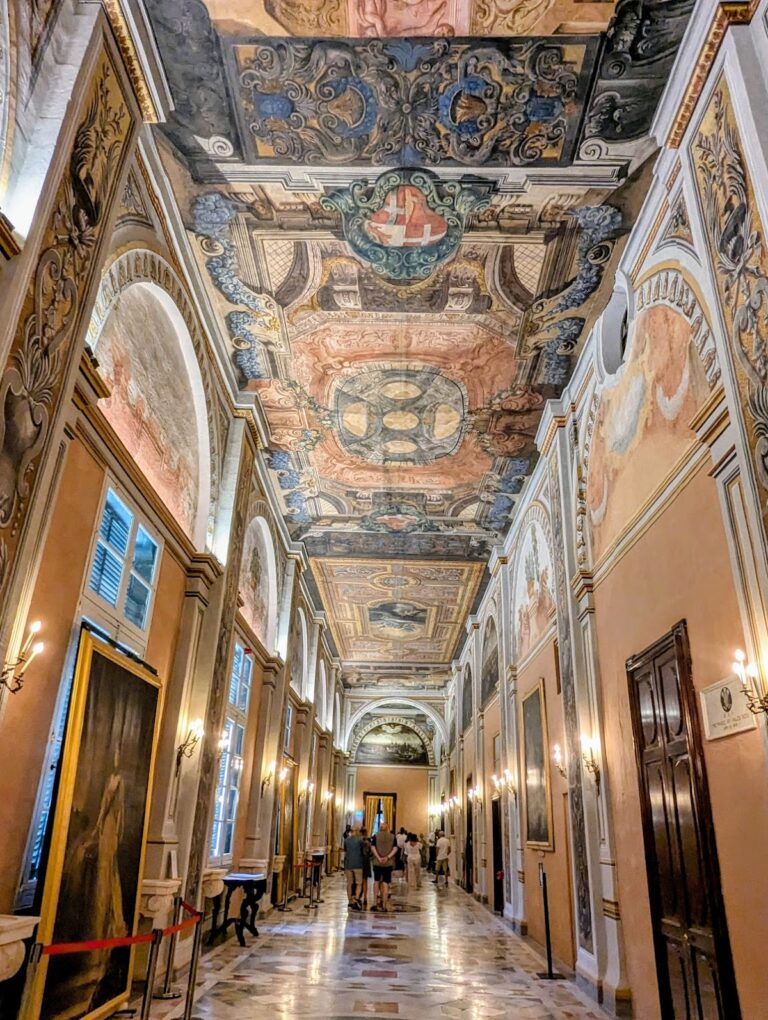
The palace’s present fabric reflects its successive uses as an aristocratic residence, an Order of St John hostel, a hotel, government premises, a club, a bank, a police station, and restaurant space. These functions occupy a building whose principal architectural identity remains concentrated in its limestone Baroque facade.
Nearby sites