Casa Rocca Piccola: A Sixteenth-Century Palace and Museum in Valletta


Site at a Glance
- Rating
- 4.6
- Popularity
- Medium
- Country
- Malta
- Primary era
- Early Modern
- External website
- Open
- Eras represented
- Early Modern, Modern
- Civilizations
- Knights Hospitaller
- Site type
- Domestic
- Remains
- Elite Residence
On this page11 sections
History
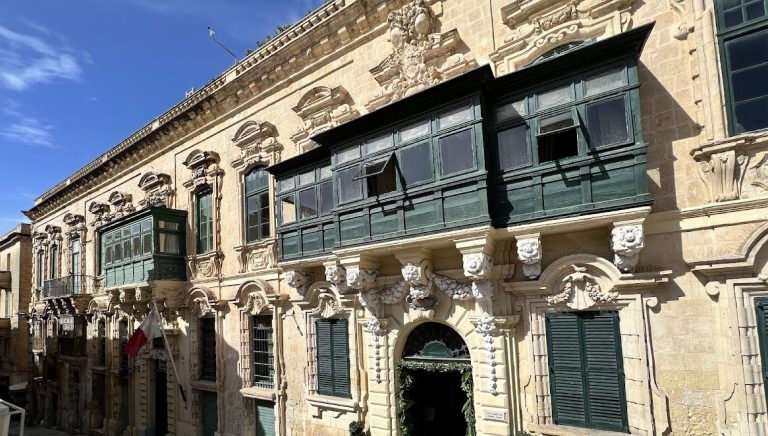
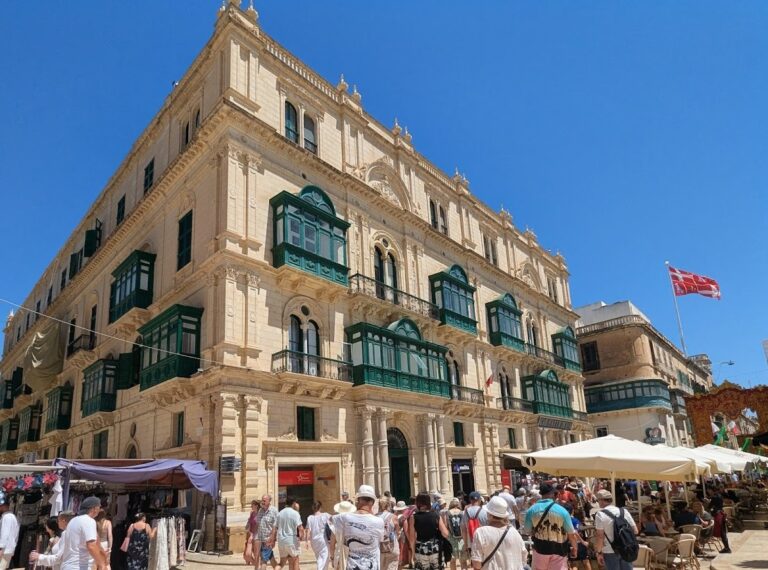
Casa Rocca Piccola is a sixteenth-century palace and museum in Valletta, Malta, built in 1580 under the Knights Hospitaller, the Catholic military-religious order that ruled Malta and founded Valletta after the 1565 siege. Its principal design is Palladian, a classical style based on balanced proportions and forms inspired by ancient Roman architecture. The palace remains associated with the long residential history of Valletta’s Maltese nobility and with the de Piro family.
Foundation under the Knights Hospitaller
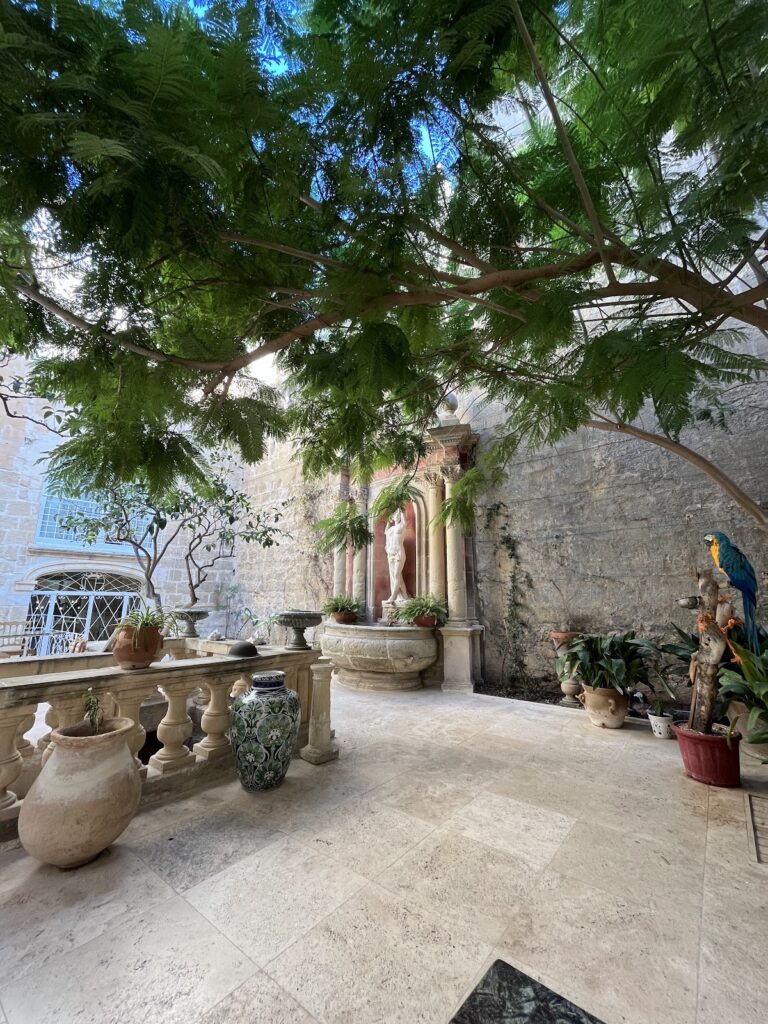
The palace was one of two houses built in Valletta by Admiral Don Pietro la Rocca during the Hospitallers’ development of the city after they had repelled the Ottoman invasion of 1565. Contemporary maps called it la casa con giardino, meaning “the house with the garden.” This description drew attention to a feature that was unusual in Valletta, where gardens were not normally permitted with houses.
Changes and continued residence
In the late eighteenth century, alterations divided the building into two smaller houses. Further changes followed in 1918, while an additional air-raid shelter was created before the Second World War. Despite these modifications, the building continued its residential role, and it remains the home of the de Piro family. The Marquis de Piro occupies part of the palace, while other areas function as a museum.
Family records and wartime use
The de Piro family archives preserve material on family and state affairs from the late sixteenth century to the present. They include business and marriage contracts, bills, wills, court cases, and records concerning the trade in enslaved Muslims. The archives have supported research projects at the University of Malta and the University of Oxford.
During the Second World War, the palace cellars became air-raid shelters. The largest could hold about 150 people and was also used as a church on Sundays, with a temporary altar. This combination of aristocratic residence, family archive, museum, and wartime refuge gives Casa Rocca Piccola an unusually broad historical scope within Valletta.
Remains
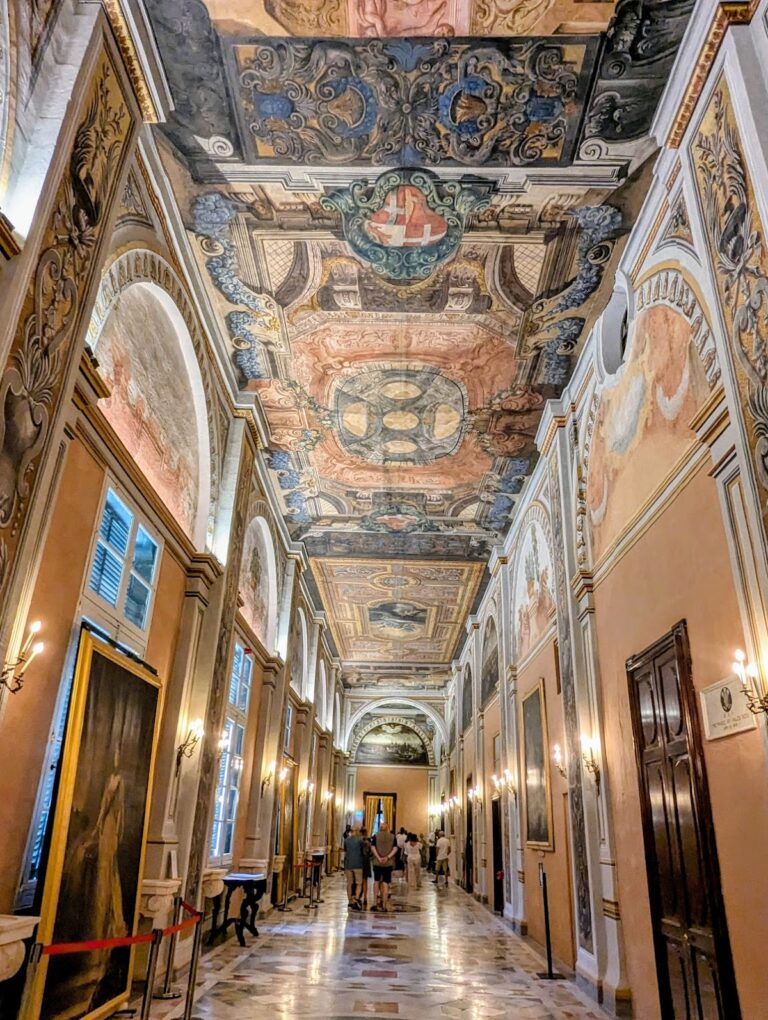
Casa Rocca Piccola retains a palace plan of more than fifty rooms, with long enfilades on the first floor. An enfilade is a sequence of rooms whose doorways align along a continuous visual axis. The ground floor originally contained kitchens and stables, while later alterations changed parts of the building. Part of the garden was built over in the early twentieth century to extend the house, and this addition was executed in the Art Deco style, a design movement known for geometric forms, stylized decoration, and modern materials and techniques.
Principal rooms and collections
The interiors include two libraries, two dining rooms, numerous drawing rooms, and a chapel. Furniture, silver, paintings, sacred objects, and clothing from Malta and Europe preserve aspects of domestic and noble life across approximately four centuries. The palace also contains Malta’s largest private collection of antique costumes, with about fifteen outfits associated with balls, weddings, and visits to rulers’ courts. Spectacles, pipes, snuffboxes, walking sticks, and related accessories accompany the clothing.
Casa Rocca Piccola also houses the largest private collection of Maltese lace. Its contents reflect lace’s use on both religious and secular occasions, linking household possessions with ceremonial and devotional life.
Chapel and Great Hall
Palladian chapel
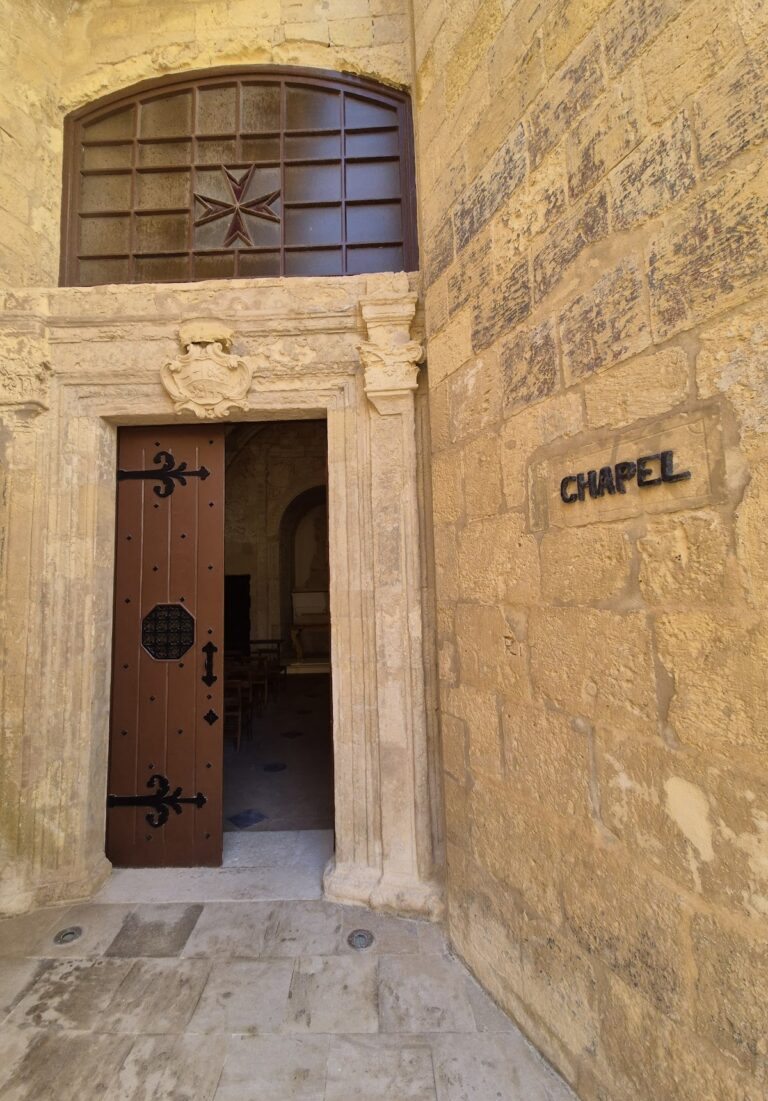
The palace chapel follows Palladian principles, while its wooden walls were treated to imitate marble. Its decorations include images of Our Lady of Sorrows and the Crucifixion of Christ. The chapel also contains a sacred statuette presented as a gift to Pope Leo VIII, a tenth-century pope of the Catholic Church.
Sala Grande
The Sala Grande, or Great Hall, has the highest ceiling in the building. A candle chandelier made in Bohemia in the late eighteenth century hangs within it, alongside an eighteenth-century writing desk that also serves as a folding chapel. The portable chapel could travel with its owner to a summer residence and could sometimes be moved into a bedroom after childbirth so that the mother could attend the infant’s baptism.
Archive room
The Archivium de Piro occupies an archive room within the palace. A statue of Saint Paul stands in the room. Saint Paul is a central figure of early Christianity and Malta’s patron saint, giving the space an additional religious association.
Cellars and air-raid shelters
Three rock-cut cellars lie beneath the building. They were first cut as quarries for building stone and later used as water wells. In 1940, tunnels were cut between the cellars beneath the palace, while other tunnels connected the building with neighboring structures. The largest cellar could be reached from the street and formed the family shelter used during the Second World War. The three cellars remain accessible as part of the palace experience, and the family shelter is Malta’s second excavated air-raid shelter.
Nearby sites