Horvat Raqit: An Archaeological Settlement Site in Israel
Site at a Glance
- Rating
- 4.5
- Popularity
- Medium
- Country
- Israel
- Primary era
- Medieval
- Eras represented
- Classical, Medieval
- Civilizations
- Byzantine, Roman
- Site type
- Settlement
- Remains
- Village
On this page6 sections
History
Horvat Raqit is an archaeological site on the slopes of Mount Shokef in Israel, within Carmel National Park, with settlement phases in the Roman–Byzantine and Early Arab periods. Its Arabic name is thought to mean “wild dove.”
A small Druze village also stood at the site. In 1840, during a peasant revolt against Ibrahim Pasha, an Egyptian military commander and administrator, the village was destroyed.
Remains
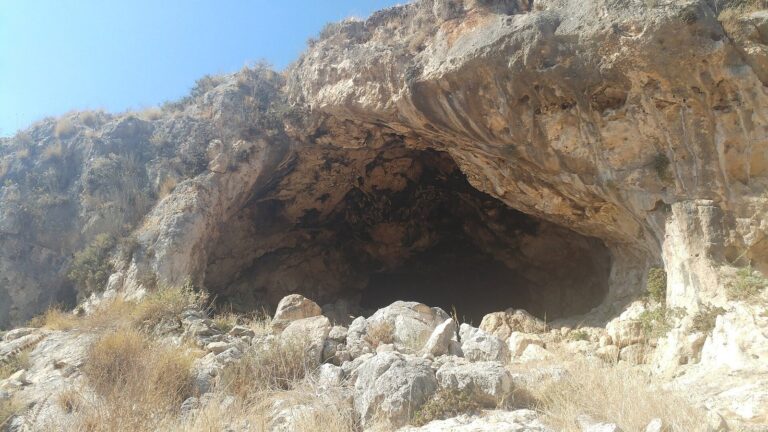
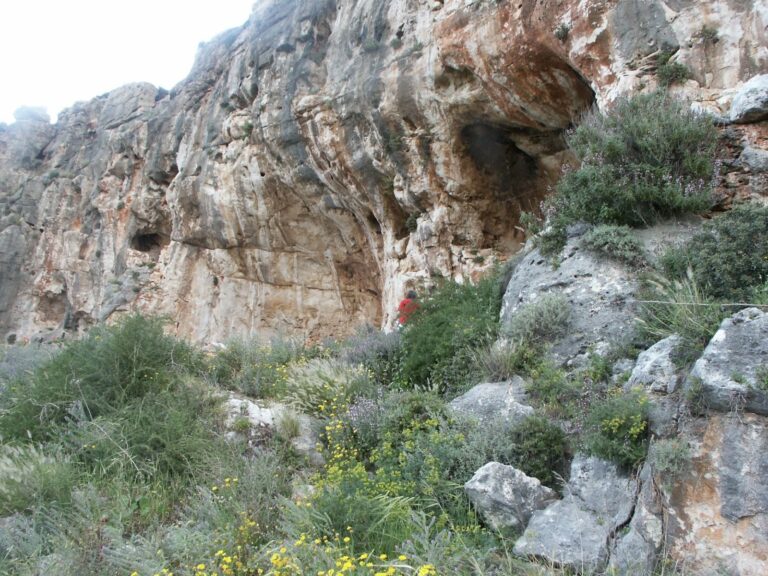
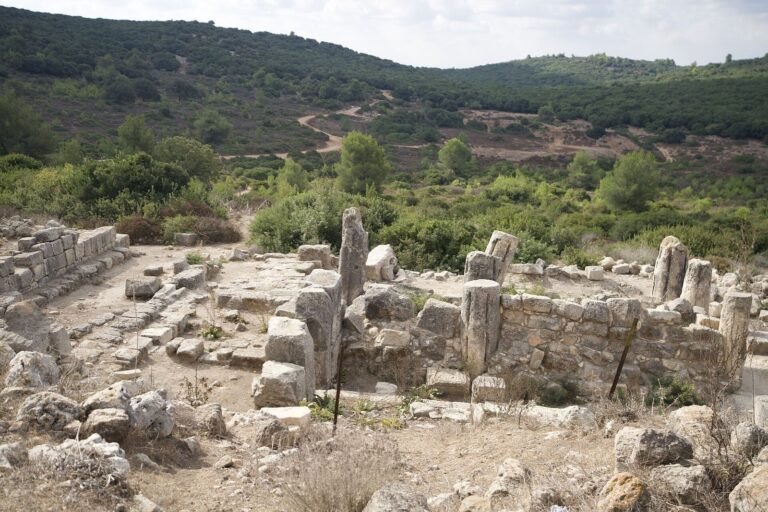
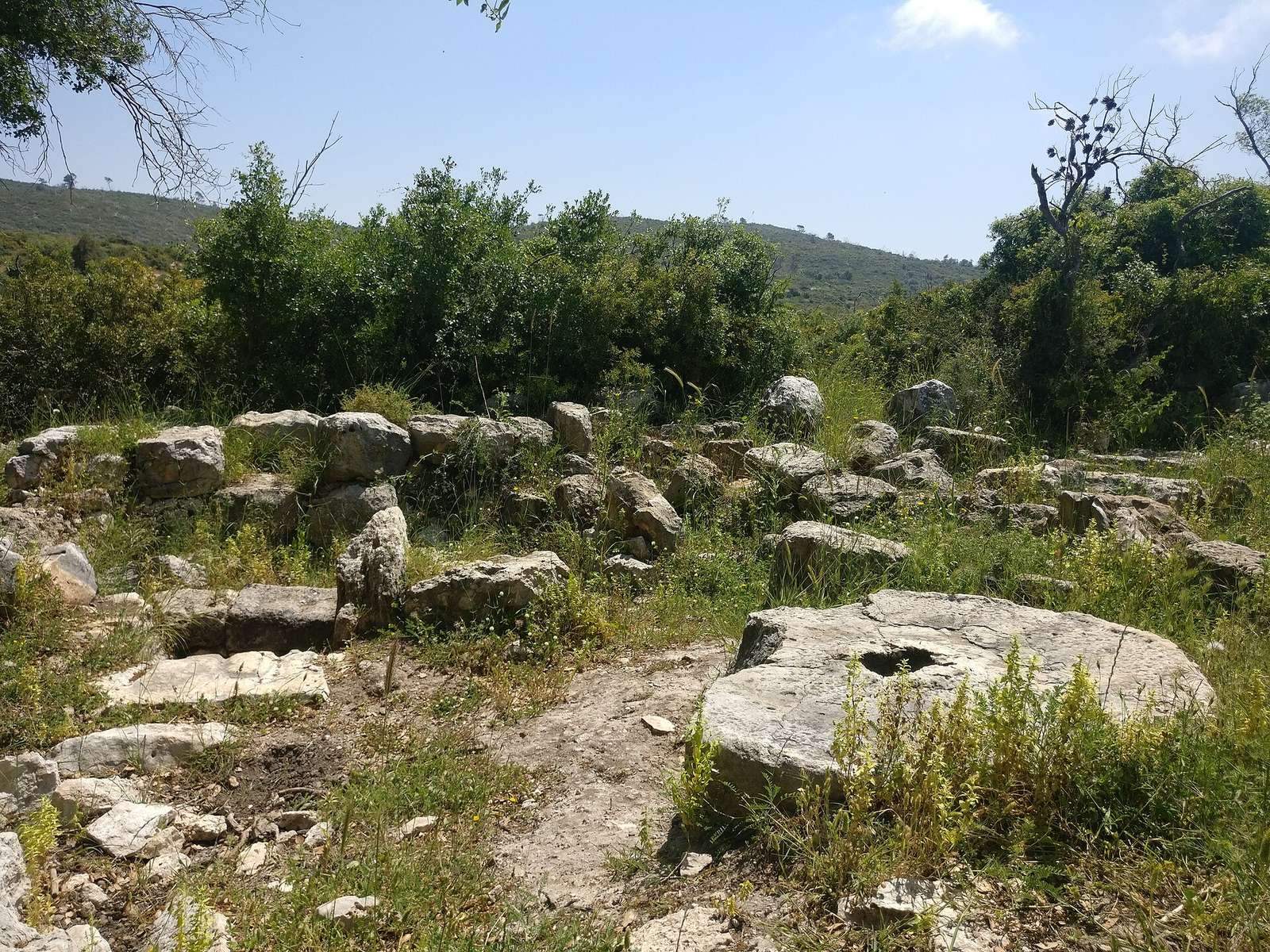
At about 370 m above sea level, the site includes building ruins, an earth-covered water-storage pool, agricultural presses, and a burial cave cut into rock. A broken stone trough lies beside the pool.
Agricultural installations
Olive press
One part of the olive press includes a circular stone measuring 1.95 m across and 65 cm high. Its square central opening held a long upright wooden post. An axle attached to the post passed through a second grinding stone, which an animal, usually a donkey, turned by walking in circles to crush the olives.
A separate stage used woven baskets beneath a heavy wooden beam. One end of the beam rested in a wall recess near the baskets; stones suspended by ropes from its free end increased the pressure gradually. Oil drained into a collection pit, possibly square. After several days, when the oil had separated and floated above the liquid residue, the two liquids were transferred into different vessels.
Winepress
The winepress has an asymmetrical treading floor and a circular collecting vat.
Rock-cut burial cave
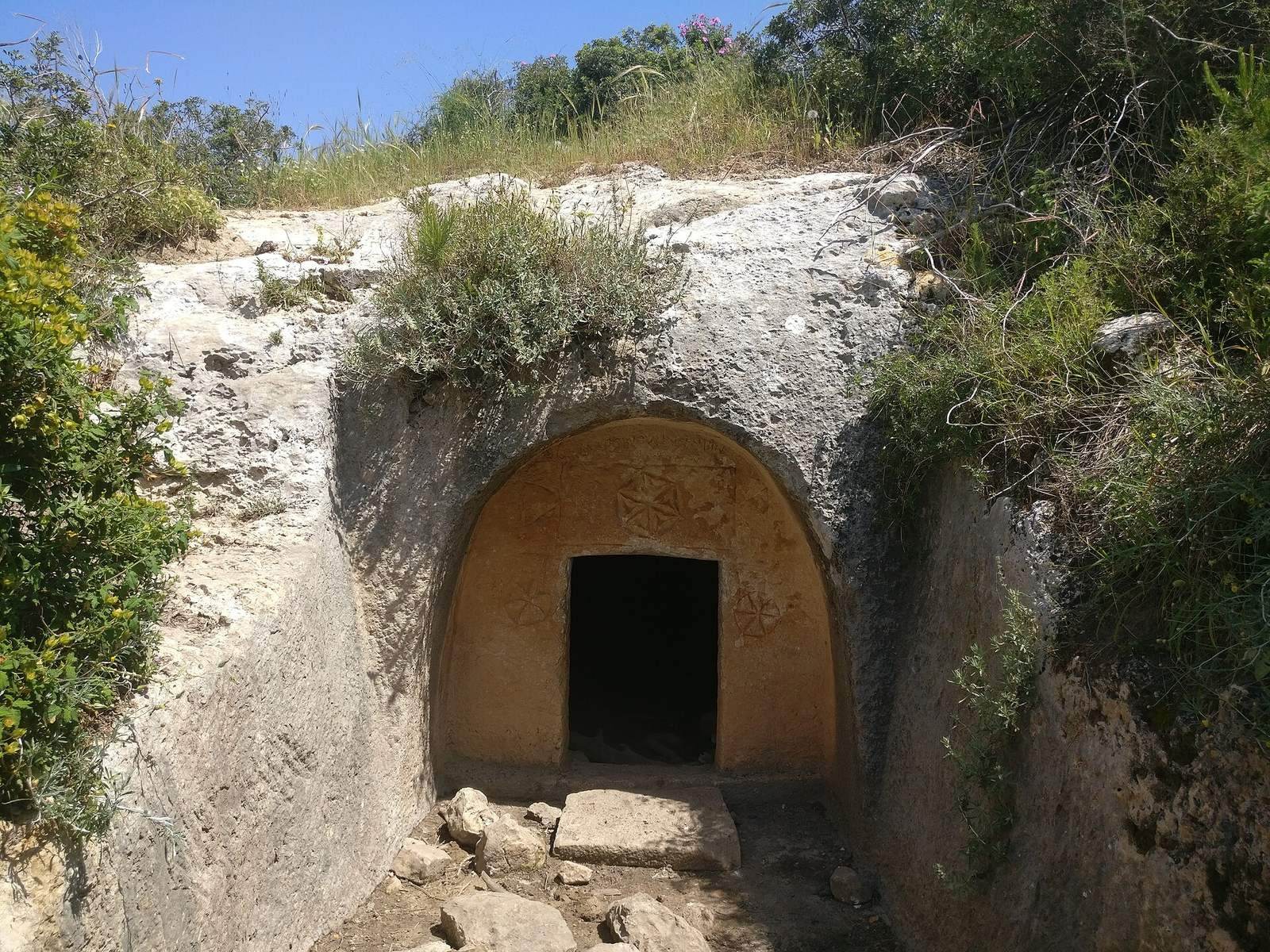
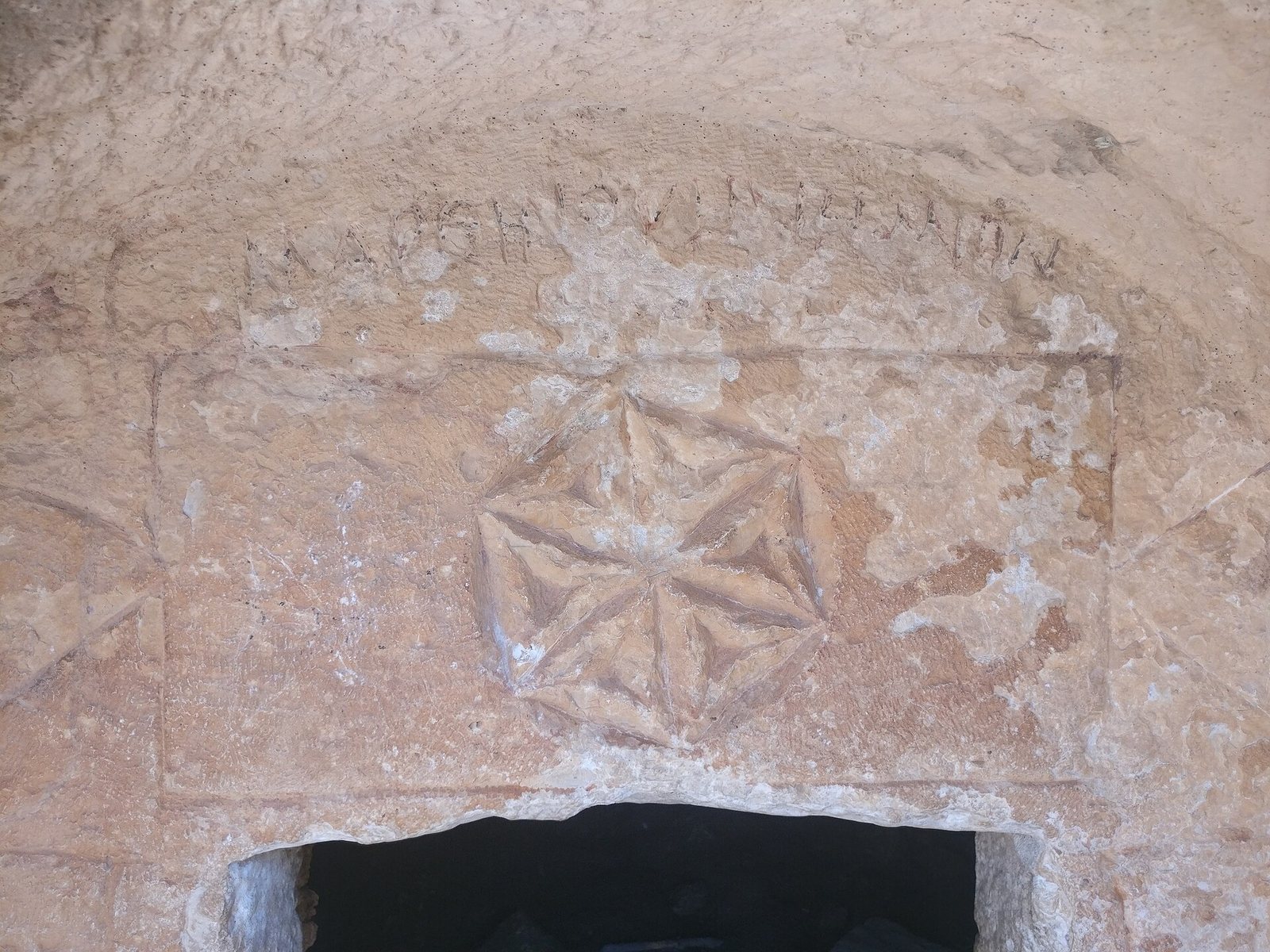
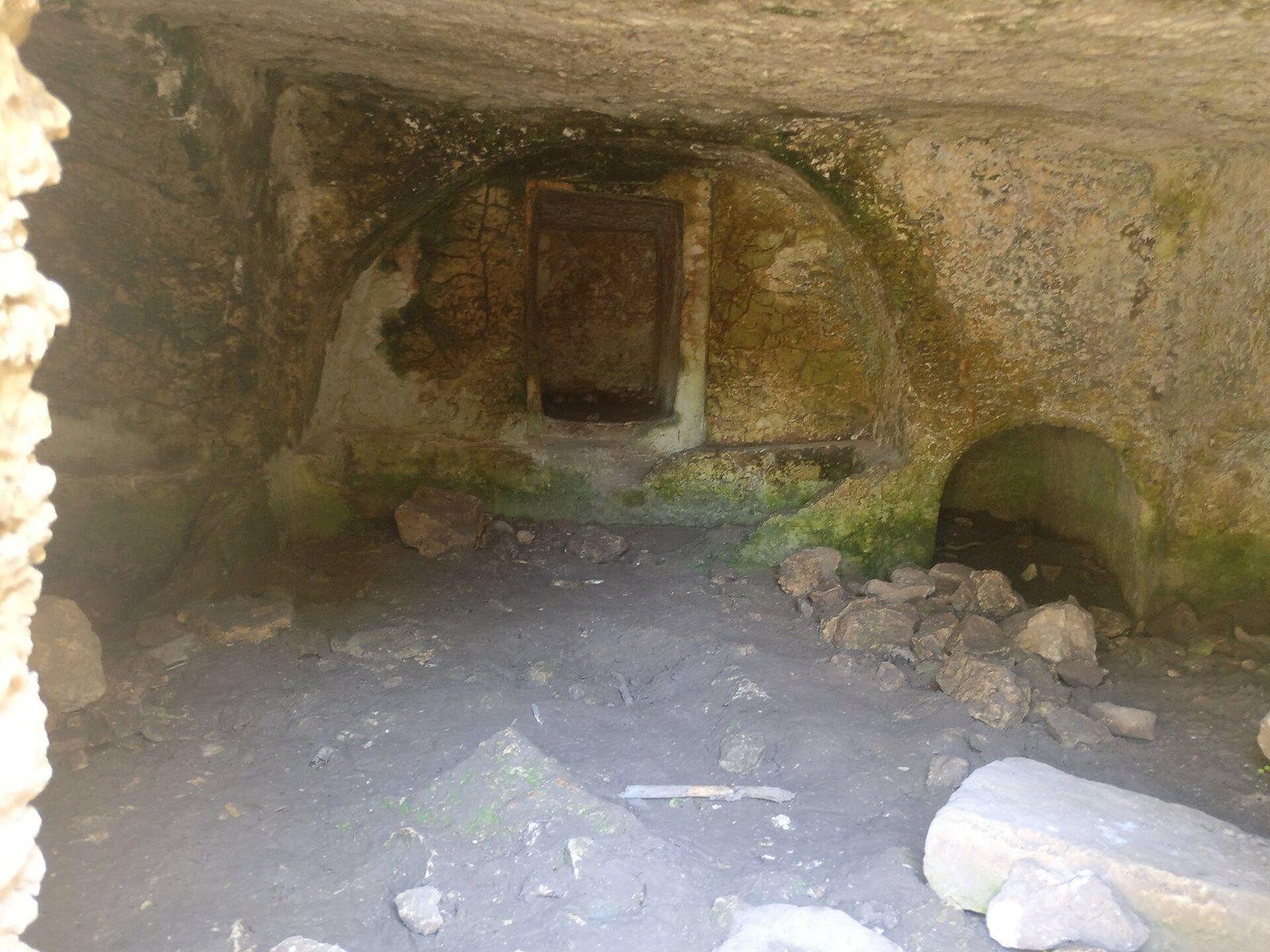
An 8.2 m passage cut into the rock leads to a square doorway set in an arched recess. Above the entrance, a carved frame shaped like a tabula ansata, a panel with projecting handle-like ends, contains a rosette; similar rosettes appear on either side. A Greek inscription transcribed in Latin letters as “MAREINOVIN IHMION” is carved above the frame.
The cave contains a small square chamber. Arched burial recesses in its left and rear walls held troughs that are now destroyed. Above the rear trough is a square niche with recesses for a door pivot and bolt. A low burial niche lies to the right of that trough, and three more are cut into the chamber’s right wall.