Nahal Oren: A Prehistoric Settlement on Mount Carmel
Site at a Glance
- Popularity
- Medium
- Country
- Israel
- Primary era
- Stone Age
- Eras represented
- Stone Age
- Civilizations
- Unclassified
- Site type
- Settlement
- Remains
- Village
On this page13 sections
History
Nahal Oren is a prehistoric settlement on the western slope of Mount Carmel in Israel, occupied intermittently from more than 20,000 to about 9,000 years before present. Its sequence extends from the late Upper Paleolithic through the Epipaleolithic and into the Neolithic, and is especially important for tracing the transition from hunting and gathering to agriculture in the Levant. The Atlitian belongs to the late Upper Paleolithic; the Kebaran and Natufian are Epipaleolithic cultures, with the Natufian representing a later phase. Pre-Pottery Neolithic A and B are successive early Neolithic periods that predate the widespread use of pottery.
Early prehistoric occupation
The earliest settlement is placed near the peak of the last glacial period, around 19,000 years before present. Sea levels were then especially low, leaving the Mediterranean coast farther away and the coastal plain wider than it is today. During the Natufian period, the sea remained below its present level but was rising. Plant and animal remains from a corresponding Natufian layer in a nearby cave indicate a landscape of woodland and open ground, broadly resembling the modern environment.
Natufian settlement
Nahal Oren became one of the largest and richest late Natufian sites in the Carmel region. It may have served as the region’s leading base camp in this later phase, following an earlier center at a nearby cave. Animal remains point to gazelles as important prey. Archaeologist Anthony Legge interpreted the high proportion of young gazelles as evidence of domestication, but this view is generally rejected in favor of selective hunting of young animals, a practice also known at other Natufian sites.
Neolithic transition
A village of the Pre-Pottery Neolithic A phase, dating to about 11,000 years before present, represents a later stage in the settlement’s development. The village was of medium size for its period and especially prominent in the Carmel region. Wheat grains have been recovered at Nahal Oren, but it is unclear whether they came from wild or cultivated plants, and grain was relatively uncommon among the food remains. The age of emmer grains has prompted suggestions that cultivation may have begun as early as about 16,000 years ago, but the grains alone do not demonstrate that people were cultivating them.
Gazelles remained a principal food source during the Neolithic occupation, and the abundance of immature gazelle bones has been taken to suggest possible domestication. Goat bones become more common through the Neolithic layers, perhaps reflecting early goat domestication and a gradual shift from gazelle hunting to herding. One proposed explanation is that goats could graze in places less suitable for gazelles.
Excavations
The site was first excavated in 1941. Moshe Stekelis carried out limited investigations during the 1940s, followed by a larger Hebrew University of Jerusalem expedition led by Stekelis and Tamar Noy from 1954 to 1960. Noy, Eric Higgs, and Anthony Legge led a further excavation from 1969 to 1971, involving the Hebrew University, the Israel Museum, and the University of Cambridge.
Remains
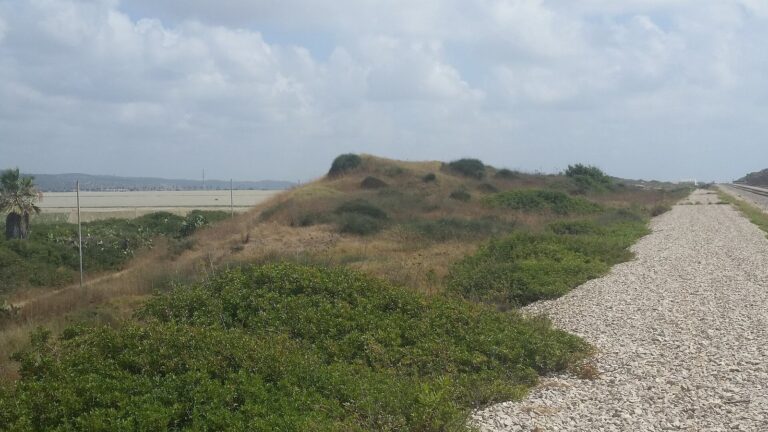
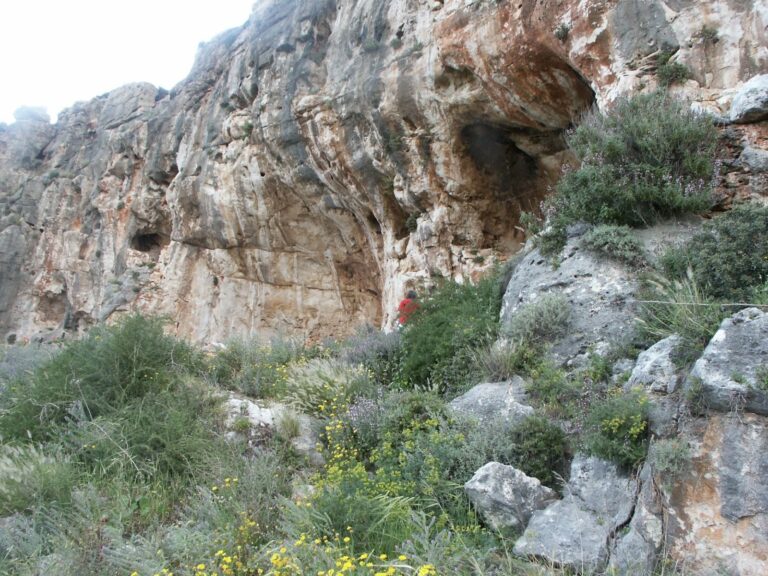
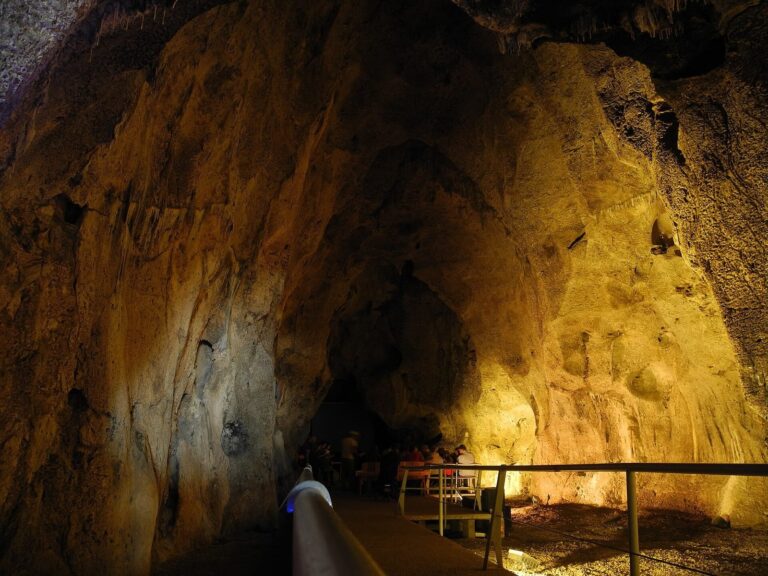
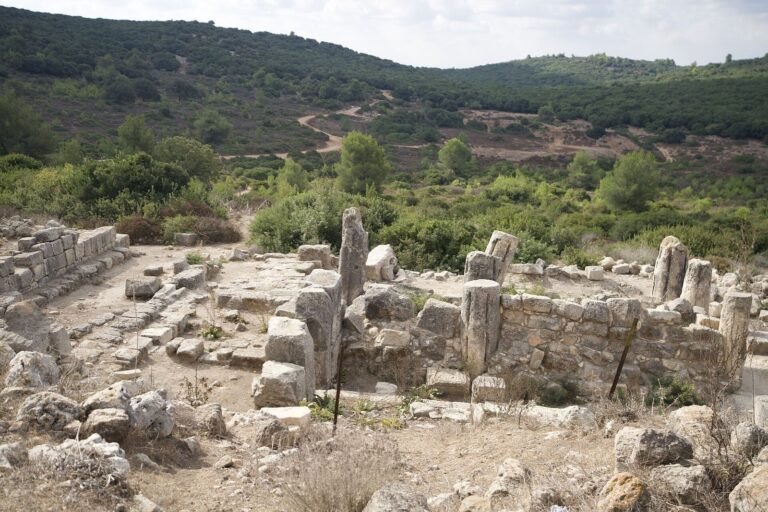
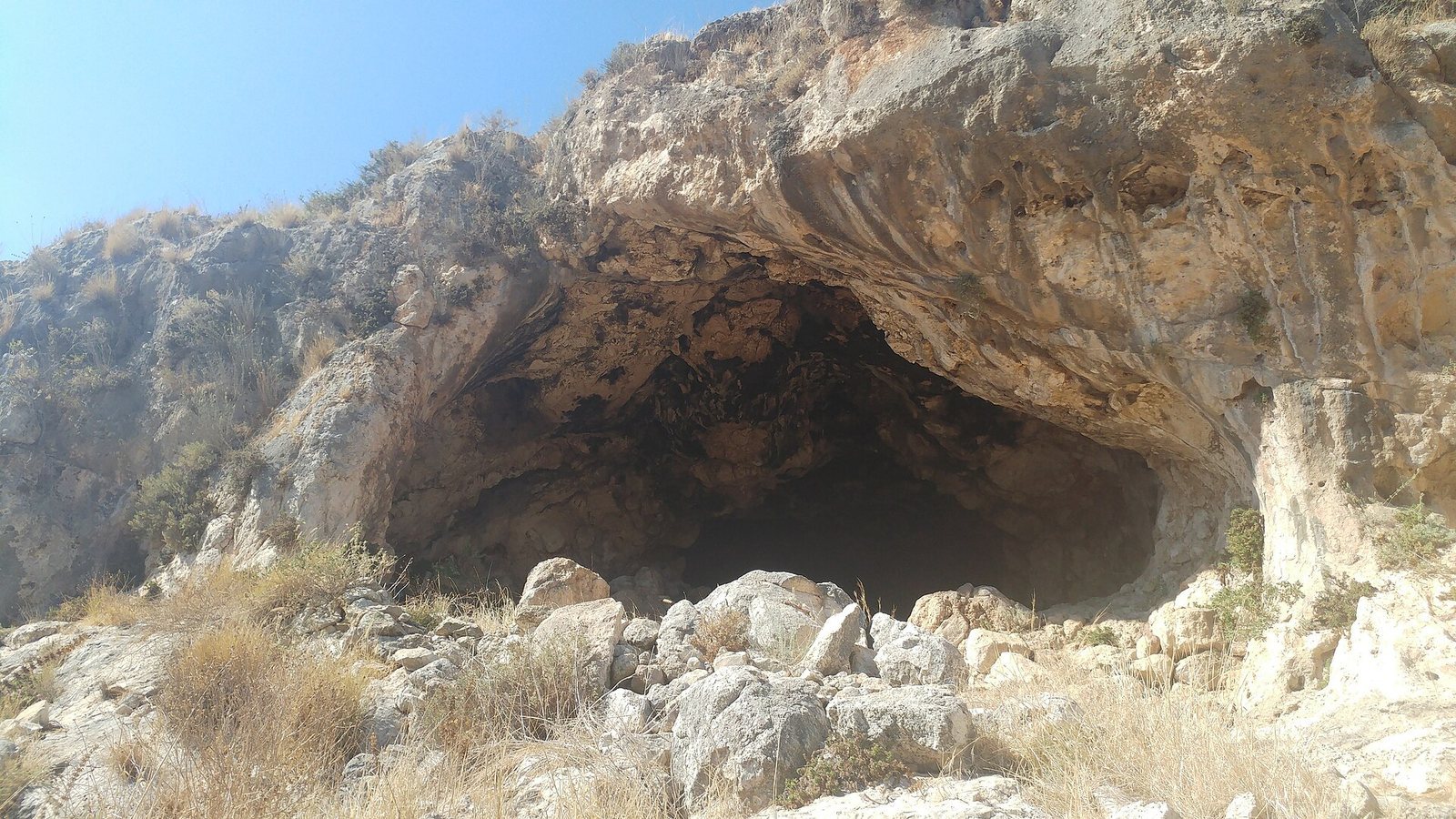
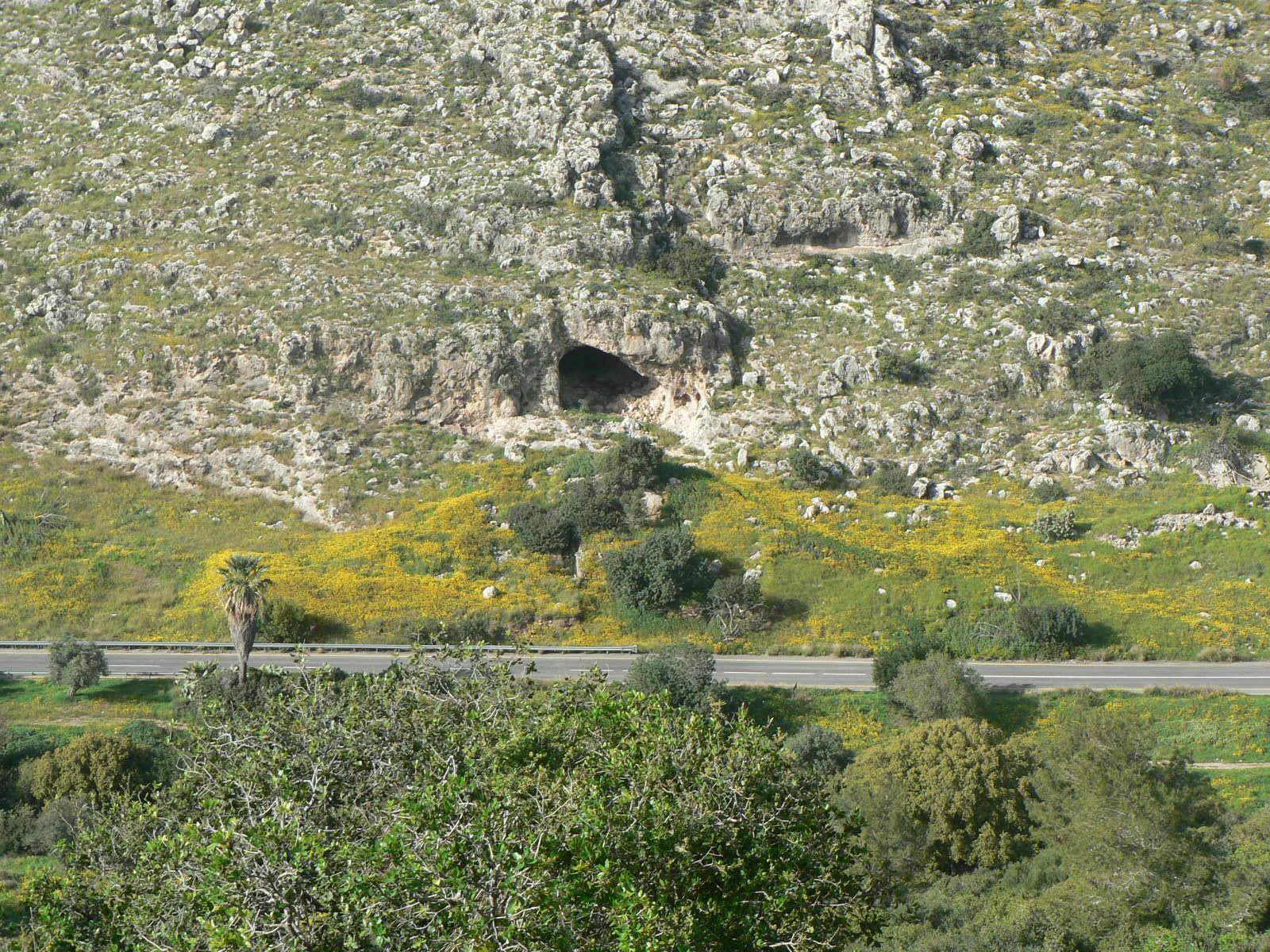
Nahal Oren occupies the northern bank and slope of the wadi where it opens onto the coastal plain. Oren Cave and a small terrace in front of it lie on the western slope of Mount Carmel, about 10 kilometres south of Haifa and approximately 46–51 metres above sea level. The terrace descends steeply toward the wadi floor, and archaeological remains extend mainly downslope from the cave. Landslides buried the cave, so excavations focused chiefly on about 400 square metres of terrace, where up to nine archaeological levels were identified. Highway 721 damaged the lower part of the site.
Natufian remains
Terraced settlement
The late Natufian settlement was probably laid out on leveled terraces. Stone walls crossed the slope, with packed-earth floors and installations beside them. Finds from the floors include mortars, flint and bone tools, and animal bones, mainly gazelle. Natufian mortars and pestles from the site date to 12,500–9,500 BC, as do basalt sharpening stones associated with Nahal Oren.
Burial area
A planned burial area at the bottom of the slope contained numerous skeletons arranged around the remains of a large hearth. The dead were placed in varied positions, and some graves included elongated, tube-shaped stone mortars.
Carved and personal objects
Natufian finds include carved animal heads and representations of human genital forms made from stone, bone, or horn, along with many beads of stone and bone.
Pre-Pottery Neolithic A village
The village occupied four closely spaced artificial terraces on the slope and comprised roughly 13 semicircular stone houses and other structures. Its buildings have been compared with those of Pre-Pottery Neolithic A Jericho. The houses had earth floors mixed with crushed limestone, and contained hearths, mortars, flint tools, and animal bones. The flint tools include axes, sickle blades, arrowheads of the Khiam type, and knives of the Beit Ta’amir type. Some blades were made of obsidian, natural volcanic glass, and were probably brought from Anatolia.
Human burials were also found in this phase. One pit held a complete skeleton whose skull had been removed, a practice better known from the later Neolithic.
Pre-Pottery Neolithic B buildings
The less well-preserved remains of this phase include six large rectangular stone buildings. Their floors combined packed earth, crushed limestone, and pebbles, and some houses had millstones set into the floor. Flint tools include axes, sickle blades, and arrowheads of the Halwan and Jericho types. One house contained three burials.
Earlier cave tools
Flint tools recovered from the cave during excavations in 1958–1960 date to 80,000–40,000 BC, earlier than the settlement’s principal sequence of later prehistoric occupation.