Hondo-ji Temple: A Nichiren Buddhist Head Temple in Matsudo, Japan


Site at a Glance
- Rating
- 4.2
- Popularity
- Medium
- Country
- Japan
- Primary era
- Medieval
- External website
- Open
- Eras represented
- Medieval, Early Modern
- Civilizations
- Ashikaga shogunate, Kamakura shogunate
- Site type
- Religious
- Remains
- Temple
On this page12 sections
History
Hondo-ji is a Nichiren Buddhist head temple in Matsudo, Chiba, Japan, formally known as Choseizan Hondo-ji. Nichiren Buddhism is a Japanese tradition founded by Nichiren in the thirteenth century and centered on the Lotus Sutra. As a head temple, Hondo-ji held authority and historical influence over affiliated temples. Its traditional mountain name, Choseizan, is an honorific element of the formal name and does not necessarily indicate a mountain location.
Origins and Nichiro’s Lineage
Hondo-ji is associated with the “Three Chō and Three Hon” group of temples connected with Nichiro’s lineage. The group includes Honmon-ji in Ikegami and Myohon-ji in Kamakura; when Honjo-ji in Sanjo is included, it is sometimes called the “Four Chō and Four Hon.” Nichiro was a direct disciple of Nichiren and established the lineage linked with Hondo-ji. His half-brothers Nichizo and Nichirin also became important Nichiren Buddhist leaders.
The temple’s origin is traditionally connected with the former residence of Hiraga Tadaharu, whose household produced Nichiro, Nichizo, and Nichirin. Soya Kyoshin, a retainer of the Chiba family and a supporter of Nichiren, is said to have built a Lotus Hall at the site. Nichiro later formally opened and consecrated it. Another tradition places the beginning at a Lotus Hall built in 1269 by Kageyama Tosa no Kami at Kano Matsubara in Kogane. In 1277, Soya Kyoshin is said to have moved that hall to Hanawa in Hiraga, where Nichiro conducted its opening ceremony. A further interpretation regards Nichiden, one of Nichiro’s disciples, as the temple’s effective founder.
In 1309, Shibasaki, the daughter of Soya Kyoshin and wife of Chiba Tanesada, donated land to the temple. After Tanesada’s death, she entered religious life and was also known as Nun Nichitei. Her donation helped Hondo-ji develop as an established religious institution.
Rebuilding and Expansion
A typhoon brought down the main hall in 1358, after which the building was reconstructed. The temple is said to have changed its mountain name from Kitatanizan to Choseizan in 1365. In 1441, the eighth abbot, Nichifuku, moved the main hall to its present site and invited Nichiju of Myohon-ji in Kamakura to conduct the formal opening ceremony.
A fire destroyed the main hall in 1452. The ninth abbot, Nichii, and the tenth, Nichizui, used fundraising for reconstruction as an opportunity for missionary work. Assistance from the local Takajo family and its relatives, the Hara family, supported the restoration and expansion of the temple.
During Nichizui’s tenure, Hondo-ji acquired a bell dated 1278. The bell had belonged to Daifukuji, a temple that later ceased to exist in Inba Estate. An added inscription records its donation in 1482 by Shitara Suketaro.
Patronage under the Tokugawa Regime
After the Takajo family was dispossessed during Toyotomi Hideyoshi’s campaign against Odawara, Takeda Nobuyoshi, the fifth son of Tokugawa Ieyasu and heir to the Anayama-Takeda house, received Kogane Castle together with his mother, Lady Akiyama. Lady Akiyama died soon afterward in 1591. The fifteenth abbot, Nichigo, honored her burial, and Ieyasu subsequently granted Hondo-ji 10 koku of red-seal land. A koku was a historical measure of rice yield that also expressed the assessed value of a land grant.
Hondo-ji maintained strong ties with the Fujufuse branch of Nichiren Buddhism. Fujufuse and Ju-fuse represented opposing positions over whether priests and believers could accept offerings or take part in religious exchanges with people outside the faith. The temple was represented by its eighteenth abbot, Nichiko, at the 1630 Shinchitai-ron, a debate concerning the branch’s religious and institutional position.
Under the shogunate’s suppression of the Fujufuse branch, Nichiko was exiled to Izu. The twenty-first abbot, Nichijutsu, was later exiled to Iyo Province. In 1665, Hondo-ji was placed under the authority of Kuon-ji of the Ju-fuse branch. During the tenure of the twenty-second abbot, Nichirei, the temple was reorganized as a Ju-fuse institution.
In 1684, Tokugawa Mitsukuni requested the relocation of Lady Akiyama’s tomb to a position beside the main hall. He also arranged improvements to the approach and donated a temple holding valued at 20 koku and 6 to. These measures altered the arrangement and resources of the temple grounds while reinforcing Hondo-ji’s connection with the Tokugawa order.
Edo Expansion and Later Institutional Change
Between 1735 and 1855, Hondo-ji’s sacred treasures were presented in five travelling exhibitions at its branch temple, Honpo-ji in Asakusa. The exhibitions increased the temple’s recognition in Edo. By 1856, Hondo-ji had four subtemples, six subsidiary religious residences, and 75 affiliated temples.
The Hondo-ji register of the dead is an important historical record associated with the temple and provides a substantial documentary connection with its past. Hondo-ji belongs to the Nichiren school and the Denshi Dharma lineage. The former head-temple and branch-temple system within the Nichiren school was dissolved in 1941, so the institutions once connected with Hondo-ji are now described as former branch temples and former affiliated temples.
Remains
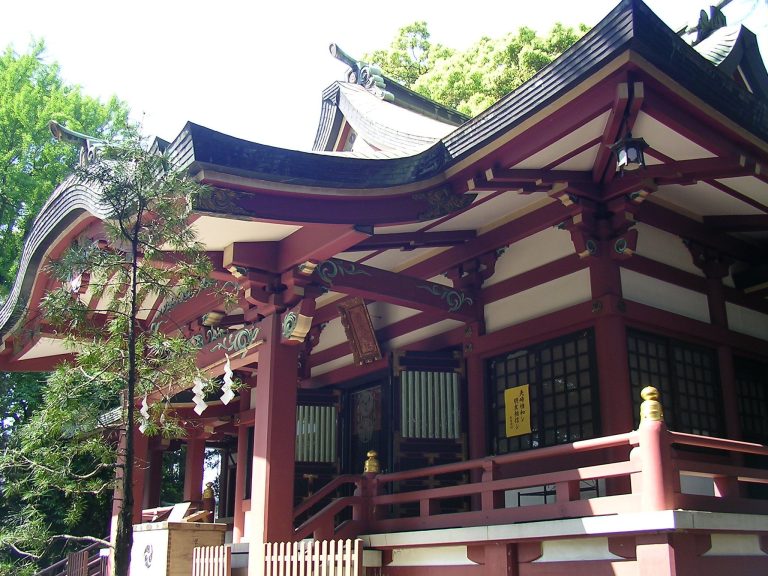
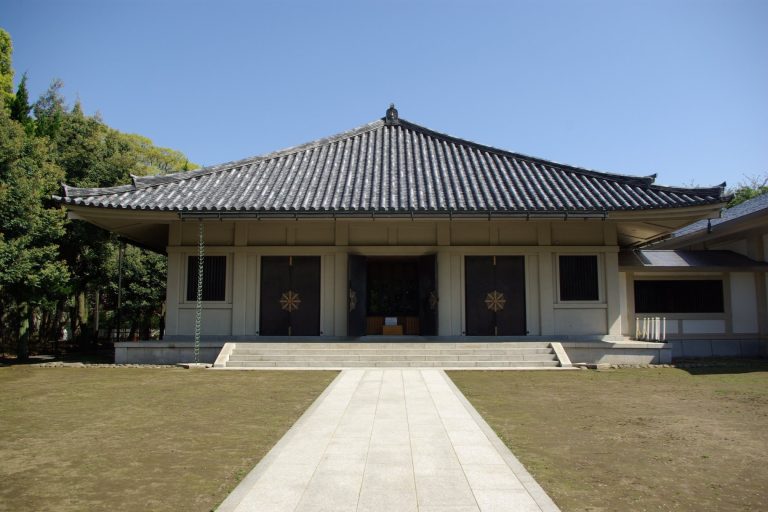
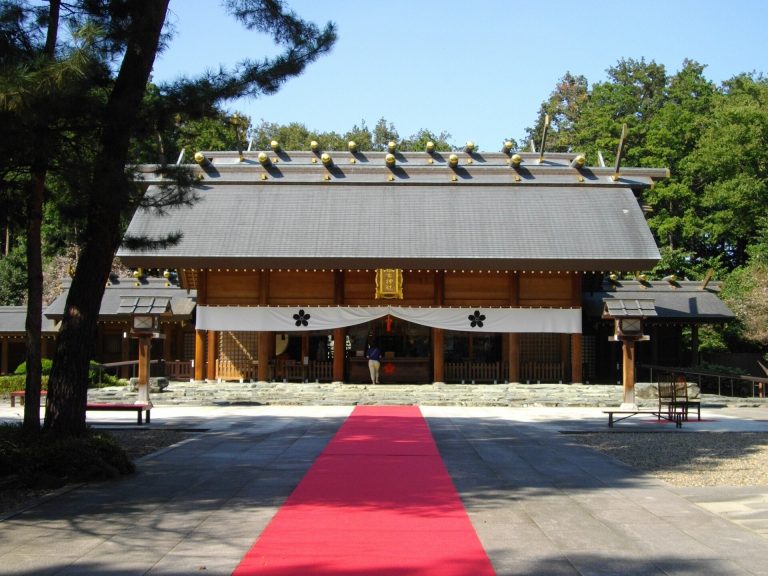
The grounds of Choseizan Hondo-ji include a temple gate, the subtemple Butsuji-in, a tea house, plantings, the main hall, and the tomb of Lady Akiyama beside it. A former affiliated-temple list also identifies Jisso-kaku Religious Association as a subtemple. The surviving features combine religious buildings, commemorative elements, and landscape plantings associated with the temple’s long institutional history.
Temple Grounds and Religious Features
Temple Gate and Subtemples
The temple gate forms part of the Hondo-ji grounds, which also include Butsuji-in as an identified subtemple. Jisso-kaku Religious Association appears in a former affiliated-temple list as another subtemple. These buildings and institutional units express the layered organization of a Nichiren Buddhist head temple.
Lady Akiyama’s Tomb
Lady Akiyama’s tomb stands beside the main hall. Its position forms part of the arrangement of the grounds associated with the improvements made to the temple approach and surrounding space under Tokugawa Mitsukuni.
Temple Bell
The temple bell bears an inscription dated 1278. A later inscription records its donation to Hondo-ji in 1482 by Shitara Suketaro. Before reaching Hondo-ji, it belonged to the former Daifukuji in Rokuzaki, Sakura. The bell therefore preserves material evidence of the temple’s medieval connections and later transfer.
Gardens and Plantings
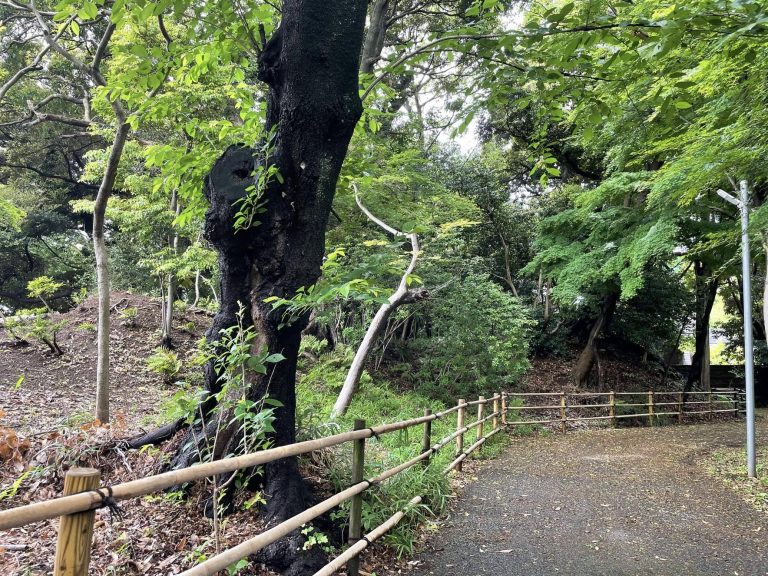
The grounds include a tea house and extensive plantings described as approximately 1,000 maple trees, 5,000 clumps of Japanese iris, and 10,000 hydrangea shrubs. These hydrangeas have given Hondo-ji the popular designation “Hydrangea Temple.”
Documentary Remains
The Hondo-ji register of the dead is a historically important documentary record connected with the temple. Alongside the bell and the surviving arrangement of the grounds, it preserves evidence for the institution’s religious and social history.