Kasai Shrine: A Historic Guardian Shrine in Tokyo


Site at a Glance
- Rating
- 4.2
- Popularity
- Low
- Country
- Japan
- Primary era
- Unclassified
- External website
- Open
- Eras represented
- Unclassified
- Civilizations
- Unclassified
- Site type
- Religious
On this page9 sections
History
Kasai Shrine is a Shinto shrine in Japan, located in Katsushika City, Tokyo, and founded in 1185 at the end of the Heian period as the guardian shrine of thirty-three villages in the former Upper and Lower Kasai area. Its origin is associated with the devotion of Kasai Kiyoshige, a medieval warrior and local power-holder, and the enshrinement of a divided spirit of Katori Shrine. The shrine was originally called Katori-gu and stood within the sacred domain of Kasai Mikuriya.
Medieval foundation and local role
Medieval records connected with Katori Shrine refer to Kasai Kiyoshige and the administration of the Kasai area. In 1387, tolls collected from travelers and horses at Sarumata Barrier were assigned to Katori Shrine. Kanamachi, Kogai, Sarumata, and Iizuka traditionally took part in rebuilding the shrine every twenty-one years, reflecting its continuing role within the surrounding communities.
Kasai Shrine historically served as the guardian shrine of the villages around it. Today, it functions as the collective tutelary shrine of eleven neighborhood associations in Kanamachi and Higashi-Kanamachi, embracing the local religious community.
Deities and Tokugawa association
The principal deities are Futsunushi no kami, Yamatotakeru no mikoto, and Tokugawa Ieyasu no mikoto. Futsunushi is the deity shared with Katori Shrine at the institution’s foundation and is associated in Shinto with the sword, the defeat of evil, achievement, and self-discipline. Yamatotakeru is a legendary imperial prince and warrior figure from early Japanese traditions. Tokugawa Ieyasu, founder of the Tokugawa shogunate, was later worshipped as a deified historical figure.
The shrine’s association with Ieyasu is linked to a tradition that he watched a regional puppet performance there and granted the shrine a red-seal certification in 1591.
Kasai Bayashi and its revival
Kasai Shrine is traditionally regarded as the birthplace of Matsuribayashi, instrumental music performed in connection with Japanese festivals. During the Kyoho period, the shrine priest Nose Tamaki is said to have adapted melodies to devotional waka poetry, taught them to village youths, and used the music to console the deity.
In about 1753, Kanto deputy Ina Tadatsune promoted the music as a prayer for peace, abundant harvests, family harmony, and the proper guidance of young people. Competitions and selections followed in various places, and chosen performers were recommended for appearances at Kanda Shrine’s festival before the shogun’s household. Performers from the Kasai area initially served at the Kanda festival, where local musicians later learned the tradition themselves. Kasai Bayashi subsequently influenced Kanda and Fukagawa festival music and related styles in the Kanto region, Chichibu, Kawagoe, Ishioka, Tohoku, and Tokai.
The tradition declined during the period associated with the arrival of foreign ships at Uraga and weakened again amid the upheavals from the end of the shogunate through the Meiji Restoration. Changing public musical preferences also contributed to its decline. It began to recover as social conditions stabilized. Kasai Shrine’s leading performers took part in Kanda Shrine’s grand festival in 1884, while the shrine priest Akimoto Shikimiya of Komatsu Village played an important role in spreading and reviving the music.
Volunteers established the Kasai Bayashi Preservation Association in 1951, and the association also served as the shrine office. Tokyo designated Kasai Bayashi an intangible cultural property in 1953, recognizing a cultural tradition rather than a physical object. The name “Kasai Bayashi” dates from the postwar period; before the association was formed, the music was generally known simply as “ohayashi.”
Modern religious and festival life
Kasai Shrine was designated a district shrine in 1875, when that term belonged to Japan’s former shrine-ranking system for institutions serving defined local districts. The system was abolished after World War II, after which Kasai Shrine became a religious corporation.
Kasai Bayashi is performed at the annual festival in September and at the November Tori no Ichi, or Rooster Market, a festival associated with good fortune and preparations for the New Year. Training takes place in the precincts on Sundays around the middle of each month.
Kasai Shrine is regarded as the only shrine in Katsushika Ward holding a Tori no Ichi. On the November days of the rooster, worshippers obtain kumade talismans, decorative rakes symbolizing the gathering of good fortune. Since before World War II, an amateur entertainment competition has been held at night in the Kaguraden, a shrine building used for sacred music, dance, and related performances. The shrine also retains the first bell used by the NHK singing program, which continues to be used in judging the competitors’ singing.
Remains
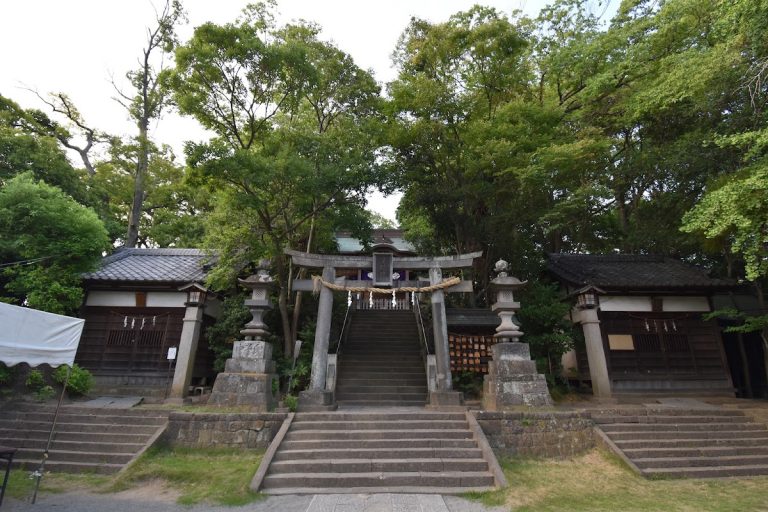
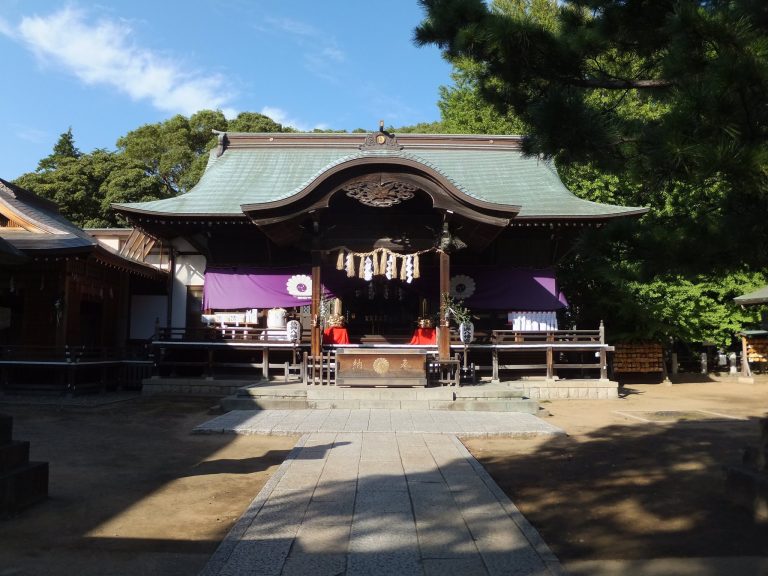
The precincts contain the principal worship hall, a Kaguraden used for performances, numerous subsidiary and associated shrines, and a large ginkgo tree connected with the shrine grounds. The surviving buildings and objects support both the shrine’s religious functions and the performance traditions that continue within the precincts.
Buildings and grounds
Worship hall and Kaguraden
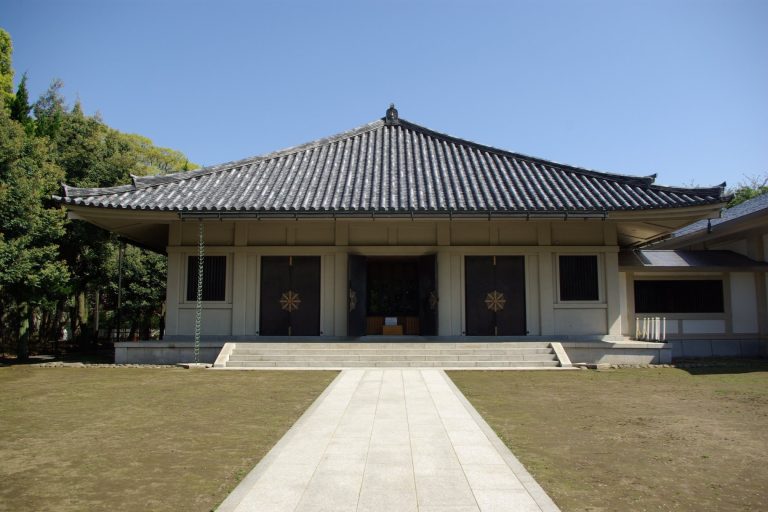
The worship hall forms the principal religious building within the precincts. Nearby, the Kaguraden provides the setting for performances during Tori no Ichi and for Kasai Bayashi at the September annual festival and the November festival. Numerous subsidiary and associated shrines are also arranged within the grounds, while the large ginkgo tree is a notable feature of the shrine’s setting.
Bell and festival objects
The first bell used by the NHK singing program is dedicated at Kasai Shrine and remains in use during the Tori no Ichi entertainment competition. Kumade talismans are obtained by worshippers during the November festival, linking the physical activity of the precincts with the festival’s customary association with gathering good fortune.