Sakuragi Shrine: Historic Shinto Shrine in Noda, Japan
Site at a Glance
- Rating
- 4.4
- Popularity
- Medium
- Country
- Japan
- Primary era
- Classical
- External website
- Open
- Eras represented
- Classical, Medieval
- Civilizations
- Yamato
- Site type
- Religious
- Remains
- Sanctuary
On this page6 sections
History
Sakuragi Shrine is a Shinto shrine in Noda, Japan, traditionally founded in 851 during the early Heian period. It is regarded as Noda’s oldest shrine and formerly held village-shrine status. Shinto is Japan’s indigenous religious tradition, centered on reverence for kami, sacred beings or forces associated with nature, places, and ancestry.
Traditional Foundation
Shrine records attribute the foundation to a descendant of Fujiwara no Kamatari and the third son of Fujiwara no Fuyutsugu. The Fujiwara were a powerful aristocratic family at the imperial court. After moving to the area, the founder is said to have enshrined Ukanomitama and Takemikazuchi beneath a large and beautiful cherry tree. Ukanomitama is associated with food, grain, and rice, while Takemikazuchi is a martial kami.
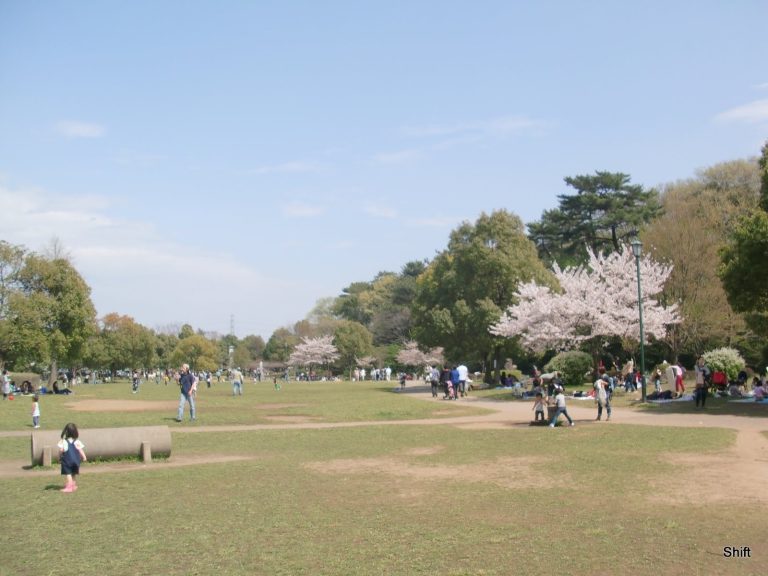
The shrine’s name reflects the history of its surroundings. Historical documents state that the area was once called Sakuragi Village and later Sakuradai Village. The place was understood as a beautiful settlement known for abundant cherry blossoms. Sakuragi Shrine now enshrines Ukanomitama, Takemikazuchi, Izanagi, and Izanami. Izanagi and Izanami are primordial creator deities in Japanese mythology, and the shrine’s principal annual observance is its spring grand festival.
Archaeological Context
In 1992, archaeological investigations took place behind the chief priest’s residence during reconstruction of the shrine. The findings, together with remains from the Nakane Hachimamae site about 100 meters east, make the wider area important for understanding the early history of Noda.
Remains
Shrine Precinct
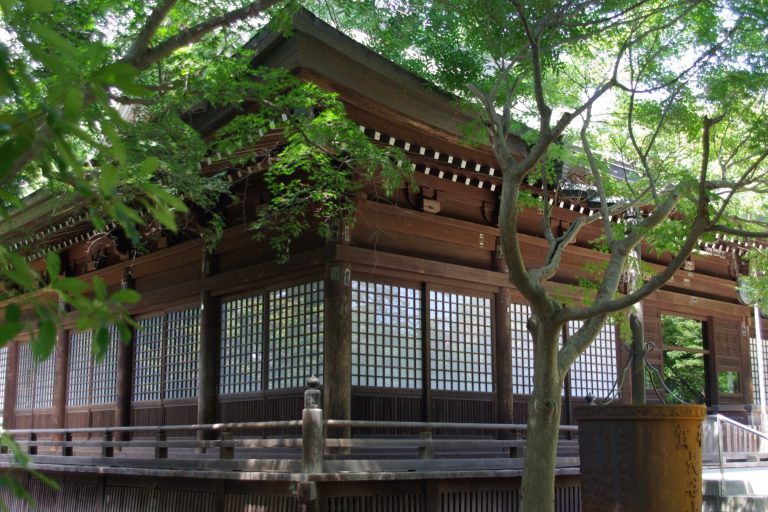
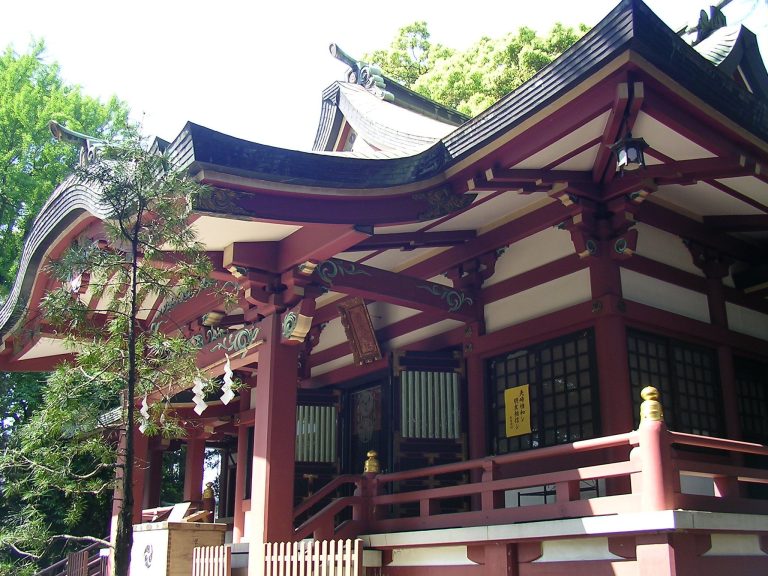
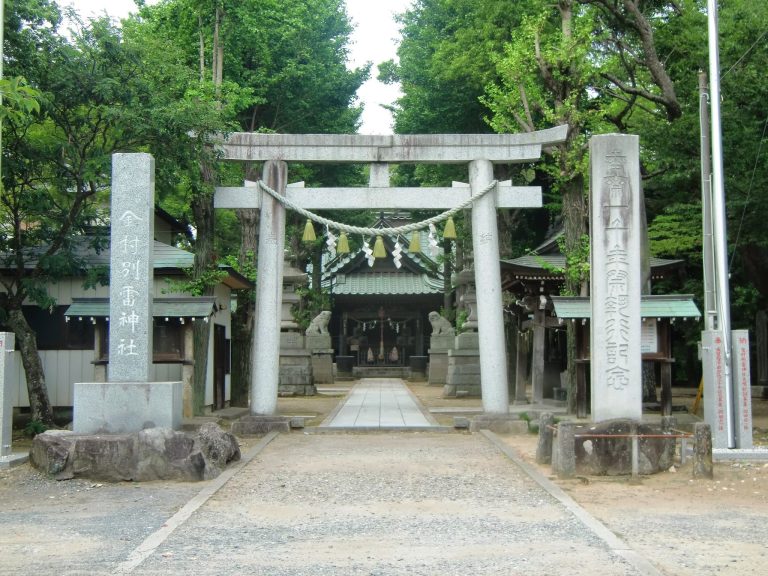
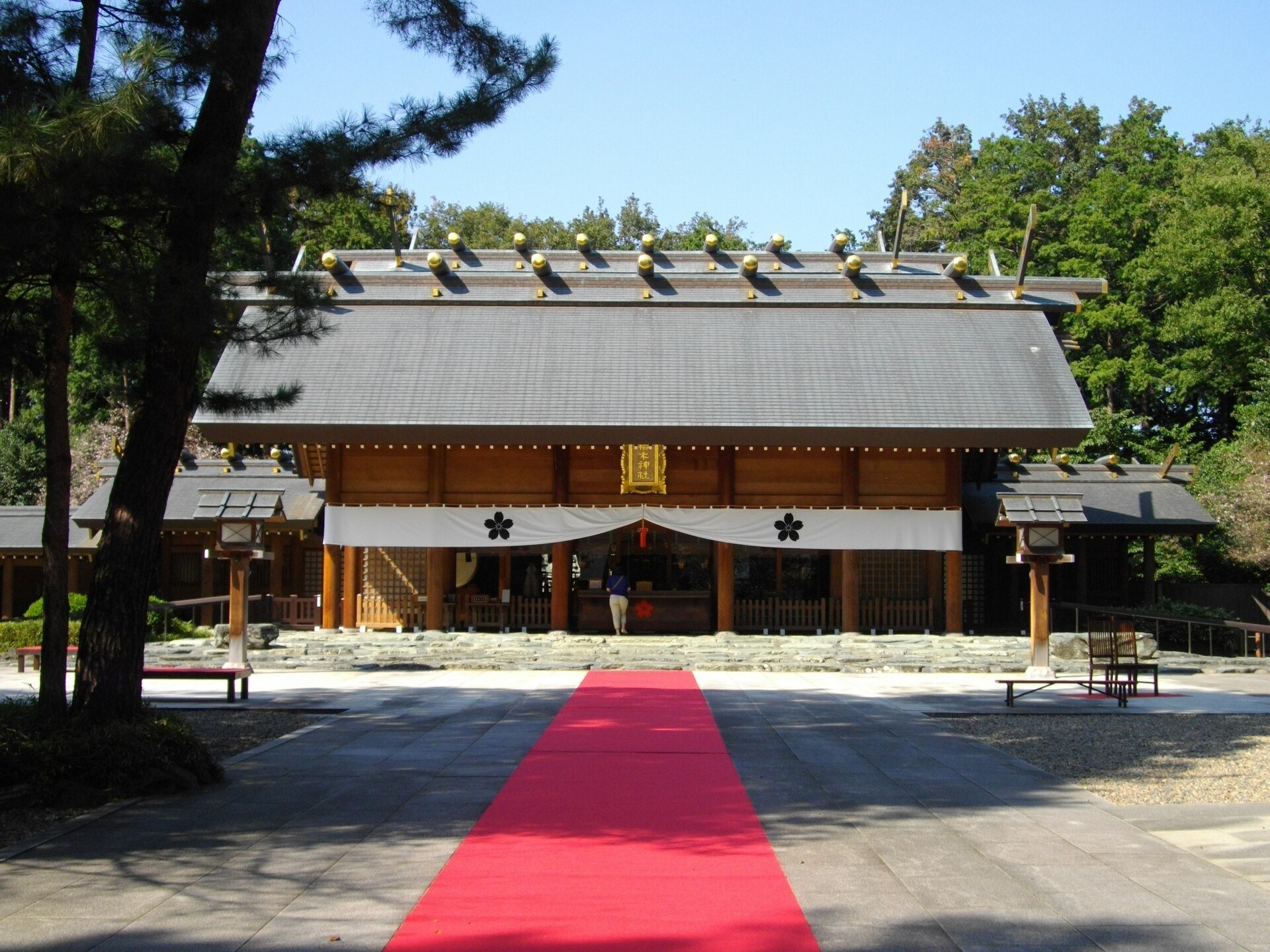
The precinct contains a worship hall, a main gate, and a large torii, the traditional gateway marking the approach to a Shinto sacred area. A weeping cherry tree grows beside the large torii, while a Miyabi cherry tree stands in front of the main gate. A Shichigosan cherry tree within the precinct is reported to flower in both spring and autumn.
Cherry-blossom imagery continues through the shrine’s religious materials. The motifs appear on votive plaques, wooden tablets on which worshippers write prayers or wishes, as well as on fortune slips, shrine stamps, and shrine stamp books that record a worshipper’s visit.
Archaeological Features
Excavation behind the chief priest’s residence produced evidence from several periods of Japanese prehistory and early history. A Paleolithic tanged point, a stone point with a projecting base for attachment to a shaft or handle, was found alongside Jomon-period pottery and stone tools. Dwelling remains from the Kofun period were also identified. The Paleolithic, Jomon, and Kofun periods represent successive phases associated with prehistoric stone-tool cultures, pottery-making communities, and the later emergence of large burial mounds and more organized political society.
The excavation also recovered numerous objects associated with ancient ritual activity. These included jade magatama beads, curved comma-shaped beads used as ornaments or ritual objects, tubular beads, trapezoidal stone objects, sword-tip-shaped ornaments, semicircular stone objects, and staff-like jewel objects. The Nakane Hachimamae site to the east contains additional dwelling remains from the early Kofun period, extending the archaeological evidence beyond the shrine precinct.