Guhō-ji Temple: A Nichiren Buddhist Head Temple in Japan


Site at a Glance
- Rating
- 4.1
- Popularity
- Low
- Country
- Japan
- Primary era
- Modern
- External website
- Open
- Eras represented
- Medieval, Modern
- Civilizations
- Ashikaga shogunate, Japanese
- Site type
- Religious
On this page12 sections
History
Guhō-ji Temple, formally Mamayama Guhō-ji, is a Nichiren Buddhist head temple in Ichikawa, Japan. Its traditions reach back to 737, when the monk Gyōki established an earlier temple called Gubō-ji for memorial rites connected with Tekona of Mama, a legendary woman associated with the area. The temple’s mountain name is Mamayama, and its principal object of worship is the Three Treasures, meaning the Buddha, the Buddhist teaching, and the Buddhist community.
Early Buddhist foundations
In 822, Kūkai, the founder of Shingon Buddhism, is said to have organized a temple complex at the site and renamed it Guhō-ji. The institution later adopted Tendai Buddhism in 881. Tendai was a major Japanese Buddhist tradition based on the Tiantai school of China.
The temple entered its Nichiren Buddhist phase in 1275. After receiving Nichiren’s teaching, the resident priest Ryōshō Hōin debated Tomiki Jōnin of nearby Hokekyō-ji, a Nichiren Buddhist temple. Guhō-ji then converted to Nichiren Buddhism. Nichichō, Jōnin’s son, became its first chief priest and is regarded as the founder of this phase of the temple’s history. In the same year, a statue of Kōbō Daishi, another name for Kūkai, was transferred to Sōjiji.
Medieval development
In 1323, Chiba Tanetada donated temple lands to Guhō-ji. During the Muromachi period, a settlement known as Mama-juku, or the two Ichikawa settlements, developed below the temple. The temple also became connected with the later Kempon Hokke tradition. In 1380, the Tendai monk Genmyō accepted Guhō-ji’s religious position and took the name Nichijū; he was subsequently regarded as the founder of Kempon Hokke Buddhism.
Guhō-ji continued to receive patronage in the fifteenth and early sixteenth centuries. Ōta Dōkan donated a teahouse in 1457, and Nichiyō, the temple’s seventh chief priest, established the Tekona Reijin Hall in 1501.
Early modern and modern history
In 1591, Tokugawa Ieyasu granted Guhō-ji a fief assessed at 30 koku, a historical Japanese measure of agricultural production used to calculate land income. In 1695, Tokugawa Mitsukuni gave the temple’s teahouse the name Henran-tei. During the Edo period, Guhō-ji was known for autumn foliage, and contemporary writings described excursions there.
The temple was drawn into the Boshin War, the 1868–1869 civil conflict between shogunal and imperial forces. Shogunal troops retreating toward the northeast temporarily stayed at Guhō-ji. At the former branch temple Dairin-in, near the Tekona Reijin Hall, the shogunal commander Hijikata Toshizō took part in a military council. After the troops departed, forces supporting the imperial government established a camp at Guhō-ji, and the Ichikawa–Funabashi War began.
A fire destroyed the temple halls in 1888, but they were rebuilt in 1890. The main hall was reconstructed in reinforced concrete in 1972, and a hall for a standing image of Daikokuten was erected in 1976. In 1941, Nichiren Buddhism dissolved its formal system of head temples and branch temples, after which Guhō-ji’s former affiliated temples were referred to as former branch temples. The temple is currently associated with its eighty-second chief priest, Suzuki Nisshin, who transferred there from Kyōōji Temple in Taitō.
Remains
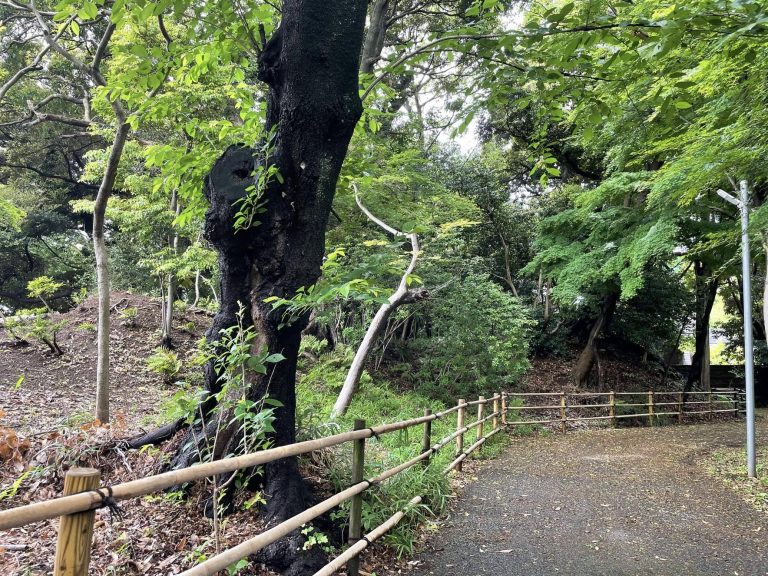
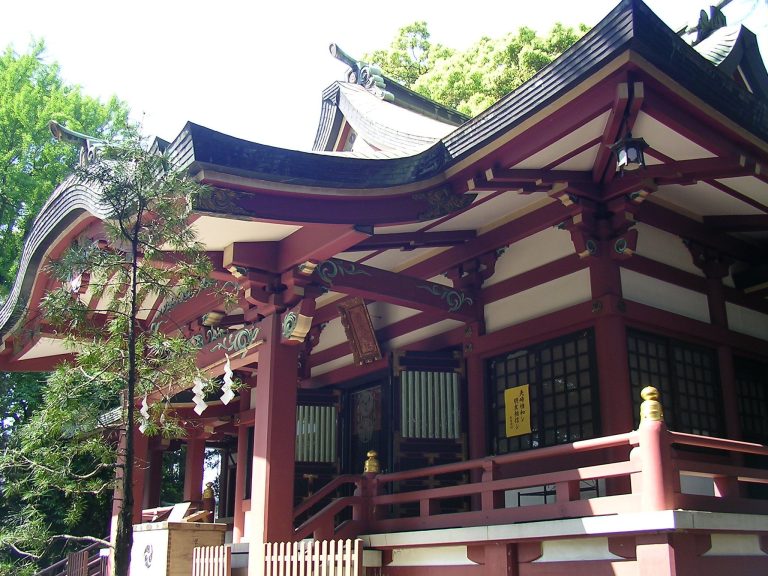
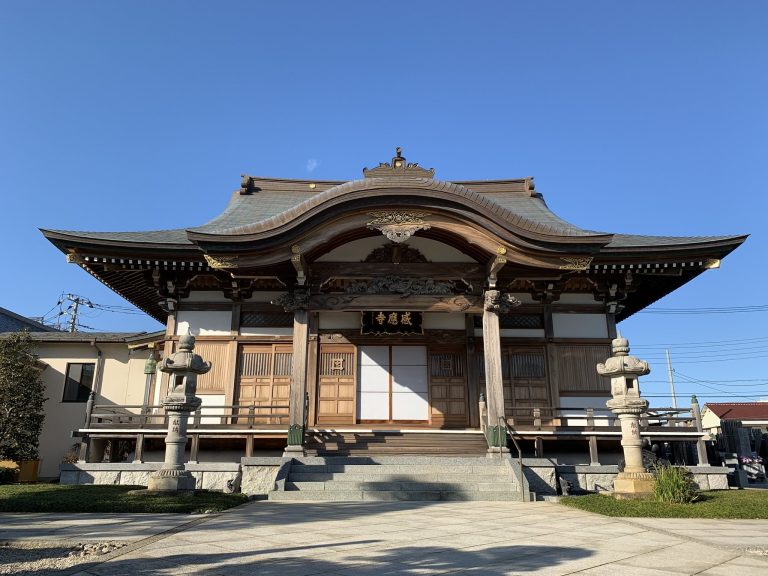
Guhō-ji’s grounds combine a Buddhist temple complex with historic monuments, a distinctive stone staircase, a weeping cherry tree, and two ancient burial mounds. The principal buildings include the main hall, the Niōmon gate, a temple gate guarded by two protective figures, a bell tower, the Daikoku Hall, the Tekona Reijin Hall, and the teahouse historically associated with Henran-tei.
Temple buildings and stone features
Main temple complex
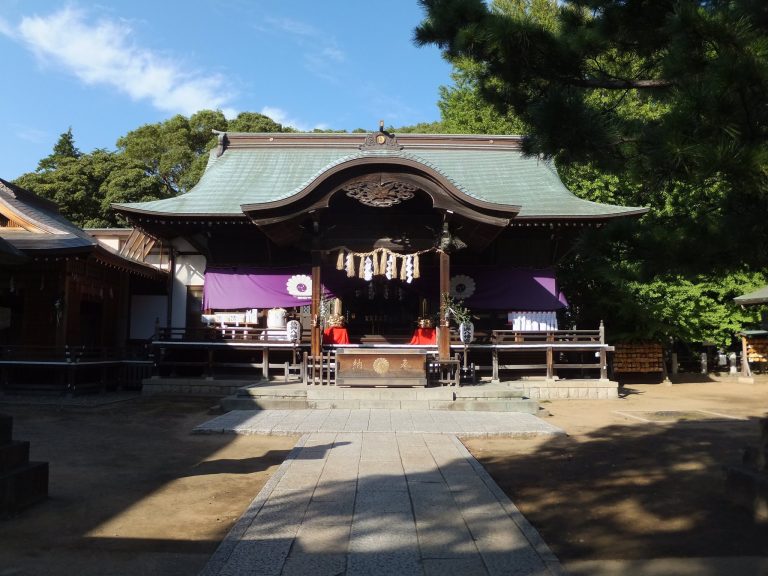
The main hall, rebuilt in reinforced concrete in 1972, forms part of the surviving temple complex alongside the Niōmon, bell tower, and other halls. The Daikoku Hall contains a figure of Daikokuten, a Buddhist and syncretic deity associated particularly with prosperity and food. The image is traditionally attributed to Nichiren’s own carving.
Tekona Reijin Hall and Henran-tei
The Tekona Reijin Hall was established in 1501 by Nichiyō, Guhō-ji’s seventh chief priest. It is dedicated to the religious tradition surrounding Tekona of Mama. The grounds also retain the teahouse donated by Ōta Dōkan in 1457, which Tokugawa Mitsukuni named Henran-tei in 1695.
The Tear Stone
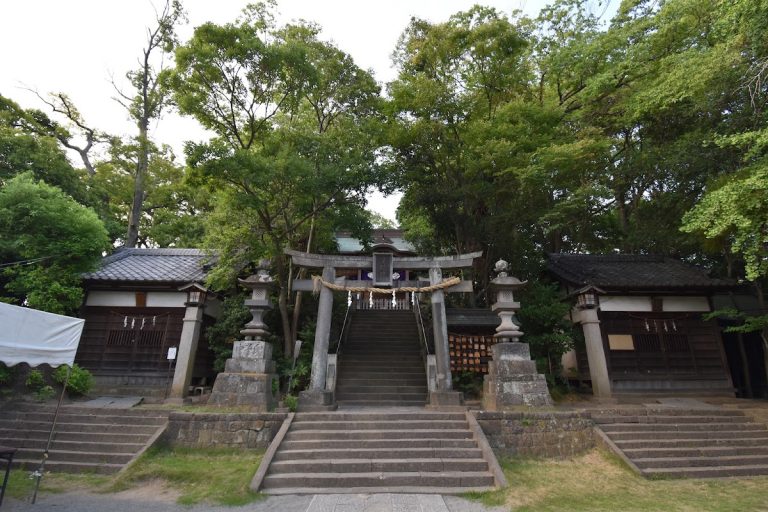
The front staircase contains more than 1,000 stones. One stone on the twenty-seventh step from the bottom remains continuously wet and appears to shed tears, giving it the name “Tear Stone.” A local tradition says that it came from a shipment sent by boat from Izu for the construction of Nikkō Tōshōgū. When the boat became immobilized near Nemoto in Ichikawa, the construction commissioner Suzuki Nagayori allegedly used the stones for Guhō-ji’s staircase without authorization. The shogunate held him responsible, and he later committed seppuku. Tradition explains the stone’s moisture as his blood and tears of regret, while another explanation attributes it to contact with one of Ichikawa’s underground watercourses.
Burial mounds and memorial features
Guhō-ji Kofun and Mamayama Kofun
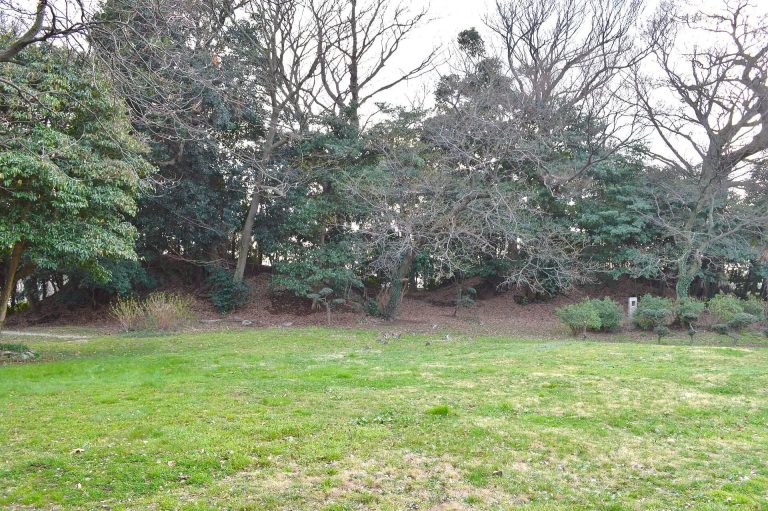
The grounds contain the Guhō-ji Kofun, a keyhole-shaped ancient Japanese burial mound. This form combines a circular rear section with a projecting rectangular front section. The Mamayama Kofun, a round burial mound, also lies within the temple grounds.
Fushihime-zakura and stone monuments
Fushihime-zakura, a weeping cherry tree, grows on the grounds. Stone monuments carry haiku by Kobayashi Issa, Mizuhara Shūōshi, and Tomiyasu Fusei, adding literary memorials to the temple’s religious and archaeological remains.