Hollókő Castle: A Medieval Fortress in Hungary
Visitor Information
Google Rating: 4.8
Popularity: Medium
Official Website: hollokoivar.hu
Country: Hungary
Civilization: Early Modern, Medieval European
Site type: Military
Remains: Castle
History
Hollókő Castle, located near the village of Hollókő in Hungary, was built by members of the Illés branch of the Hungarian Kacsics clan following the devastating Mongol invasion in the 13th century. Its earliest part, the lower levels of the old tower, were probably constructed before the invasion by Kacsics András, indicating that the site had some form of fortification even prior to the widespread building that followed.
The castle is first mentioned in a written record from 1310 under the name “Castrum Hollokew.” During the first half of the 14th century, the fortress became entangled in regional power struggles. It came under the influence of the powerful oligarch Csák Máté, whose dominion forced local nobles into submission. After his death in 1327, royal authority was reasserted, and the castle was granted to Szécsényi Tamás. It was under his leadership and that of his descendants that the castle saw significant enlargement, including the construction of defensive walls, bastions, and a gate tower through the late 14th and 15th centuries.
Ownership changed hands among several noble families over the following decades. The Losonczi and Guthi-Ország clans implemented important architectural modifications at the end of the 15th and early 16th centuries, introducing Gothic elements and raising the castle’s palace by two floors. Following the Ottoman conquest of nearby Nógrád Castle in 1544, Hollókő Castle became part of the Habsburg-led border defense system. It served as a minor stronghold to protect surrounding villages from Ottoman raids, frequently changing control between Hungarian and Turkish forces during this turbulent period.
The castle was occupied intermittently by Ottoman troops between 1556 and 1663. Records include a skirmish in 1550 involving the castle captain and a Turkish commander. In 1593, royal forces recaptured the fortress without artillery, but by 1596 the castle was noted to be in poor repair. Minor strengthening works were ordered in 1608. The military importance of Hollókő dwindled over time, though Ottoman control briefly returned from 1663 until 1683, when it was liberated by Polish King John III Sobieski’s troops.
In 1701, Emperor Leopold I ordered the demolition of the castle to prevent its use as a rebel stronghold. However, only partial dismantling occurred in 1711, leaving the fortress as a ruin. The property subsequently passed to the Forgách family in the early 18th century and later to the Pulszky family in 1860. Over time, the ruins were used by local residents as simple shelters. Archaeological excavations between 1966 and 1969 helped uncover the site’s historical layers, leading to restoration work from 1970 onward. In 1977, the castle and its surroundings were declared a protected landscape, with ongoing renovations including a major restoration in 2015 that reopened parts of the old tower and several buildings within the complex.
Remains
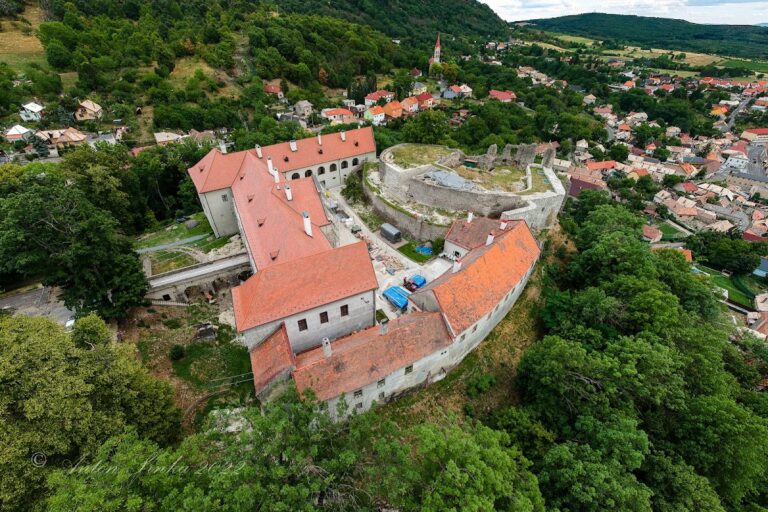
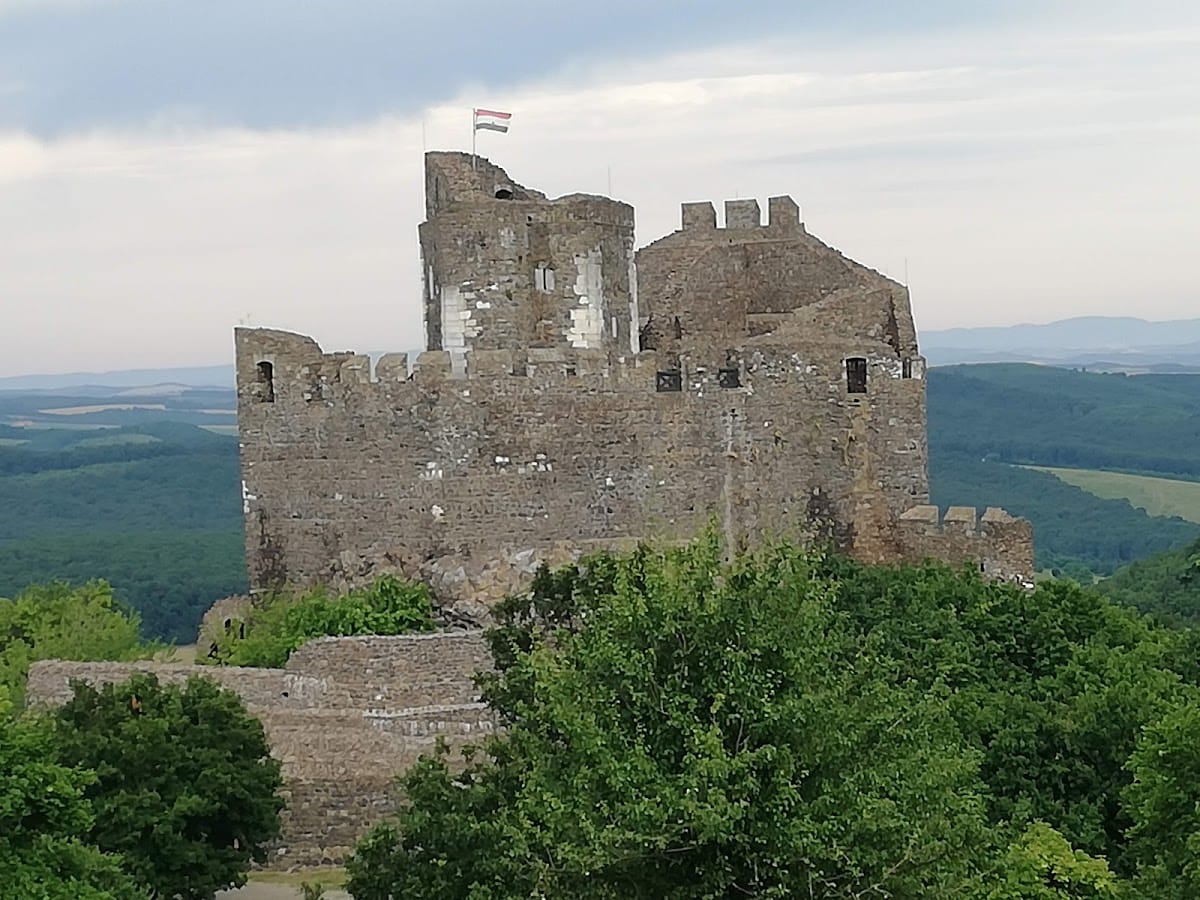
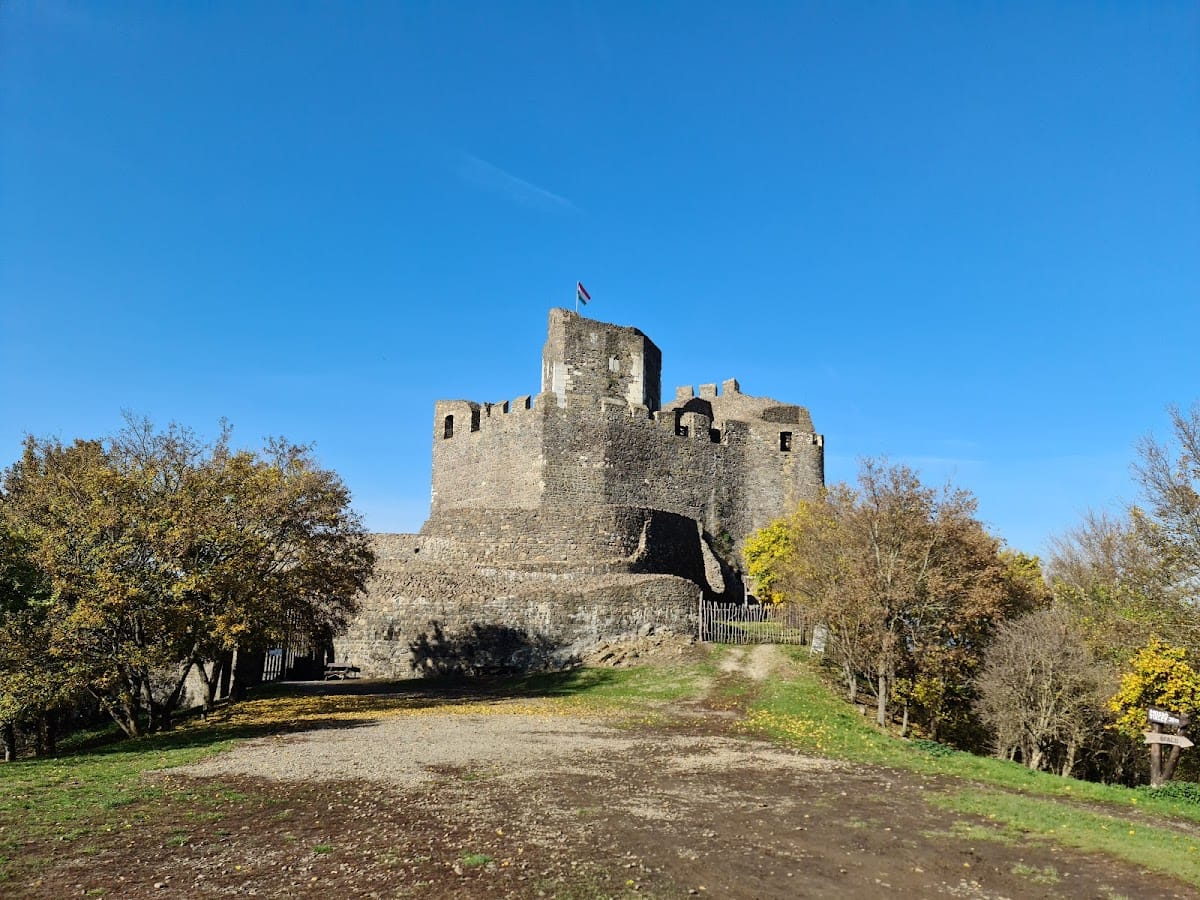
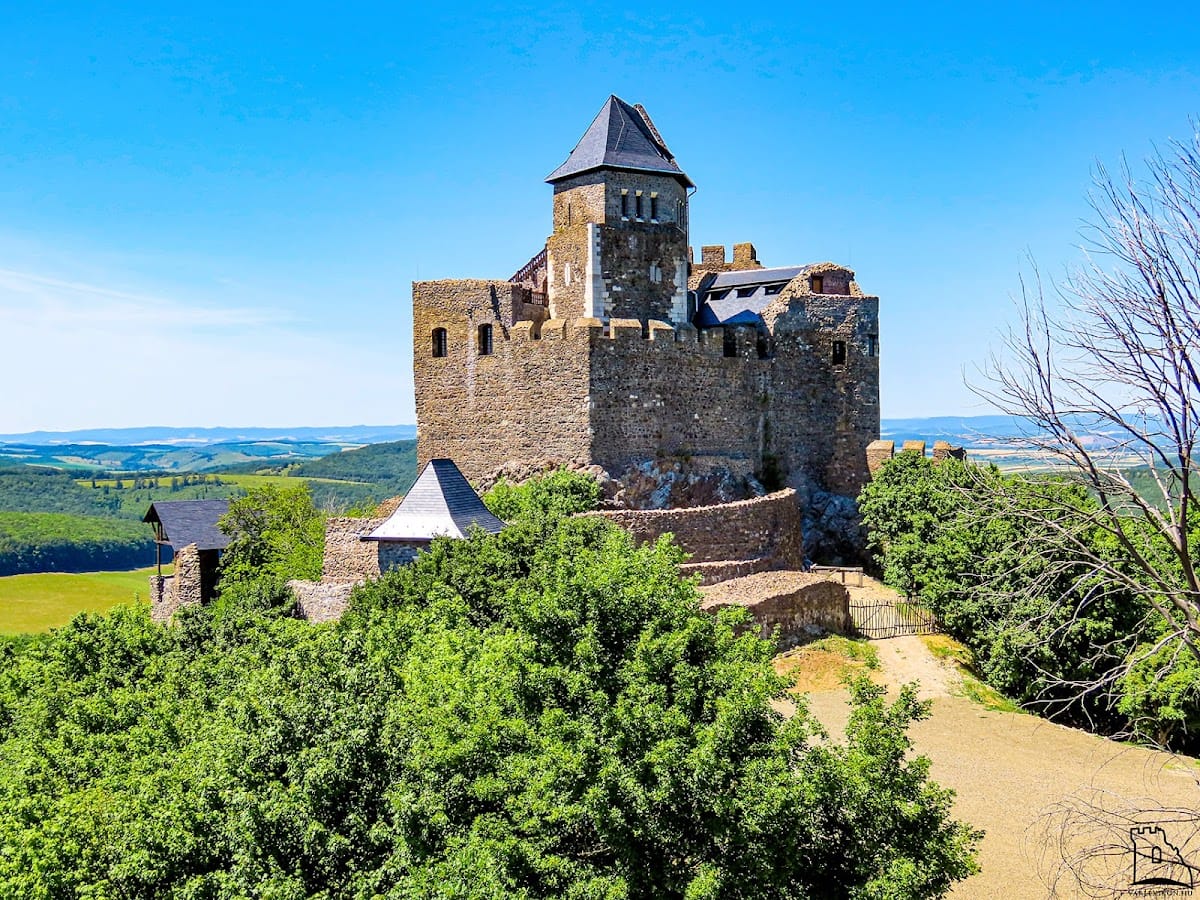
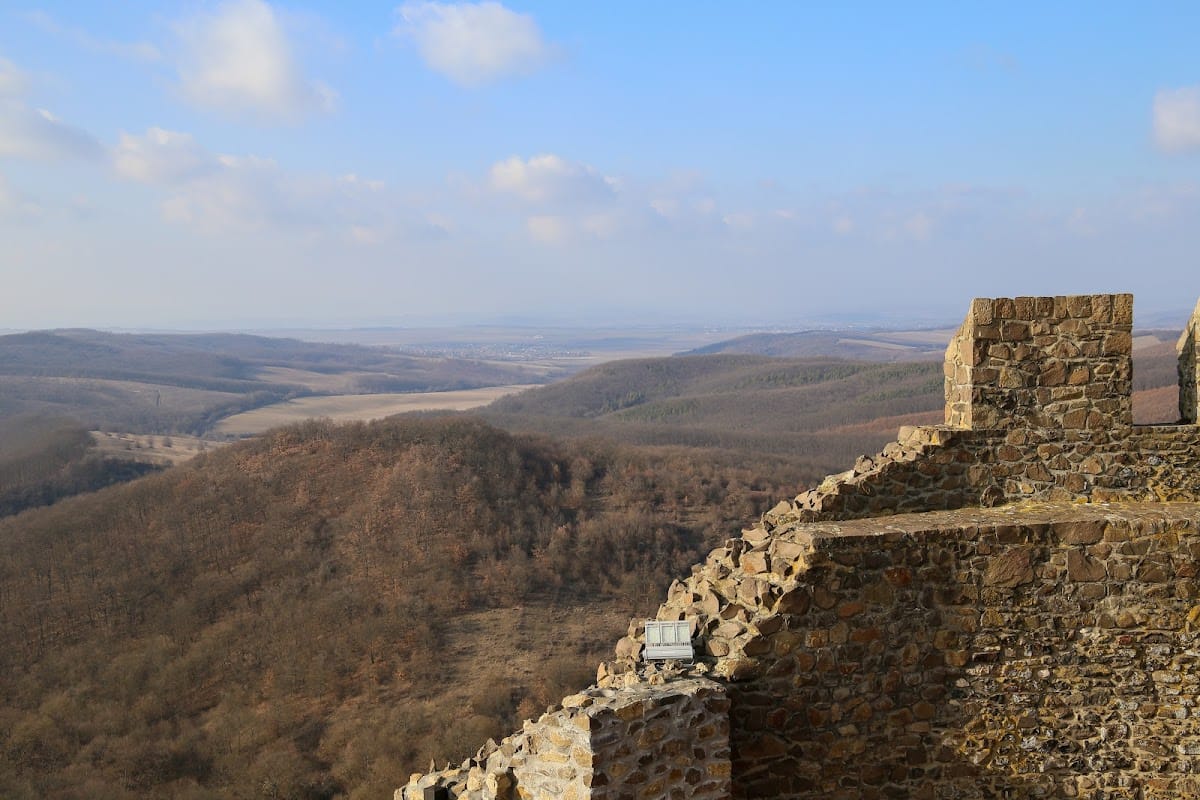
Hollókő Castle stands on a roughly 400-meter-high rocky hill, its irregular layout shaped by the natural contours of the terrain. Seen from above, its plan resembles a snail shell spiraling around a pentagonal old tower, which is the tallest structure with four stories intended for residence. This tower is topped with battlements featuring narrow vertical openings, or loopholes, designed for defense.
The castle extends approximately 68 meters from north to south and 51 meters east to west, rising over 27 meters in elevation from the main entrance to the tower doorway. Visitors entering the site pass through a winding, multi-angled gate passage that leads to an outer gate tower equipped with a drawbridge. Defensive measures here include multiple gates and wolf pits—shallow holes designed to hamper intruders.
Inside the outer courtyard lies a cistern carved directly into the rock, measuring about four meters in diameter. This water reservoir is associated with local legends suggesting hidden treasure nearby. Two protective corridors called falszoros connect the outer courtyard to the inner castle gate; one remains partly intact, while the other was no longer in use by the 16th century. The southwestern corridor terminates in a triangular guard tower guarding the approach.
The castle’s outer bailey is terraced and organized with up to four gates dividing the space. Within the inner courtyard, the area was reduced in size during the 16th century when the palace was heightened by two additional floors. The palace itself follows an L-shaped floor plan, with walls two meters thick to support the expanded structure.
Access to the pentagonal tower’s ground floor and the internal staircases leading upward are found inside the inner courtyard. The palace includes a large hall for knights located above the cellar, alongside a chapel situated next to the hall. The western wing contains another cistern servicing the inner castle, located at one corner of these buildings.
Several defensive architectural features are evident, such as a gyilokjáró—a murder hole passage used to attack enemies below—and a long stairway ascending to the tower entrance. This entrance remains closed today due to an unfinished roof. The castle’s wards housed stables and storage facilities, many showing Gothic-style doorways and barrel-vaulted cellars added during renovations carried out in the late 15th century.
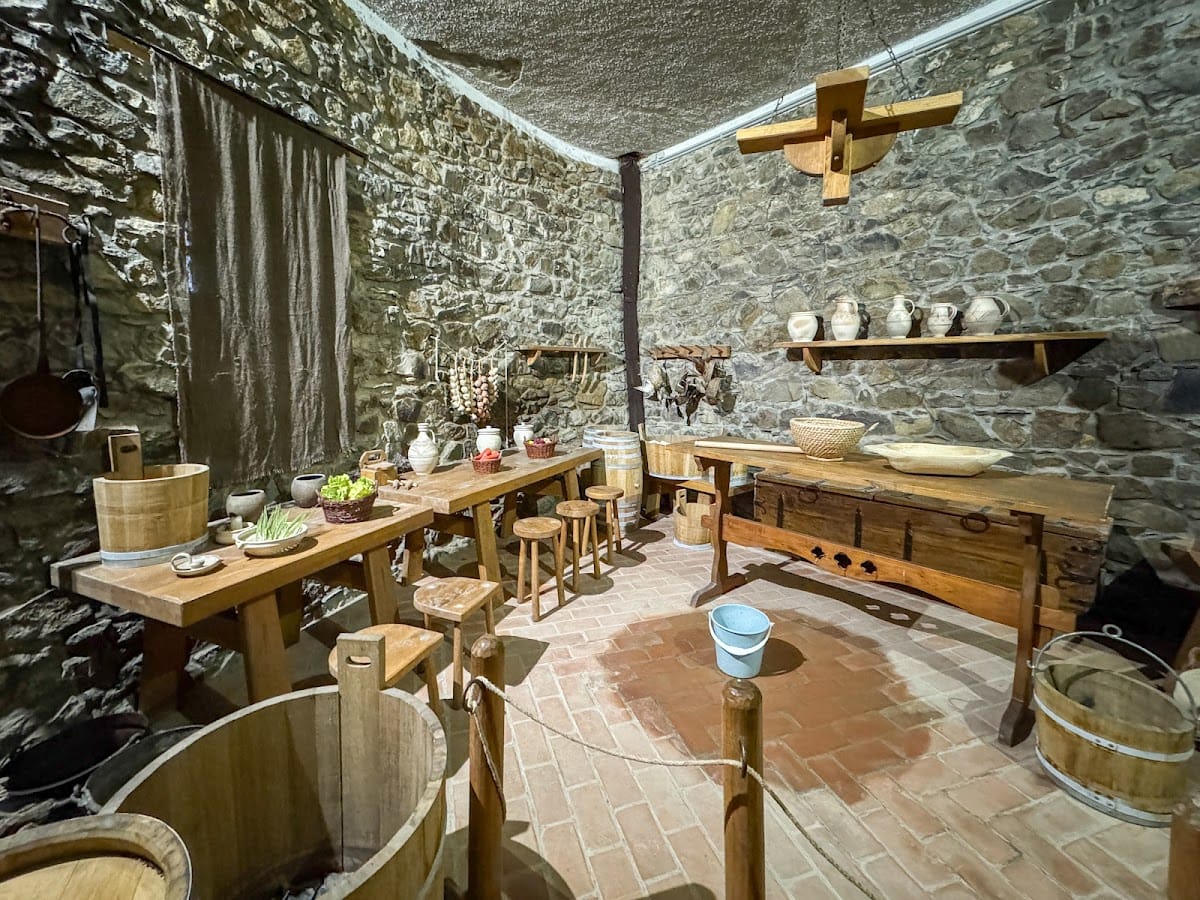
The comprehensive restoration finished in 2015 allowed the old tower to reopen and brought new life to the captain’s quarters and dining room within the upper castle area. Two economic buildings in the lower castle were renovated to accommodate a small museum featuring a 3D animated film narrating the castle’s construction history, along with functional spaces such as a kitchen, a blacksmith’s workshop, and an armory.
Despite centuries of dismantling and stone removal by local inhabitants, Hollókő Castle is among the best-preserved medieval fortresses in Nógrád County. Its remains offer valuable insight into defensive strategies, noble life, and evolving architectural styles from the late Middle Ages through the early modern period.
Nearby sites