Herborn Castle: Nassau Stronghold and Seminary Seat
Site at a Glance
- Popularity
- Medium
- Country
- Germany
- Primary era
- Medieval
- Eras represented
- Medieval
- Civilizations
- Holy Roman Empire
- Site type
- Domestic
- Remains
- Castle
On this page5 sections
History
Nassau origins and remodelling
Herborn Castle is a medieval stronghold in Herborn, Germany, originating in the late 13th century. It formed the center of the Herborn March, a territorial district held by the Counts of Nassau under a grant from the Landgraves of Hesse. The earliest written reference dates to 1350, and the castle became a manor house in the early 14th century. By about 1445, Count Engelbert I of Nassau-Breda had remodelled it in the late Gothic style.
The Counts of Nassau used the castle from time to time as a secondary residence. In the 15th century, a workshop there produced firearms. The castle was also intended at times as a home for widowed noblewomen, although whether it served that purpose in practice is uncertain.
Academy and later uses
In 1584, John VI, Count of Nassau-Dillenburg, established the Herborn Academy, a Reformed Protestant institution of higher learning in the Calvinist tradition. The school initially occupied the castle, then moved after a few years to Herborn’s old town hall. Its library stayed at the castle until 1725, and some professors had residences there. One was Johannes Althusius, a legal scholar and political theorist. The castle also operated as a mint in the 1680s.
Although the castle was sometimes intended as a residence for widowed noblewomen, its use in that role remains uncertain. Isabelle Charlotte of Nassau-Dietz lived mainly in Dillenburg, not Herborn; she endowed a separate home in Herborn for widows without noble rank. In 1757, she was buried in a marble sarcophagus in the town’s Evangelical church. From 1781, the castle housed an administrative officer. French general Nicolas Jean-de-Dieu Soult stayed there in 1796, then fled ahead of Austrian commander Archduke Charles. The names French Gate and French Path probably recall Soult’s flight.
Recovery and seminary
The castle deteriorated between 1815 and 1840, despite alterations, and a distillery operated within its walls in 1822. In 1840, it was offered for sale for demolition. Herborn’s first civic heritage-preservation initiative sought to save the building, and the government in Wiesbaden reacquired and repaired it. From 1840 to 1866, it served as a government office.
After Herborn came under Prussian rule in 1866, the Prussian king made the castle available to the Theological Seminary of the Nassau regional church. The seminary had developed in 1817 from the theology faculty of the Herborn Academy and had previously been based in the Academy’s School Courtyard. During the Franco-Prussian War of 1870–71, fought between France and Prussia, the castle served as a military hospital. The covering of the balloon Ville de Paris, which had left besieged Paris and landed at Sinn, was displayed in the courtyard; proceeds supported the hospital.
A restoration carried out in 1929–31 repaired the castle. It is now the seat of the Theological Seminary of the Evangelical Church in Hesse and Nassau, a successor to the Herborn Academy.
Remains
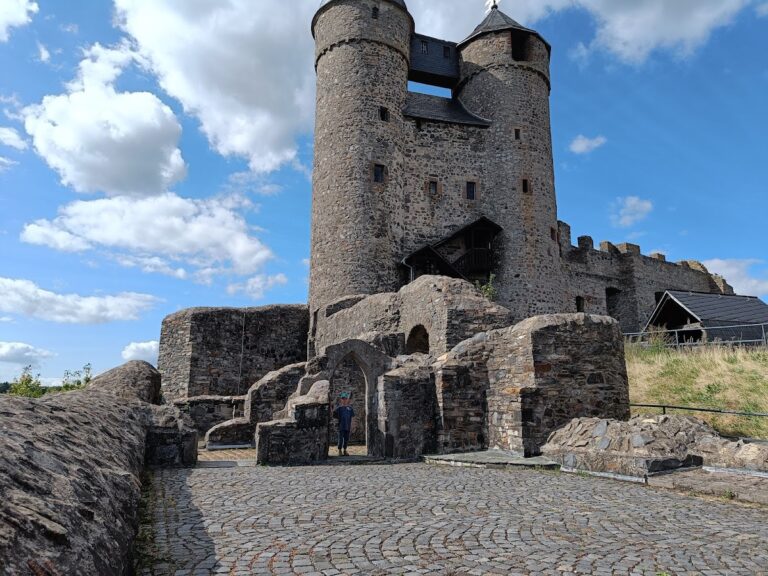
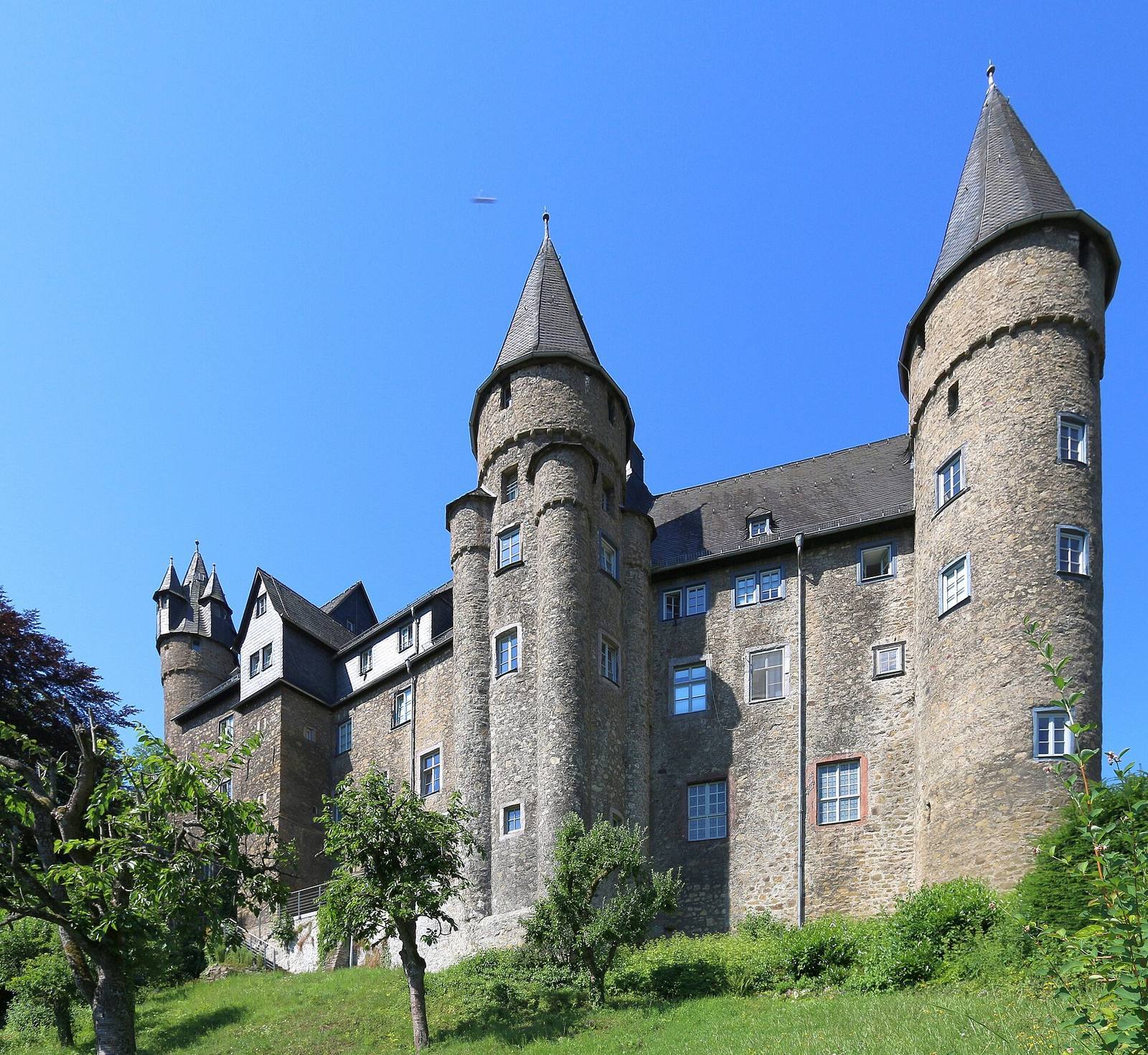
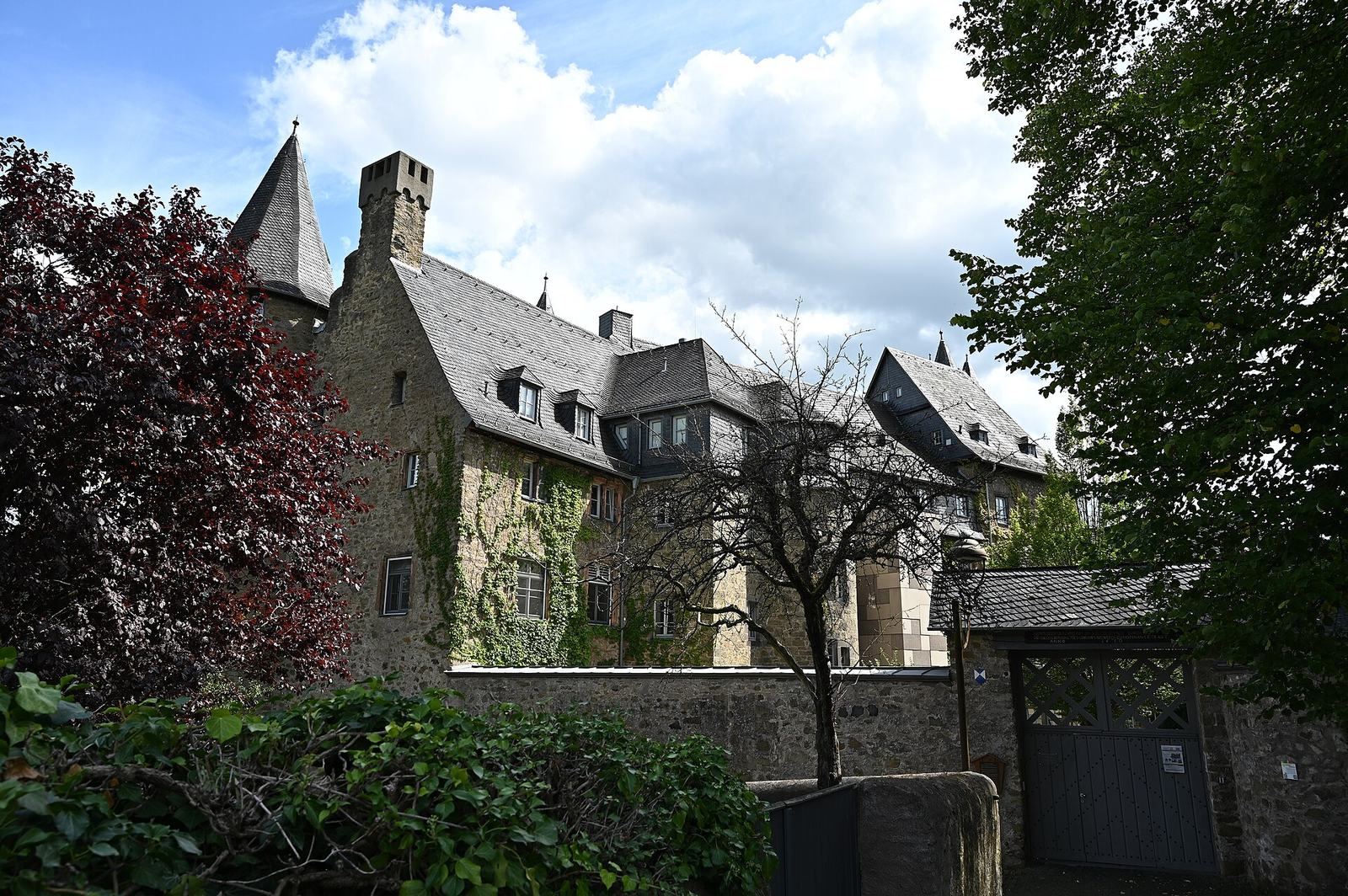
The castle stands above Herborn at the edge of a slope, inside the town’s encircling wall, to which it was connected. The wall was built after Herborn received town rights in 1251. The castle’s 15th-century remodelling gave it a late Gothic appearance, including towers in a French style.
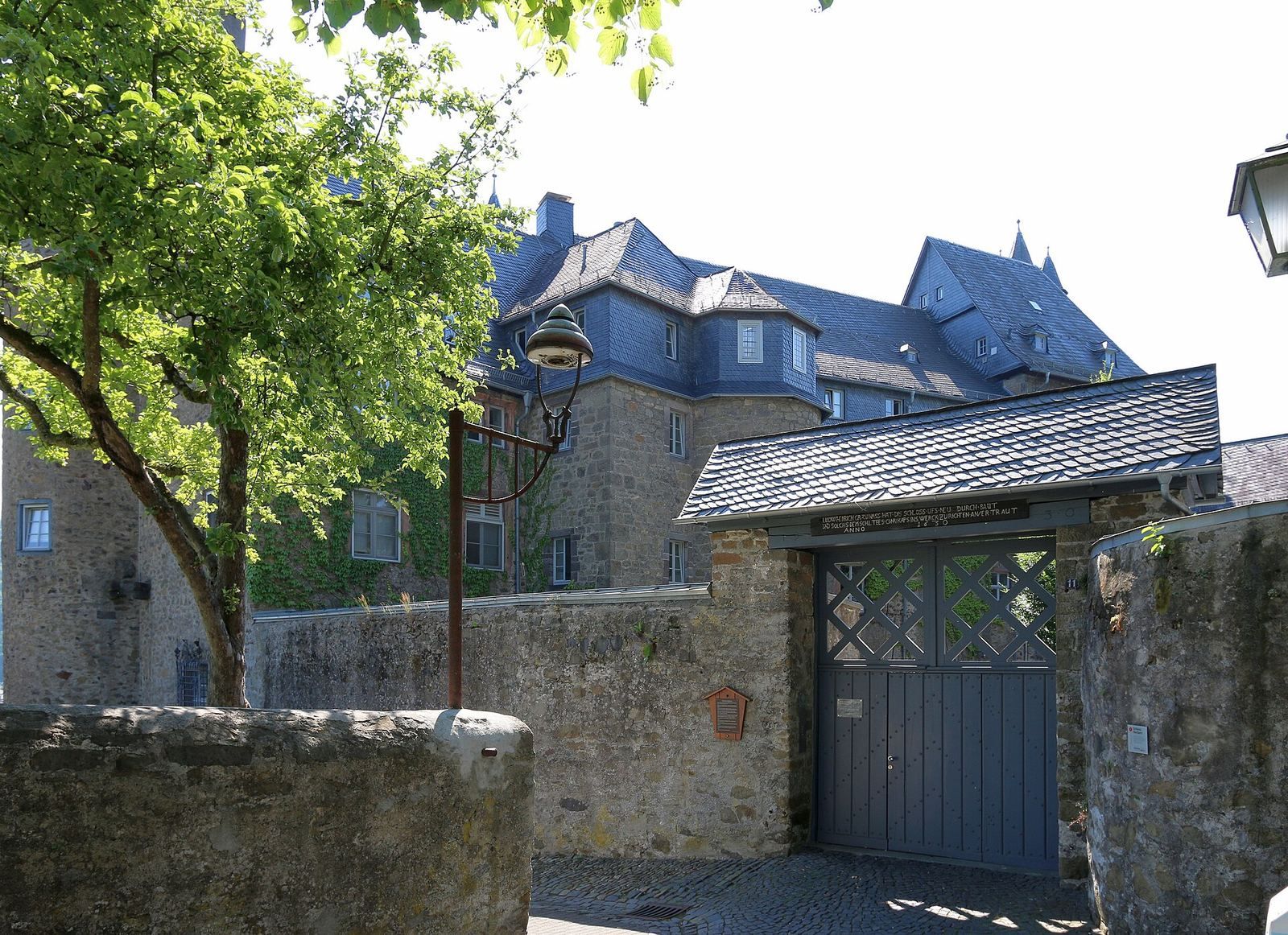
A small gate known as the French Gate and the French Path are features associated with the castle. The castle library holds approximately 68,000 titles, around 10,000 of them printed before 1900. Its collection includes works produced by historical Herborn printers, among them Corvin.