Schloss Holdereggen: A Neo-Renaissance Villa in Lindau
Site at a Glance
- Popularity
- Low
- Country
- Germany
- Primary era
- Modern
- Eras represented
- Modern
- Civilizations
- German, Kingdom of Bavaria
- Site type
- Domestic
- Remains
- Elite Residence
On this page4 sections
History
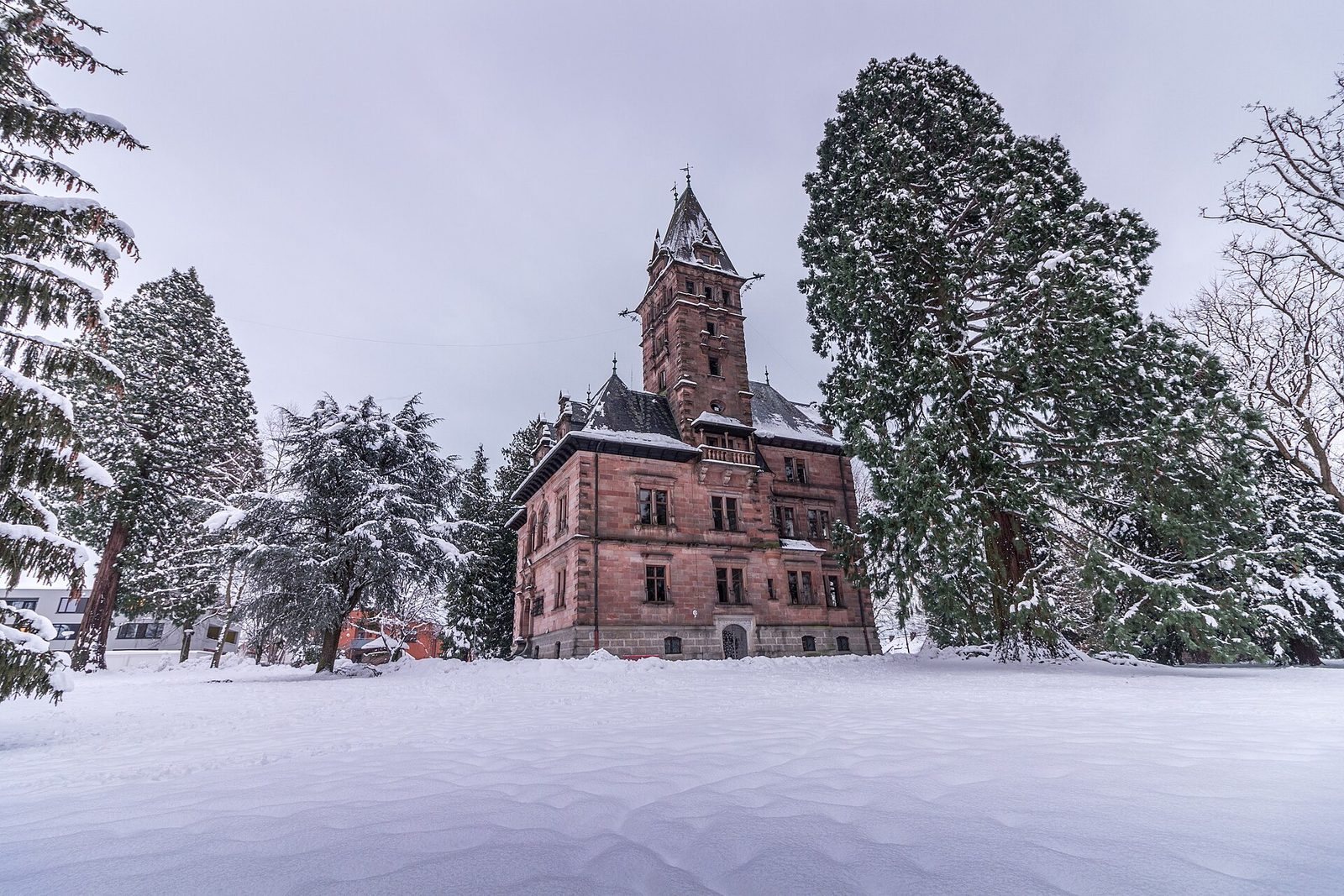
Schloss Holdereggen is a villa in Aeschach, Lindau, Germany, built between 1887 and 1890 in the Neo-Renaissance style, a nineteenth-century revival of Renaissance forms. Its design also has an English-Norman character, drawing on forms associated with Norman-era buildings in England. Entrepreneur Hermann Näher commissioned it as a residence.
The grounds first appear in a record from 1497 as Holderegk and are said to have belonged to Lienhard Holderegk in the fifteenth century. The spellings Hölderecken and Holdereggen appear in records from 1626 and 1653. Another possible explanation for the name connects it with the medieval cultivation of elder shrubs.
Hermann Näher’s Villa
Näher (1838-1908), who was born in Aeschach, made his fortune through tobacco and spice cultivation and exports of ivory and fine wood from Sumatra. He returned to Lindau in 1879, married Louise von Gonzenbach in 1881, and acquired the grounds for his new villa. Villa Diehl had previously occupied the building site.
The villa was built to plans prepared by an architect in Munich. Näher and his wife could not live there for long. Untrustworthy dealings by business partners led to financial difficulties and a widely publicized bankruptcy, placing the villa within the bankruptcy estate. Näher died in 1908 while the proceedings continued. On 18 May 1902, he had been made an honorary citizen of Lindau in recognition of his generosity to the community.
New Ownership and Public Use
Adolph Brougier became the owner in May 1910. A co-owner of Franz Kathreiners Nachfolger, a company associated with Kathreiner malt coffee, he made the villa available as a military hospital during the First World War.
The property later passed to the family of Brougier’s son-in-law, Ludwig Seisser. Seisser belonged to an old Bavarian merchant family, worked in his father-in-law’s business, and held the honorary title of royal commercial councillor, a distinction associated with prominent businesspeople in some German states. His son Erich was killed by the Nazis during the Holocaust, the Nazi-led genocide of European Jews and persecution and murder of other groups.
Under pressure from the Nazi Party, which ruled Germany from 1933 to 1945, the Seisser family sold the property. In 1937, Lindau acquired the villa and grounds and converted the building into a boarding school for the Higher Evangelical Girls’ School. The name “Jungfernburg,” which dates from this period, remains in local use.
The building has housed Lindau’s city music school since 1951. Karl Prestele was among its co-founders and teachers. From 2001 to 2010, a special-education support center operated there as an outpost of the Antonio-Huber School in Lindenberg. In 2012, a small pavement-set memorial called a Stolperstein was installed outside the villa in memory of Erich Seisser.
Remains
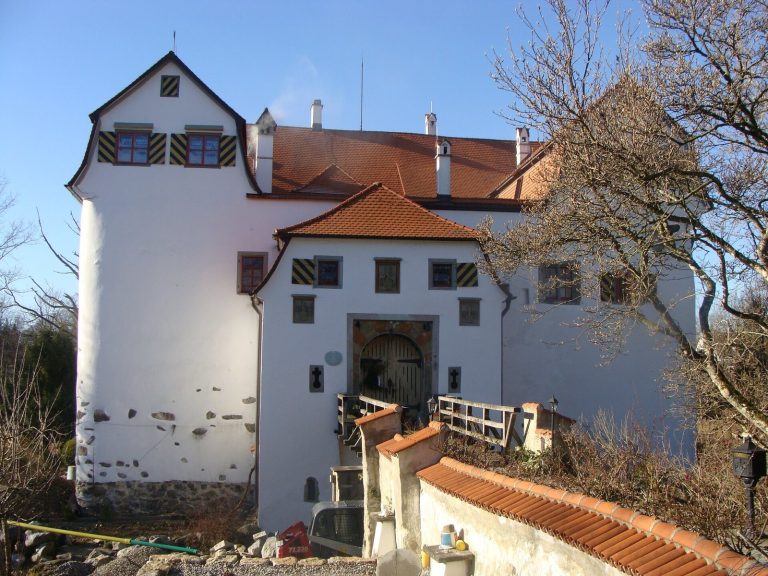
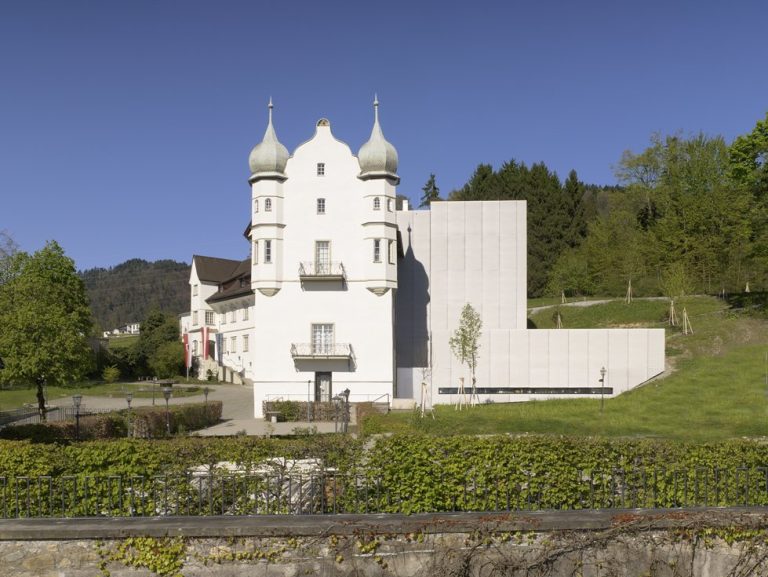
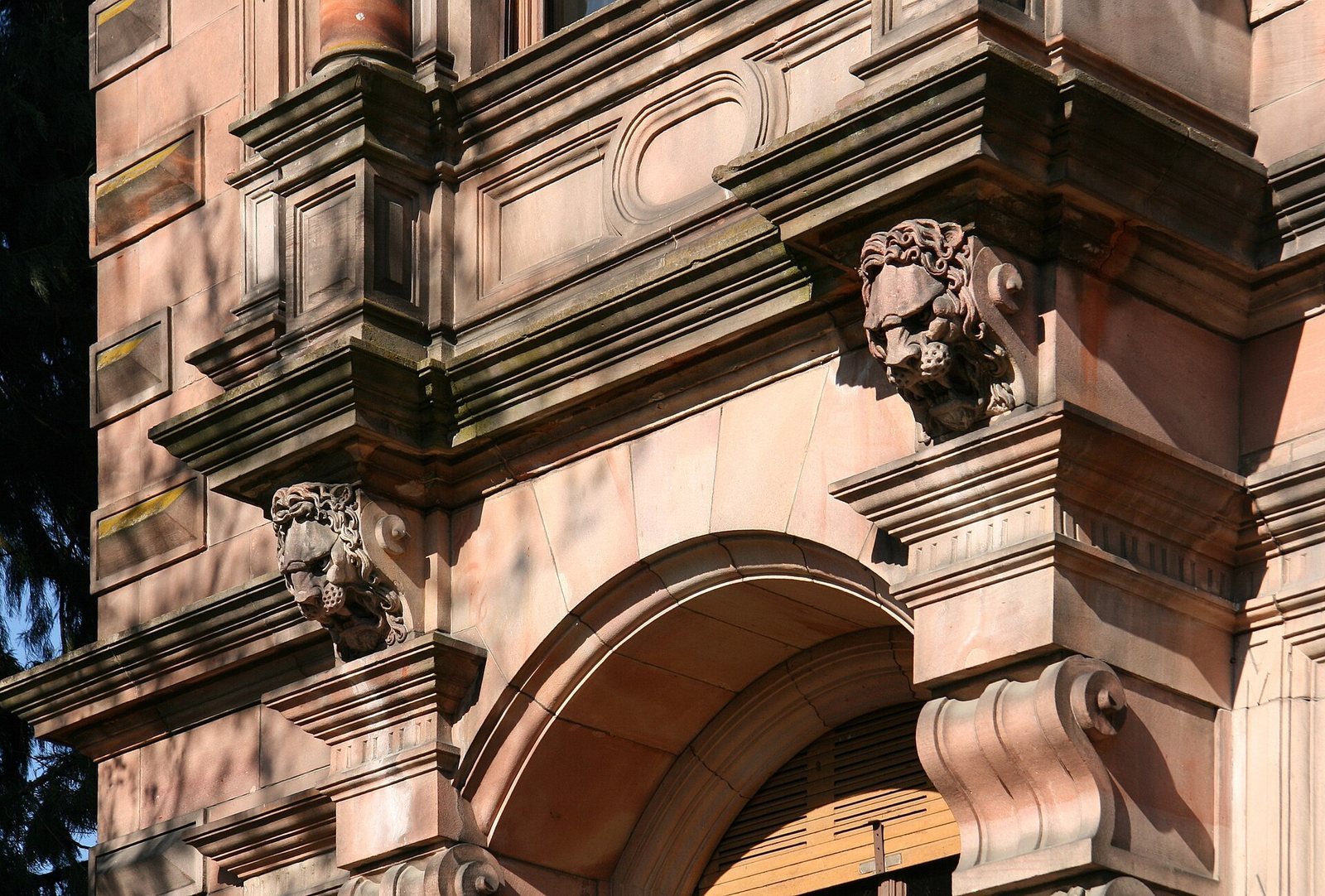
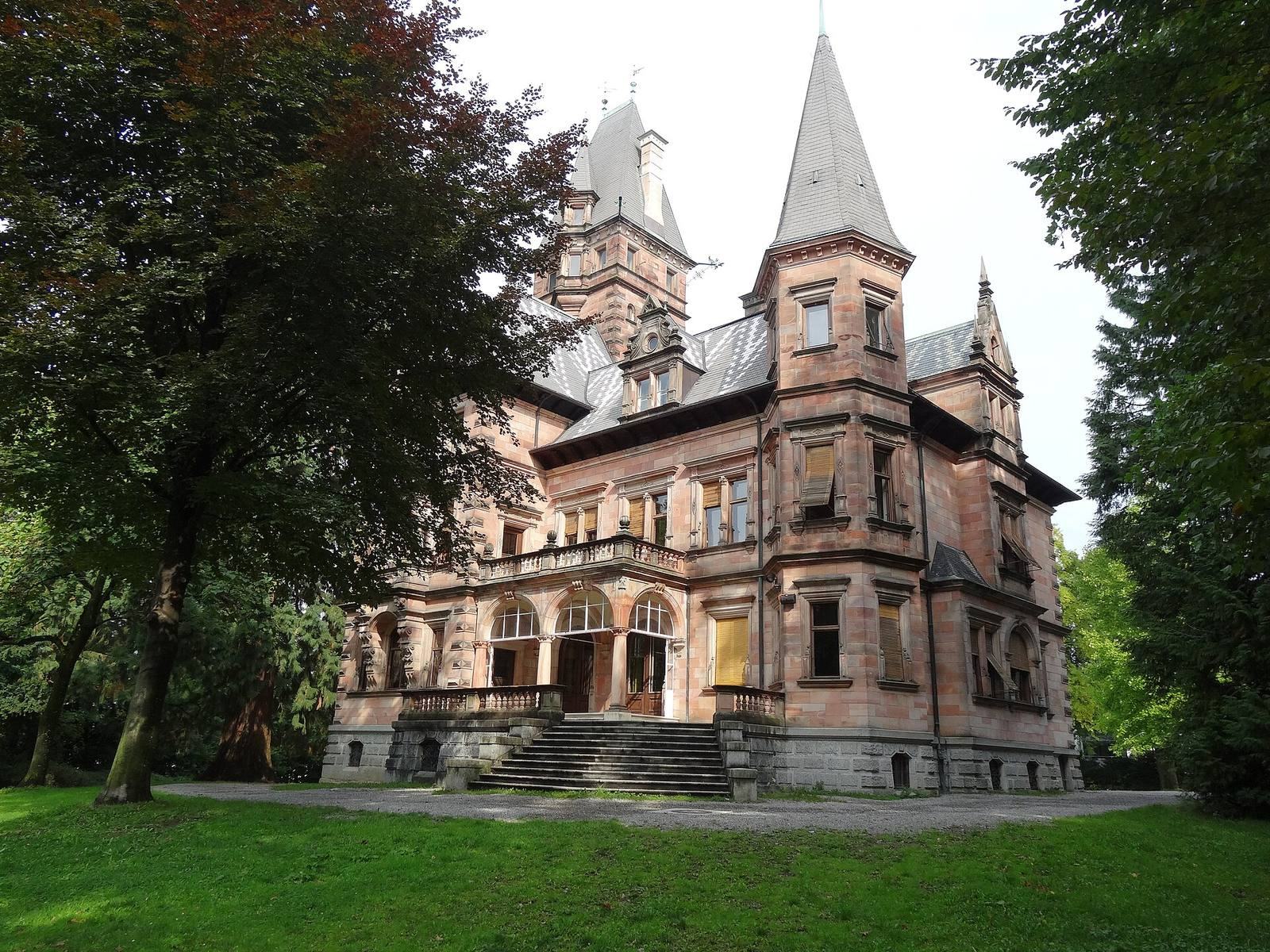
The two-storey villa stands within an enclosed park and is built of red sandstone quarried near Landstuhl. Its design includes two towers and bay windows, while an exterior staircase leads to a terrace.
Outside the building, a Stolperstein, a small memorial set into the pavement, marks the site.