Hartlebury Castle: A Medieval Fortified Manor and Episcopal Residence


Site at a Glance
- Rating
- 4.7
- Popularity
- Low
- Country
- United Kingdom
- Primary era
- Medieval
- External website
- Open
- Eras represented
- Medieval, Early Modern
- Civilizations
- English
- Site type
- Military
- Remains
- Castle
On this page16 sections
History
Hartlebury Castle is a medieval fortified manor house in the United Kingdom, near Hartlebury in Worcestershire. Built in the mid-thirteenth century, it served as a residence of the Bishops of Worcester from the early 1200s until 2007, later becoming their principal home. The manor had belonged to the bishops since the Norman Conquest, after its land was given to the Bishop of Worcester by King Burgred of Mercia.
Medieval episcopal residence
Bishop Walter de Cantilupe began strengthening the manor house during the thirteenth century. He supported Simon de Montfort, the nobleman who led the baronial opposition to King Henry III during the Second Barons’ War. Cantilupe’s successor, Bishop Godfrey Giffard, completed the fortifications in 1268, creating a defended episcopal residence.
The castle received its first recorded royal visit in 1282, when King Edward I stopped there while travelling to Wales. A gatehouse was added during the reign of King Henry VI at the instigation of Bishop John Carpenter. Hartlebury remained closely connected with the bishops of Worcester, whose household and administrative needs shaped its later development.
Royal visits and episcopal connections
Princess Mary visited Hartlebury in April 1526. On 12 August 1575, Queen Elizabeth I stayed at the castle while travelling to Worcester. Seven years later, Bishop John Whitgift signed the document that permitted William Shakespeare to marry Anne Hathaway.
The castle also preserves associations with later bishops and their families. Bishop Richard Hurd established the Hurd Library in 1782. In 1788, he received King George III, Queen Charlotte, three princesses, and the Duke of York at Hartlebury. Bishop Edward Stillingfleet planted the avenue of lime trees in the park, while Bishop Henry Pepys presented Queen Victoria with the deer herd kept at the estate since time immemorial.
Emily Pepys, the ten-year-old daughter of Bishop Pepys, recorded the daily life of the bishop’s family in a diary covering six months in 1844 and 1845. By 1890, some of the moats had been filled and converted into flower gardens, changing parts of the medieval defensive landscape into ornamental grounds.
Civil War and later use
During the First English Civil War, fought from 1642 to 1646 between supporters of King Charles I and Parliament, Hartlebury was strongly fortified for the royalist side. Captain Sandys and Lord Windsor held it with 120 infantrymen, 20 cavalrymen, and provisions intended to last twelve months. The garrison surrendered to Colonel Thomas Morgan’s Parliamentary forces after two days, without a shot being fired.
Parliament then slighted the castle, deliberately damaging the stronghold so that it could no longer serve effectively as a military position. Parliamentary commissioners seized and sold the castle and manor to Thomas Westrowe for £3,133 6s. 8d. Both properties were returned to the Bishop of Worcester after the Stuart Restoration of 1660.
During the First World War, Hartlebury Castle became a Red Cross Voluntary Aid Detachment hospital. VAD personnel provided nursing and hospital support during the conflict, and scrapbooks made by soldiers treated at Hartlebury remain associated with the site.
Museum and preservation
Worcestershire County Council took over the north wing in 1964, and the Worcestershire County Museum opened there in 1966. The bishop’s residence moved to a house beside Worcester Cathedral following the appointment of Bishop John Inge in 2008, ending Hartlebury’s centuries-long role as the bishop’s home.
The proposed sale of the castle in 2010 led to a local campaign against its transfer into private ownership. The Hartlebury Castle Preservation Trust, a registered charity, was formed to preserve the buildings, estate, and Hurd Library for education and public enjoyment. The Trust agreed to purchase the freehold from the Church of England in 2012 and completed the purchase of the castle and its 43-acre estate in March 2015.
Heritage Lottery Fund support followed in stages, including a grant secured in 2014 by the Trust, Worcestershire County Council, and Museums Worcestershire for the preservation of the castle, estate, and collections. Renovations were completed in April 2018, with interpretation focusing partly on the Pepys family through digital portraits, audio guides, and interactive displays. Hartlebury Castle is a Grade I listed building, the highest category of statutory protection in England for buildings of exceptional architectural or historic interest. Its preservation has also received support from Historic England and the Culture Recovery Fund of the Department for Digital, Culture, Media and Sport.
Remains
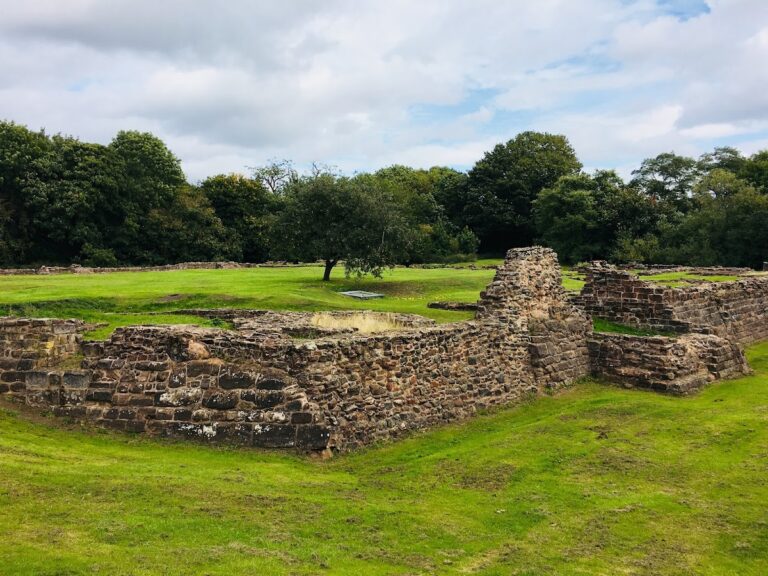
Hartlebury Castle survives as a group of historic buildings and landscaped grounds formed from a fortified medieval manor house, later episcopal residences, former defensive features, gardens, parkland, and associated collections. The estate covers 43 acres and includes the castle buildings, former moats, an avenue of lime trees, and several designed landscape areas.
Medieval and Civil War fabric
Fortified manor house
The principal building began as a fortified manor house in the mid-thirteenth century. Its medieval defences included embattled elements, completed under Bishop Godfrey Giffard in 1268. The work gave the Bishops of Worcester a defended residence while retaining the functions of a manorial and episcopal household.
Gatehouse and bastion ditch
A gatehouse was added during the reign of King Henry VI at the instigation of Bishop John Carpenter. In July 2022, cropmarks revealed the line of a Civil War-era bastion ditch, and excavation in 2023 established that the ditch was 3.4 metres deep. The work recovered seventeenth-century material, including a coin of James I and lead pistol shot.
Gardens and parkland
Former moats and gardens
Parts of the former moat system were filled by 1890 and laid out as flower gardens. The present grounds include a sunken garden, an orchard terrace, a boardwalk, a carriage circle, a nature trail, and the Moat Walk. These features occupy an estate whose landscape still incorporates the altered line of the castle’s former defensive works.
Lime avenue and estate features
An avenue of lime trees runs through the park. The grounds also contain a cider mill and a Transport Gallery, where surviving vehicles and conveyances include a fire engine, hansom cab, bicycles, carts, and a collection of Gypsy caravans.
Library and museum collections
Hurd Library
The Hurd Library remains at Hartlebury and contains Bishop Richard Hurd’s extensive book collection. The holdings include works formerly kept in the libraries of Alexander Pope and William Warburton, as well as a copy of the Iliad from which Pope made his translation.
Worcestershire County Museum
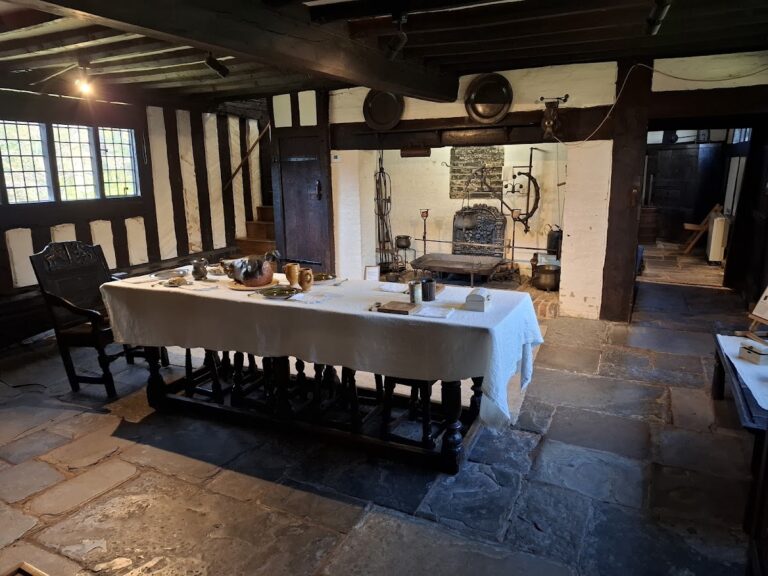
The north wing contains the Worcestershire County Museum, installed in former servants’ quarters. Its displays cover local history, toys, archaeology, costumes, Bromsgrove Guild crafts, local industry and transport, geology, and natural history. Period-room displays represent a schoolroom, nursery, and scullery, together with rooms styled in Victorian, Georgian, and English Civil War forms.
Palace interpretation
The former bishop’s palace is presented through audio guides, talking portraits, and interactive displays. Together with the library, museum, gardens, and surviving military features, these elements convey the different uses that shaped Hartlebury Castle from the medieval period to the modern era.
Nearby sites