Hajikami Kofun: A Fifth-Century Keyhole Burial Mound in Japan
Site at a Glance
- Rating
- 3.7
- Popularity
- Very Low
- Country
- Japan
- Primary era
- Classical
- External website
- Open
- Eras represented
- Classical, Early Modern, Modern
- Civilizations
- Yamato
- Site type
- Burial
- Remains
- Burial Mound
On this page8 sections
History
Hajikami Kofun, also called Hajikami-hama Kofun, is a fifth-century Japanese burial mound in Arida, Wakayama, Japan. Built during the middle Kofun period, the era from approximately the third to the sixth centuries associated with elite burial mounds, it originally had a keyhole-shaped plan combining a circular rear mound with a square-fronted section. Its actual occupant is unknown, although local tradition identifies it with Prince Nagaya.
Construction in the Kofun period
The tomb was constructed during the middle or latter part of the fifth century on the coast of northwestern Wakayama. Several kofun formerly occupied the surrounding area, forming part of a local burial landscape. The mound was encircled by a moat, and stone walls were installed around it by approximately the latter part of the Edo period. The moat later became filled, while the mound continued to be treated as a place of local historical and religious importance.
Excavation and industrial change
Hajikami Kofun was discovered and excavated in 1908 while agricultural land was being cultivated. The burial goods were submitted to the Imperial Household Ministry and later transferred to the Tokyo Imperial Museum, now the Tokyo National Museum. From 1940 onward, construction for a naval-designated aviation-fuel manufacturing plant destroyed most of the other kofun in the surrounding area. The plant began operating in 1941 as the Wakayama Factory of Toa Fuel Industry, and the site is now within the ENEOS Wakayama Refinery.
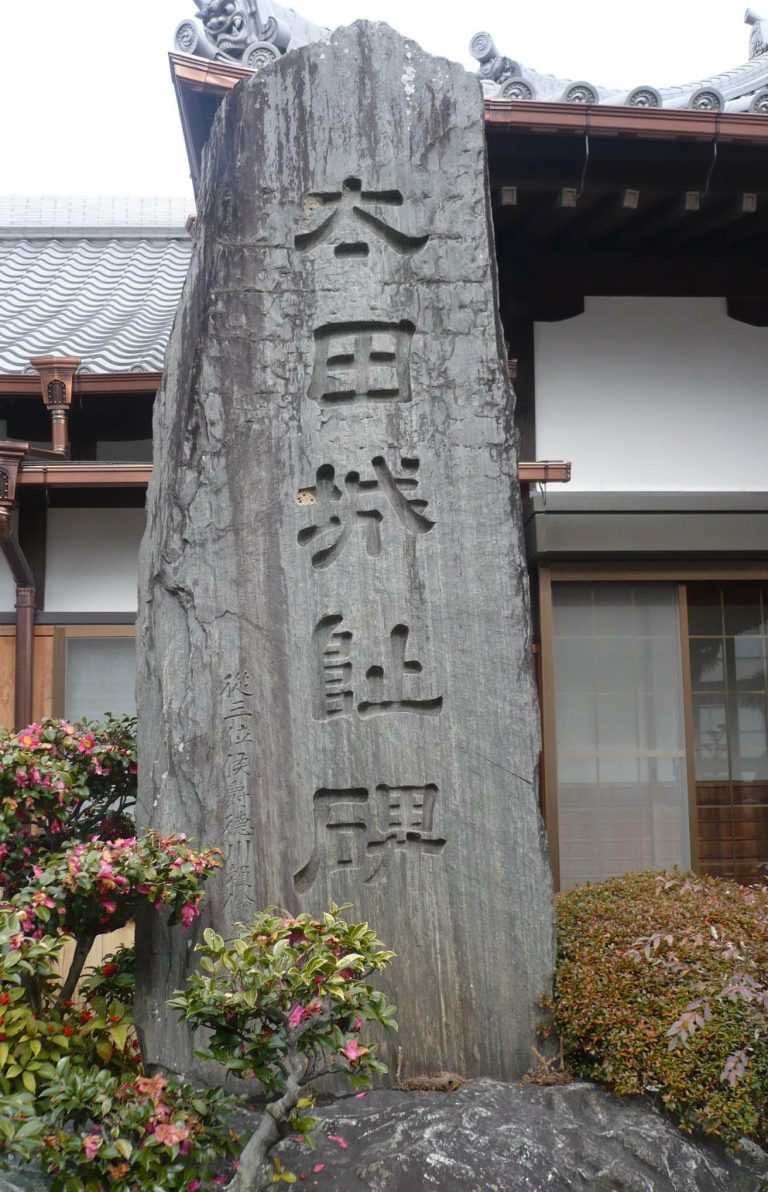
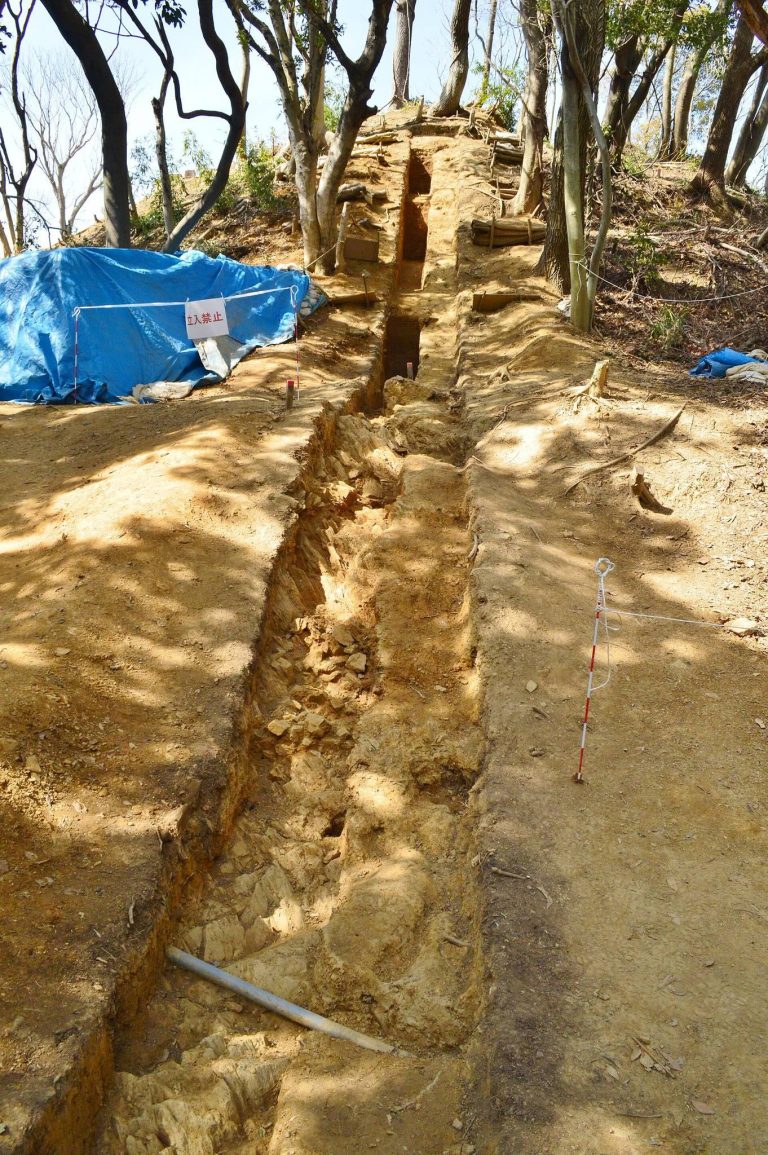
A stone monument was erected on the summit in 1914. Its inscription commemorates the sacred remains of Prince Nagaya and reflects a local tradition concerning the tomb’s identity. The site was designated a Wakayama Prefectural Historic Site on April 1, 1958, under the name “Hajikami no Kofun.” Repairs to the stone walls led to an archaeological investigation by the Arida City Board of Education in fiscal year 2010, followed by a preliminary report in 2012. A memorial festival continues to be held at the tomb.
The tradition of Prince Nagaya
Prince Nagaya was an imperial prince and court aristocrat of the early eighth century, the son of Prince Takechi and grandson of Emperor Tenmu. The Shoku Nihongi, an official Japanese court chronicle, records that Nagaya, his wife Princess Kibi, and their children died by suicide during the Nagaya Prince Incident in 729. It states that Nagaya and Princess Kibi were buried at Ikoma Mountain. The Imperial Household Agency, the Japanese government body responsible for imperial household affairs and imperial mausolea, now identifies Nashimoto No. 2 Kofun in Heguri Town, Nara Prefecture, as the Tomb of Prince Nagaya.
Two Buddhist and legendary collections, the Nihon Ryoiki and the Konjaku Monogatari-shu, preserve a different tradition. In this account, Nagaya’s bones were sent to Tosa Province, after which deaths were attributed to his vengeful spirit. The bones were then placed at an island site in Kii Province. Local tradition identifies that island with Okinoshima, offshore from Hatsushima, and connects Hajikami Kofun on the opposite shore with Nagaya’s burial. This tradition conflicts with the archaeological dating of the mound, whose construction several centuries predates Nagaya’s lifetime.
Remains
Mound and burial chamber
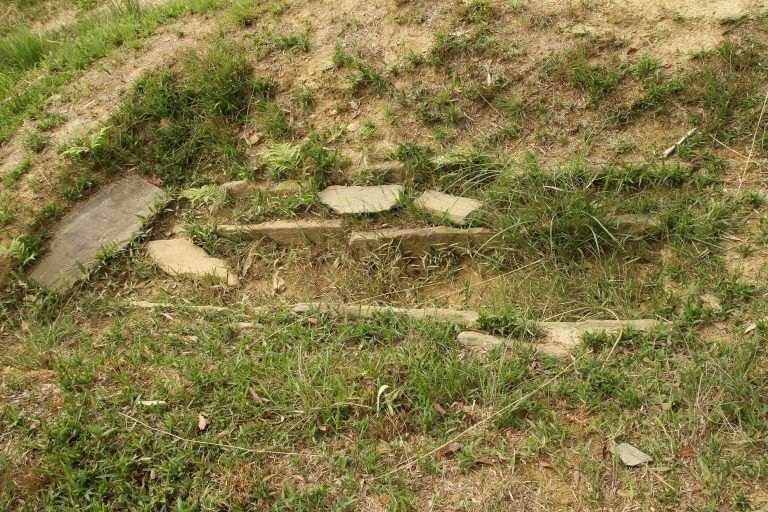
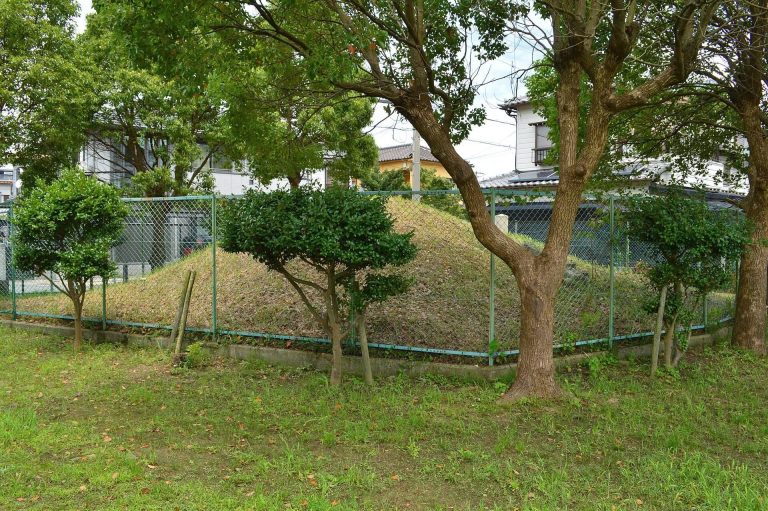
The surviving mound is the circular rear part of a keyhole-shaped tomb, reconstructed at approximately 20 meters in diameter. Its square-fronted section faced southwest. The front section is uncertain in form, but its present remains are estimated at about 5 meters long and 8 meters wide. A moat surrounded the mound, and the burial facility was a horizontal-entry stone chamber containing a box-shaped stone coffin. Stone walls around the mound belong to a later phase, probably established by approximately the latter part of the Edo period.
Excavated burial goods
The 1908 excavation recovered human-bone fragments, a bronze mirror, a stone pillow, weapons, armor, Haji ware, and other grave goods. Haji ware was a low-fired, unglazed earthenware tradition used in ancient Japan, including for funerary vessels. The materials are preserved at the Tokyo National Museum in fragmentary condition. A nearly life-size drawing by Higashiyama Kindo, a local priest of Komyoji Temple and painter who died in 1912, provides detailed information about the excavated assemblage.
The recorded objects include one bronze mirror measuring 11.7 centimeters in diameter, more than ten bone fragments, twelve teeth, one stone pillow, seven fittings, seven tubular beads, two swords, one helmet, one suit of armor with an associated iron fitting, four spear- or halberd-like weapons, eleven arrowheads, and eleven vessels. The fittings comprise five six-petaled floral pieces and two circular pieces. The vessels consist of four stemmed Haji ware cups and seven small jars of assorted sizes. One additional blade is listed as possibly being a straight sword.
Monument and later associations
The stone monument on the summit bears the inscription commemorating Prince Nagaya’s sacred remains. The six-petaled floral fittings from the burial assemblage later influenced the emblem and school song of Hatsushima Elementary School in Arida, linking objects recovered from the tomb with a local institutional tradition.