Tennozuka Kofun: A Sixth-Century Keyhole Burial Mound in Japan
Site at a Glance
- Rating
- 3.8
- Popularity
- Very Low
- Country
- Japan
- Primary era
- Medieval
- External website
- Open
- Eras represented
- Medieval
- Civilizations
- Yamato
- Site type
- Burial
- Remains
- Burial Mound
On this page6 sections
History
Tennozuka Kofun is a sixth-century keyhole-shaped burial mound in Japan, located in Wakayama City, Wakayama Prefecture. Built during the late Kofun period, an era from roughly the third to the seventh century when mound-building societies flourished in Japan, it occupies the summit of Mount Tennozuka in the Iwahashi Senzuka Kofun Group. Its unusually large scale has been associated with the prosperity of the ancient Kishi clan, a lineage connected with the Kii region around present-day Wakayama.
Construction in the Late Kofun Period
The mound was probably constructed around the middle of the sixth century, when the building of large burial mounds was declining across Japan. It stands at the highest point of the Iwahashi mountain mass, about 155 meters above sea level, overlooking the Wakayama Plain near the mouth of the Kinokawa River. Known formerly as Tennozukayama Kofun, it is the largest kofun in Wakayama Prefecture and the largest mound in the Iwahashi Senzuka Kofun Group.
Its scale places the tomb within the political and social setting of the late Kofun period, when exceptionally large burial mounds were becoming less common. The site was later recognized as part of the wider Iwahashi Senzuka Kofun Group, which received national Special Historic Site status on October 3, 2016. In Japan, this designation is reserved for historic sites regarded as having particularly high historical or scholarly importance.
Investigation and Preservation
Tokugawa Yorimichi investigated the tomb in 1906. The following year, Ono Ungai of the Anthropology Department of Tokyo Imperial University examined the stone chamber. A plan of the chamber appeared in Neil Gordon Munro’s Prehistoric Japan in 1908. The interior was opened to the public for two months in 1912.
Further archaeological work took place in 1964 through an investigation by the Wakayama City Board of Education and Kansai University. Survey and excavation resumed in fiscal year 2015 to establish the site’s extent before designation. Second- and third-phase excavations followed in fiscal years 2017 and 2018 as part of site development, with the results reported in 2020. The official name changed from Tennozukayama Kofun to Tennozuka Kofun on February 1, 2016.
Remains
The Mound
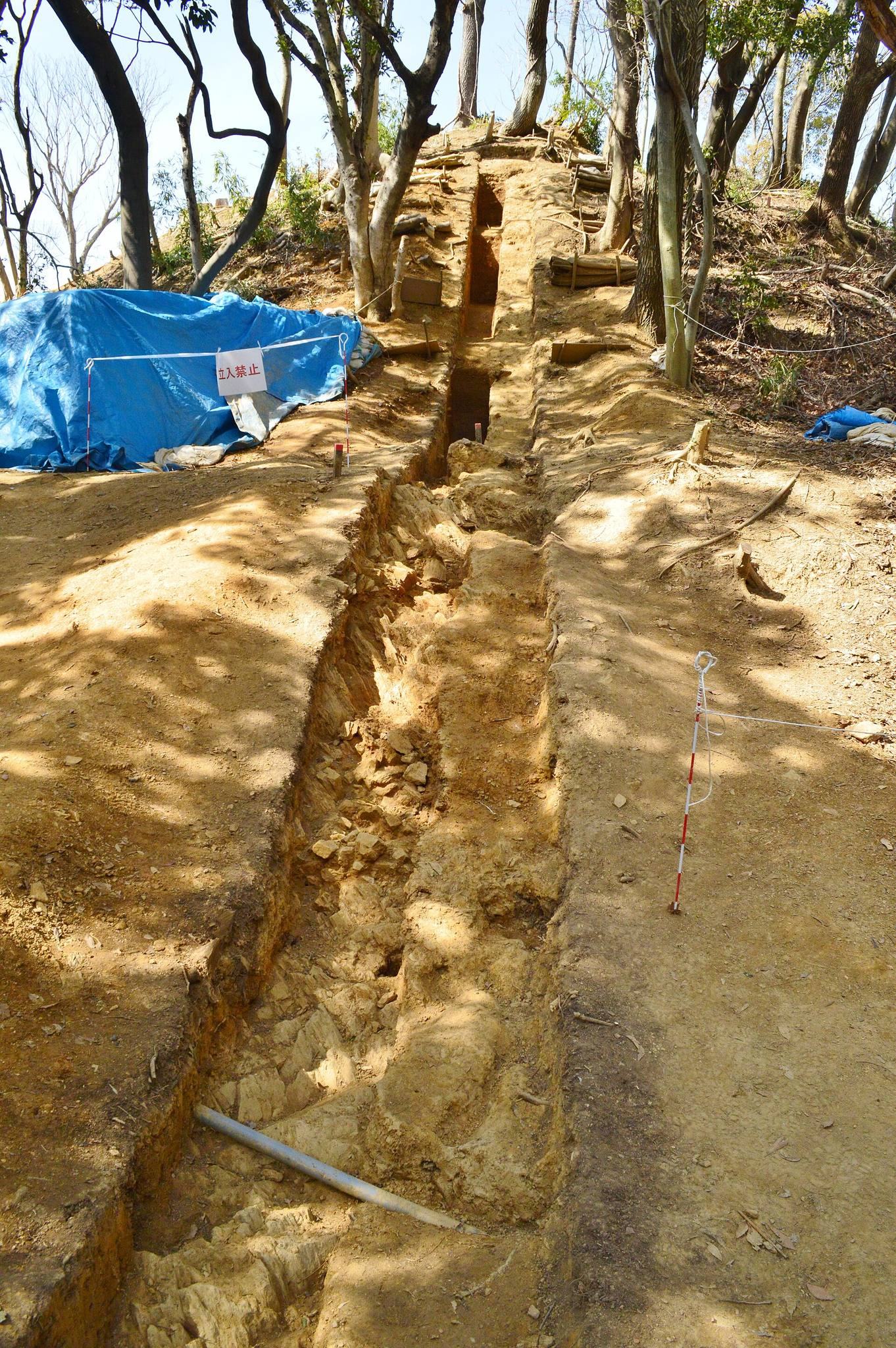
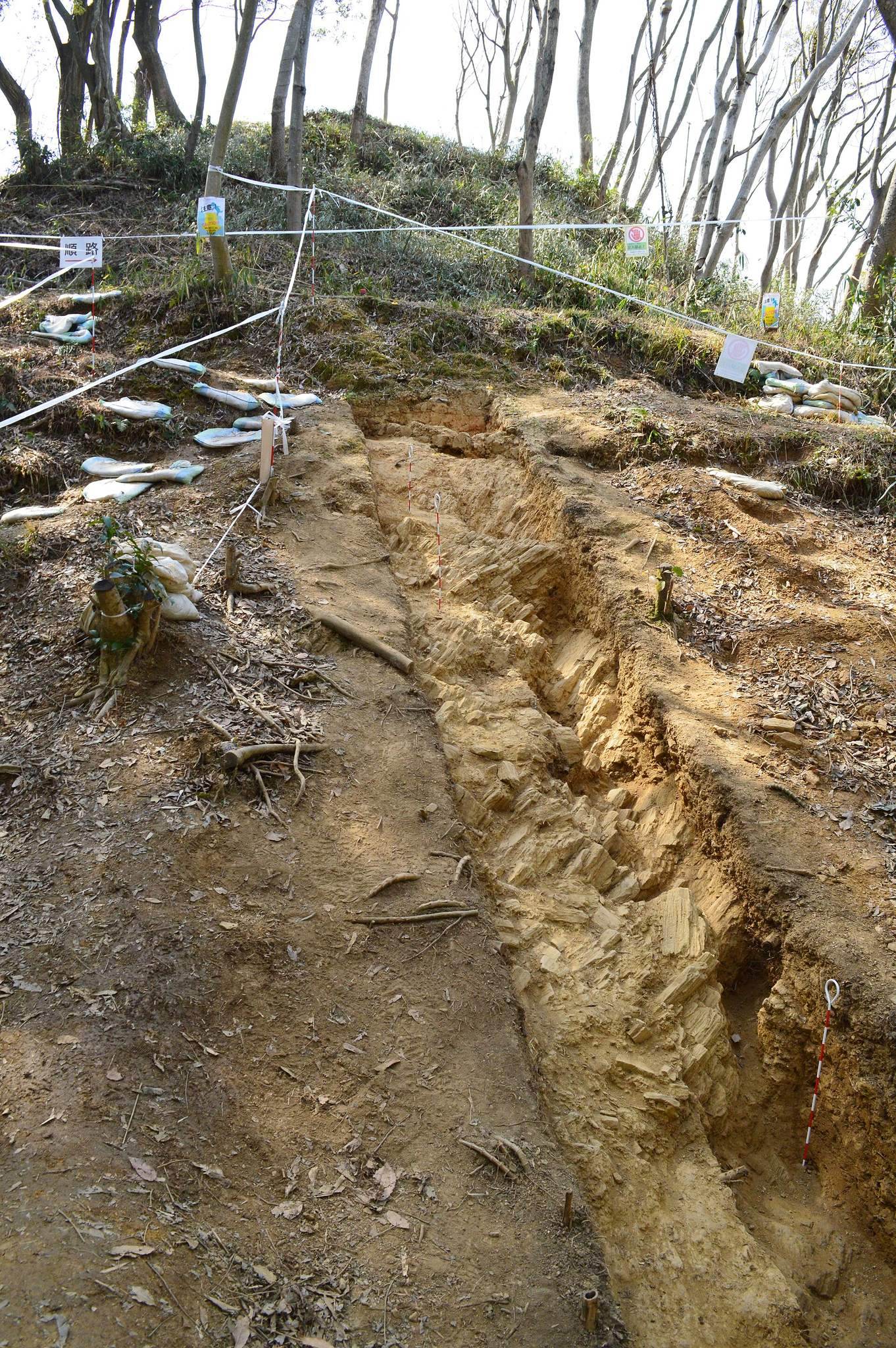
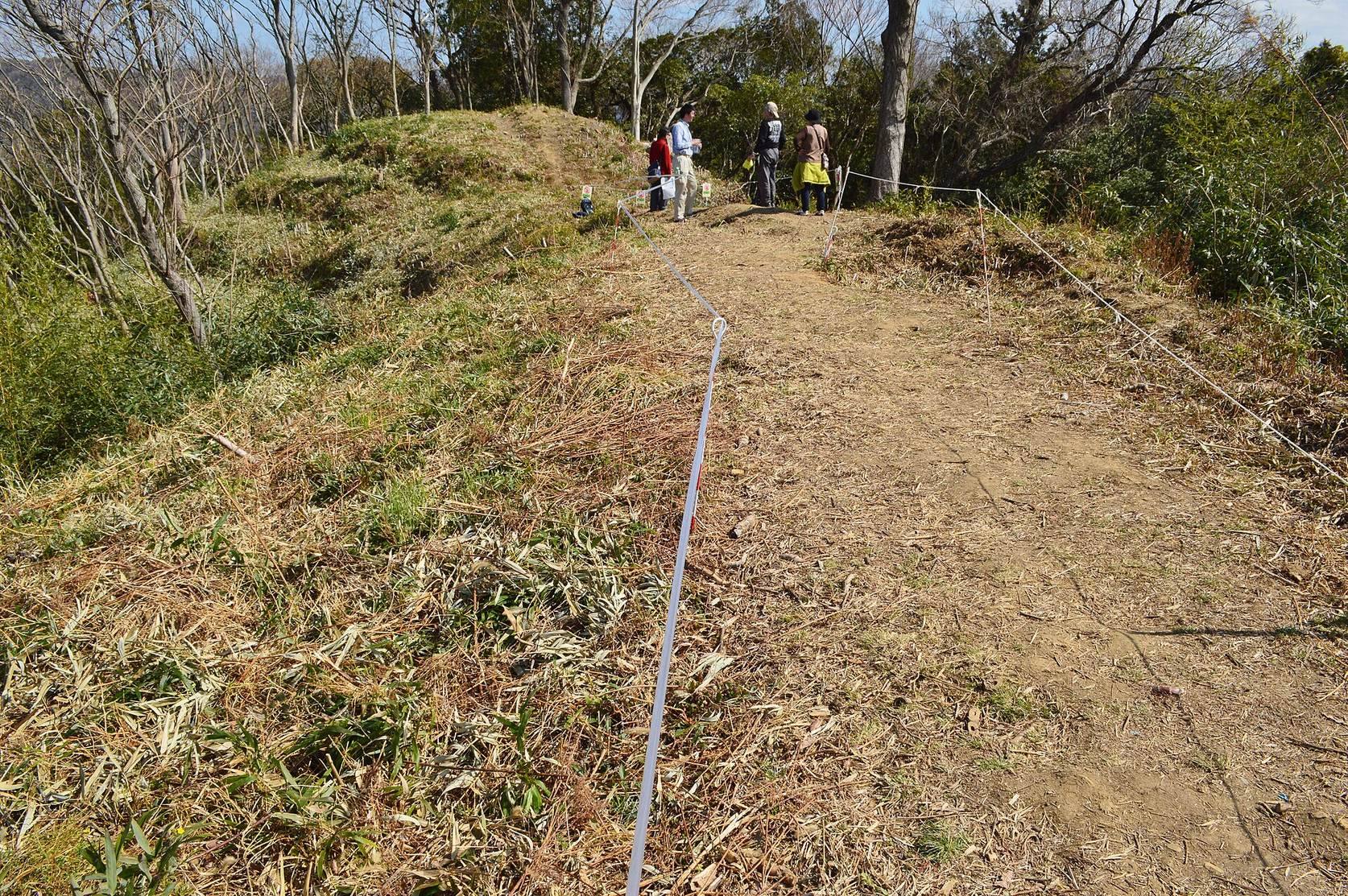
Tennozuka Kofun is a two-stage, keyhole-shaped mound. This form combines a circular rear section with a projecting rectangular front section. The square front points west, and the mound measures 88 meters from end to end. Its circular rear section is approximately 44 to 48 meters in diameter and rises 10.1 meters high. The front section was also constructed in two stages.
Much of the first stage was created by cutting and shaping the bedrock. Higher parts were formed with earth fill, apparently obtained by cutting into the natural ground. Yayoi-period pottery and stone tools found in this fill indicate that a settlement probably existed near the summit before the mound was built. The mound’s construction belongs to a later phase of kofun building, with a comparatively restrained arrangement of external features.
The Burial Chamber
The burial facility lies in the circular rear section and opens toward the south. It is a horizontal stone chamber, meaning a burial room entered through a passage from the side of the mound. The chamber has a double-sleeved plan, with projecting side sections at the junction between the passage and the main room. This is an Iwahashi-type chamber, a form associated with the Iwahashi Senzuka Kofun Group.
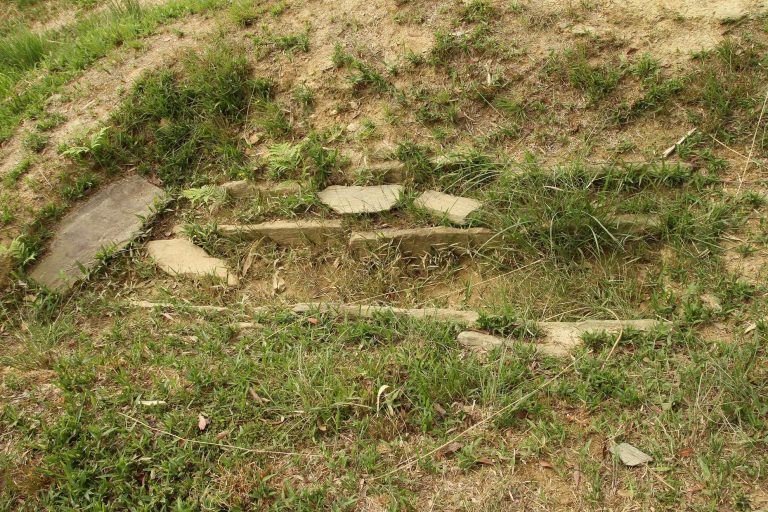
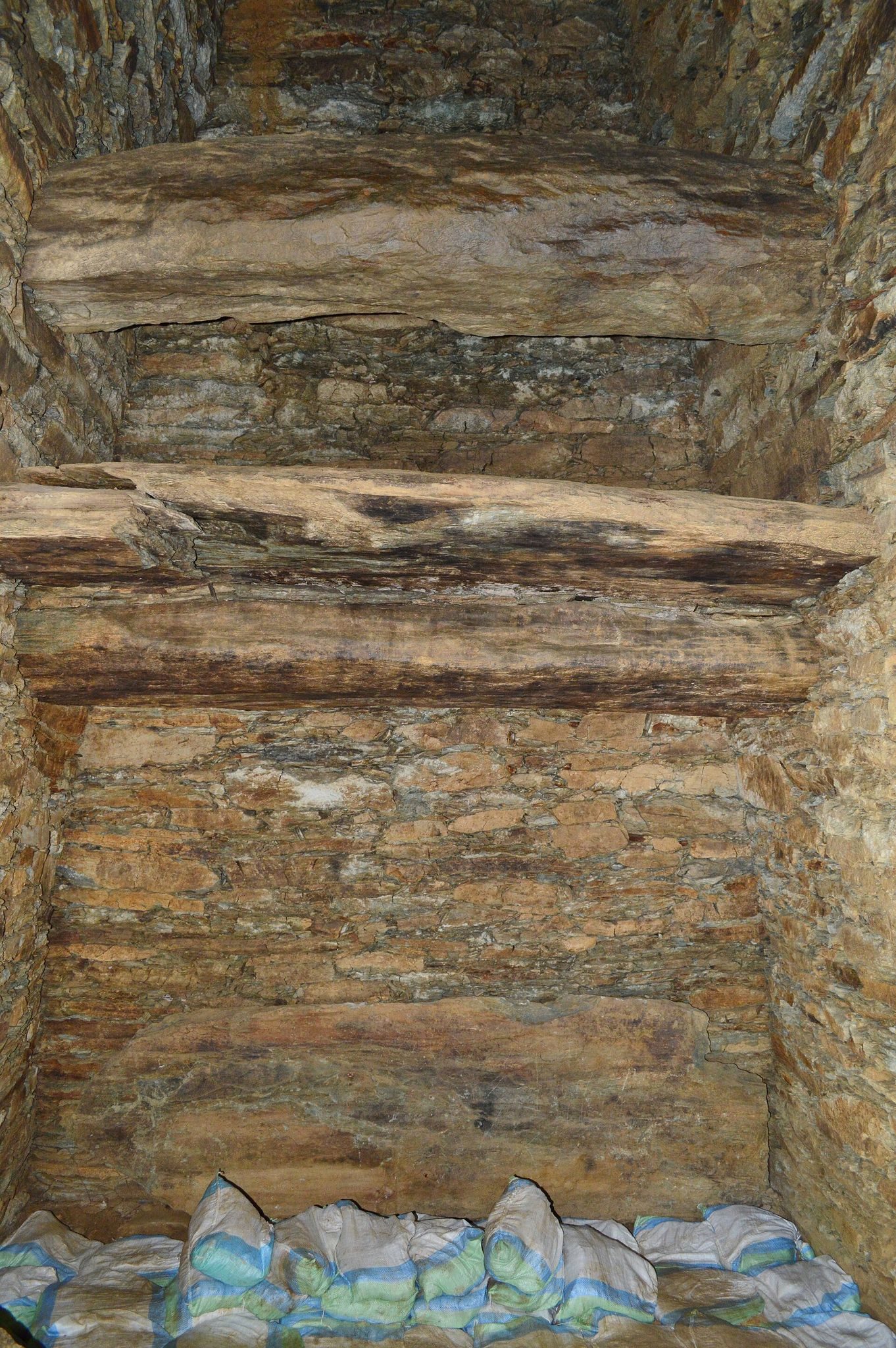
The chamber extends for 10 meters. Its main room is 4.22 meters long, 2.89 meters wide, and 5.9 meters high, making its height the second greatest recorded for a stone chamber in Japan. It was built from crystalline schist and includes a stone shelf formed from two slabs, together with eight stone beams. The main room rests on bedrock, while drainage channels run along its center and beside both side walls. These channels continue through the passage and out toward the exterior of the mound. Stone slabs remain scattered across the floor.
The chamber was looted, but archaeological investigations in 1964 and fiscal year 2017 recovered beads, small glass beads, iron objects, iron arrowheads, horse equipment, and Sue ware pottery. Sue ware was a high-fired ceramic tradition in ancient Japan and is useful for dating archaeological deposits. The pottery belongs to the TK10–MT85 ceramic phase. Finds from the tomb are displayed at the Kii Fudoki no Oka facility in Wakayama, while the Wakayama City Museum houses a replica of the stone chamber.