Ōta Castle: A Sengoku-Period Flatland Stronghold in Wakayama


Site at a Glance
- Rating
- 3.6
- Popularity
- Very Low
- Country
- Japan
- Primary era
- Early Modern
- External website
- Open
- Eras represented
- Early Modern
- Civilizations
- Toyotomi regime
- Site type
- Military
- Remains
- Castle
On this page15 sections
History
Ōta Castle was a Sengoku-period flatland castle in Wakayama, Japan, built on relatively level ground during an era of prolonged civil warfare. Traditionally, its foundation is placed in the Entoku era, when Kishi Toshitsura, the 64th Kii provincial official known as the kuni no miyatsuko, established it to protect religious estate lands. Another tradition places its foundation in the Bunmei era. The castle was first associated with the Kishi family and later with the Ōta family, before its destruction and abandonment in 1585.
Foundation and the first siege
Ōta Sakon is credited with constructing or substantially rebuilding the castle in 1576. His name does not appear in contemporary records, and his identity remains uncertain. He may have been known alternatively as Ōta Genzaemon or Ōta Jirozaemon. The castle became connected with the Miyago group, one of the armed local leagues active in Kii, a historical province corresponding broadly to present-day Wakayama Prefecture and surrounding areas.
The First Siege of Ōta Castle followed Oda Nobunaga’s withdrawal from his campaign in Kii. In May 1578, Saika forces attacked the Miyago group led by Ōta Sakon, while monks from Negoro-ji, a major Buddhist temple complex with military and political influence, supported the defenders. The fighting continued for about a month without a decisive result. Saika Magoichi then proposed a truce, which the opposing sides accepted.
The first siege is also linked to a story in which Sabu Iga-no-kami used hoes to damage the castle moat while another force intercepted reinforcements from Negoro-ji and Miyago. The same account describes the killing of a Negoro figure identified only as Ōtani. The reliability of this episode is uncertain. The wider conflict reflected divisions among the Saika leagues. In 1577, some Saika members, including Ōta Sakon’s Miyago group, had cooperated with Nobunaga during his attack on the Saika area. After Nobunaga withdrew, other Saika forces sought revenge. Nobunaga sent approximately 80,000 troops under Sakuma Nobumori, but the army failed to subdue the region.
The regional league and Hideyoshi’s campaign
During the political and military crisis surrounding the Komaki–Nagakute campaign in 1584, forces from Ōta, Saika, and Negoro-ji attacked Kishiwada Castle and advanced toward Osaka. One interpretation connects this action with an invitation from Tokugawa Ieyasu, while another holds that the allied forces acted independently.
The forces around Negoro-ji formed the Kishū Sōkoku ikki, a regional league based on religious and local institutions. It controlled religious estates assessed at about 720,000 koku, a premodern measure of land revenue conventionally linked to the rice yield of a holding, and supported approximately 30,000 warrior monks. Hideyoshi ordered the revenues from these estates to be surrendered. The ensuing campaign has been understood both as punishment for attacks toward Osaka and as a deliberate effort to destroy the regional league system.
On 10 March 1585, Hashiba Hideyoshi personally led an expedition of approximately 100,000 troops, with Hashiba Hidenaga and Hashiba Hidetsugu serving as deputies. Hideyoshi’s forces captured successive strongholds of the Ōta, Saika, and Negoro groups after the fall of Sengoku-bori Castle on 21 March. On 23 March, they attacked Negoro-ji from Fubuki Pass and Momosaka and burned the temple complex. Parts of the Saika forces joined Hideyoshi, leaving Ōta Castle increasingly isolated.
The second siege and surrender
The Second Siege of Ōta Castle lasted from 24 March to 24 April 1585. Estimates of the attacking army range from 60,000 to 100,000 troops, while the defenders and noncombatants inside the castle numbered approximately 3,000 to 5,000. Hideyoshi’s advanced force included 3,000 men under Hori Hidemasa and another 3,000 under Hasegawa Hidekazu. After crossing the Kinokawa near Tainose Bridge, the troops were ambushed by Ōta defenders using firearms and bows. At least 53 attackers were killed, although another account gives the number as 51.
Hideyoshi’s army then adopted a water siege, using an embankment to flood the fortified enclosure. The barrier stood about 300 metres from the castle, apparently at a distance chosen in relation to the effective range of firearms. It was reportedly 3 to 5 metres high, about 30 metres wide, and approximately 6 kilometres long, with an opening on its eastern side. The date and scale of the work remain uncertain. Construction began in late March and was completed around 1 April, according to accounts that give either five or six days of labour. Estimates of the total workforce range from approximately 269,200 to 469,200 people, figures that may be exaggerated. One interpretation proposes that existing flood embankments beside the frequently overflowing Kinokawa were reused.
Water began entering the enclosure on 1 April. Several days of heavy rain from 3 April increased the flooding until the castle appeared to float. Hideyoshi’s headquarters was reportedly at Kuroda, about 1 kilometre north of the castle, although its precise position is unknown. Hideyoshi also ordered Nakagawa Tobei to attack with 13 atake-bune, large Japanese warships suited to river and coastal fighting. Screens were fitted to their prows to protect the crews from arrows and firearms, but skilled swimmers from the castle bored holes in the hulls and sank the vessels. The defenders continued to use firearms against the attacking troops.
On 9 April, Matsumoto Sukemochi breached about 150 ken of the embankment near the Kirido entrance. The resulting flood caused many deaths in the camp of Ukita Hideie. Hideyoshi’s forces reportedly used 600,000 earth-filled bags to repair the breach over several days. After about a month of siege, the defenders’ material and psychological condition had deteriorated. On 24 April, following negotiations with Hachisuka Masakatsu and Maeno Nagayasu, Ōta Sakon and 52 other defenders committed suicide.
The 53 heads were buried in three places, and the Koyamatsuka monument near Gentsuji marks one of them. A letter dated 26 April also describes the execution of 53 men, the crucifixion of 23 of their wives, and the public display of the 53 heads at Tennoji. On the day of the surrender, Hideyoshi issued a three-clause order bearing a vermilion seal. It granted mercy to peasants from Izumi and northern Kii, ordered the principal leaders to be executed while sparing ordinary peasants and their families, and required the inhabitants to surrender weapons and return to farming.
A further order provided for the return of food, farming tools, cooking utensils, household goods, horses, and cattle. These measures were intended not only to remove ordinary inhabitants from the castle but also to restore their ability to resume agricultural life. The disarmament order is regarded as an early example of the policy later expressed in Hideyoshi’s nationwide separation of farmers and warriors and in the 1588 sword hunt. It also challenged the regional league system that had enabled local communities to remain armed.
Destruction and later interpretation
Ōta Castle was burned after the surrender and is believed to have been abandoned at that time. Hidenaga subsequently began construction of Wakayama Castle. The Portuguese Jesuit missionary Luis Frois described the siege in a letter to the Society of Jesus. His term “Ondanaxiro” is thought to refer to Ōta Castle, while the “commander of the sea” mentioned in the letter may have been Konishi Yukinaga. These identifications remain uncertain.
The precise character and cause of the Second Siege are also disputed. Hideyoshi-aligned records state that Ōta forces first apologized but later robbed military supplies and killed labourers. An alternative tradition says that the defenders killed 53 men sent by Hideyoshi’s envoy Nakamura Kazuuji after rejecting a demand for surrender. The number 53 may therefore have influenced the later surrender terms. The authenticity of the document known as the Ōta family papers has been questioned because its wording and Maeno Nagayasu’s seal do not correspond well to the period, leaving the historical value of its statements uncertain.
The traditional location was marked by a stone monument erected in 1921, when the surrounding area was understood to have been the former Ōta settlement. Later interpretation placed the castle south of Hideyoshi’s flood embankment, across the Miyai River near the Komukai locality, rather than entirely at the monument site. The difference between these locations reflects continuing uncertainty about the castle’s original plan and the landscape altered by later urban development.
Remains
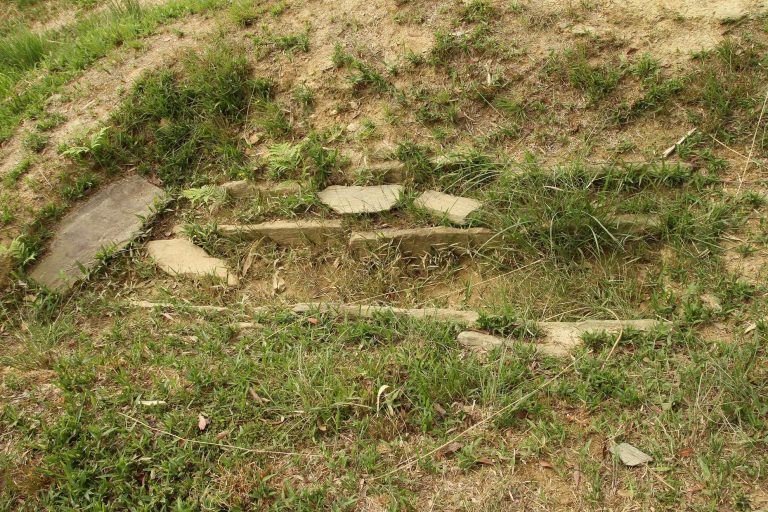
Ōta Castle was a flatland stronghold without a keep. Traditional estimates give it an east-to-west extent of about 2.5 cho, approximately 273 metres, and a north-to-south extent of 2 cho, approximately 218 metres. More recent excavation suggests a nearly square enclosure measuring about 2.5 cho on each side. Deep moats surrounded the castle, while earthen ramparts and high watchtowers strengthened its defenses. The principal surviving evidence lies beneath residential areas, and modern urban growth has obscured much of the former castle landscape.
Castle enclosure and gates
Main bailey and defenses
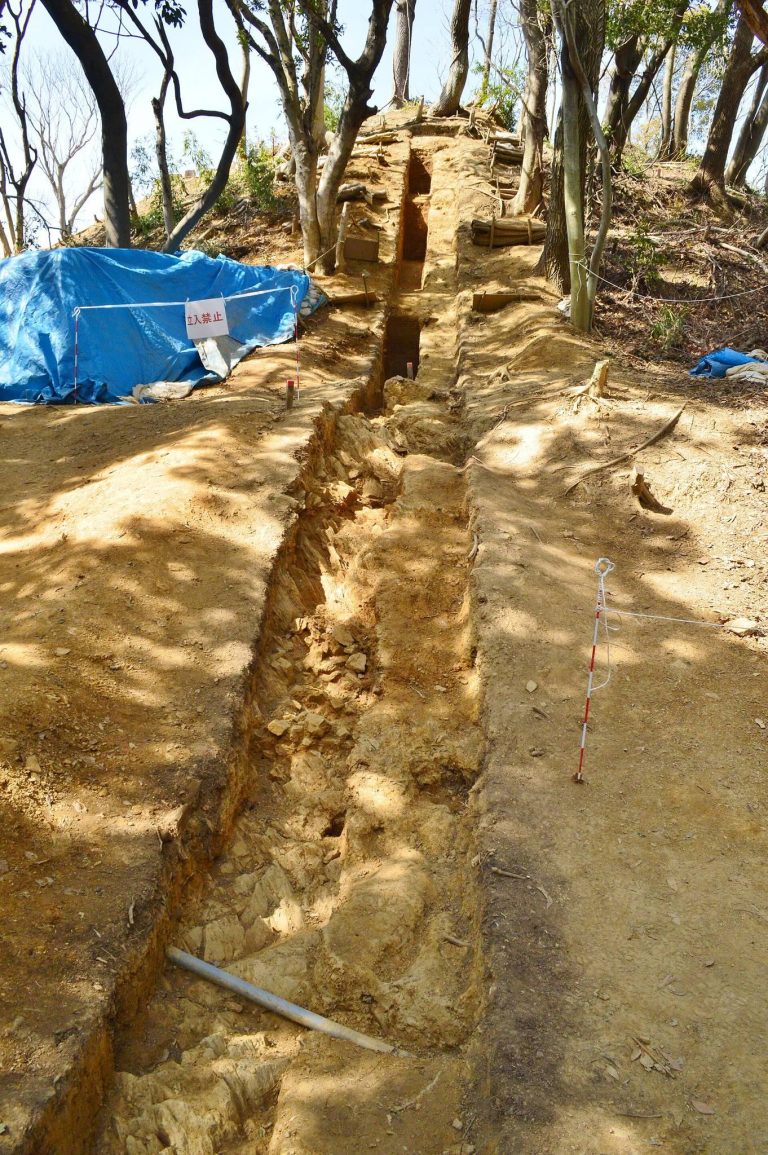
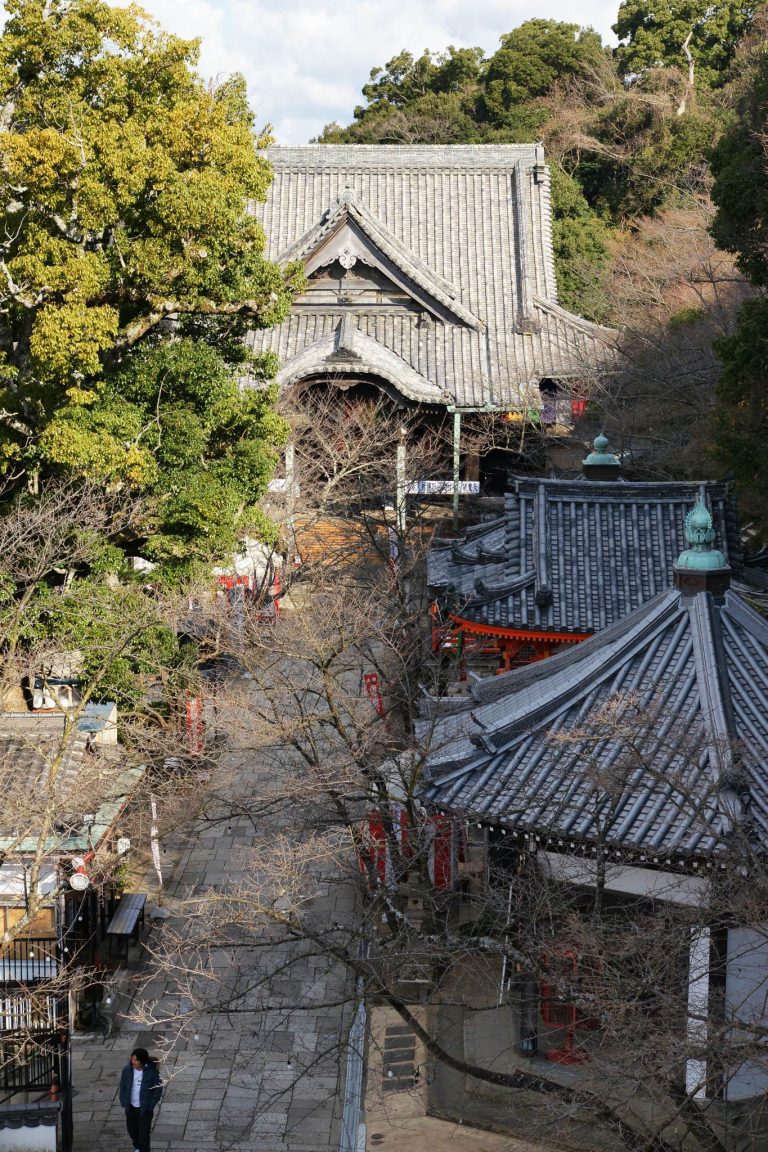
Ōta Castle is traditionally placed around Raikoji and Gentsuji, with Raikoji identified as the location of the main bailey, the castle’s principal enclosed area. The defensive layout included the Great Gate, the South Great Gate, and a northwest gate. Excavations associated with the Ōta–Kuroda Yayoi Site have identified five archaeological features considered remnants of the castle moat. Muromachi-period dishes and grinding bowls, along with three lead bullets, were recovered from the archaeological area.
Great Gate
The Great Gate stood east of the castle near Daimon Bridge, which crossed the Daimon River. It was later moved to Dairyuji in Hashimukōchō, where it survives as the relocated gate associated with Ōta Castle. Wakayama City designates it as a cultural property. The gate is the surviving relocated structure identified from the castle.
Waterworks and siege landscape
Dream Floating Bridge
A bridge traditionally called the “Dream Floating Bridge” was said to have stood about 100 metres northeast of the Great Gate. Its remains are no longer identifiable, possibly because the location has been buried. According to legend, Ōta Sakon dreamed of a floating bridge and understood from the dream that Hideyoshi was preparing a water attack. The story connects the bridge’s name with the flooding operation of 1585.
Flood embankments
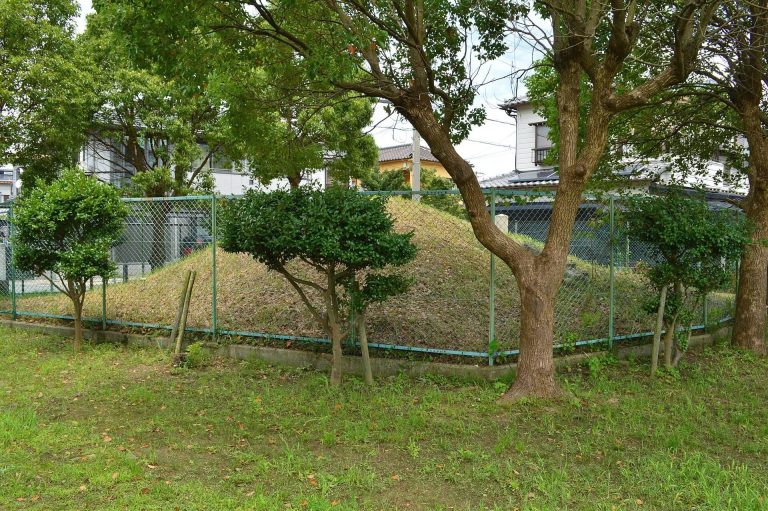
About 20 traces of the Second Siege’s embankments remained during the early Showa period, although most later disappeared. Remnants near the flood-discharge area are reported to survive. A geomorphological interpretation places the water siege within a landscape of Holocene terrace edges, natural levees, and point-bar formations. Under this interpretation, the siege works may have formed a relatively small barrier across the Miyai, or Daimon, River near Kirido rather than an entirely new 6-kilometre embankment enclosing the castle.
Memorial and burial features
Koyamatsuka monument
The Koyamatsuka monument near Gentsuji marks one of the three burial places associated with the 53 heads after the castle’s surrender. Its position belongs to the traditional landscape of the Ōta settlement, while the proposed castle location south of the embankment reflects a different interpretation based on flood-control remains and local topography.
Sand Grave
Raikoji contains a grave known as the “Sand Grave.” Some interpretations identify it as the grave of Ōta Sakon’s wife. Its association with the Ōta family forms part of the surviving memorial traditions connected with the castle site.