Guglielmi Castle: A Neo-Gothic Summer Residence on Isola Maggiore



Site at a Glance
- Rating
- 4
- Popularity
- Very Low
- Country
- Italy
- Primary era
- Modern
- External website
- Open
- Eras represented
- Medieval, Modern
- Civilizations
- Italian, Papal States
- Site type
- Domestic
- Remains
- Castle
On this page8 sections
History
Origins and construction
Guglielmi Castle, also known as Isabella Castle, is a Neo-Gothic summer residence built in 1887 on Isola Maggiore in Lake Trasimeno, Italy. Neo-Gothic is a nineteenth-century revival style that reinterprets medieval Gothic architecture through picturesque castle forms and historicizing details. Senator Giacinto Guglielmi commissioned the building with his wife, Isabella Berardi, to whom it was dedicated.
Giacinto held the titles of Marquis of Vulci and Montebello. The Guglielmi family originated in Legogne near Norcia and moved to Civitavecchia during the second half of the eighteenth century. Giacinto and his relatives later acquired property in Umbria and the Roman countryside, while family wealth grew through landholding, quarries, mines, and livestock. These resources helped the family enter political and noble circles.
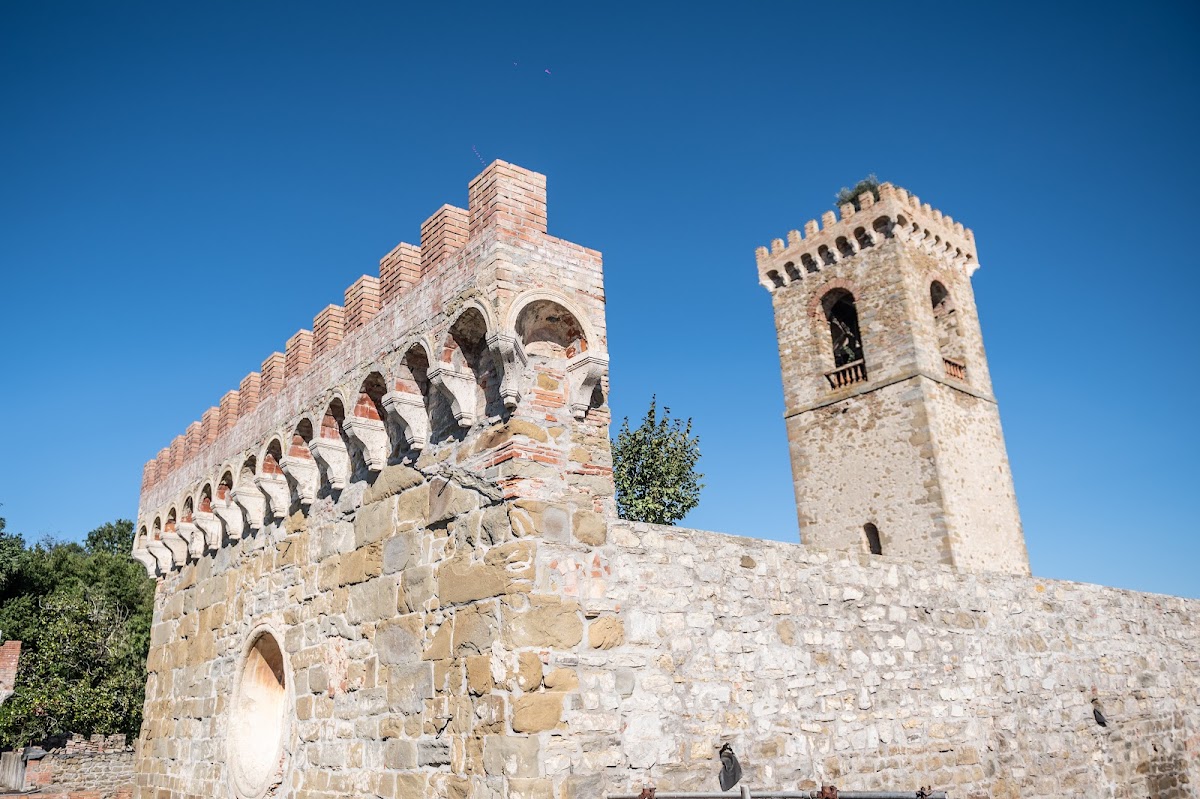
The project transformed an existing religious complex. Giacinto purchased the Church of San Francesco for 1,000 lire and the adjoining monastery of the Friars Minor for 2,200 lire. The Friars Minor are members of the Franciscan order founded by Francis of Assisi. The earlier buildings, including a medieval tower, were incorporated into the new residence. Construction lasted four years, and the Guglielmi family held a lavish inauguration in 1894.
Family residence and island life
The building project provided paid employment for all of the island’s approximately 200 inhabitants at the time. In 1904, Giacinto and Isabella’s daughter Elena introduced Irish lace among the daughters of local fishermen. Irish lace is a hand-made decorative lace tradition associated with Ireland, and the craft continued to flourish on Isola Maggiore.
Guglielmi Castle attracted noble visitors from Umbria, Tuscany, and Rome. Giacinto arranged boats to carry private visitors between Tuoro and the island’s landing stage. Queen Elena of Montenegro, queen consort of Italy from 1900 to 1946, visited the castle and stayed overnight.
Wartime detention and later decline
In February 1944, Prefect Rocchi of Perugia selected the castle as the provincial concentration camp for Italian and foreign Jews arrested in the province. In this context, a concentration camp was a detention facility in which people were confined under state or military authority, often without ordinary judicial proceedings. About thirty Jewish prisoners were held at the castle under police surveillance. As the front approached, local inhabitants helped them escape and avoid deportation.
The castle remained in Guglielmi family ownership until 1975 and passed under different administration or ownership in 1990. From the 1970s, valuable furnishings were transferred to other Guglielmi residences, and the building entered a period of severe neglect. A company that had purchased the complex and begun restoration declared bankruptcy in 2010. An auction proposed in 2014 was unsuccessful. The castle is now privately owned and abandoned, and it has been recognized as Italian national heritage.
Remains
Castle, park, and lakeside setting
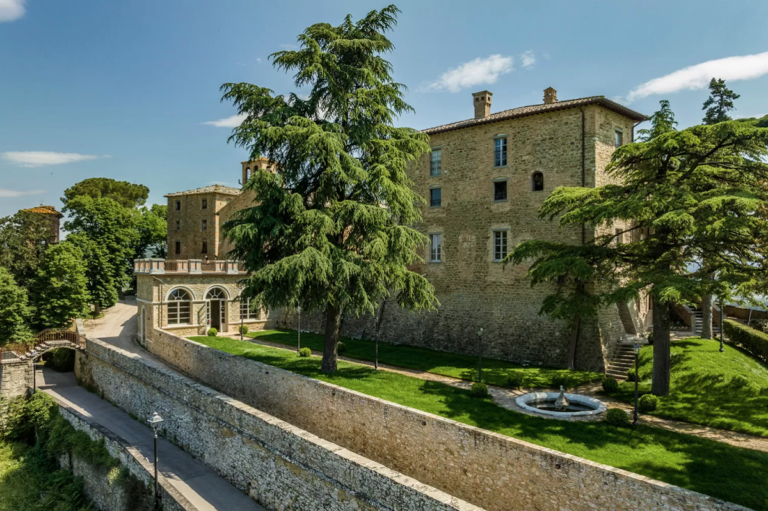
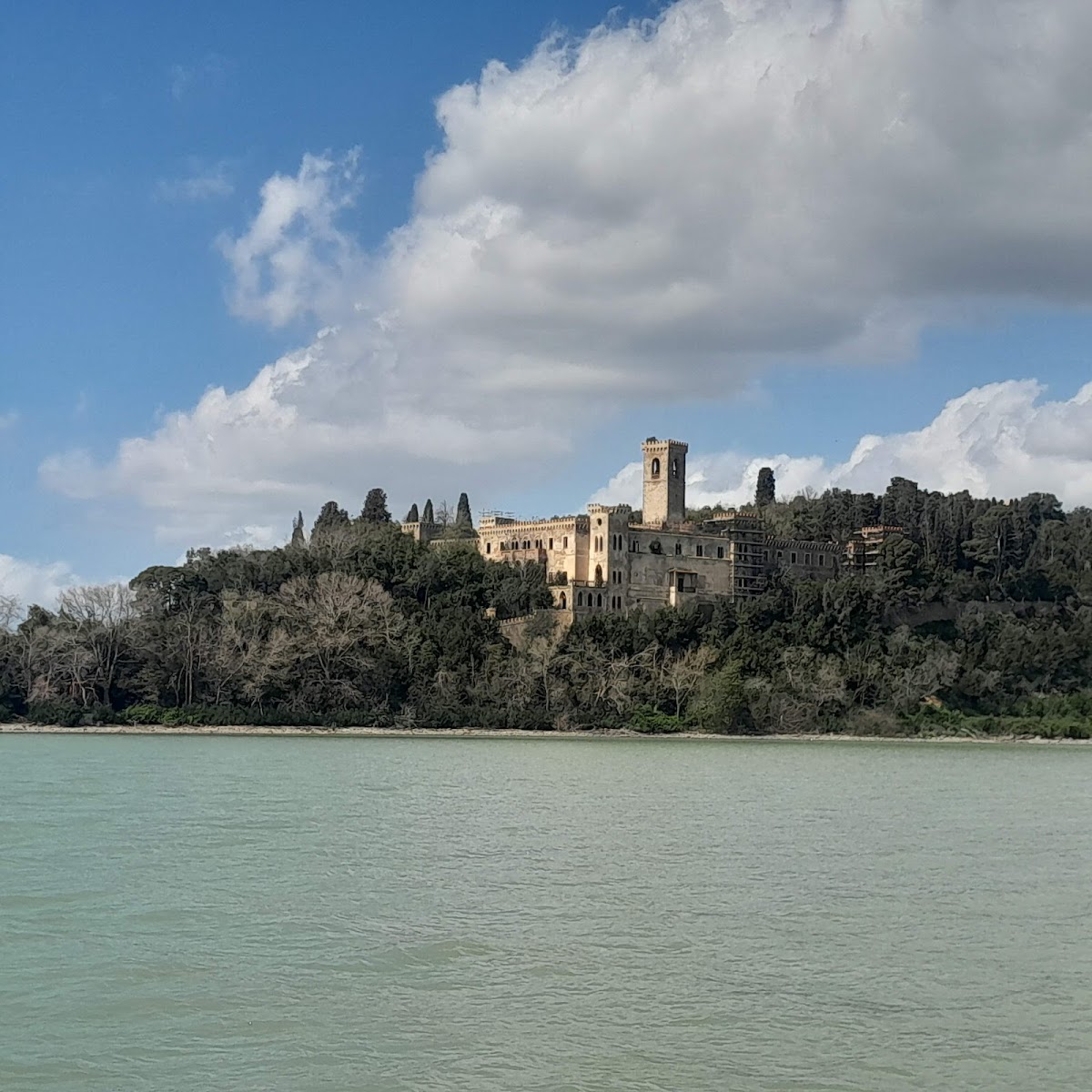
Guglielmi Castle stands beside the shore of Lake Trasimeno on the southern part of Isola Maggiore. The Neo-Gothic residence is set within a large park and luxuriant gardens. Its design drew influence from Miramare Castle in Trieste and from the theatrical historicist castles commissioned by Louis II of Bavaria, including Neuschwanstein and Herrenchiemsee.
A small balcony overlooked Lake Trasimeno and formerly provided views across the lake at night. The balcony later became unusable. The building’s present condition reflects the removal of its interiors during the 1970s and the prolonged neglect that followed.
Incorporated medieval complex
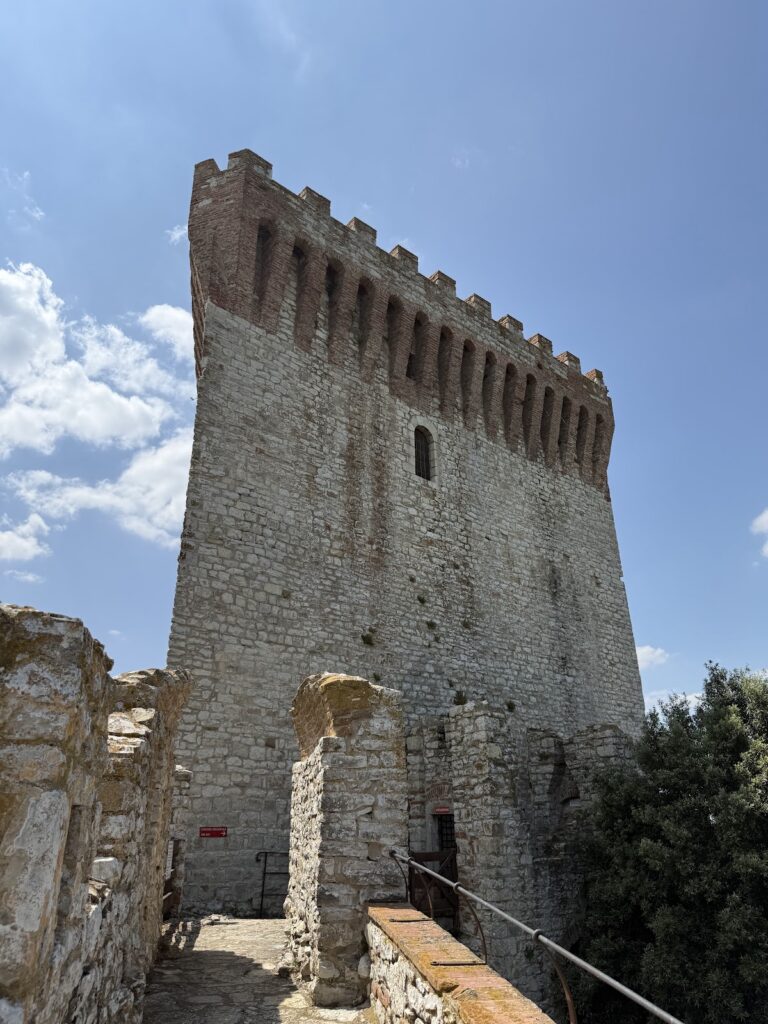
The residence contains the former Church of San Francesco and the adjoining monastery of the Friars Minor. The monastery dates to 1328, while its bell tower belongs to the Romanesque period, the medieval architectural tradition characterized by substantial masonry, rounded arches, and robust tower forms. A medieval tower also formed part of the incorporated complex.
Interiors and chapel
The castle’s richly furnished rooms once held art collections, a gallery of ancestral portraits and armor, including Japanese armor, a reception hall with Murano chandeliers, and a large billiard room. Its Chapel of San Francesco contained a Madonna and Child attributed to Sano di Pietro, a fifteenth-century painter from Siena known for religious panel paintings. The painting was transferred in 1972 to the Church of the Salvatore.