Castell de Selmella: A Romanesque Medieval Fortification in Spain



Site at a Glance
- Rating
- 4.2
- Popularity
- Very Low
- Country
- Spain
- Primary era
- Medieval
- External website
- Open
- Eras represented
- Bronze Age, Iron Age, Medieval
- Civilizations
- Crown of Aragon, Iberian
- Site type
- Military
- Remains
- Castle
On this page7 sections
History
Castell de Selmella is a medieval fortification in Spain, located in the municipality of El Pont d’Armentera, Tarragona. Dating from the eleventh to twelfth centuries, it is a Romanesque castle built on the summit of its namesake hill. The site formed part of the defensive line along the Gaià River, an advanced frontier position associated with the Marca Hispànica, the early medieval border zone south of the Pyrenees linked to Carolingian power.
Earlier occupation and the medieval castle
Archaeological evidence places an Iberian settlement at the site during the Late Bronze Age, approximately between the tenth and eighth centuries BC. An early Iron Age fortification or settlement was also established there. The earliest written reference to the castle dates from the beginning of the eleventh century, showing that it already existed by that time.
In 1012, Hug of Montagut, also known as Hug of Cervelló, disputed ownership of Selmella with Borrell, bishop of Vic. The dispute ended in Hug of Cervelló’s favour. In 1018, he distributed lands and possessions in the territories of several castles among his four sons, assigning Selmella to his eldest son, Bonfill.
Cervelló and Santes Creus
Selmella remained in the hands of the Cervelló family throughout the eleventh, twelfth, and thirteenth centuries. Bernat, a son of Guerau Alemany IV of Cervelló, founded a secondary branch of the family whose members became feudatories or castellans, officials responsible for administering and defending the castle for its lord. This line ended in the thirteenth century. In 1193, Guerau Alemany V of Cervelló left the castle to his son Ramon Alemany.
Santes Creus, a Cistercian monastery in Catalonia, gradually expanded its territorial and administrative rights in Selmella during the thirteenth century. In 1178, Guillem Guerau de Cervelló transferred the castle to the monastery under emphyteutic tenure, a long-term arrangement that transferred use and revenue rights while retaining superior lordship. Ramon Alemany of Cervelló gave property in Selmella’s territory to Santes Creus in 1203, and in 1256 Guillem of Selmella granted the monastery all the rights he held there.
Although Santes Creus administered the lands from the twelfth century until the first third of the nineteenth century, ownership remained with the Alemany family, lords of Cervelló, until the sixteenth century. The Armengol family, barons of Rocafort, later held the ownership. A hearth census from 1365 still assigned the castle to the Cervelló family, while records from the seventeenth century identify the Armengols as owners. They probably acquired it at the beginning of the sixteenth century.
Decline and later status
The castle appears to have been abandoned around the beginning of the fifteenth century. Later changes indicate that it had developed into a feudal palace rather than a functioning military stronghold, even though its defensive appearance remained imposing. Its position was strategically advanced in relation to the castles of Saburella, Vallespinosa, Santa Perpètua de Gaià, and Tamarit, standing west of the main defensive line along the Gaià.
When seigneurial jurisdictions, the local judicial and administrative powers exercised by territorial lords, were abolished in 1837, about seventy people lived in Selmella, mainly in scattered dwellings. The settlement then belonged to the municipality of El Pont d’Armentera. Castell de Selmella is registered as a Cultural Asset of National Interest and as a Spanish cultural-interest monument, with the latter designation in force since 1988.
Remains
Hilltop fortification
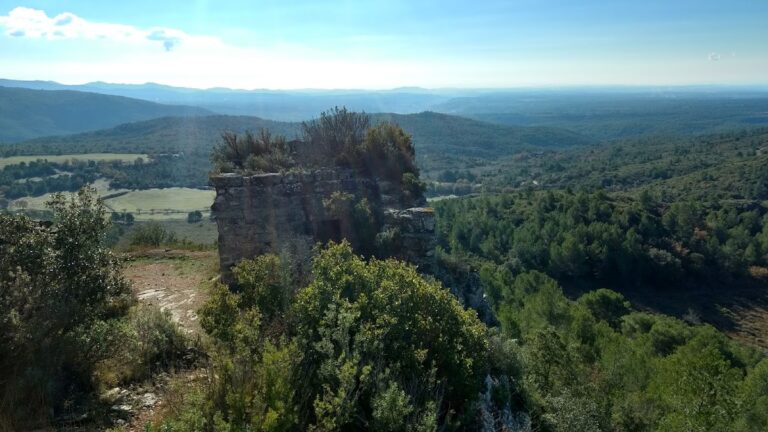
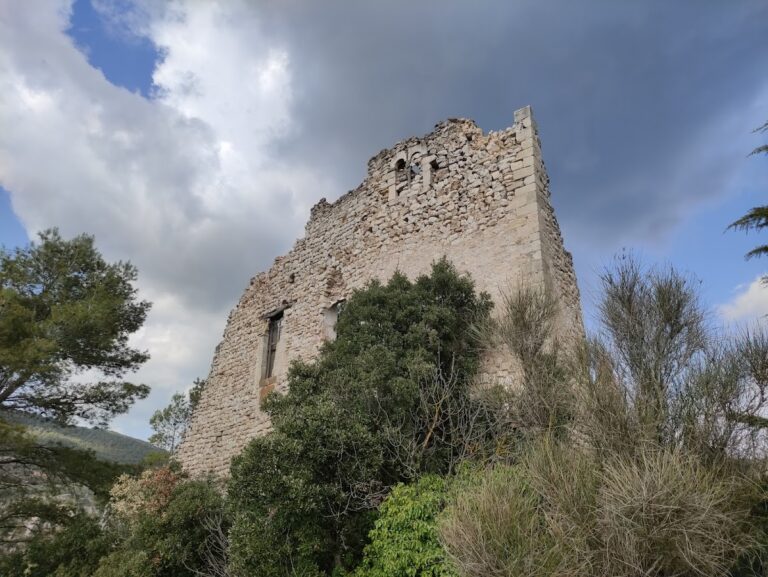
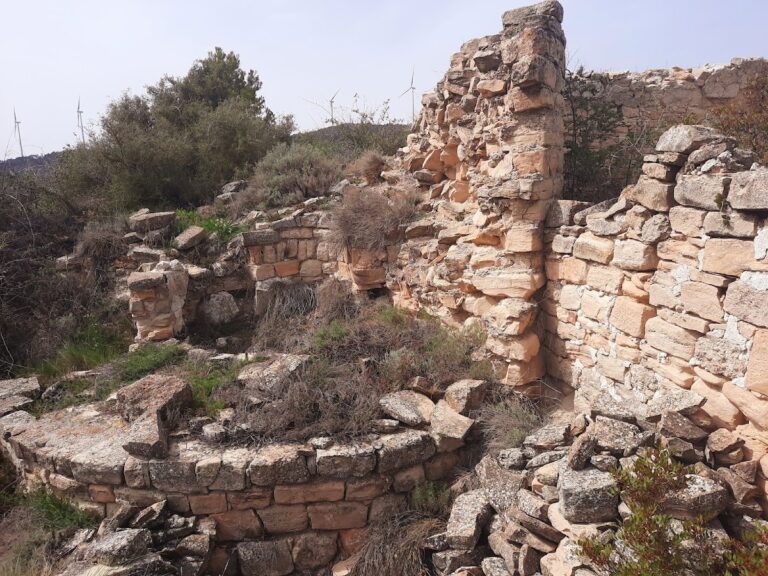
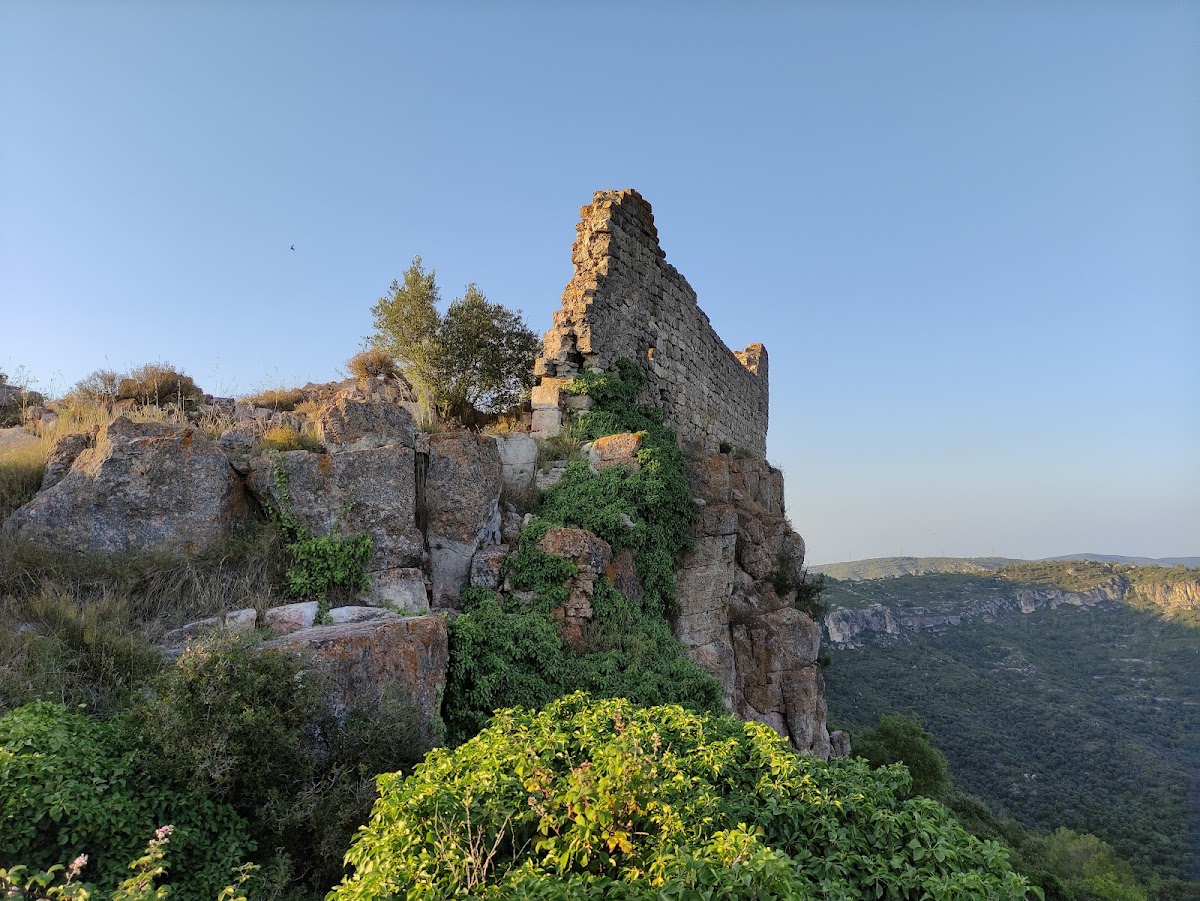
Castell de Selmella occupies the summit of a hill at 831 metres above sea level. Its surviving Romanesque remains include much of a defensive tower set in front of the moat, several upright sections of castle wall, clearly defined interior divisions, and a number of arrow slits. These elements preserve the outline of a fortified complex arranged around defensive and residential spaces.
The interior layout incorporates modifications and additions from the beginning of the Gothic period. Much of the original medieval fortification may have been altered or lost, while the surviving walls and tower retain the castle’s defensive character. The elevated position provides views north toward Montserrat and Montseny, east to the sea, and south across almost the entire plain of Tarragona.
Village church
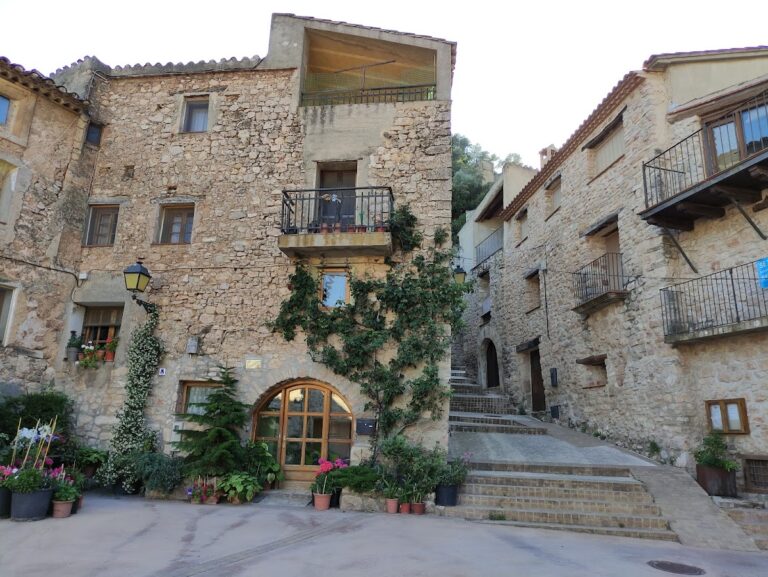
The uninhabited village of Selmella lies at the foot of the castle. Its Romanesque church is dedicated to Saint Lawrence and probably dates from the twelfth century. Despite severe damage, the building retains elements of its original Romanesque construction, linking the settlement below with the medieval period represented by the fortification above.
Nearby sites