Grand Prior’s Palace: A Hospitaller Residence in Prague
Site at a Glance
- Popularity
- Medium
- Country
- Czechia
- Primary era
- Early Modern
- Eras represented
- Medieval, Early Modern
- Civilizations
- Duchy of Bohemia, Habsburg, Habsburg Austria, Holy Roman Empire, Kingdom of Bohemia, Knights Hospitaller
- Site type
- Religious
- Remains
- Palace
On this page6 sections
History
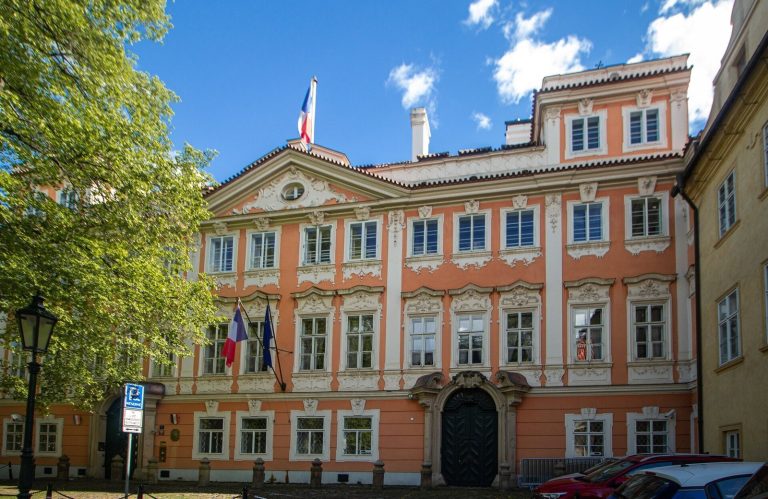
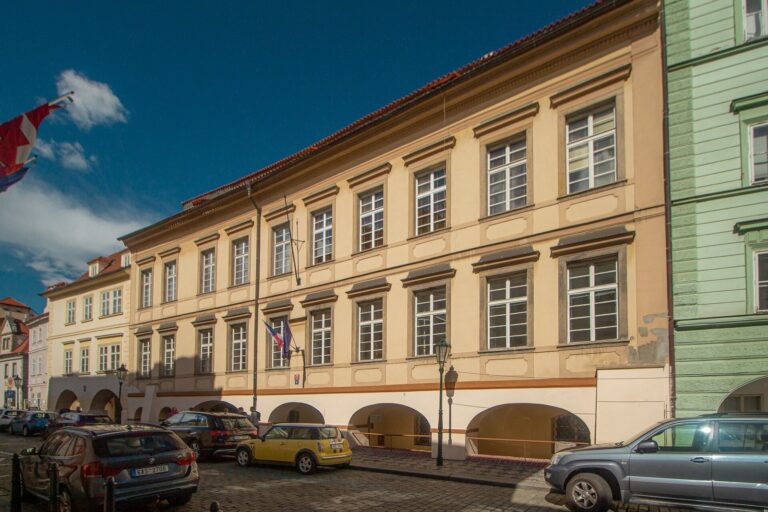
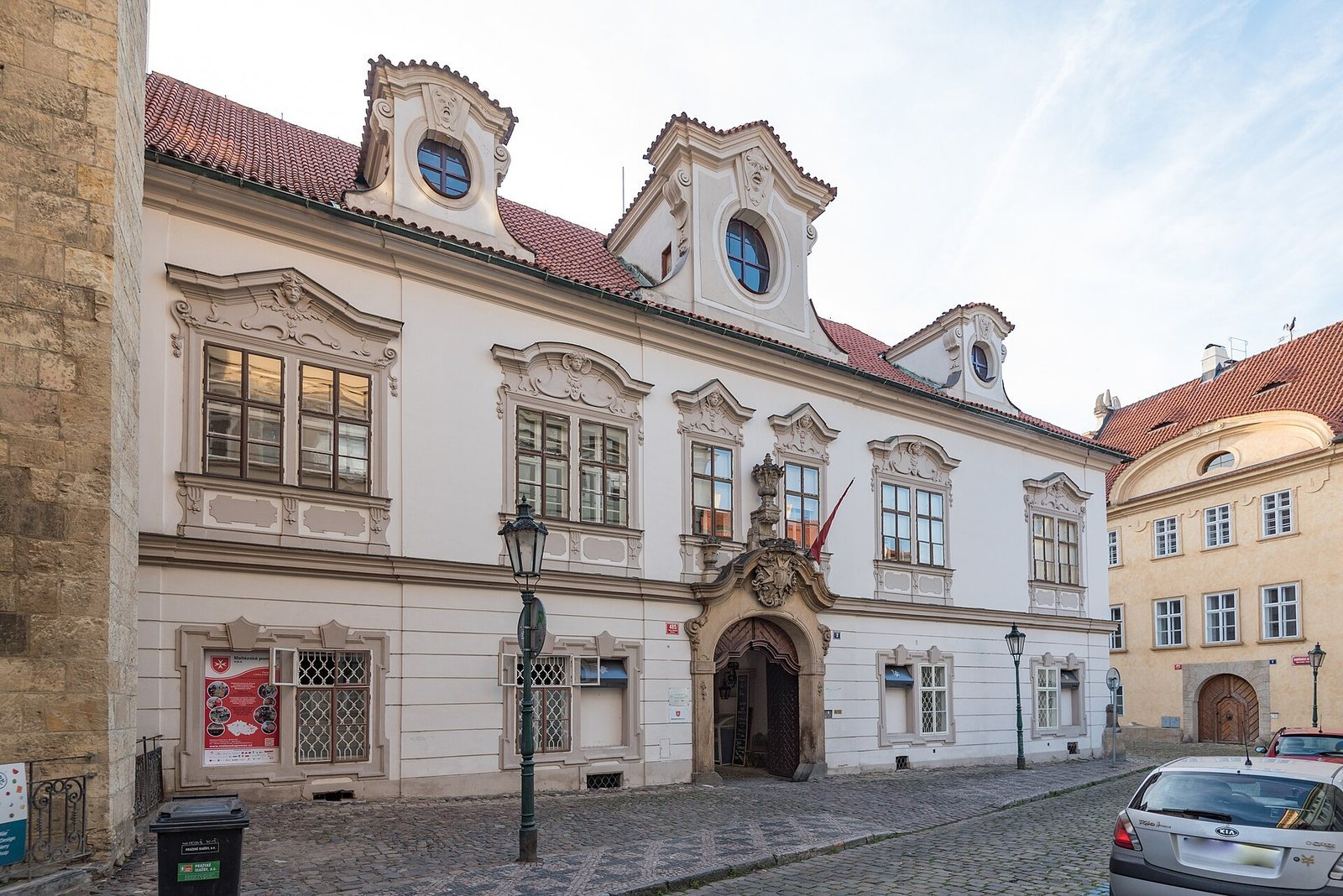
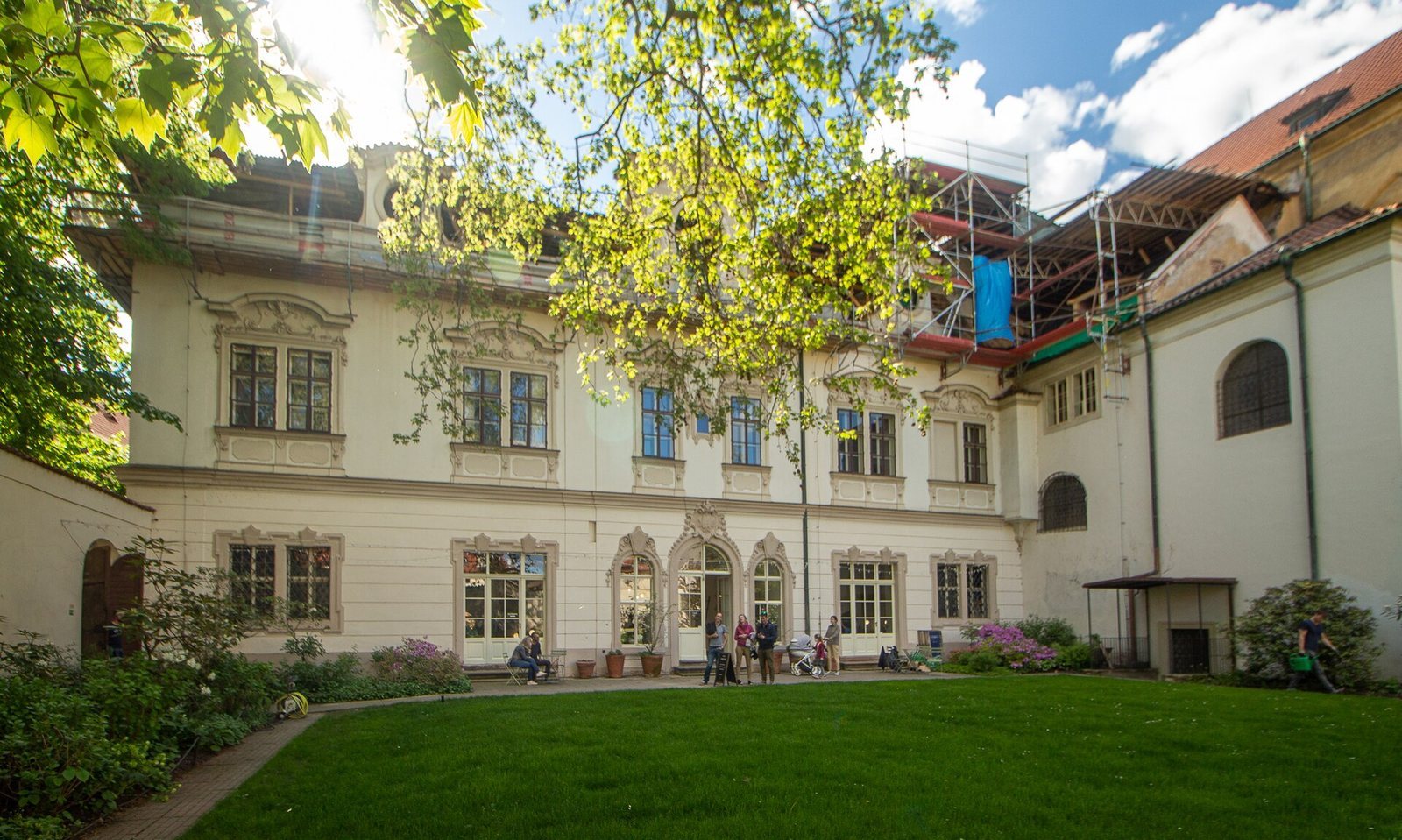
The Grand Prior’s Palace is a Baroque palace on Grand Priory Square in Prague’s Malá Strana district, Czechia. It probably dates to the second half of the 12th century, when it was dedicated to the Hospitallers, a medieval religious order that developed a military role and became associated with the Order of Malta. Baroque architecture is known for dramatic forms and rich ornament.
Medieval origins and the provincial priory
During the 15th-century Hussite Wars, conflicts in Bohemia associated with the Hussite religious movement, the palace was burned. Between 1516 and 1532, the order’s first provincial prior, the head of a regional division, moved to the palace from Strakonice.
Baroque rebuilding
The palace was reconstructed several times. Carlo Lurago carried out early Baroque work after 1725, followed by a major rebuilding directed by architect Bartolome Scotti. Grand Prior Gundaker Poppel, Count of Dietrichstein, supervised this later project. A grand prior was a senior official who headed a priory, an administrative division of a religious order.
Return to the Order
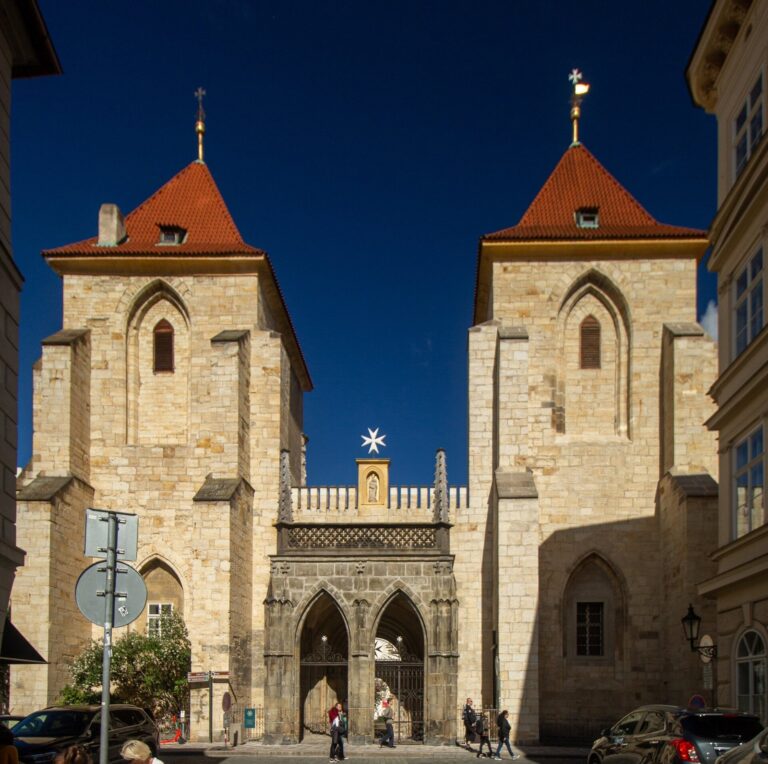
The palace forms part of the Hospitaller commandery, a local administrative establishment of a religious order, and the Order of Malta’s precinct in Prague. In 1991 it was returned to the Sovereign Military and Hospitaller Order of Saint John of Jerusalem, of Rhodes and of Malta, and was restored. The precinct is protected as a cultural monument in Czechia.
Remains
Palace layout and features
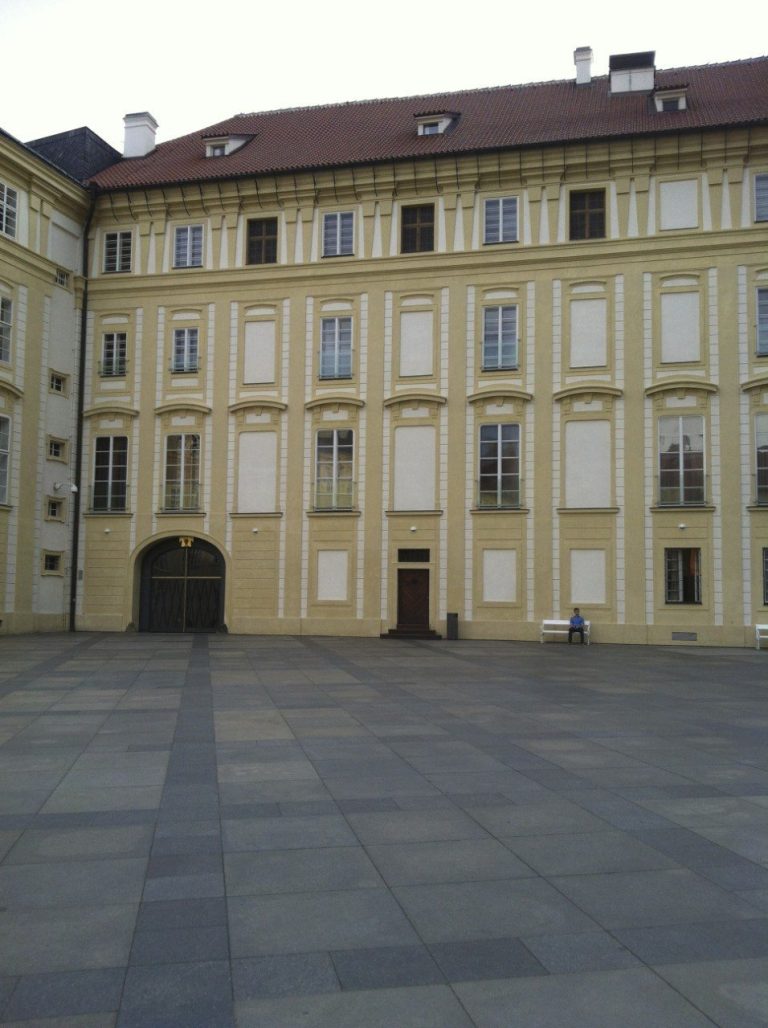
The palace is arranged around a square atrium (central court). Three wings have one storey, while the north wing, which contains a Gothic atrium, rises three storeys. Gothic architecture is associated with pointed arches and ribbed vaults. The building rests on Romanesque foundations, from an architectural style known for heavy masonry and rounded arches. Some sections with vaulted ceilings, or arched ceilings, date to the early Baroque period or the Renaissance, a period that revived classical forms.
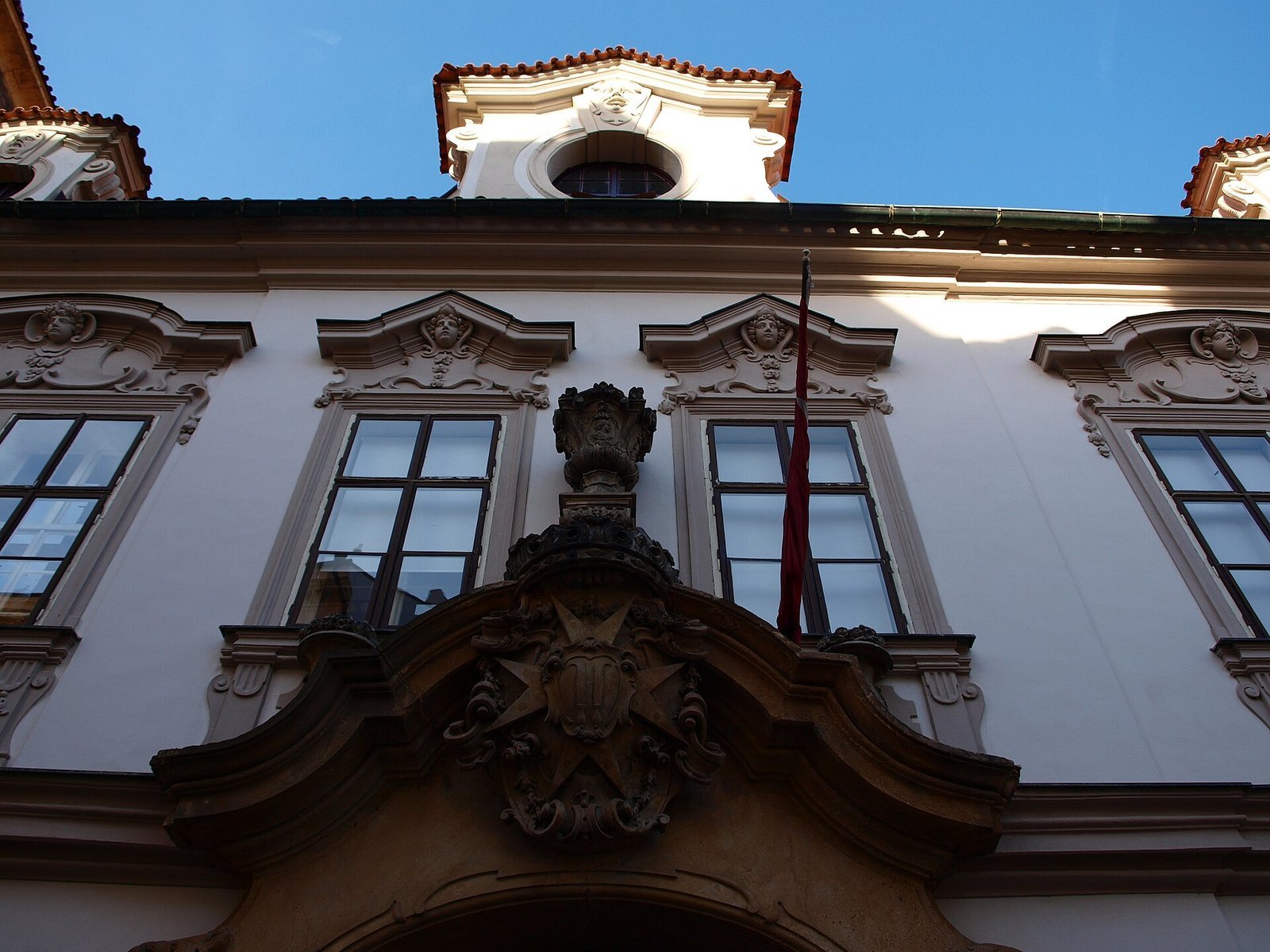
Inside, a monumental staircase built entirely of stone is decorated with sculptures by Matthias Bernard Braun, who is also credited with the palace’s statues and decoration. The entrance portal facing Grand Priory Square bears the coat of arms of Gundaker Poppel, Count of Dietrichstein. The Baroque chapel is now used as a café and restaurant.