Palazzo Sturm: An Eighteenth-Century Palace and Museum in Bassano del Grappa
Site at a Glance
- Popularity
- Medium
- Country
- Italy
- Primary era
- Early Modern
- Eras represented
- Medieval, Early Modern, Modern
- Civilizations
- Venetian
- Site type
- Domestic
- Remains
- Elite Residence
On this page12 sections
History
Construction and silk production
Palazzo Sturm is an eighteenth-century palace in Bassano del Grappa, Italy, built in the mid-18th century for industrialist and silk merchant Vincenzo Ferrari. The amateur architect Daniello Bernardi, an abbot (a senior monastic officeholder), designed the building. It served both as Ferrari’s home and as a place for silk production, and was formerly known as Palazzo Ferrari and Palazzo Vanzo Mercante.
Later ownership and museum use
During the 19th century, the palace was altered under the ownership of Vanzo Mercante. The municipality of Bassano del Grappa later received it by bequest from Baron Giovanni Battista Sturm von Hirschfeld (1895-1943), whose name the palace bears. The Ceramic Museum was installed there in 1992, followed by the Remondini Printing Museum on 15 September 2007. The latter explores the Remondini family’s printing business, an important 18th- and 19th-century industry in Bassano’s economy.
Remains
Layout and earlier building fabric
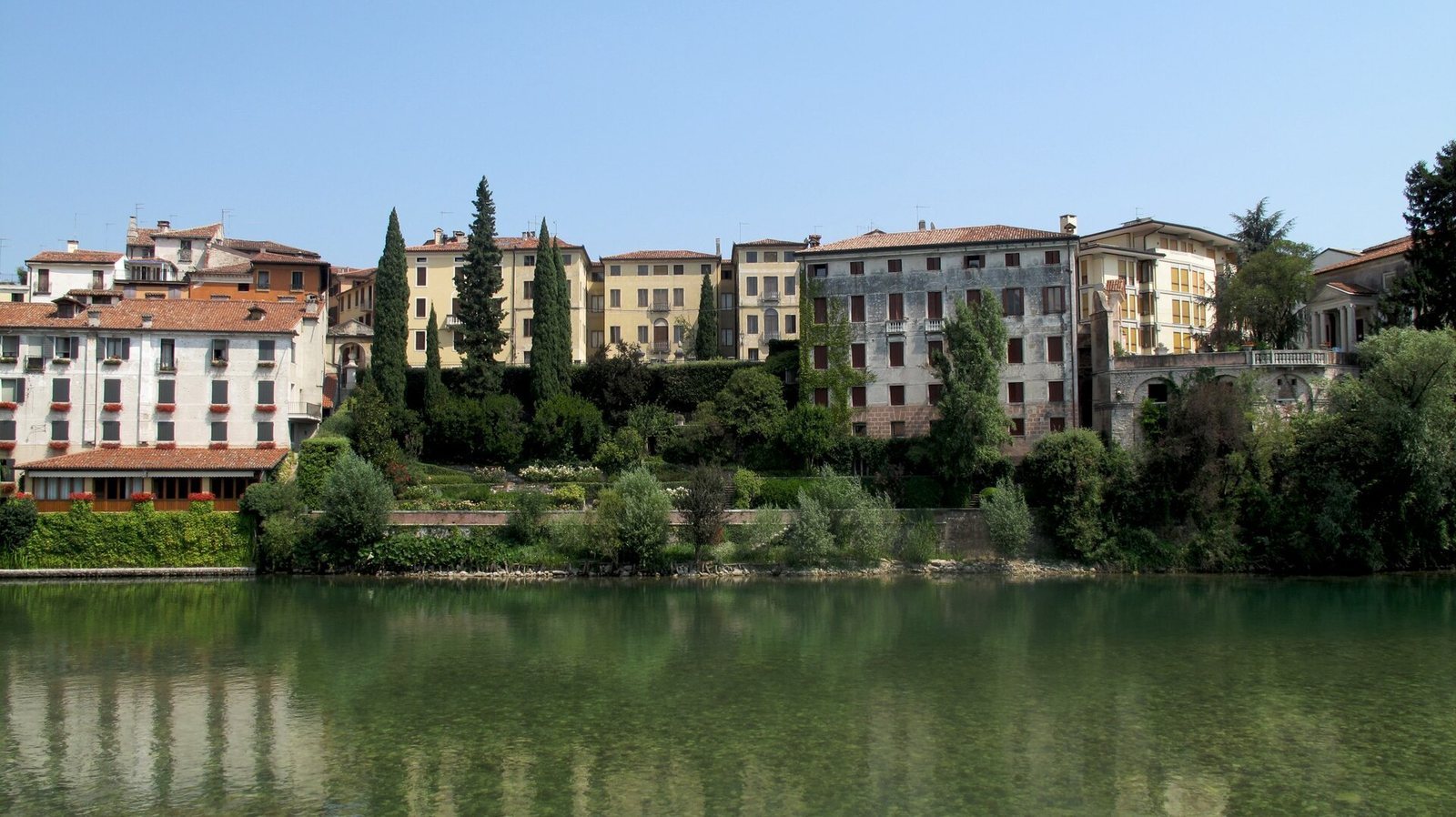
In the Cornorotto district, the palace stands on the left bank of the Brenta River and overlooks the water. Its construction incorporated a group of 15th-century buildings, including part of a wall and a tower. The palace has about 70 rooms across seven levels. Upper floors held the residence and reception rooms, reached through a monumental entrance; lower levels contained silk workshops, shops, storage areas, and servants’ quarters, with direct access to the river. In the 19th century, the building was raised, and its new roof joined the top of a viewing gallery that had originally been open on three sides.
Decorated interiors
Entrance hall
In 1765, Venetian painter Giorgio Anselmi decorated the ceiling and upper wall panels of the entrance hall with the Fall of the Giants, female allegorical figures, and telamons, sculpted male figures used as architectural supports or decoration. The murals use perspective to create the illusion of architectural depth.
Stucco decoration
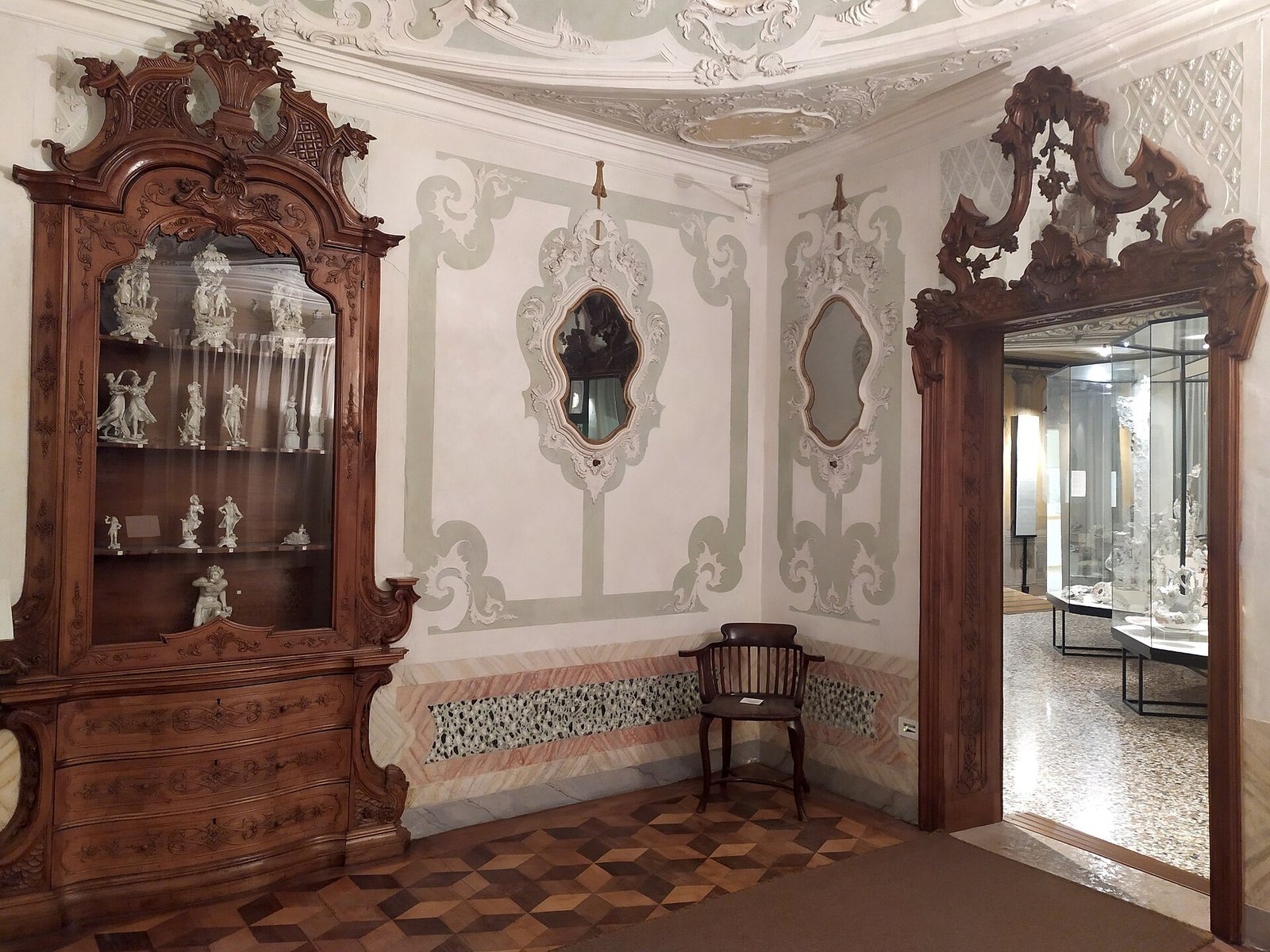
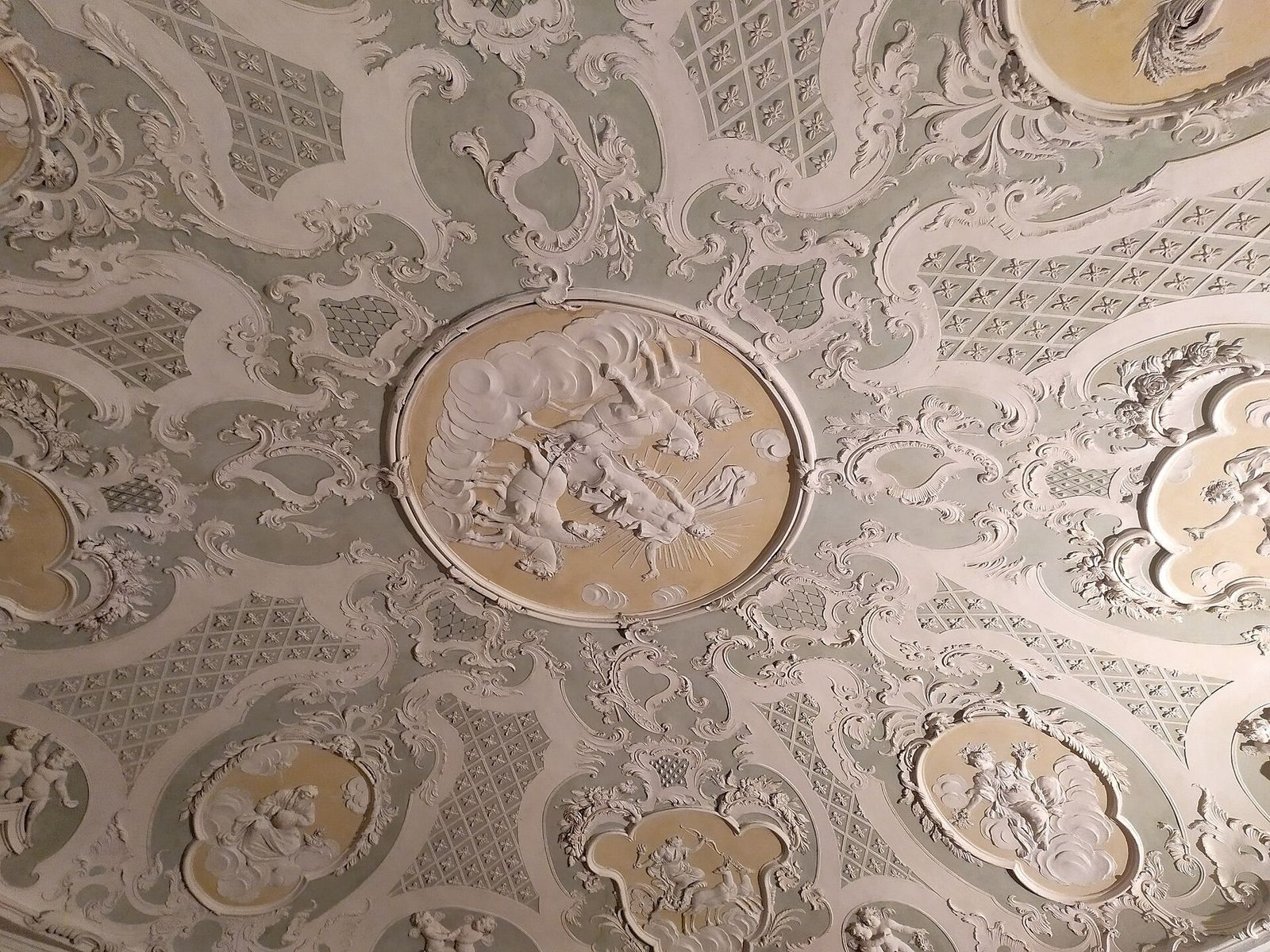
An artist whose identity is uncertain created stucco frames around windows and mirrors in 1766. The decoration includes scenes and figures associated with the Chariot of the Sun, the Seasons, Bacchus, Diana, Jupiter, and Mercury. It adorns the main hall and numerous other rooms.
Alcove
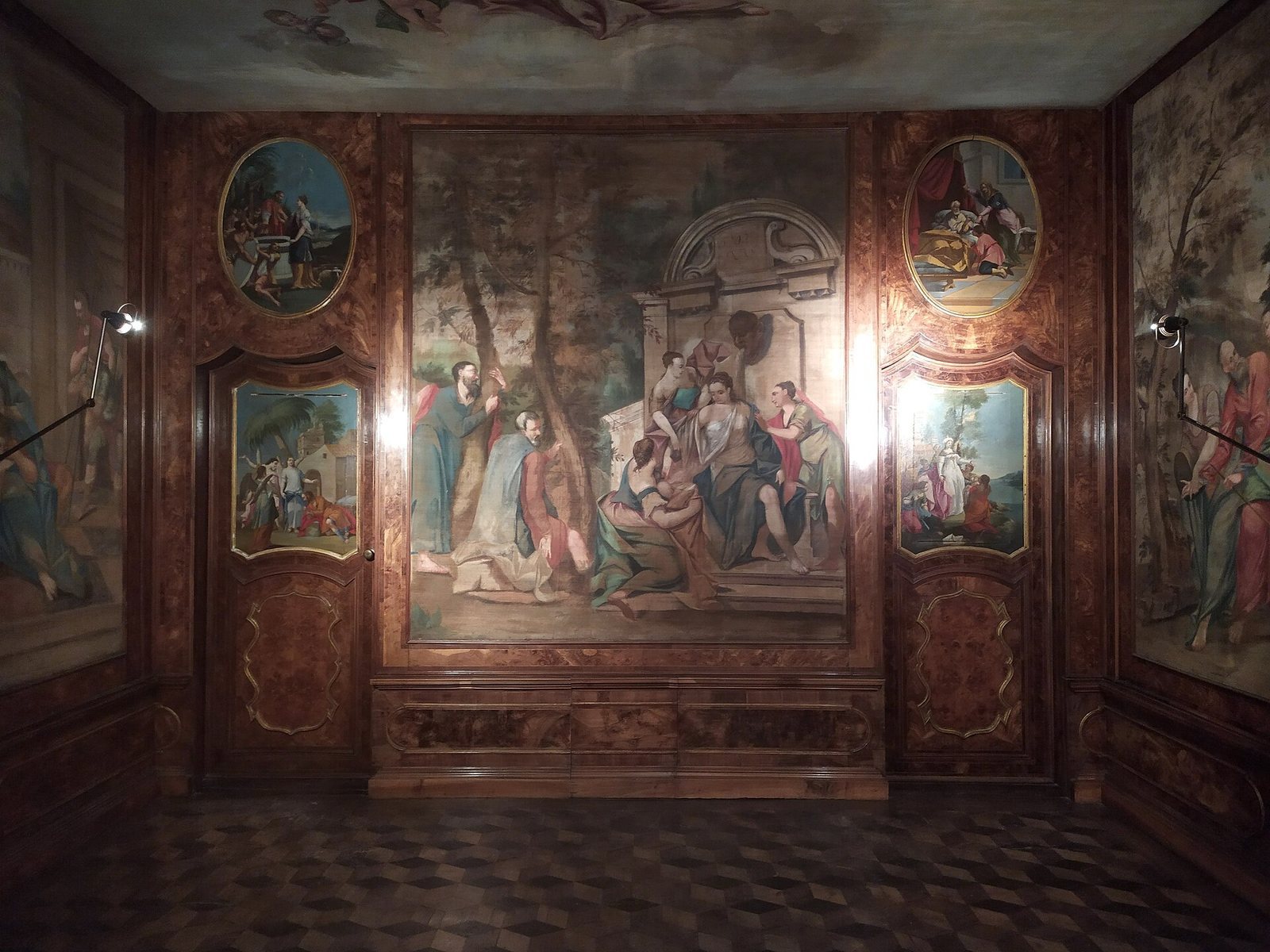
The alcove retains wooden wall panels with inlay, engraving, and carving, alongside tempera paintings by Treviso painter Gaetano Zompini. These features form part of the palace’s richly decorated Rococo interiors. Rococo was an ornate style that flourished in 18th-century Europe.
Museum collections
Ceramic Museum
The Ceramic Museum holds about 1,200 objects, including maiolica, a tin-glazed earthenware, porcelain, and other earthenware. Its collection includes a notable group of 18th- and 19th-century work by the Antonibon, a family associated with a historic ceramics manufactory in the Veneto. Popular plates are displayed in the old kitchen, while works by internationally renowned artists are held on the lower floor.
Remondini Printing Museum
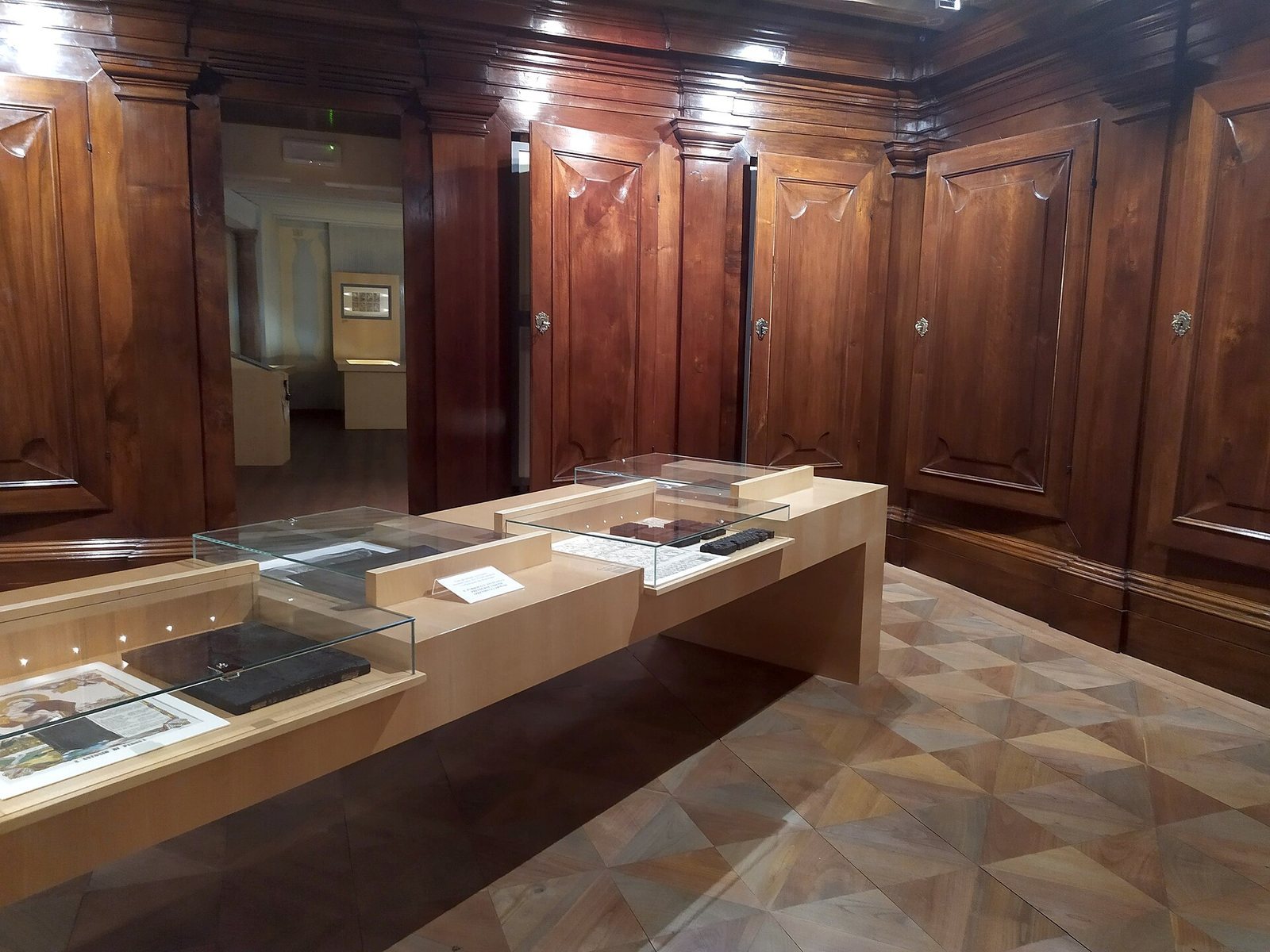
The printing museum displays books, decorated papers, popular religious and secular prints, games, and other material, as well as printing equipment, matrices, and products made by the Remondini firm. Its holdings also include an old-print collection belonging to the family’s last members in the 19th century. Works include etchings and woodcuts by German Renaissance printmaker Albrecht Dürer, Italian Renaissance painter Andrea Mantegna, and Venetian painter Giambattista Tiepolo.