Gleninagh Castle: A Sixteenth-Century Irish Tower House in County Clare

Site at a Glance
- Rating
- 4.5
- Popularity
- Low
- Country
- Ireland
- Primary era
- Early Modern
- Eras represented
- Early Modern
- Civilizations
- Irish
- Site type
- Military
- Remains
- Castle
On this page8 sections
History
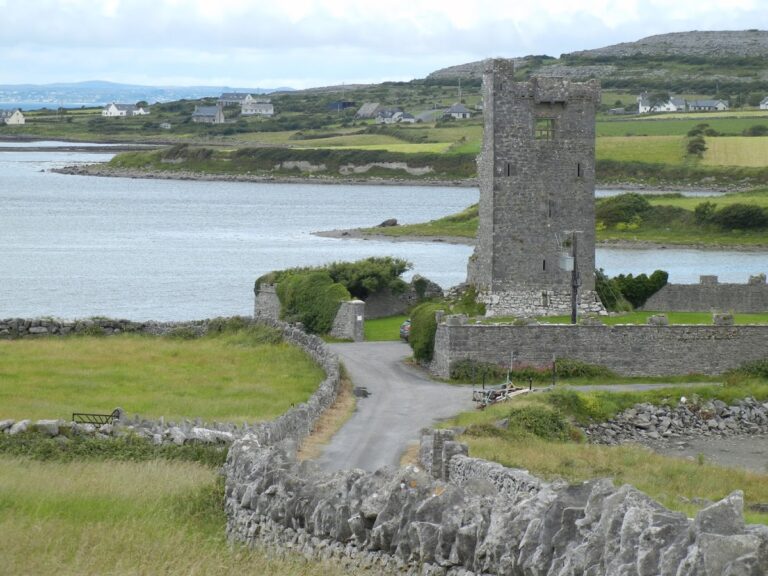
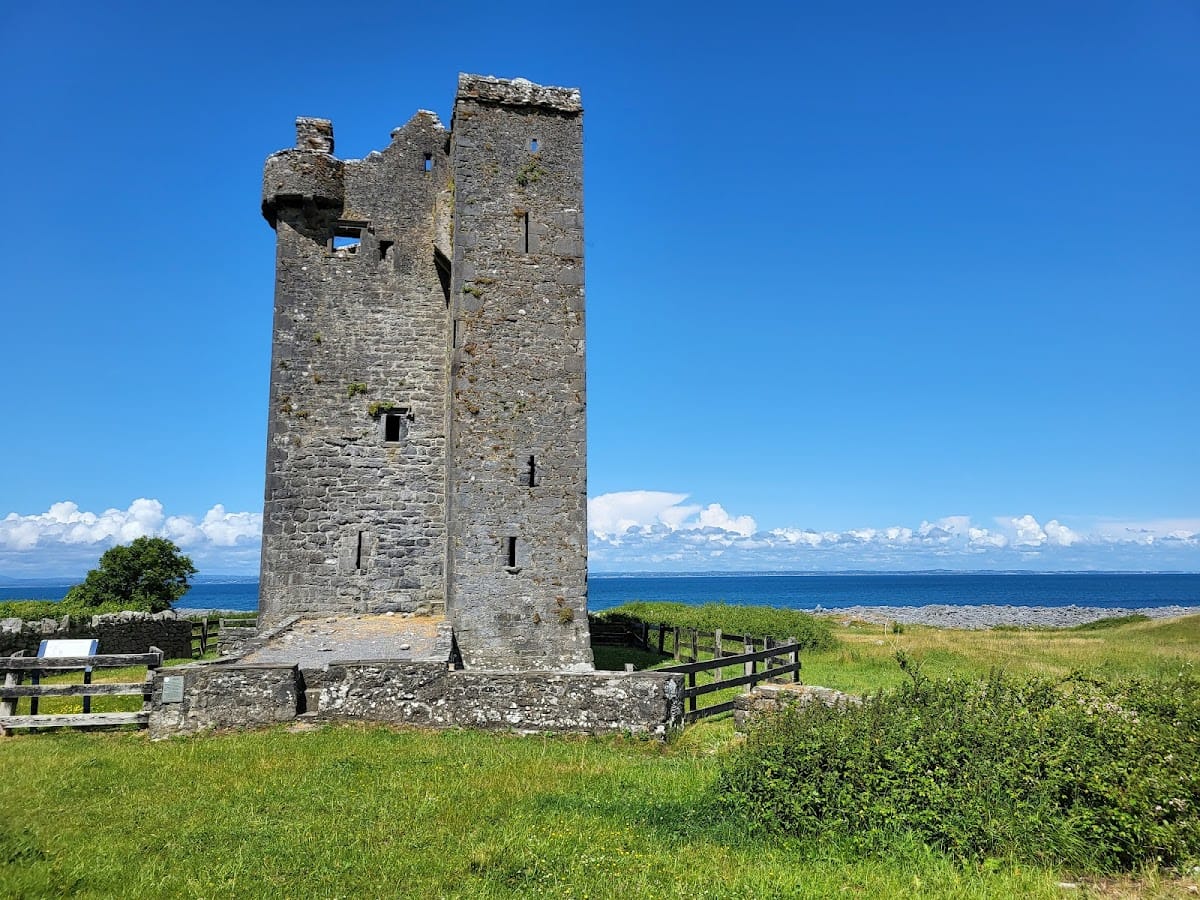
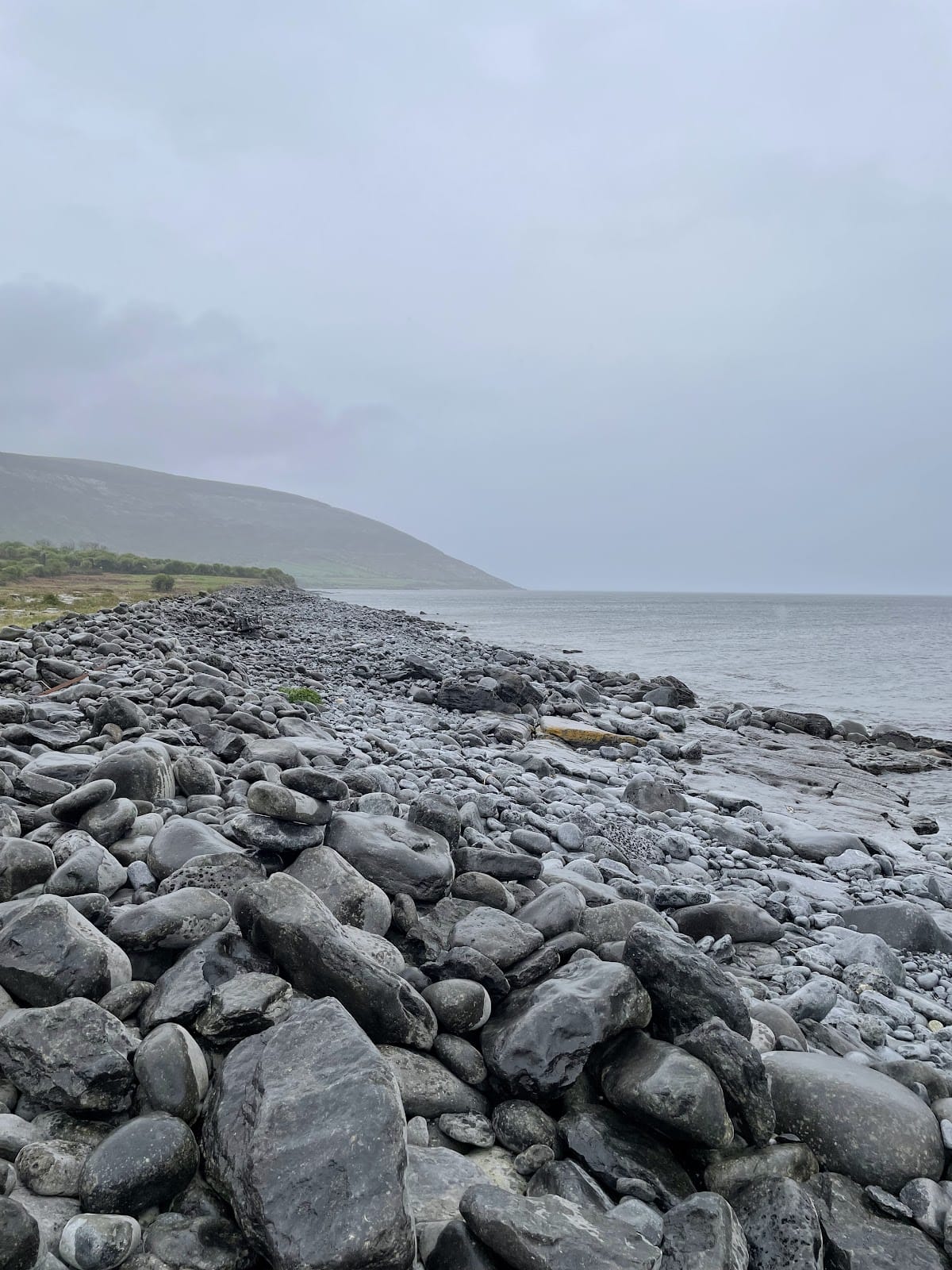
Gleninagh Castle is a sixteenth-century Irish tower house in County Clare, Ireland, built by the Gaelic O’Loughlin clan on a rocky rise above Galway Bay at the northwestern edge of the Burren. A tower house was a fortified residence that combined domestic accommodation with defensive features. The Irish name Gleann Eidhneach means “Ivy Valley,” while an older name, possibly Cluain Eidhneach, has been interpreted as “rock overgrown with ivy.” This earlier name may refer to a church that occupied the site before the castle.
O’Loughlin Lands and English Conquest
The castle and its lands remained with the O’Loughlins until 1544, when Henry VIII granted them to Richard Harding. Henry VIII, king of England from 1509 to 1547, used land grants as part of the expansion of English authority in Ireland. Harding was apparently expected to conquer the territory and seize Gleninagh Castle, which had not yet been taken by England. James Lynch of Galway captured the castle and lands in 1570. By 1629, they belonged to the Diocese of Kilfenora, an Irish Christian ecclesiastical jurisdiction centered on Kilfenora.
Later Residence and Abandonment
Ownership changed repeatedly before the castle returned to the O’Loughlin family. The family continued to use it as a residence until about 1840, and the building was described as being in good condition in 1839. After its abandonment in 1843, Lord Blood used the castle as a cattle shed, while its upper part was converted into a pigeon house. The associated nineteenth-century estate and landlord’s house belonged to William Bindon Blood, a descendant of Colonel Thomas Blood, who attempted to steal the English crown in 1671.
In 1837 the surrounding area formed a Catholic parish called Glyn or Glenarraga. The settlement had 146 houses and 886 inhabitants in 1841, while Gleninagh, Murroghkelly, and Murroghwoggy were recorded near the castle in 1845. During the twentieth century, Gleninagh Castle was partially restored, and it is recognized as an Irish National Monument.
Churches, Pilgrimage, and Earlier Traditions
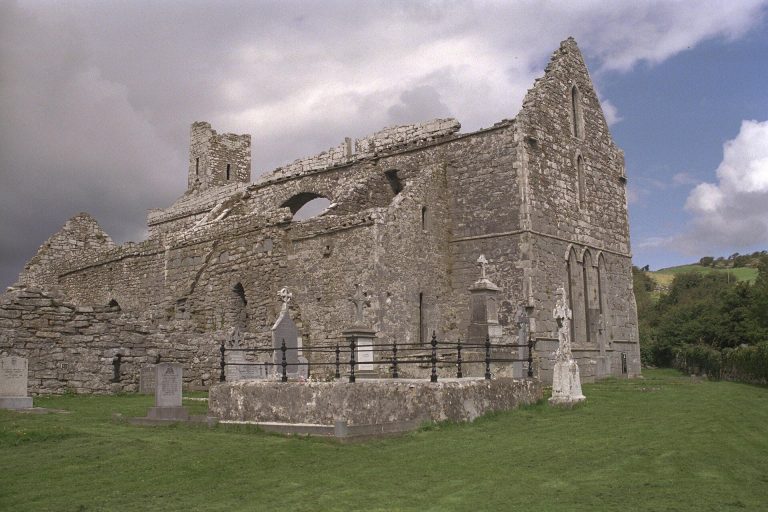
An old church beside the castle has an uncertain history. Church records have been interpreted as suggesting a date of 1302, while a monastery may have occupied the site earlier. Traces of a monastic wall and evidence of monks’ economic activity have been identified. The nearby pilgrimage site Tobar na Croiche Naoimhe, meaning “Place of the Holy Cross,” was also known by forms including Croghneva, Tobar na Croise Naomhtha, and Tobernacrobaneede. A local tradition held that blind people were cured there. Excavations in 1840 reportedly uncovered human skulls and traces interpreted as evidence of ancient human sacrifice, prompting the suggestion that the place had sacred associations before Christianity.
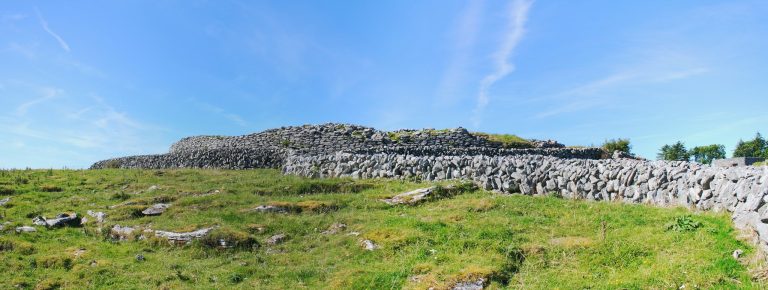
Another pilgrimage site, Tobar Cornain, lies north of the castle and retains a Gothic-revival structure dating from 1860. Other associated features include the ancient mound of Dough Branneen, the sacred stone called Keger, and Dun Fergus, an Iron Age Celtic ring fort. A ring fort was a generally circular enclosed settlement or defensive site formed by an earthen or stone bank and ditch. Ancient lime-burning kilns also survive near the castle.
Remains
Gleninagh Castle is an L-plan tower house of rubble stone set on a rocky hill near Galway Bay. Its four-storey tower occupies a footprint of approximately 9.7 by 8.4 metres, or about 31.8 by 27.6 feet. The castle stands within a wider group of ecclesiastical, estate, pilgrimage, and prehistoric features, including the ruined church beside it and a lighthouse on the nearby sea cliff known as Black Head.
Tower House
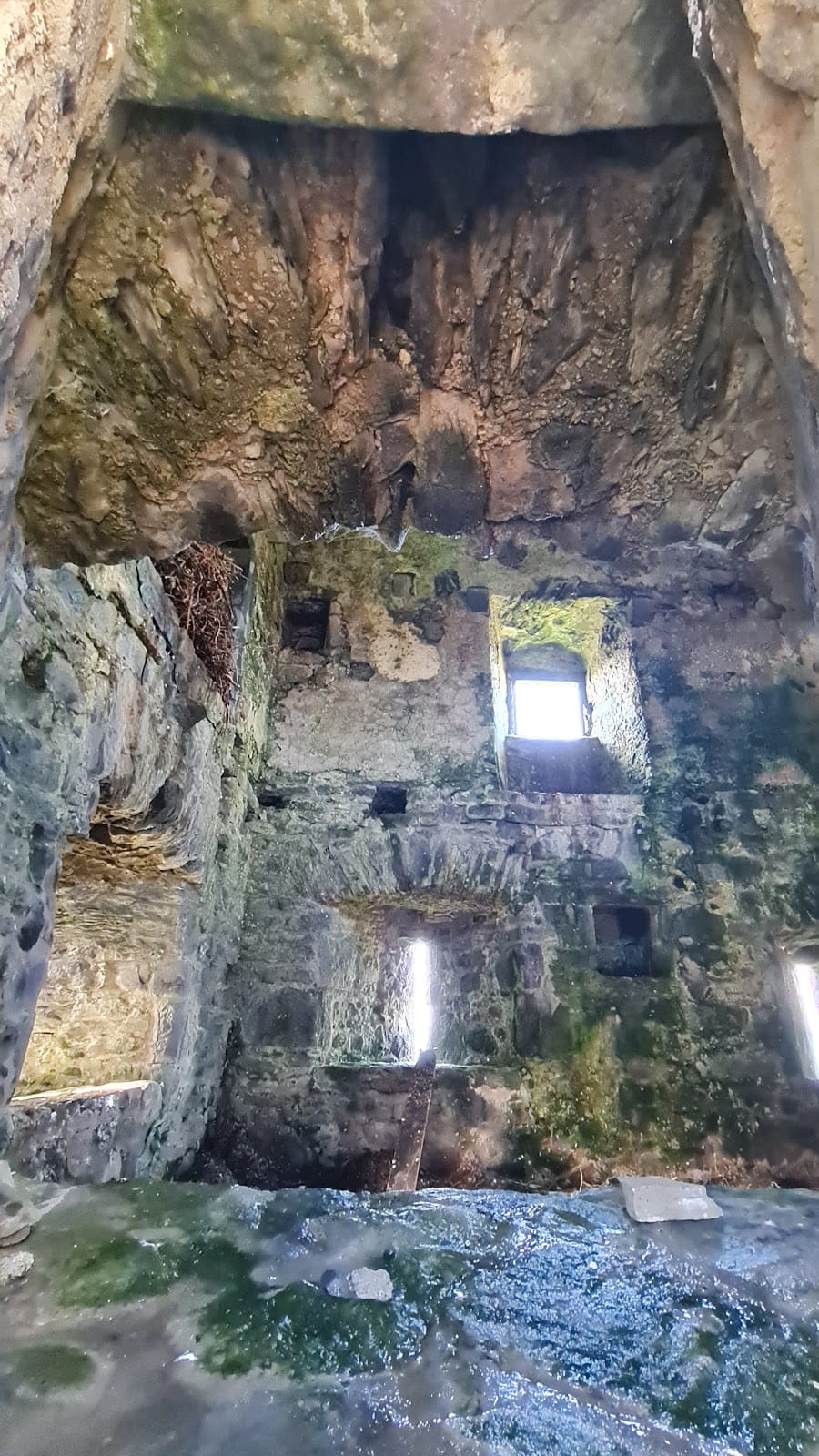
The tower contains a stone spiral staircase, and narrow loopholes occur on its floors. Three corners carry projecting circular turrets, or bartizans, which are small defensive turrets attached to a building’s exterior. The entrance on the ground floor, located in the small tower, was protected by a machicolation, a projecting structure with openings through which defenders could drop objects onto attackers below. In 1839 the tower was thatched.
A series of narrow window openings and loopholes in the end wall were later blocked, probably during the late sixteenth or early seventeenth century. The alteration may have allowed the openings to function as open fireplaces. Several old fireplaces also survived within the castle, linking changes to its defensive openings with its continued domestic use.
Church and Estate Ruins
The church beside the castle was described in 1839 as an ivy-covered ruin. Its walls are about 2.5 feet thick and approximately 8 feet high. The pointed south wall contains a dressed-stone doorway about 5.33 feet high, while the south side has two windows, one rectangular and one round. The church was still described as being in good condition in 1897, but it is now ruined and abandoned.
The former nineteenth-century landlord’s house and its estate are also ruins. The estate included a garden and a well whose water was regarded as holy. These remains belonged to the later phase of the site’s history, when Gleninagh formed part of the Blood family’s local estate.
Pilgrimage and Surrounding Features
At Tobar na Croiche Naoimhe stands a Gothic-type stone arch topped by a cross. Tobar Cornain retains a nineteenth-century structure in the Gothic-revival style. Nearby Dun Fergus is an Iron Age Celtic ring fort, beneath which natural caves occur. A lighthouse stands close to the castle on the Black Head sea cliff, while ancient lime-burning kilns survive in the surrounding area.