Fulštejn Castle: A Medieval Fortress near Bohušov in the Czech Republic
Visitor Information
Google Rating: 4.5
Popularity: Low
Official Website: www.jeseniky.net
Country: Czechia
Civilization: Medieval European
Site type: Military
Remains: Castle
History
Fulštejn Castle is located near the village of Bohušov in the Czech Republic. It was established by medieval builders in the first half of the 13th century on a strategic site that had been fortified since prehistoric times. The initiative to found the castle came from Bruno of Schauenburg, the bishop of Olomouc, who sought to strengthen his territorial holdings in this region.
The castle’s core construction was finished by 1255, after which half of the estate and the adjoining village of Bohušov were granted as a fief to Herbord of Fulštejn by the Olomouc chapter, the church body involved in regional governance. Ownership within the Fulštejn family evolved through the latter part of the 13th century, with Herbord dividing the castle between his sons, and securing royal confirmation from King Přemysl Otakar II in 1275 for the sale of the second half to his younger sons. This established Fulštejn as a significant familial stronghold.
In January 1476, during the Czech-Hungarian wars, forces loyal to Hungarian King Matthias Corvinus attacked and severely damaged Fulštejn Castle. The assault left the fortress in need of extensive rebuilding, which was completed by the late 15th century, restoring its defensive and residential functions.
In 1566, the castle and the estate were sold by Jiří of Fulštejn to Václav the Elder Sedlnický of Choltice, who became the new lord of the domain. After Václav’s death in 1572, his sons inherited the estate. Among them, Bedřich undertook repairs to the castle in 1611, indicating continued occupation and maintenance during this period.
The castle’s fortunes declined following the Bohemian Revolt (1618–1620), when Karel Kryštof Sedlnický, son of Bedřich, participated in the uprising against Habsburg rule. After the defeat of the revolt, the castle was confiscated, and Karel Kryštof died in exile in 1651. In 1623, the estate was turned into a church fief and sold to Pavel Michna of Vacínov, who apparently did not live at Fulštejn.
Military action returned during the Thirty Years’ War, when Danish troops under Peter Ernst Mansfeld passed through the area in 1626–1627, causing partial destruction of the castle. In 1641, Jan of Jarošín acquired the castle in a ruined state. During the later stages of the war, the Swedish army used Fulštejn as a military base from 1642 to 1648. The Swedes demolished the castle upon leaving, dealing a fatal blow to its defensive viability.
By 1668, ownership transferred to Count Julius Leopold of Hodice, who held estates nearby, including Silesian Rudoltice. Though the castle saw some limited repairs after the Swedish destruction, the owners preferred to focus on their residence at Rudoltice, leading to Fulštejn’s further decline into ruin.
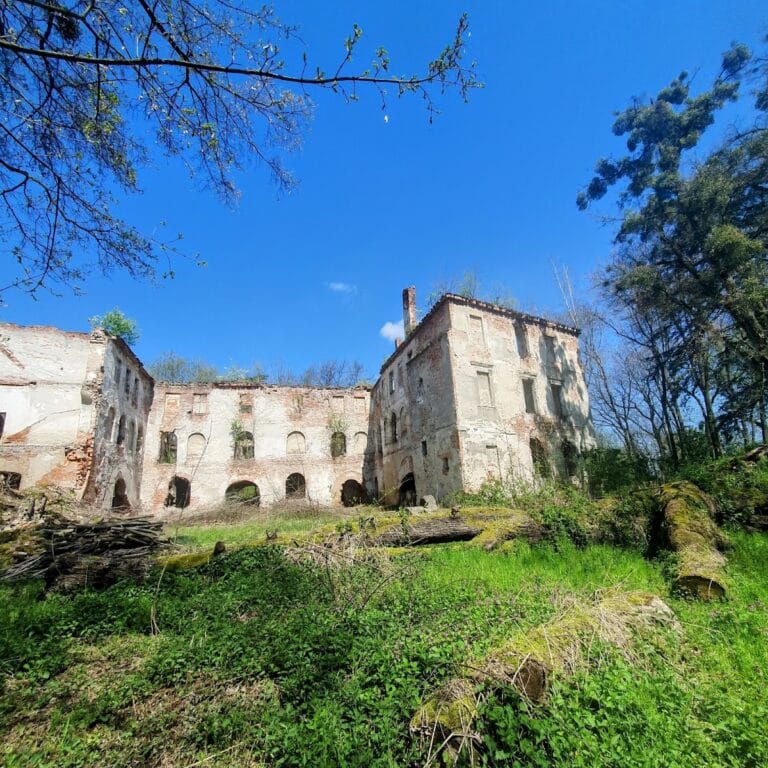
Today, the ruins of Fulštejn stand within the territorial bounds of Bohušov and are recognized as a protected cultural monument. The site preserves traces of the medieval fortification’s long and turbulent history in this borderland region.
Remains
The remains of Fulštejn Castle reveal the outline of a medieval fortress erected atop earlier earthworks from prehistoric times. These earthworks provided a naturally elevated and defensible position that medieval builders enhanced with stone fortifications. The layout follows typical defensive principles of the period, featuring substantial walls and moats designed to impede attacking forces.
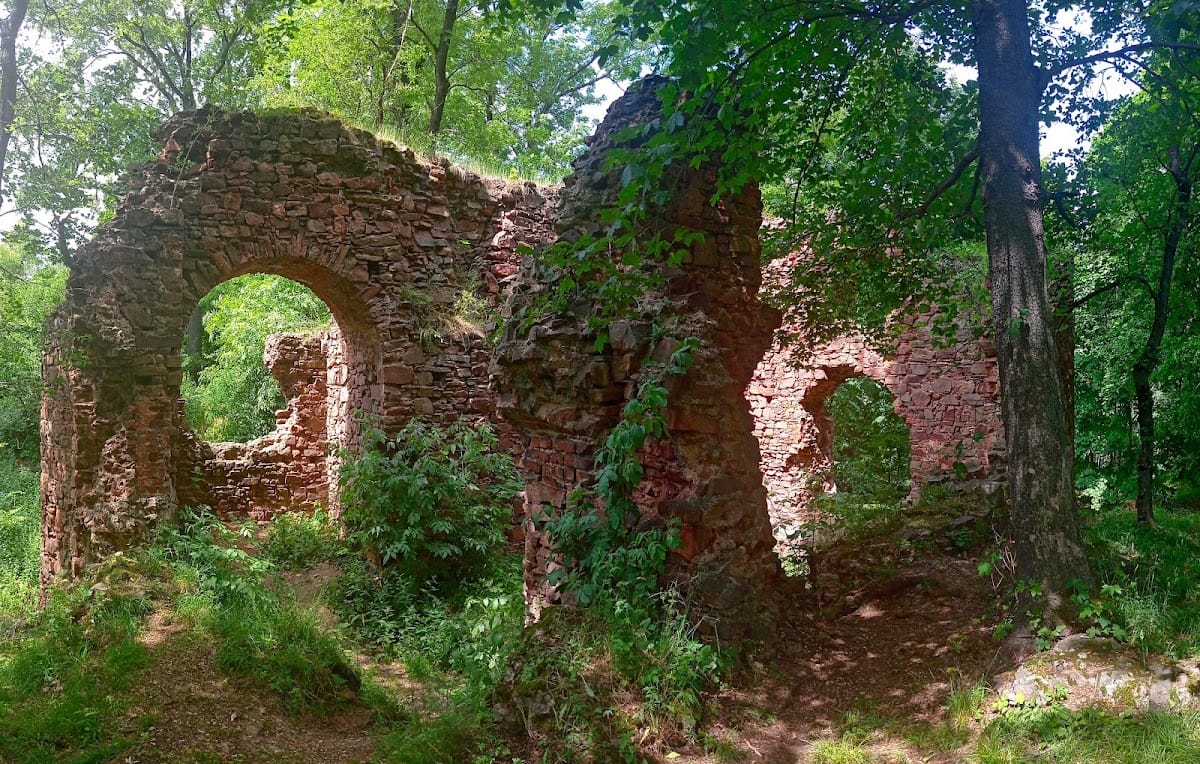
Among the surviving structures, sections of a large round tower stand as a prominent vestige of the castle’s defensive core. Such towers were commonly used for observation and as strongholds within the castle complex. The tower’s preserved masonry indicates solid construction, though it survives only in fragmentary form.
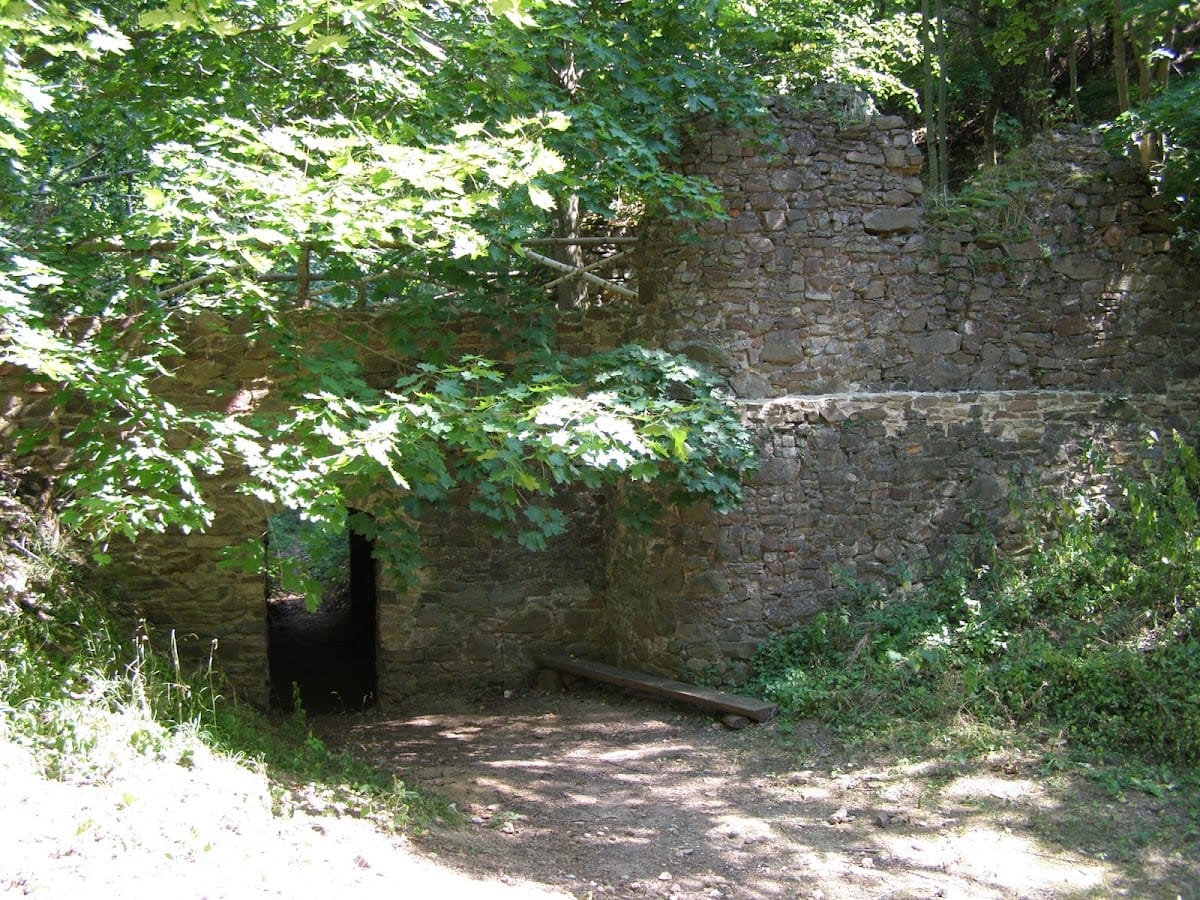
The main castle gate remains partially intact, including evidence of an original bridge that once spanned the surrounding moats. This entrance would have controlled access to the fortress, combining natural and manmade obstacles to protect against invaders. The bridge structure, though ruined, still highlights the defensive tactics employed in medieval castle design.
Surrounding the castle are massive ramparts, raised earth embankments faced with stone or compacted soil, which served to reinforce the walls and slow the movement of enemy troops. These ramparts, together with the original moats, demonstrate the layered defense system characteristic of castles built in the 13th century and reconstructed in the late Middle Ages.
Today, the site is an extensive ruin; only partial structural elements remain standing, while much of the castle’s fabric has been gradually lost to time and historical destruction. There are no recorded inscriptions, decorative details, or artifacts such as tools or pottery preserved within the ruins. However, the surviving architecture clearly marks Fulštejn as a fortified medieval stronghold with a long history of military and residential use.
The castle’s location near Bohušov and its later association with estates such as Silesian Rudoltice reflect the changing patterns of noble residence and territorial control in the area. Although much of the original complex has vanished, the existing remnants provide valuable insights into medieval fortification practices and the historical events that shaped this borderland castle.
Nearby sites