Fukuzen-ji Temple: A Buddhist Temple and Korean Missionary Reception Site in Japan


Site at a Glance
- Rating
- 4.5
- Popularity
- Low
- Country
- Japan
- Primary era
- Early Modern
- External website
- Open
- Eras represented
- Early Modern
- Civilizations
- Tokugawa
- Site type
- Religious
On this page6 sections
History
Fukuzen-ji Temple is a Buddhist temple in Fukuyama, Japan, traditionally founded around 950 during the Heian period by the itinerant monk Kūya. It belongs to the Daikaku-ji branch of Shingon Buddhism, and its principal image is a Thousand-Armed Kannon, a form of the Buddhist bodhisattva associated with compassion. The temple’s earliest history remains largely conjectural.
Foundation and Edo-period development
Fukuzen-ji’s main hall and adjoining Reception Hall were built during the Genroku era, around 1690. The Reception Hall later became known as Taichōrō, meaning “Hall Facing the Tides,” a name suited to its outlook over the coastal scenery of Tomo.
During the Edo period, Tomo served as a port on the Seto Inland Sea where ships sheltered while waiting for favorable winds and tides. It became one of the stops used by the twelve official Joseon diplomatic missions sent from Korea to Japan. Their route crossed the Seto Inland Sea to Tomo, then continued through ports including Ushimado, Murotsu, Hyogo, and Osaka before proceeding toward Kyoto and Edo.
Fukuzen-ji served as a guesthouse for these missions and as a meeting place where Korean envoys encountered Japanese scholars of Chinese learning and calligraphers. Korean visitors praised the scenery before Taichōrō was built, and descriptions from 1617, 1655, 1711, 1719, and 1764 survive in mission diaries and records. In 1711, a delegation official called the view from the Reception Hall “the finest scenic view in Japan.”
Restoration and diplomatic associations
After 1711, the temple and Taichōrō fell into disrepair, although the complex continued in use. When the next Korean mission arrived in 1748, another building had been assigned as its lodging. The delegation objected by spending a night aboard its ship rather than entering the replacement lodging. Chief envoy Hong Gye-hui then visited Fukuzen-ji, reassured the monks, and urged that the temple be restored as the mission’s official lodging.
Hong Gye-hui named the Reception Hall Taichōrō in 1748. By the time another Korean mission arrived in 1763, the temple had been restored and was again connected with the delegation’s official lodging.
During the Bakumatsu period, the final phase of the Tokugawa shogunate before the Meiji Restoration, Fukuzen-ji was used for negotiations between Sakamoto Ryōma’s Kaientai and the Kishū Domain. The discussions concerned compensation for the accidental sinking of the steamship Iroha-maru, which had been carrying Western weapons to Tosa Domain.
The precinct is designated a National Historic Site as the “Tomo Fukuzen-ji Precinct,” one of the places associated with the Korean missions to Japan. Taichōrō-related materials connected with those missions are also designated an important cultural property of Fukuyama City.
Remains
Temple complex
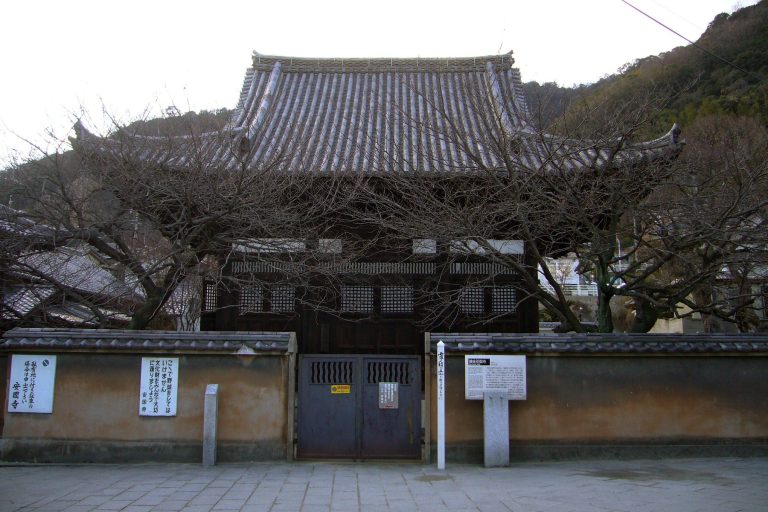
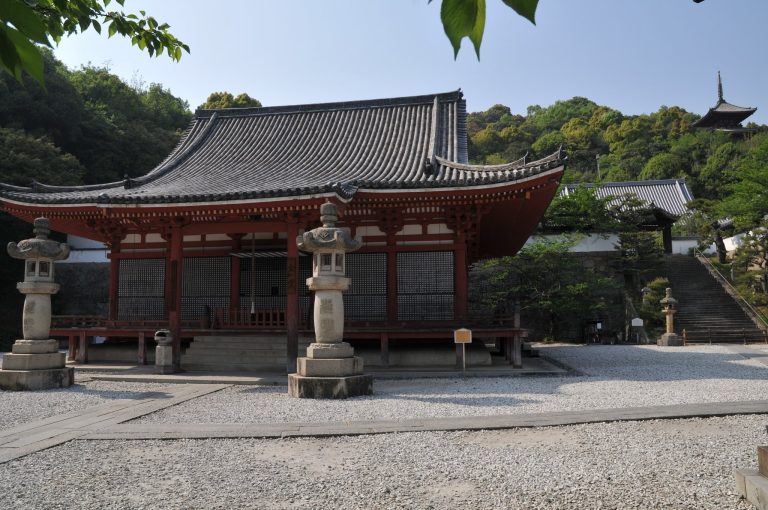
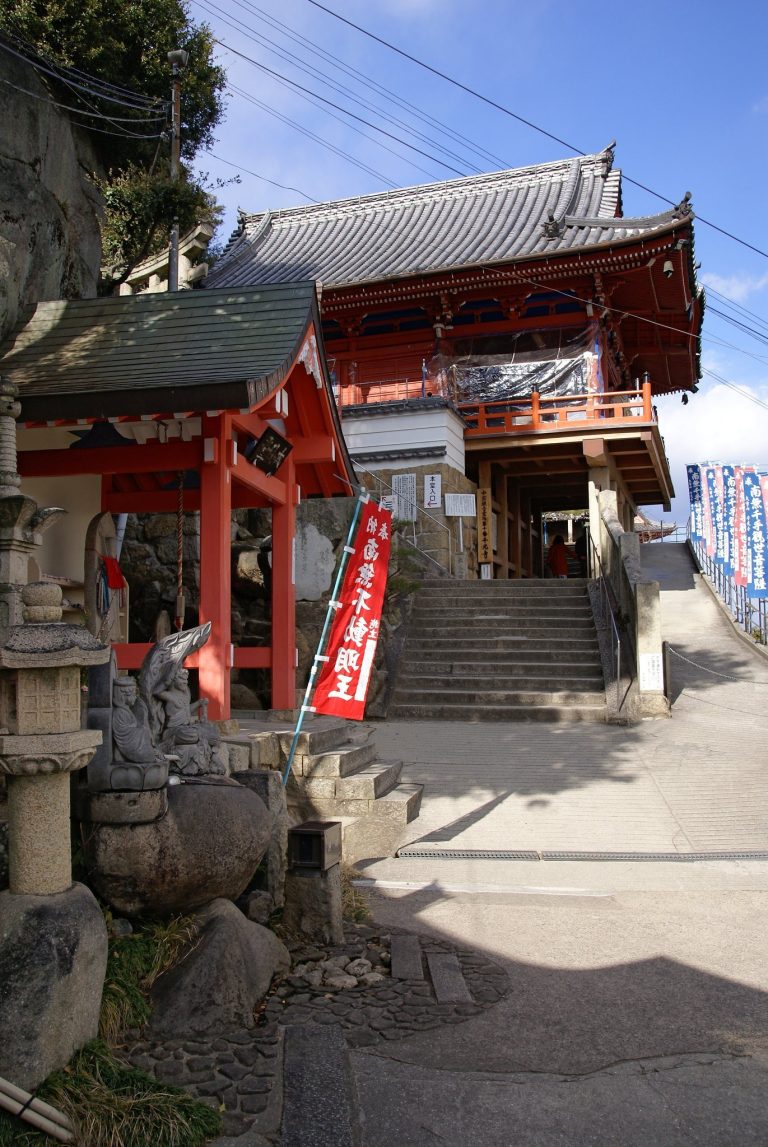
Fukuzen-ji stands in the Tomo-machi area of Fukuyama, Hiroshima Prefecture. Its grounds form a complex built on stone walls, with the main hall and Reception Hall arranged together. Both surviving buildings date from the Genroku era, around 1690, while the Reception Hall is identified as the oldest surviving structure in the complex.
Taichōrō and Korean mission materials
Adjoining the main hall, Taichōrō is the Reception Hall associated with the Korean diplomatic missions. Its position provides a view over the surrounding scenery of Tomo, the coastal outlook repeatedly praised in Korean diplomatic writings.
A flat plaque bearing the name Taichōrō survives at the temple. Its lettering reproduces the inscription copied in 1748 by Hong Gyeong-hae, the military officer who accompanied his father, Hong Gye-hui. Poems composed and presented extemporaneously by Hong Gye-hui and other Korean envoys during the 1748 visit also survive among the temple’s mission-related materials. Together with Chinese-language poems and other plaques left by members of the delegations, these objects preserve the material record of the Joseon missions at Fukuzen-ji.