Ankoku-ji Temple: A Rinzai Zen Buddhist Temple in Japan


Site at a Glance
- Rating
- 4
- Popularity
- Very Low
- Country
- Japan
- Primary era
- Medieval
- Eras represented
- Medieval, Early Modern
- Civilizations
- Kamakura shogunate, Tokugawa
- Site type
- Religious
- Remains
- Temple
On this page12 sections
History
Ankoku-ji Temple is a Rinzai Zen Buddhist temple in Fukuyama, Hiroshima Prefecture, Japan, founded through its predecessor Kinpō-ji in 1273. Located in Tomo, it is also known as Bingo Ankoku-ji and bears the mountain name Zuiunzan. Its principal devotional image is a triad of Amida, the Buddha associated with Pure Land Buddhist devotion.
Foundation and medieval revivals
The Zen priest Muhon Kakushin, also known as Hottō Kokushi, founded Kinpō-ji in 1273, and the temple’s Shakado Buddhist hall was built at the same time. The Amida triad was produced in 1274. Ashikaga Takauji, founder of Japan’s Muromachi shogunate, revived the temple in 1339. During the Muromachi period, the era governed by the Ashikaga shogunate, it adopted the name Ankoku-ji.
Reorganization and later history
During the Azuchi-Momoyama period, Japan’s late sixteenth-century era of political reunification, Ankoku-ji was revived in 1579 by Mori Terumoto and Ankokuji Ekei. The temple later declined again. In the early Edo period, the era of the Tokugawa shogunate, Ankoku-ji became a branch temple of Myoshinji in Kyoto within the Rinzai Zen tradition.
The lecture hall burned down in 1920. The Shakado received protected status in 1927, and the Amida triad and seated image of Hottō Kokushi received the same status in 1942. These designations were originally made under the former legal category of National Treasure. The temple precincts became a Hiroshima Prefecture historic site in 1955.
Remains
The temple grounds contain a wooden Buddhist hall, sculpted images, small ritual objects placed inside a statue, stone and wooden monuments, and later religious buildings. Their dates range from the thirteenth century to the Shōwa period, which lasted from 1926 to 1989.
Historic buildings and temple monuments
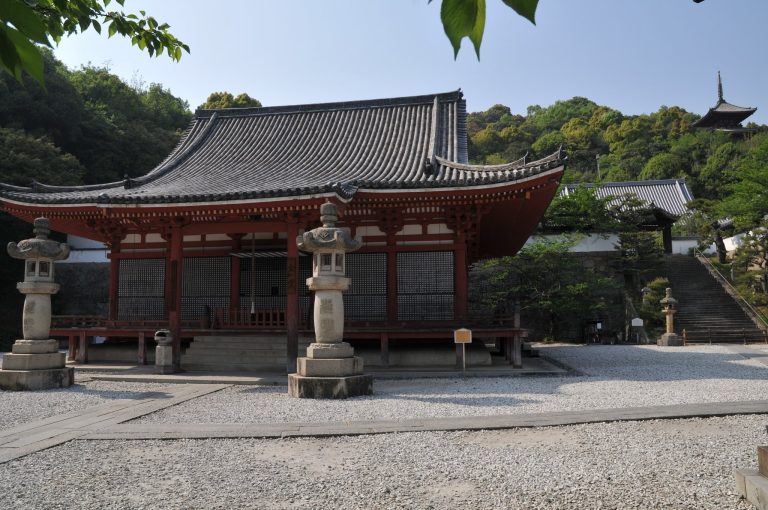
Shakado Buddhist Hall
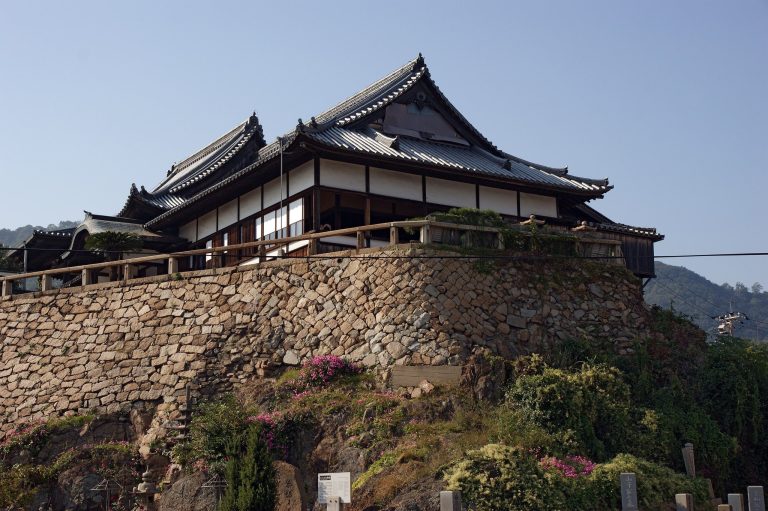
The Shakado is Ankoku-ji’s principal historic building. Constructed in 1273, the wooden hall is preserved as an Important Cultural Property and forms the central architectural expression of the temple’s early history.
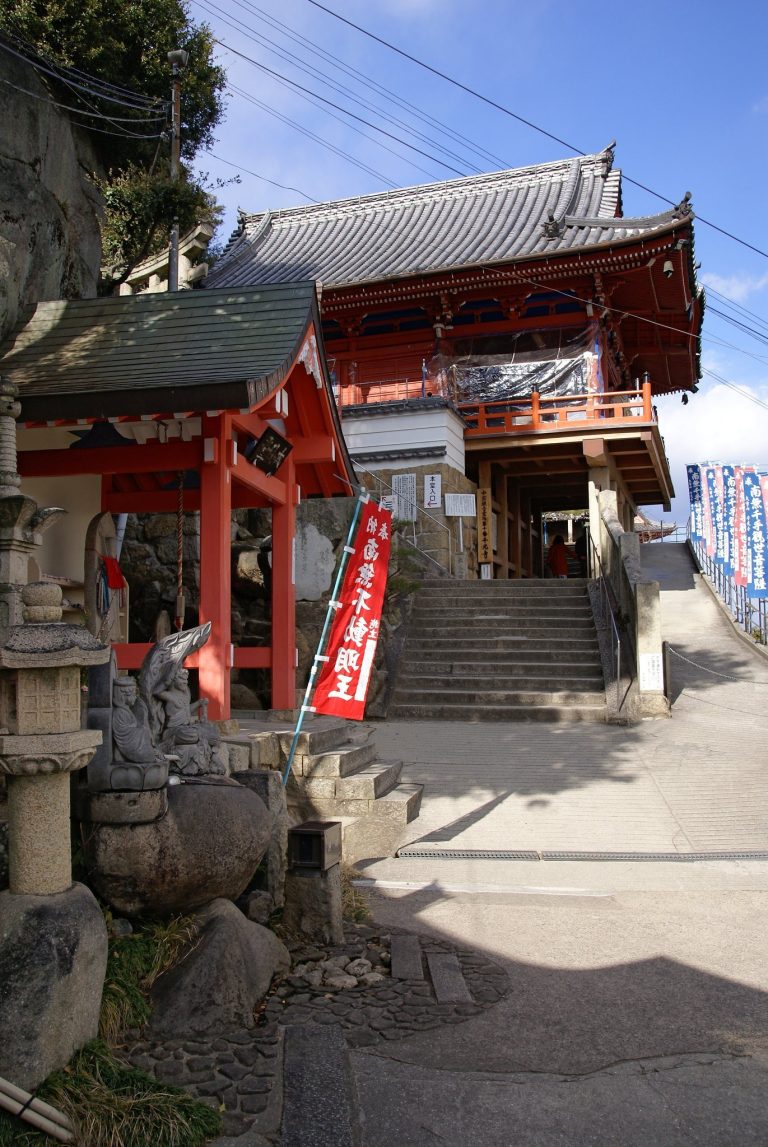
Jizōdō and Koyasu Kannon Hall
The Jizōdō, built during the early Edo period, enshrines a stone seated statue of Jizō Bodhisattva made in 1330. The figure measures 219 centimetres in overall height, while the statue itself is 120 centimetres high. The Koyasu Kannon Hall was rebuilt during the Shōwa period.
Five-ring pagodas and tea-whisk mound
The grounds include the five-ring pagoda of Mizuno Tamon, erected in 1632, and the Tomo-no-tsu five-ring pagoda, erected in 1654 and standing 280 centimetres high. A five-ring pagoda is a Buddhist monument formed from five symbolic geometric shapes representing earth, water, fire, air, and space. The precinct also contains a monument associated with tea whisks, known as a tea-whisk mound.
Sculptures and ritual objects
Amida triad
The wooden standing Amida triad was made in 1274 and serves as the temple’s principal devotional image. Its three figures preserve the connection between the surviving religious furnishings and the temple’s thirteenth-century foundation.
Hottō Kokushi portrait sculpture
The wooden seated statue of Hottō Kokushi is a formal chinso, or portrait of a Zen master, made as a longevity portrait when Kakushin was 69 years old. Documents placed inside the statue date its production to 1275. It is regarded as the oldest Japanese chinso sculpture with a clearly known date and the oldest known longevity portrait.
A crystal five-ring stupa, a Buddhist monument representing earth, water, fire, air, and space, was placed inside a small box within the statue. It is 6.9 centimetres high. The statue’s internal deposits also contain a handwritten text with Sanskrit seed syllables, a mantra, and a verse by a Zen master bearing the title Buddhist-Eye Zen Master. Dated December 18, 1275, the text is signed by Kakushin. Another handwritten record, dated March 15, 1664, records repairs to the statue.
Later devotional images and temple objects
A seated wooden statue of Bodhidharma, the Indian monk traditionally regarded in East Asian Buddhism as the patriarch who transmitted the teachings that developed into Chan and Zen, was made in 1678 and is 45 centimetres high overall. The temple also preserves a cloud-shaped gong, or unpan, made in 1685. Measuring 47 centimetres vertically and 52 centimetres horizontally, this type of suspended metal instrument was used in Zen monastic settings to signal meals, work, meditation, and other activities.