Franzensburg: A Historic Water Castle in Laxenburg, Austria
Visitor Information
Google Rating: 4.7
Popularity: Medium
Official Website: www.schloss-laxenburg.at
Country: Austria
Civilization: Medieval European, Modern
Site type: Domestic
Remains: Palace
History
Franzensburg is situated in the market town of Laxenburg in Austria and was constructed by the Habsburg monarchy during the early 19th century. It was built as a palace-castle complex under the direction of Emperor Franz II, who ordered its creation as a stately residence on an artificial island within a park pond.
The palace’s construction began in 1801, designed by the court architect Johann Ferdinand Hetzendorf von Hohenberg, and was envisioned as comprising two main components: a knight’s castle used for residential purposes and a museum named Knappenburg. The museum was intended to display a broad array of the Habsburg family’s art collections. Work on Franzensburg encountered a pause in 1805 due to the disruptions caused by the Napoleonic Wars. Construction resumed only after the coalition opposing Napoleon achieved victory, leading to the castle’s completion in 1836, shortly after Emperor Franz II had passed away.
Franzensburg’s design embraced the Historicism architectural movement by intentionally imitating medieval styles, integrating genuine medieval building fragments. Significant elements came from older structures, including parts of the Heiligenkreuz Monastery’s parish church and the Speciosa chapel from Klosterneuburg, one of the earliest Gothic buildings in the Danube region. To manage costs, especially for bricks, Emperor Franz II acquired a brick factory and the nearby Vösendorf castle, establishing an administrative and production hub to support construction efforts.
Since 1806, transportation to the castle island involved a ferry crossing the pond. Seasonally, this ferry was replaced by a wooden bridge in winter, and later, a permanent stone bridge was erected on the eastern side. Following the dissolution of the Austro-Hungarian Empire in 1918, the Habsburg estates, including Franzensburg, were confiscated, transferring ownership to the state. The palace then served as a public museum. Restoration efforts culminated in 2003 when Franzensburg was officially reopened with participation from Otto von Habsburg, a direct descendant of its founder.
The castle stands within an extensive park of approximately 250 hectares, laid out in the English landscape garden style of the late 18th century. This park features natural elements such as forests, meadows, canals, and auxiliary structures including the Temple of Concord, the Knight’s Column, and a pleasure house, all contributing to the historic setting of the estate.
Remains
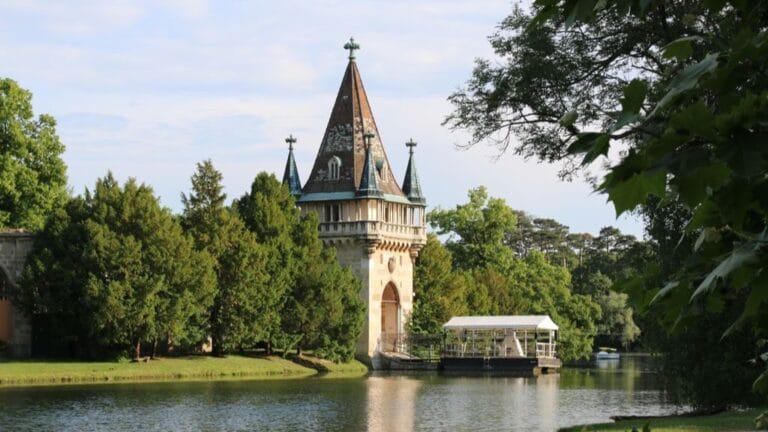
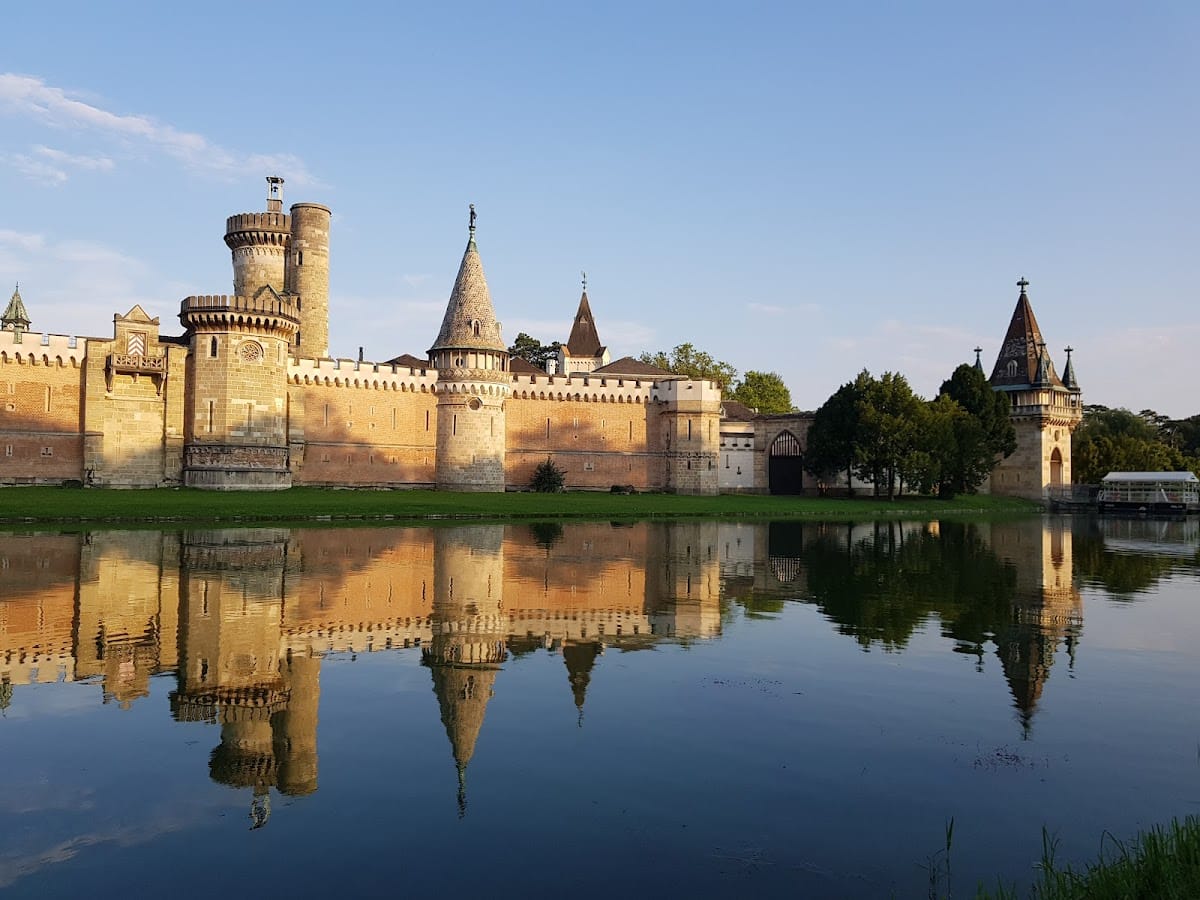
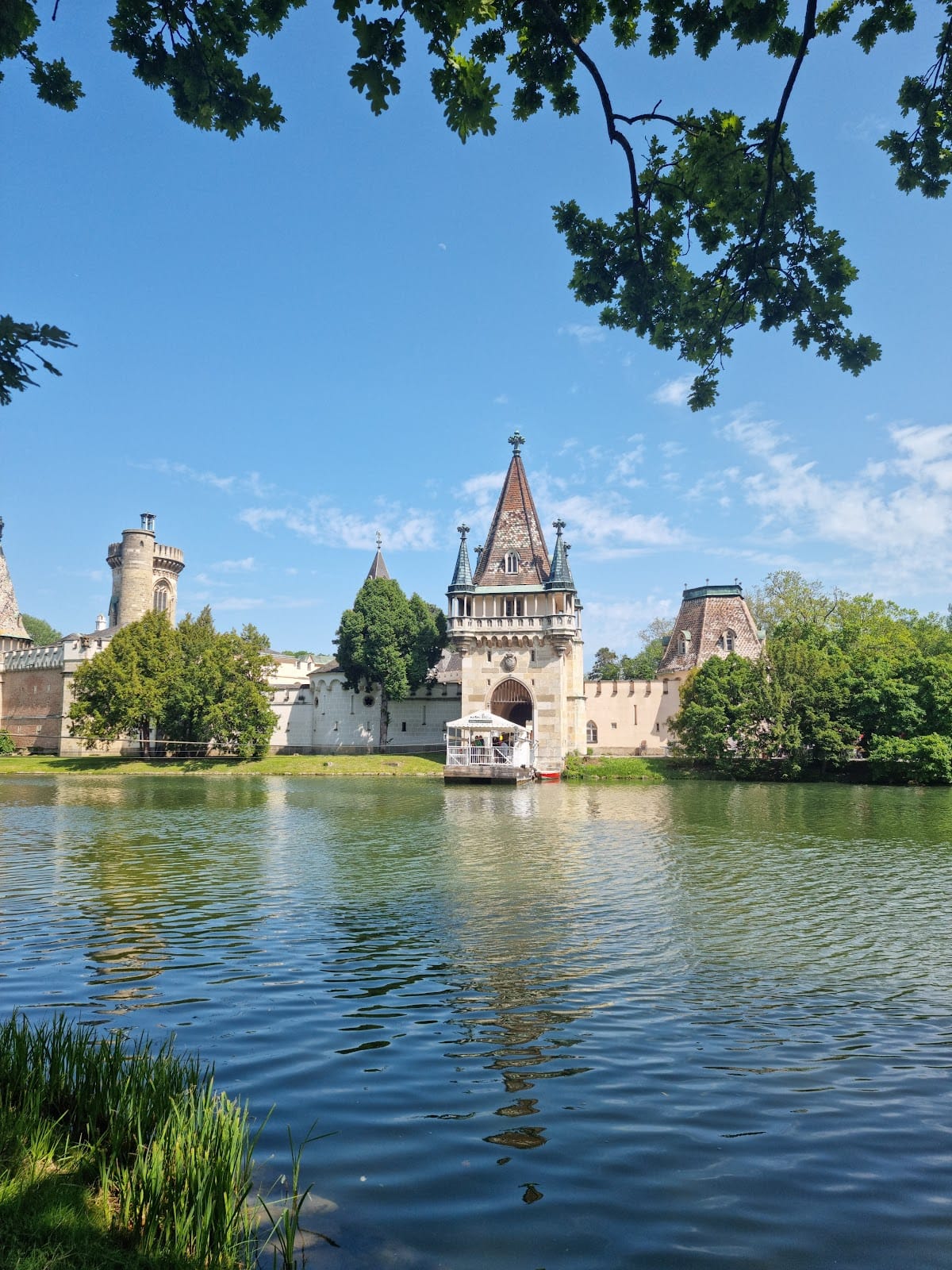
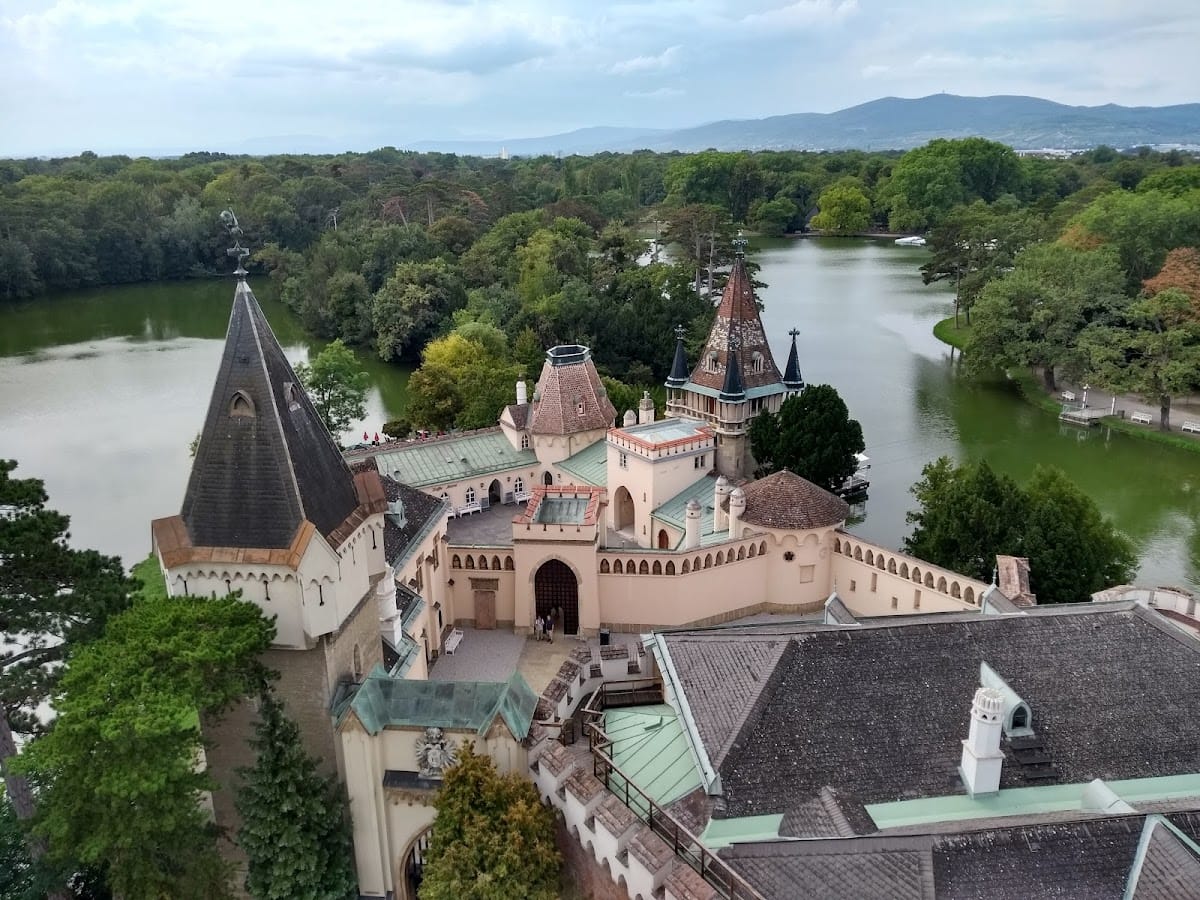
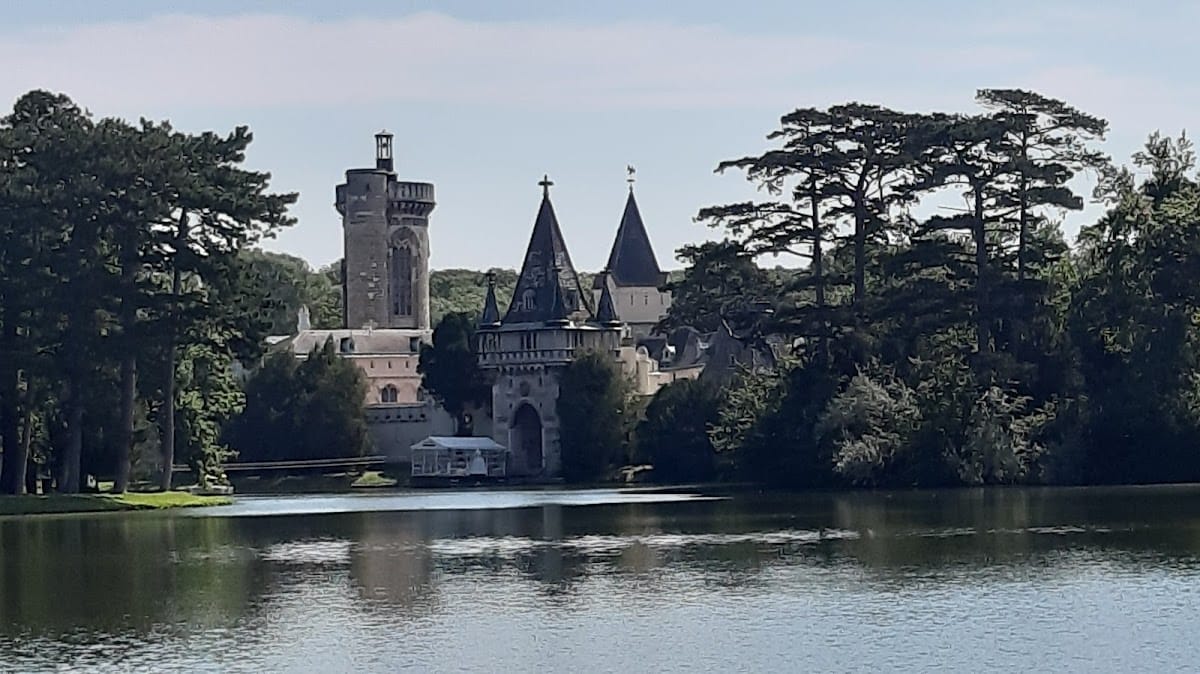
Franzensburg presents itself as a water castle situated on an artificial island surrounded by a pond within the landscaped park. Its layout consists of several multi-story buildings connected by covered passages and galleries, creating a complex that simulates a medieval fortress.
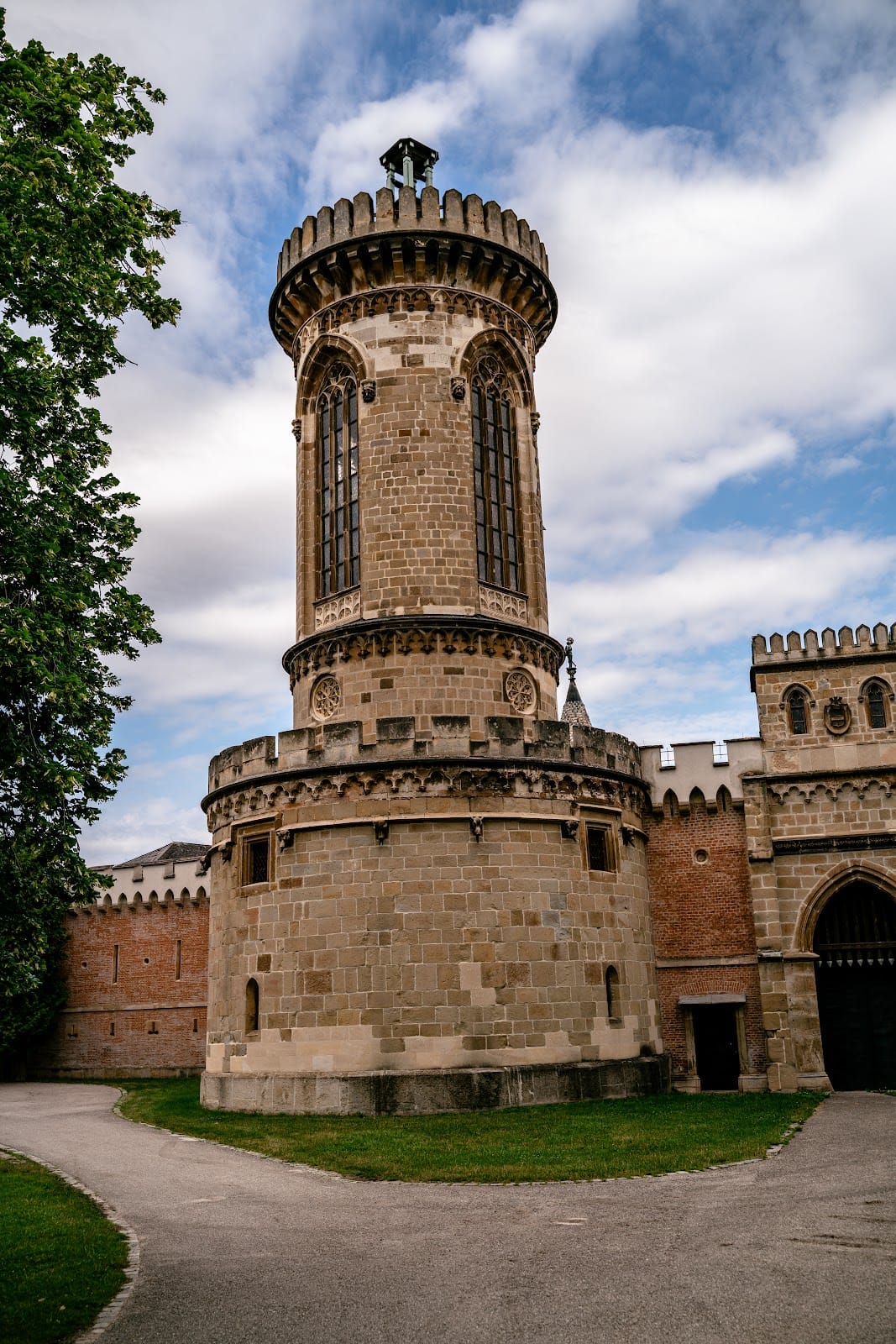
The western side of the castle is distinguished by features resembling a genuine medieval stronghold, including a high battlement wall equipped with defensive towers. In contrast, the eastern facade is marked by a tall observation tower, providing a vantage point over the surroundings. Incorporated within the structure are large medieval architectural fragments salvaged from significant historic buildings. Among these are elements from the parish church of Heiligenkreuz Monastery and pieces of the Speciosa chapel from Klosterneuburg, which have been carefully reconstructed as part of the castle.
Inside Franzensburg, visitors can explore several rooms displaying notable collections. The Armory Hall features a ceiling decorated with a colorful assembly of shields bearing the coats of arms of 44 Austrian regions and provinces. The Habsburg Hall houses half of the imperial statues sculpted by Paul Strudel; the other half resides in Vienna’s former imperial library. Another notable space is the Lorraine Hall, which contains portraits of emperors on the imperial throne after Franz II, anchored by a depiction of the castle’s founder painted by Leopold Kupelwieser. This hall also includes works by renowned artists Ferdinand Georg Waldmüller and Friedrich von Amerling. The Luisenzimmer, distinct for its ceiling paintings, is furnished with two intricately carved door panels and doors dating from around 1600, originally from Rappottenstein Castle.
Transportation to the island has historically relied on a ferry service, which remains operational today under a licensed shipping company. In winter, the ferry is replaced by a wooden bridge, and visitors can also access the island via a permanent stone bridge located on the pond’s eastern shore.
The surrounding park enhances the setting of Franzensburg with its English landscape garden design, featuring an arrangement of forests, meadows, and waterways. The park incorporates several ornamental structures and open spaces such as the Temple of Concord and the Knight’s Column, which complement the natural environment and the castle itself. These elements collectively form a harmonious ensemble reflective of the cultural tastes of the late 18th and early 19th centuries.
Nearby sites