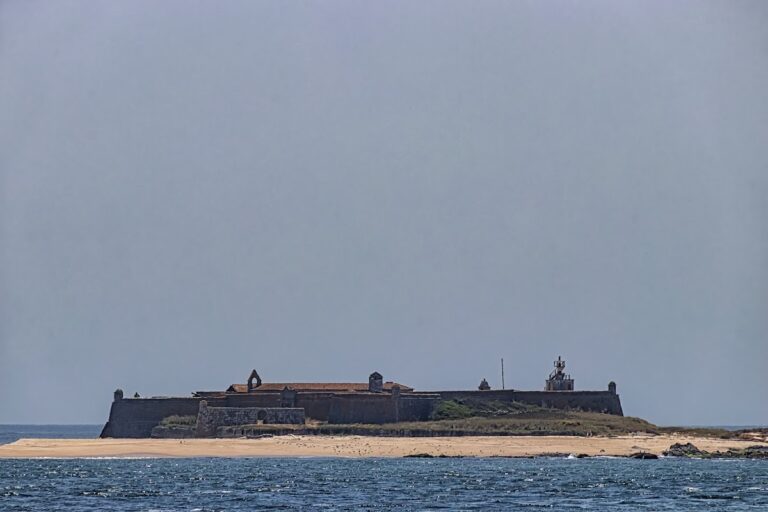
Fortim de Montedor: A Mannerist Coastal Fortification in Portugal


Site at a Glance
- Rating
- 4.4
- Popularity
- Low
- Country
- Portugal
- Primary era
- Early Modern
- External website
- Open
- Eras represented
- Early Modern
- Civilizations
- Portuguese
- Site type
- Military
- Remains
- Fort
On this page6 sections
History
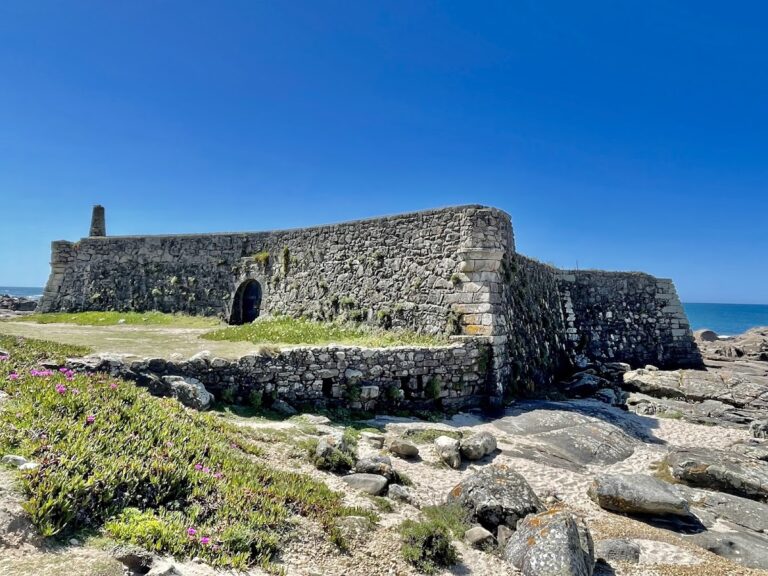
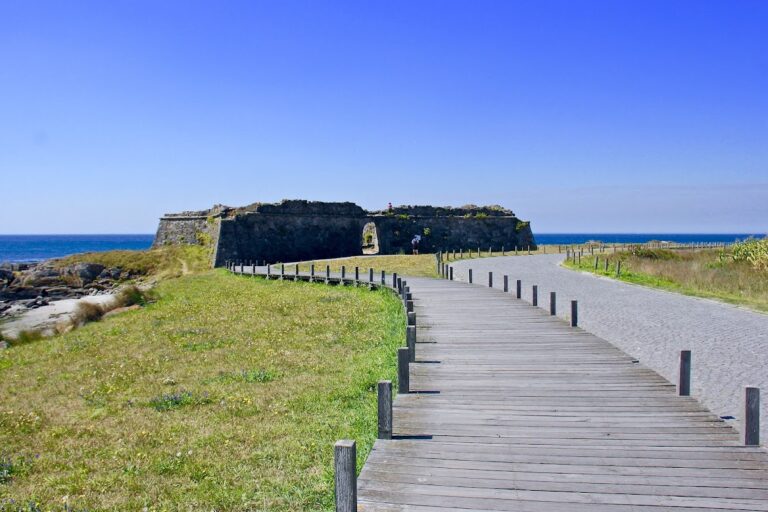
Fortim de Montedor is a small bastioned coastal fortification in Portugal, standing at Paçô beach in Carreço, Viana do Castelo. Built by the Portuguese in the second half of the seventeenth century in the Mannerist style, it formed part of a defensive effort to protect the Atlantic coast of Alto Minho from possible attacks by the Spanish navy.
Defenses after the War of Restoration
The fort was erected after the War of Restoration, the conflict through which Portugal reasserted its independence from Spain between 1640 and 1668. It was one of four coastal fortifications constructed between Caminha and Viana do Castelo. The other three were the Fort of Vinha at Areosa and the forts of Cão and Lagarteira at Vila Praia de Âncora.
Fortim de Montedor belonged to a wider defensive system. The Ínsua Fort, built during the War of Restoration, guarded the mouth of the Minho River. At the same time, the fortifications of Valença, Vila Nova de Cerveira, and Santiago da Barra were renovated, while the Fort of São Francisco de Lovelhe was built to defend the southern bank of the Minho. Pedro II of Portugal, who reigned from 1683 to 1706, is identified as the promoter of Fortim de Montedor. The architect Manuel Pinto Villa Lobos may have designed it and the related coastal forts, although this attribution remains uncertain.
Later military and modern history
The fort remained in use during the eighteenth century and was deactivated in 1716. Fortim de Montedor and several associated coastal fortifications later contributed to regional defenses during the Peninsular War and the Liberal Wars in the first half of the nineteenth century.
In the 1980s, ownership passed to the former Regional Tourism Board of Alto Minho for consideration as a place for cultural and tourist use. In 1995, architect Luís Teles prepared a proposal to convert the fort into a restaurant. That proposal was later replaced by another project by Teles for an interpretation and support center serving environmental trails. Conservation and restoration work took place in 2004. Fortim de Montedor has been classified as a Property of Public Interest since 1967 under Decree No. 47,508, published on 24 January of that year.
Remains
Fortim de Montedor survives as a small, ruined coastal fortification with a star-shaped plan and simple elevations. Its Mannerist design uses projecting bastions to organize the defenses, while the fort’s position on Paçô beach places it within the coastal landscape it was built to protect. The plan resembles those of the forts at Areosa and Cão, and the similarity may point to a common designer.
Plan and defensive form
The fort has four unequal bastions, defensive projections that allowed fire to cover the walls and their approaches from the sides. Its seaward face is curved, while the opposite face is concave. On the landward side, the gate of arms is formed by a semicircular arch. The planimetric design was regarded in its period as an advance in coastal surveillance and defense.
Interior arrangement
Inside, the service quarters are arranged around a central corridor that functions as the courtyard. This internal organization links the accommodation and working spaces to the fort’s compact defensive plan. The surviving structure is in ruined condition, with its form and arrangement preserved as the principal evidence of its original use.