Forte Bravetta: A Fort in Rome’s Defensive System


Site at a Glance
- Rating
- 4.3
- Popularity
- Low
- Country
- Italy
- Primary era
- Modern
- Eras represented
- Modern
- Civilizations
- Italian
- Site type
- Military
- Remains
- Fort
On this page7 sections
History
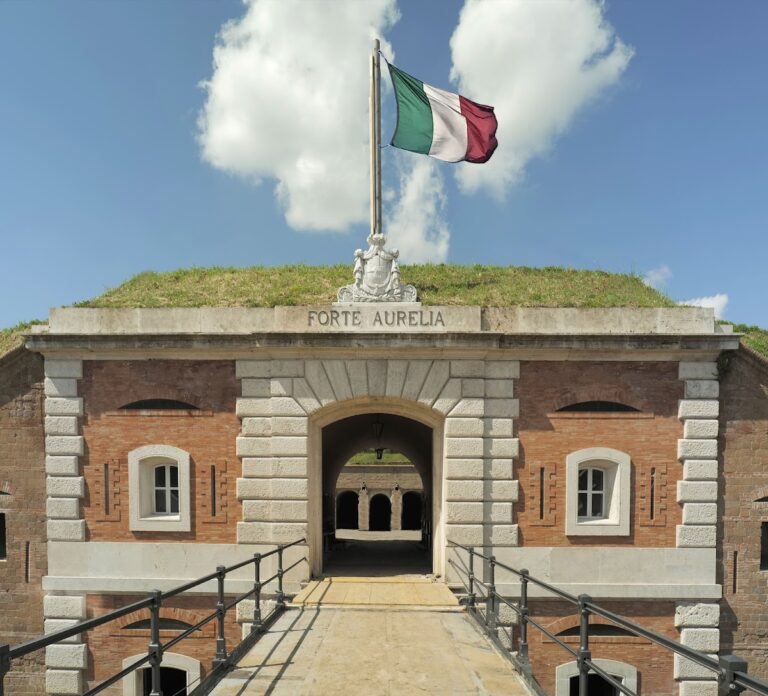
Forte Bravetta is a Prussian-style fort in Rome, Italy, constructed between 1877 and 1883 as part of the city’s fortified defensive system. It was one of 15 detached forts built between 1877 and 1891 after Rome became the capital of Italy, forming a ring intended to protect the city from military attack. The fort’s defensive role ended in 1919.
Construction and military use
Construction began in 1877 and was completed in 1883. Forte Bravetta occupied a strategic position within the ring of forts around Rome, although its military purpose was later superseded. The fort was built on the remains of a Roman villa attributed to Lucius Fabius Pollio.
Executions under Fascism and occupation
During the Fascist period, the Special Tribunal for the Defence of the State used Forte Bravetta for executions. This court had been created by the Fascist regime to prosecute its political opponents. On 17 June 1932, the republican Domenico Bovone and the anarchist Angelo Sbardellotto were executed there after being convicted of planning attacks against Benito Mussolini, Italy’s Fascist dictator from 1922 until 1943.
Forte Bravetta became an execution site again during the German occupation of Rome, which lasted from 11 October 1943 to 3 June 1944. During this period, 77 partisans were executed there. The German Military Court ordered the executions, and the Gestapo, Nazi Germany’s secret state police, carried them out under Herbert Kappler, the German SS and police officer who directed the security apparatus in occupied Rome. Fascists sentenced to death by the High Court of Justice for Sanctions against Fascism were also executed at the fort between 1944 and 1945.
Memorialization
A monument beside the entrance commemorates victims of the Resistance, the organized anti-Fascist and anti-Nazi movement in Italy during the Second World War. On 9 September 2009, Rome’s mayor inaugurated the Parco dei Martiri, a municipal garden of approximately 10 hectares dedicated to victims of Nazifascism, the combined Nazi and Fascist systems and forces responsible for persecuting and killing their opponents. The present owner of Forte Bravetta is Roma Capitale.
Remains
Fort and setting
Forte Bravetta occupies 10.6 hectares at the end of Via di Bravetta, between Via Aurelia and Via Portuense. It lies near Villa York and Casal Ninfeo within the Valle dei Casali Nature Reserve. The surviving fort belongs to the Prussian style and stands on the remains of a Roman villa attributed to Lucius Fabius Pollio, joining the nineteenth-century defensive structure to an earlier archaeological setting.
Parco dei Martiri
The Parco dei Martiri occupies approximately 10 hectares of the site. An olive tree planted in 2009 symbolizes peace; it was donated by the Jewish National Fund and came from Jerusalem. The memorial monument beside the entrance and the park preserve the site’s association with the victims of the Resistance and Nazifascism.
Nearby sites