Forte do Alto do Duque: A Nineteenth-Century Defensive Fort in Lisbon


Site at a Glance
- Rating
- 4.1
- Popularity
- Low
- Country
- Portugal
- Primary era
- Modern
- Eras represented
- Modern
- Civilizations
- Portuguese
- Site type
- Military
- Remains
- Fort
On this page8 sections
History
Construction and Defensive Role
Forte do Alto do Duque is a military fort in Lisbon, Portugal, constructed between 1875 and 1890 under the promotion of King Luís I. It formed part of the Campo Entrincheirado, Lisbon’s late-nineteenth-century system of mutually supporting forts and defensive works intended to protect the capital and the approaches to the Tagus River. The fort was built on land belonging to the estate of the Duke of Cadaval and, together with Fort Bom Sucesso, was intended to defend the entrance to the Tagus in the Monsanto area.
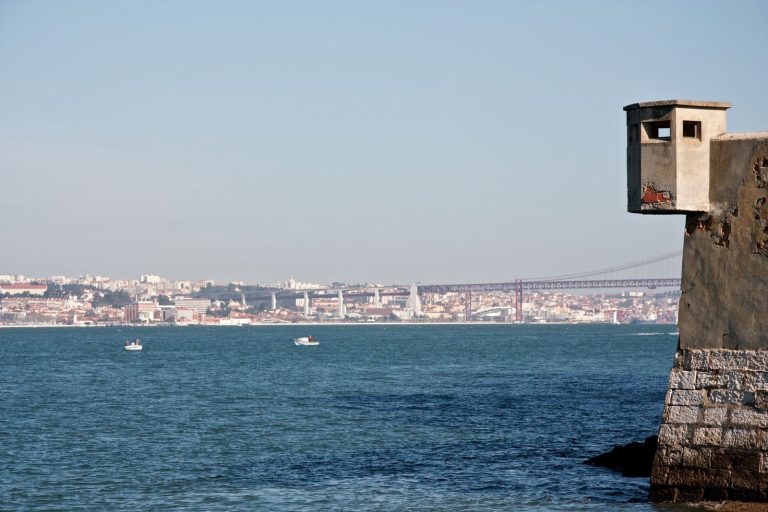
Its artillery included four 15-centimetre SK L/40 naval guns manufactured by Krupp, the German industrial and arms manufacturer. On 17 April 1901, the fort became the site of Portugal’s first wireless connection. A message travelled across the Tagus to a receiving station at Fort Trafaria, 4,300 metres away. During labour strikes in 1912, the fort was used with other forts to detain strikers.
Military and Political Events
In 1932, the Detachment of Alto do Duque Fort was established at the site as a military unit trusted by the regime. Four years later, during the Spanish Civil War, fought from 1936 to 1939 between the Spanish Republicans and forces led by General Francisco Franco, the fort responded to artillery fire from Portuguese naval vessels that had revolted and were attempting to leave the Tagus to support the Spanish Republican side.
Following the Carnation Revolution of 25 April 1974, which overthrew Portugal’s authoritarian regime, Forte do Alto do Duque briefly became the headquarters of COPCON, the Operational Command of the Continent. This military command was created after the revolution and was associated with the revolutionary left within the Armed Forces Movement. During the attempted coup of 11 March 1975, aircraft linked to António de Spínola’s supporters circled the area to intimidate the fort’s defenders. The defenders drove them away with gunfire, and no attacking troops reached the fort’s vicinity. COPCON was dissolved after the failed coup of 25 November 1975.
Later Institutional Uses
During the 1990s, the fort temporarily housed the headquarters of the Operational Command of the Land Forces. It later served as the headquarters of the Defence Strategic Information Service, known as SIED, a Portuguese state intelligence institution responsible for strategic defence information, until 2015. Since April 2019, it has housed the Criminal Investigation Division of the Lisbon Public Security Police. In September of that year, it appeared on a list of military buildings proposed for disposal in Portugal’s official gazette. The fort’s official designation is Military Building No. 31, Lisbon.
Remains
Fort Layout and Buildings
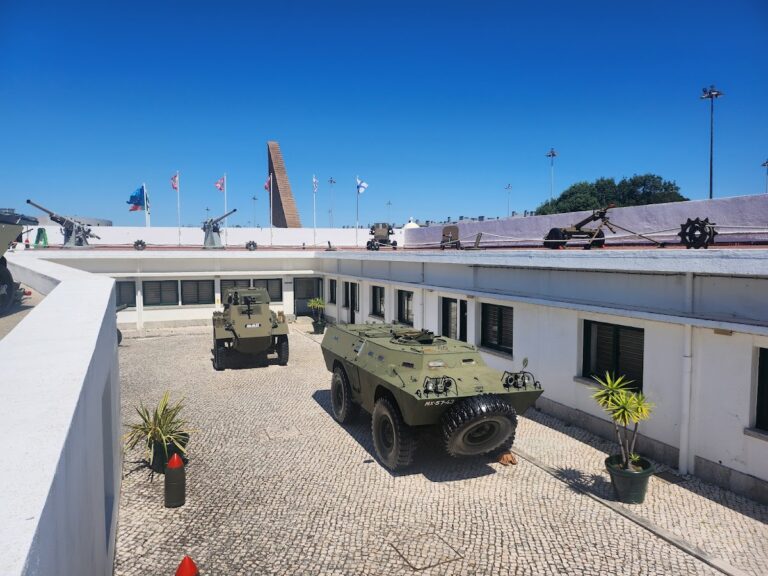
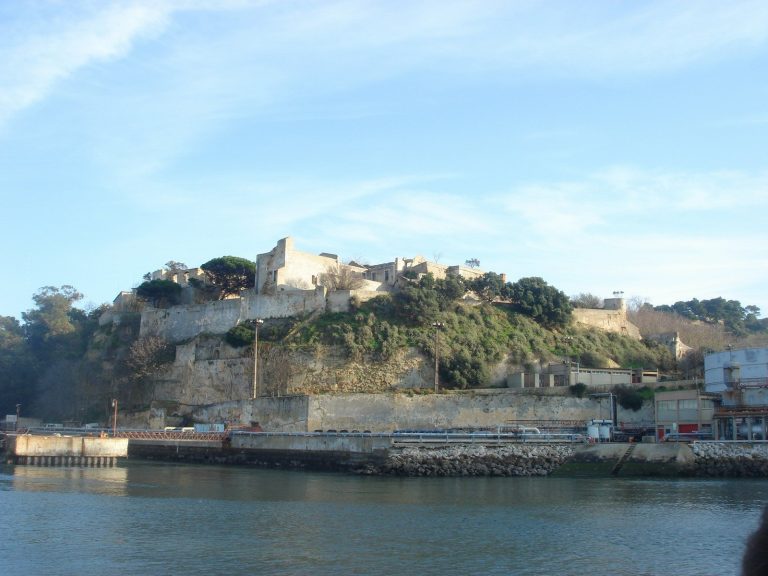
Forte do Alto do Duque stands about 75 metres above sea level at the southwestern tip of Monsanto Forest Park, in the parish of Ajuda. It occupies a hill overlooking the Tagus and the central area of the Lisbon suburb of Algés. The fort has an irregular pentagonal plan and is largely buried at ground level, with a moat surrounding it. Its central area is covered by a dome, while a separate barracks building lies across the moat and connects to the main fort by a bridge. The complex is described as restored.
Main Fort
The main fort contains a centrally planned construction with a cistern covered by a rotational vault, a curved roof formed around a central point. The underground character of the structure and its surrounding moat reflect its place within Lisbon’s interconnected defensive system. The fort’s armament included four 15-centimetre SK L/40 naval guns, linking the surviving military structure to its role in defending the Tagus approaches.
Barracks Building
The barracks is a distinct building positioned across the moat from the principal fort. A bridge connects it to the main defensive structure, preserving the relationship between accommodation and the fortified compound within the restored complex.