Forte de Santa Catarina: A Coastal Stronghold in Portugal
Site at a Glance
- Popularity
- Medium
- Country
- Portugal
- Primary era
- Early Modern
- Eras represented
- Medieval, Early Modern, Modern
- Civilizations
- Habsburg, Portuguese
- Site type
- Military
- Remains
- Fort
On this page9 sections
History
Foundations and Coastal Defence
Forte de Santa Catarina is a coastal stronghold in Figueira da Foz, Portugal, built to help defend the area’s port and bay. Its foundations are believed to date to the reign of John I, king of Portugal from 1385 to 1433.
In October 1585, while Portugal was ruled by the Habsburg dynasty, Coimbra’s municipal council asked Philip I of Portugal to build a fort at the mouth of the Mondego River, on the rocks of Santa Catarina Hill. Construction began later, funded by taxes from Buarcos and contributions from the University of Coimbra and the Monastery of Santa Cruz. The fort formed part of a defensive network with the Fortress of Buarcos and Palheiros Fortlet. English privateers looted it in 1602.
Reinforcement and French Occupation
Work to strengthen the fort began in 1643, after Portugal restored its independence from Habsburg rule. By 1680, its facilities were in ruins. A budget for renovation was prepared, but the work did not proceed because funds were redirected to other costs of the War of Restoration, the conflict in which Portugal regained and defended its independence.
French troops under General Jean-Andoche Junot occupied the fort in 1808 during the Peninsular War, in which Napoleonic France fought Portugal, Spain, and Britain. On June 27, around two dozen volunteer students from the University of Coimbra, under artillery sergeant Bernardo António Zagalo and infantry sergeant Inácio Caiola, led about 3,000 people of varying training, equipment, and capability in forcing the French garrison to surrender. The prisoners were taken to Coimbra. British forces under Admiral Charles Cotton then occupied the fort, helping secure the landing of 13,000 men under Arthur Wellesley at Lavos on August 1.
Changing Uses
During the nineteenth century, successive reports called for urgent repairs, and the fort eventually lost its military function. A lighthouse was installed there in 1888 and deactivated in 1969. In 1911, part of the fort was ceded to the Portuguese Institute for the Relief of Shipwrecked People; a few years later, the remainder was leased to the Figueira Tennis Club. A decree published in 1961 classified the fort as a Property of Public Interest.
Remains
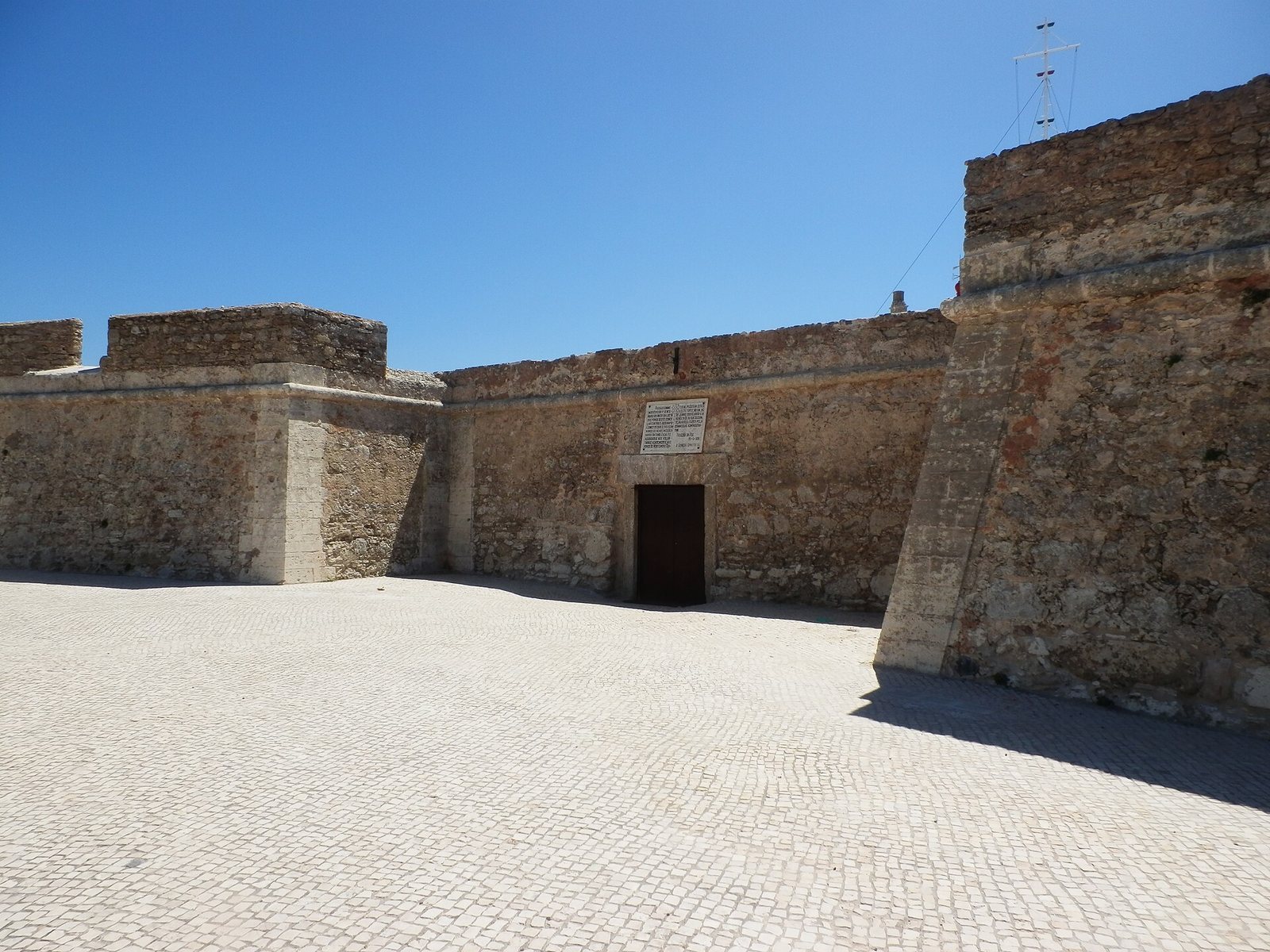
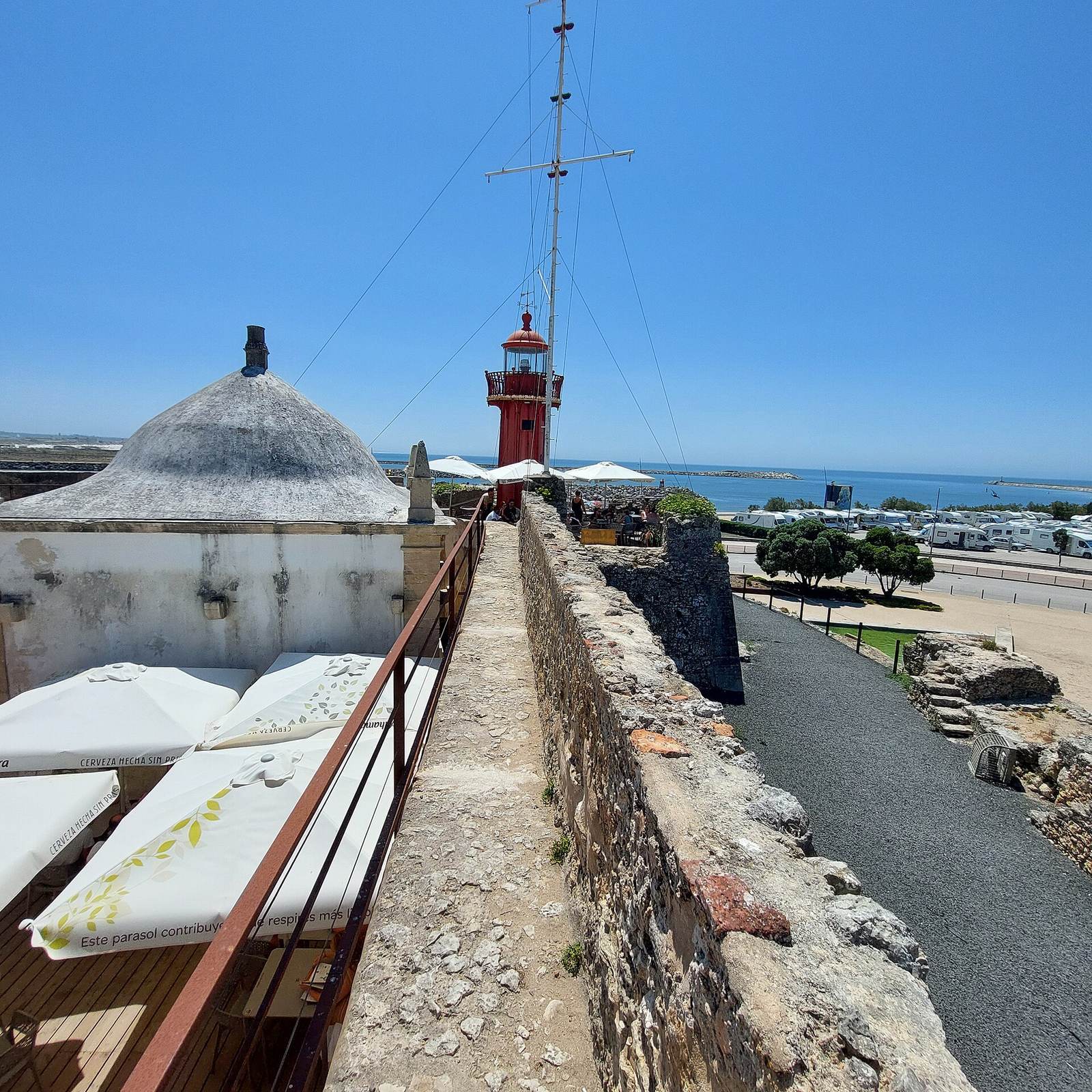
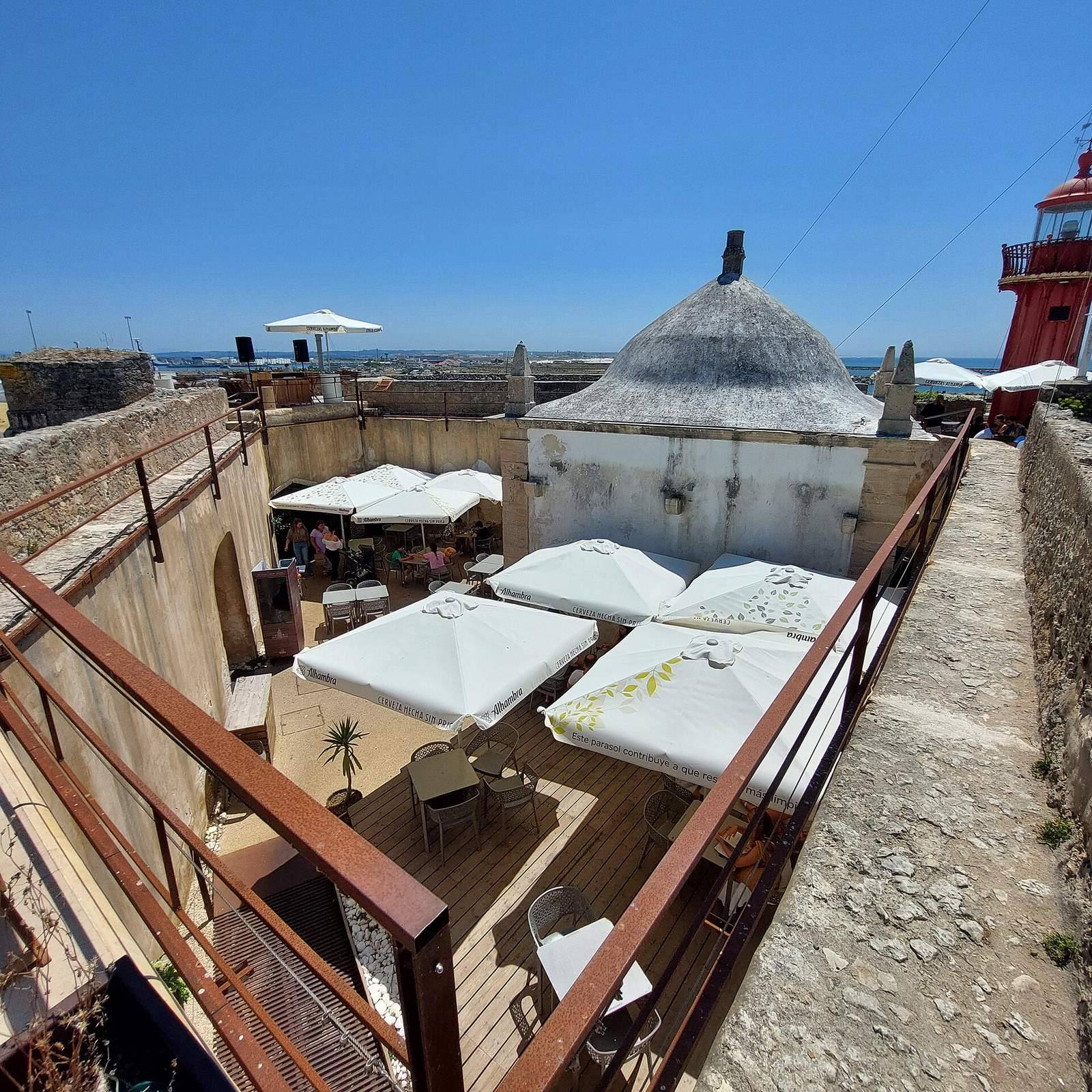
The surviving complex includes a defensive enclosure, a parade ground with buildings, and a lighthouse within the fort. Its condition is described as good.
Fort and Interior Structures
Plan and Bastions
The fort has an irregular triangular plan adapted to uneven ground. Its projecting bastions provided positions for defending the walls. One has a particularly acute angle, criticized as a possible weakness in the fort’s defensive capacity; the others are dovetail-shaped.
Parade Ground, Barracks and Chapel
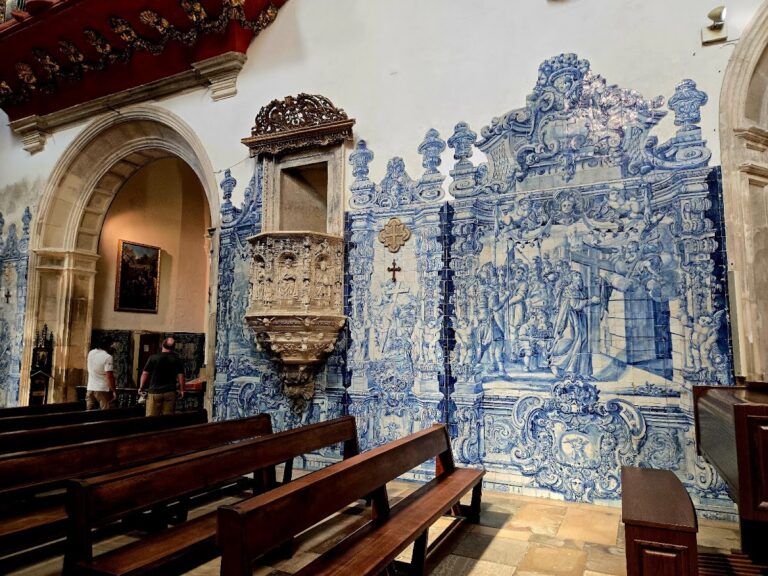
The parade ground contains barracks and the Chapel of Santa Catarina. Built around 1598, the chapel is a square-plan building in the Mannerist style, an artistic and architectural style developed after the Renaissance. It holds an image of its patron saint dating from the eighteenth century.
Santa Catarina Lighthouse
Within the fort, the lighthouse has a cylindrical tower of red-painted cast iron, about 10 metres high, with a lantern and gallery.