Fors Church: A Medieval Parish Church in Eskilstuna, Sweden
Site at a Glance
- Country
- Sweden
- Primary era
- Medieval
- Eras represented
- Medieval, Early Modern, Modern
- Civilizations
- Swedish
- Site type
- Religious
- Remains
- Fortified Church
On this page10 sections
History
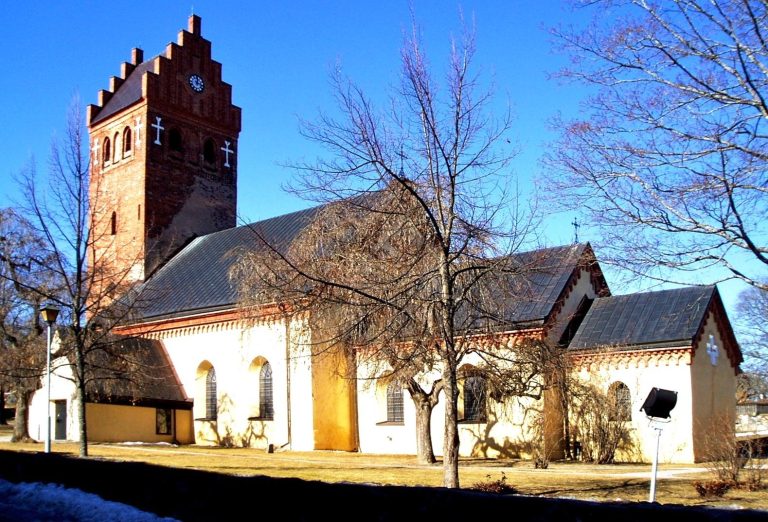
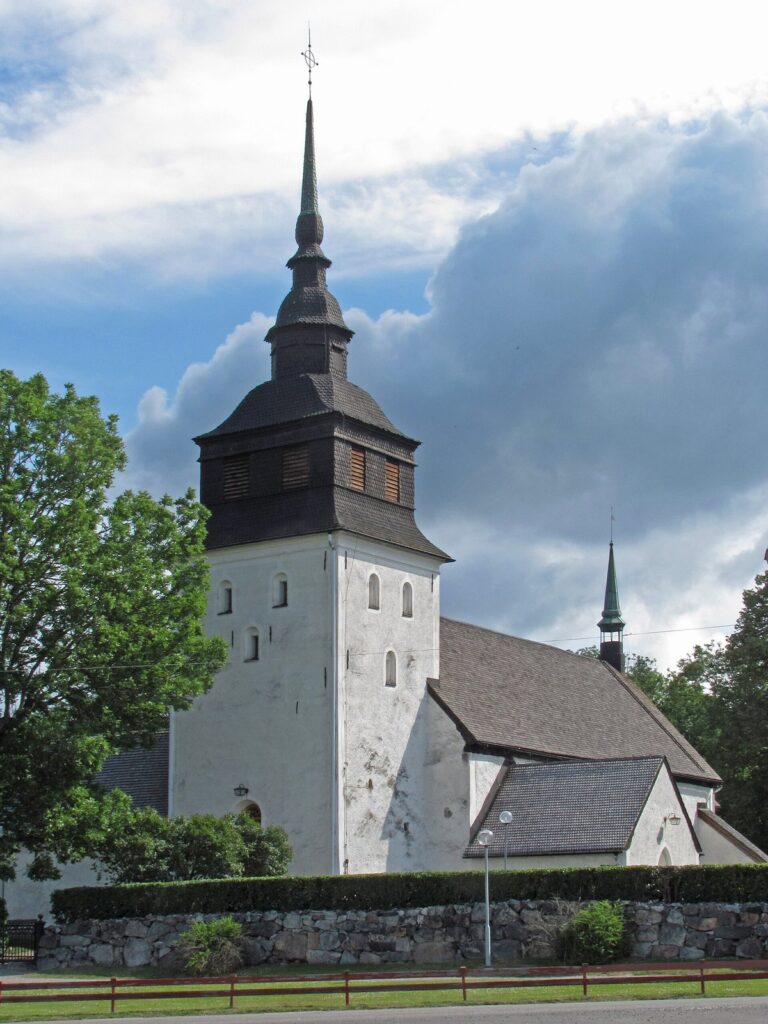
Fors Church is a medieval church in central Eskilstuna, Sweden, on the west bank of the Eskilstuna River. The present church was built in the mid-11th century on the initiative of Saint Eskil, an English monk venerated as a Christian saint. Its oldest stonework is Romanesque, an early European architectural style. The church was consecrated during the 11th century. A medieval tradition links Eskil to Christian mission in Södermanland and credits him with an earlier stone church, said to have been built around 1000.
Fors is the oldest church in Tunafors parish, a local congregation and its territory, and the parish’s second largest. It belongs to the Diocese of Strängnäs, a church administrative area within the Church of Sweden. Among Eskilstuna’s oldest buildings, it is regarded as the city’s foremost medieval monument. Its name comes from the Eskilstuna River beside it.
Foundation and medieval development
The church probably served as a diocesan church, serving a wider church district, for western Södermanland, southern Västmanland, and eastern Närke. It may also have served a Hospitaller monastery, a house of a Catholic religious order with a military role.
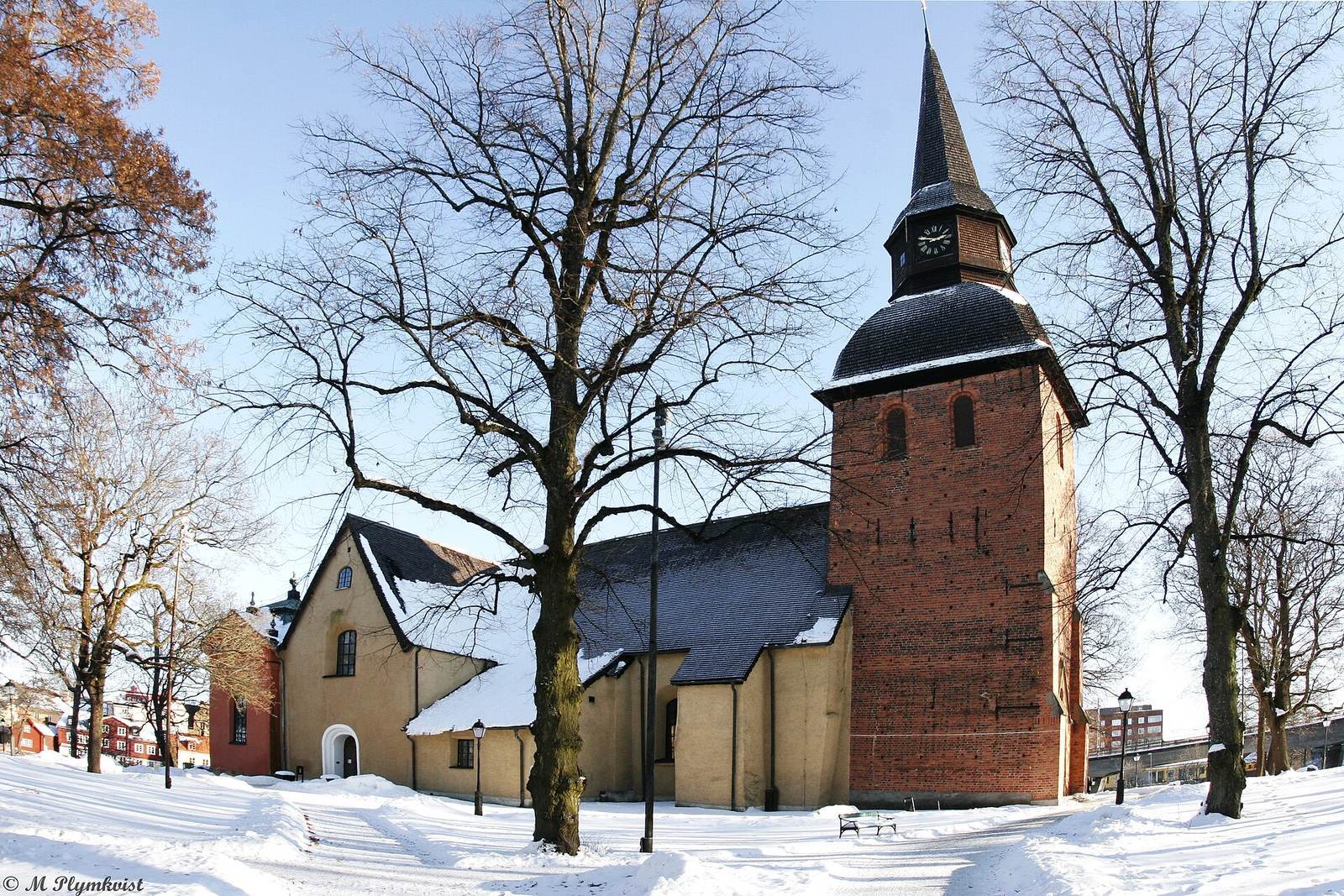
The church was probably extended eastward in the 14th century. Its tower is thought to have been added in the early 15th century. A nave was added sometime between the 15th and 17th centuries, following the Romanesque style of the older parts.
Changes in the 17th century
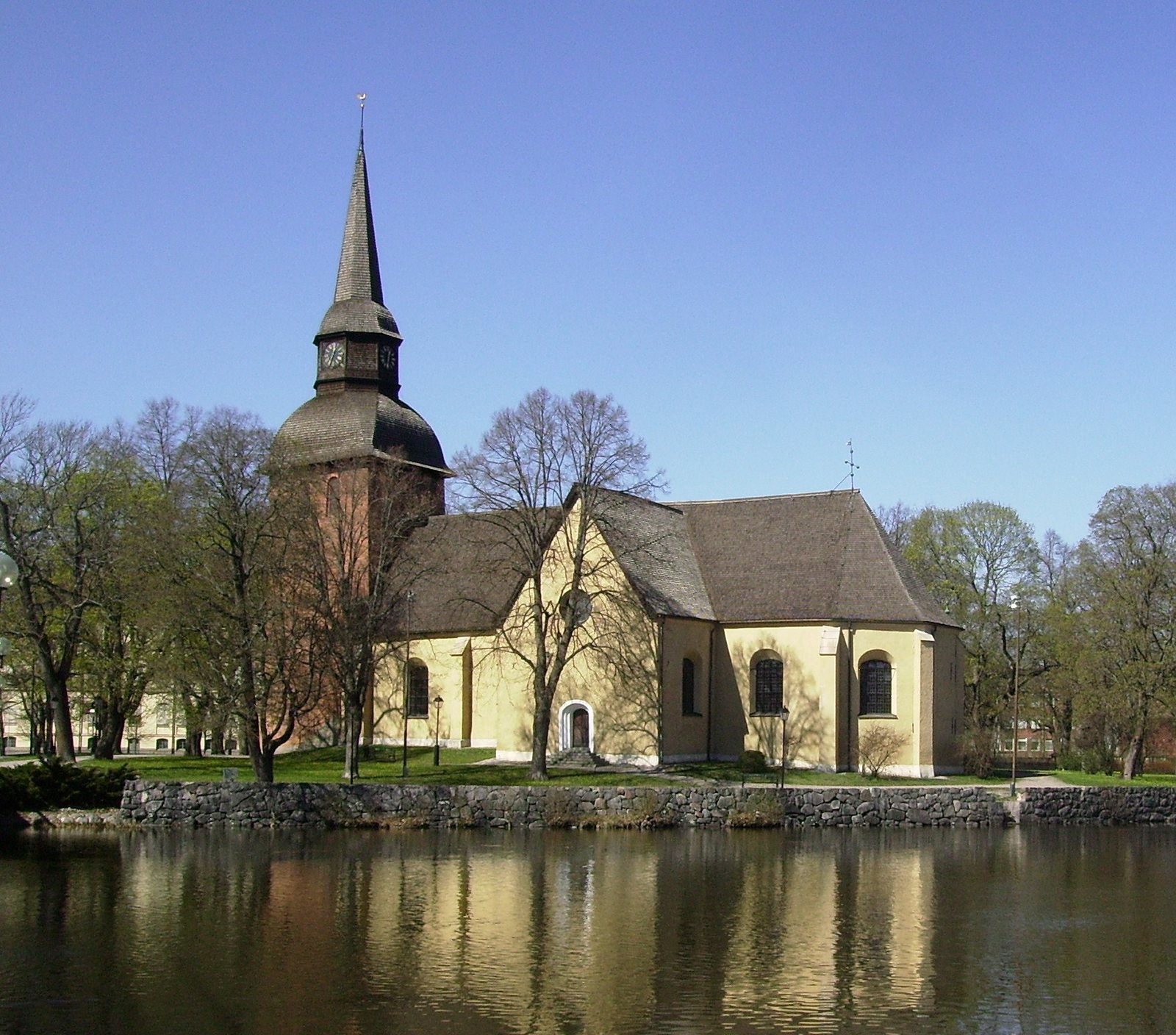
Further alterations and additions during the 17th century gave the church its present overall form. In the 1650s, the Lohe family financed a substantial part of the work, and a family burial chapel was built in the church in return. The tower served as a lookout and defensive position against attackers approaching by river. Its present spire was erected in 1676.
Organ and later history
City councillor Casper Grau donated an organ gallery in 1672. An organ in use before 1773 had ten stops, which control sets of pipes. Pehr Zacharias Strand of Stockholm built a 12-stop instrument in 1814. In 1856, Erik Adolf Setterquist of Hallsberg rebuilt and enlarged the organ for the Eskilstuna City and Rural parishes, which used the church; it was inaugurated on 27 July. Åkerman & Lund built another organ in 1921, and E. A. Setterquist & Son enlarged it in 1937 to 32 stops across two hand-played keyboards and a foot-operated pedalboard. Frederiksborg Orgelbyggeri built a mechanical choir organ in 1972 and a new main organ in 1974. Walter Thür Orgelbyggen later built the present main organ.
Remains
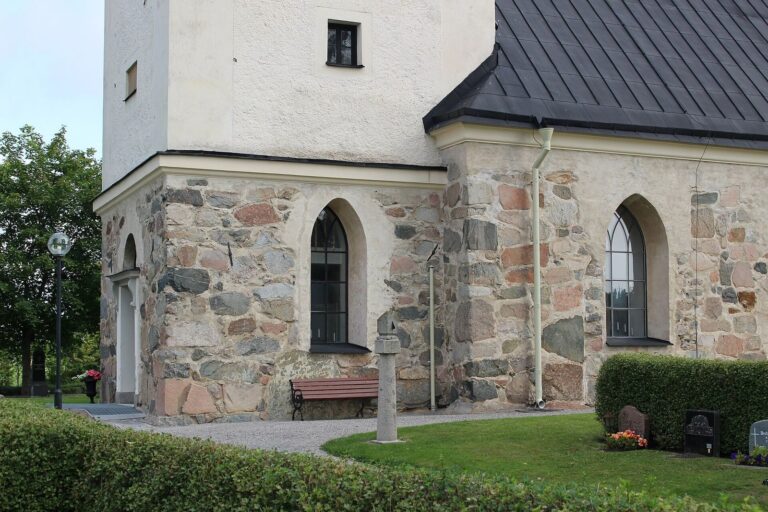
The church combines Romanesque stonework with later additions in a cross-shaped plan. Its nave ends in a three-sided choir, the area around the main altar, and is accompanied by crosswise arms called transepts. The nave and tower together form the cross-shaped arrangement. The north and west walls of the original stone church survive, along with the porch, among the oldest parts of the building. The porch retains its original appearance and was last restored in the 17th century. The tower originally had a simple gabled roof; with its spire, it reaches 50 metres.
Interior furnishings and art
Medieval sculpture
The church’s oldest sculpture is probably a seated bishop dating from the 13th century.
Pulpit and altarpiece
The Lohe family gave the church its Baroque pulpit and altarpiece around 1655. Baroque is a later European art style. Wooden figures on the pulpit represent the four Evangelists, traditionally identified as the authors of the Gospels, as well as Jesus Christ and the apostle Paul. The altarpiece includes a 17th-century oil painting of the Transfiguration by the French artist Eustache Le Sueur, with a painting of God the Father above it. Images of the four Evangelists with their attributes surround these works. Three child figures crown the altarpiece; the central figure holds a band inscribed with words meaning ‘Glory to God in the highest.’
Later artwork and textiles
A window in the north transept, dedicated in 1987, depicts scenes from the life of Saint Eskil. Church artist Bengt Olof Kälde made it. Birgitta Hagnell-Lindén created a new choir carpet in 1989.
Organs
The present main organ has 38 stops across three hand-played keyboards and a pedalboard played with the feet. Its main façade comes from the 1814 organ. Walter Thür Orgelbyggen built the present instrument in 1999 with a rear-positive division, an organ section positioned behind the player.