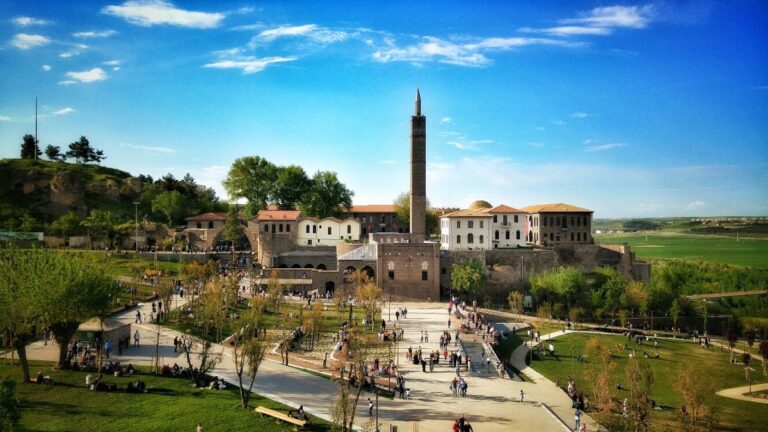
Şeyh Muhtar Mosque and the Four-Legged Minaret in Diyarbakır


Site at a Glance
- Rating
- 4.8
- Popularity
- Medium
- Country
- Turkey
- Primary era
- Early Modern
- Eras represented
- Early Modern
- Civilizations
- Aq Qoyunlu
- Site type
- Religious
- Remains
- Mosque
On this page6 sections
History
Şeyh Muhtar Mosque is a historic Sunni Muslim mosque in Diyarbakır, Türkiye, built in 1500 under the Aq Qoyunlu, a Turkmen ruling confederation that controlled eastern Anatolia and nearby regions during the fifteenth and early sixteenth centuries. It remains an active place of worship within the walled historic district of Sur.
Aq Qoyunlu Foundation
Hacı Hüseyin, son of Hacı Ömer, commissioned the mosque during the reign of the Aq Qoyunlu sultan Qasim Khan. An inscription on the minaret records its construction, and the building is also locally called Qasim Padişah Mosque. The name Şeyh Muhtar, or Şeyh Mutahhar, refers to Sheikh Matar, an Islamic religious figure whose tomb is believed to lie within the mosque property.
Diyarbakır yearbooks describe the tower later used as the minaret as a tall, stable structure built in 906. They state that it became a minaret when the mosque was constructed beside it after the area’s conquest by Muslims. Local tradition gives its four supporting columns a religious meaning, associating them with the Hanafi, Hanbali, Maliki, and Shafi’i schools, the four principal Sunni schools of Islamic jurisprudence.
Conflict, Restoration, and Earthquake Damage
The General Directorate of Foundations owns the mosque and carried out a restoration in 1960. On the night of 25 November 2015, automatic-weapons fire during an armed exchange between members of the Kurdish Patriotic Revolutionary Youth Movement and police damaged two columns of the minaret.
On 28 November, Tahir Elçi, a Turkish-Kurdish lawyer and human-rights advocate who chaired the Diyarbakır Bar Association, gave a press statement at the Four-Legged Minaret. He called for an end to armed conflict and police operations in residential areas. Shortly afterward, he was killed by a gunshot to the head during another exchange of fire near the minaret. Two undercover police officers, including Elçi’s bodyguard, were also killed. The mosque and minaret later sustained additional damage in the earthquakes that struck southeastern Türkiye in February 2023.
Remains
The Mosque Building
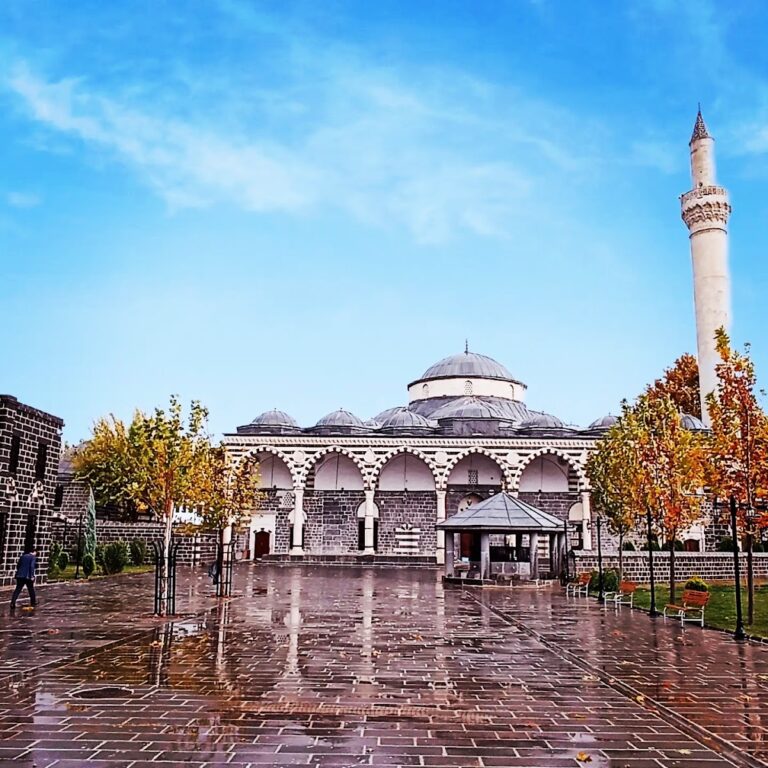
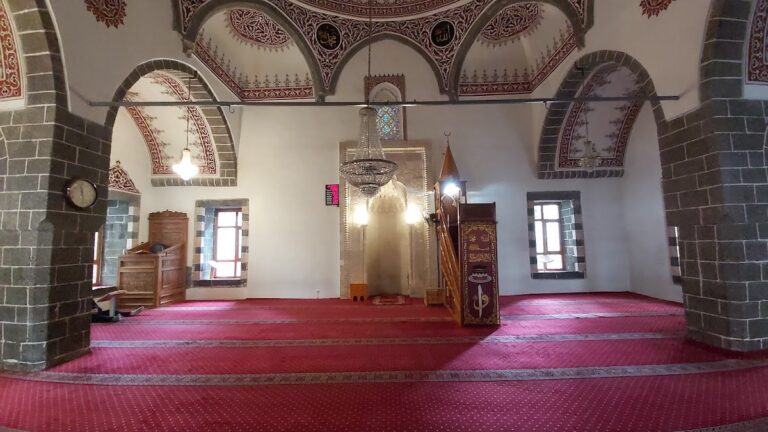
The mosque stands on Yeni Kapı Street in the Savaş neighborhood of Sur, on a property covering approximately 600 square metres. Its square plan is covered by a single dome, and its walls are built with alternating courses of stone and brick. The covered area measures 221 square metres, with room for up to 500 worshippers.
Arched windows punctuate the building, with three on each side and two at both the front and rear. The two windows in the qibla wall, the wall oriented toward the Kaaba in Mecca and marking the direction of prayer, are blocked with masonry.
The Four-Legged Minaret
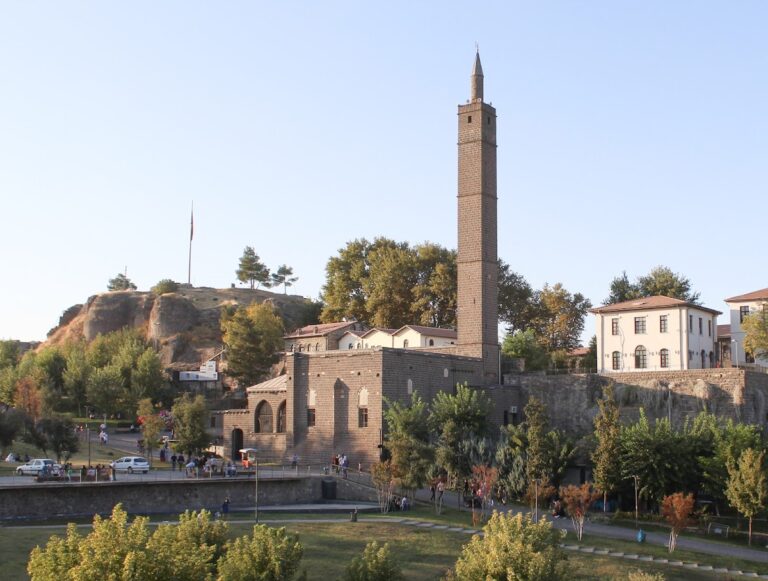
A freestanding minaret stands beside the mosque as a square-prism tower supported by four massive stone columns. Known as the Four-Legged Minaret, or Dört Ayaklı Minare and Minareya Çarling, it forms the mosque’s most distinctive architectural feature. Its four-column structure also provides the physical basis for the local tradition linking each support with one of the four principal Sunni schools of jurisprudence.
Nearby sites