Eta Anakannon Kofun: A Late Kofun-Period Burial Mound in Japan
Site at a Glance
- Rating
- 4.6
- Popularity
- Very Low
- Country
- Japan
- Primary era
- Medieval
- External website
- Open
- Eras represented
- Medieval
- Civilizations
- Yamato
- Site type
- Burial
- Remains
- Burial Mound
On this page10 sections
History
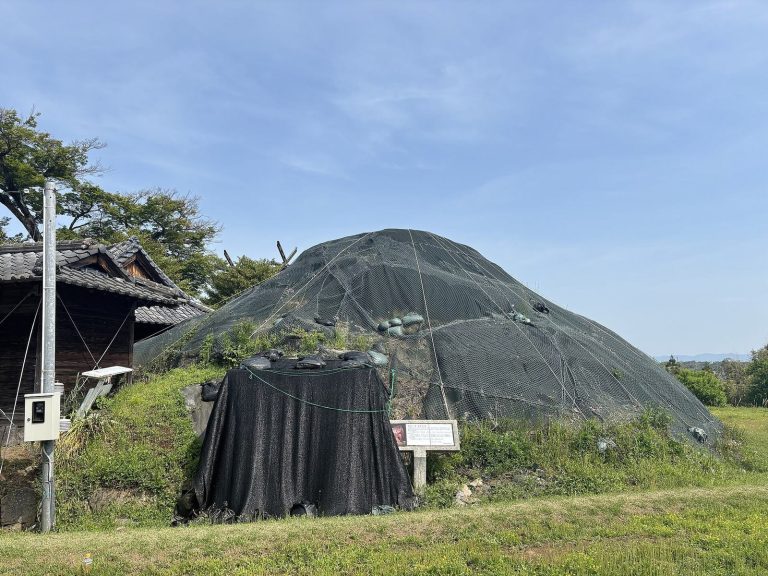
Eta Anakannon Kofun is a late Kofun-period burial mound in Japan, located in the Eta area of Nagomi, Kumamoto Prefecture, and probably built during the latter half of the sixth century. A kofun was a monumental Japanese burial mound, especially associated with the Kofun period, which lasted broadly from the third to the seventh century. The tomb’s horizontal stone chamber and decorated interior place it within the burial traditions of this late period.
Construction and name
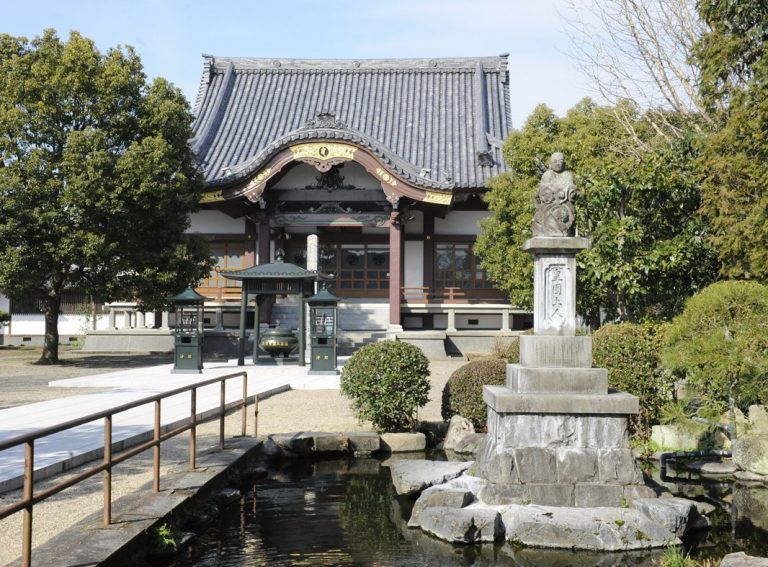
The mound was probably constructed in the latter half of the sixth century, although a date in the seventh century has also been proposed. Its name comes from a Kannon statue enshrined in the passageway. Kannon Bosatsu is a Buddhist bodhisattva associated with compassion and the saving of beings in distress.
Investigation and preservation
Japanese archaeologist Sueji Umehara investigated the kofun in 1917 and again in 1944. The site was designated a National Historic Site of Japan on November 13, 1944. The associated grave goods are kept at the Kyoto University Museum in Kyoto, while entry into the burial chamber is subject to restrictions.
Remains
Mound and setting
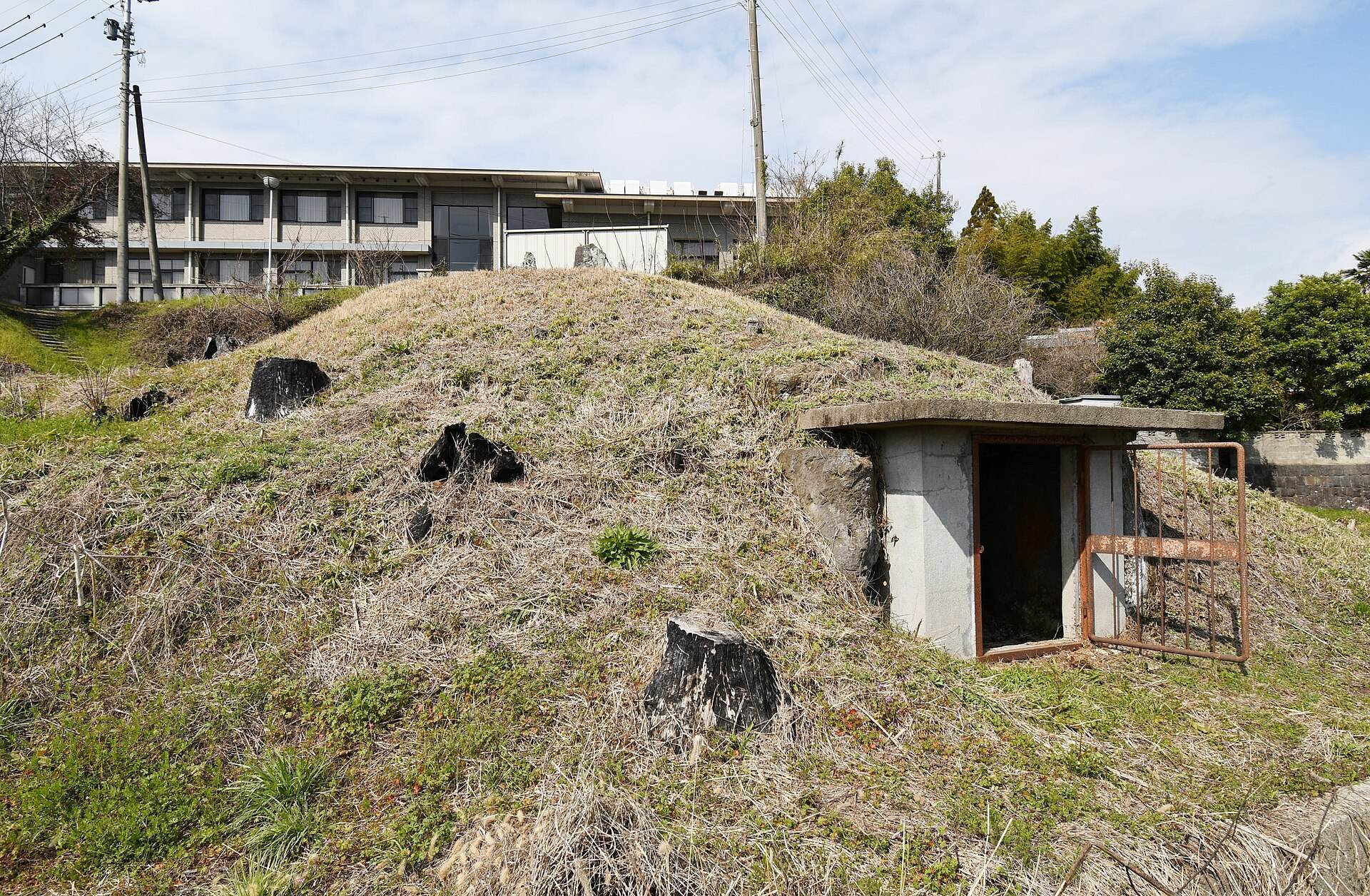
Eta Anakannon Kofun is a circular mound on a slope at the southern end of the Suwahara Plateau, in the Kikuchi River area. It stands at approximately 27 meters above sea level. One estimate gives the mound a diameter of about 17 meters and a height of 3.5 meters; another gives a diameter of about 25 meters. Its dimensions are difficult to establish because cultivation and other land use have partly levelled the mound. The summit retains a flattened area approximately 7 meters across.
Stone burial chamber
Layout and construction
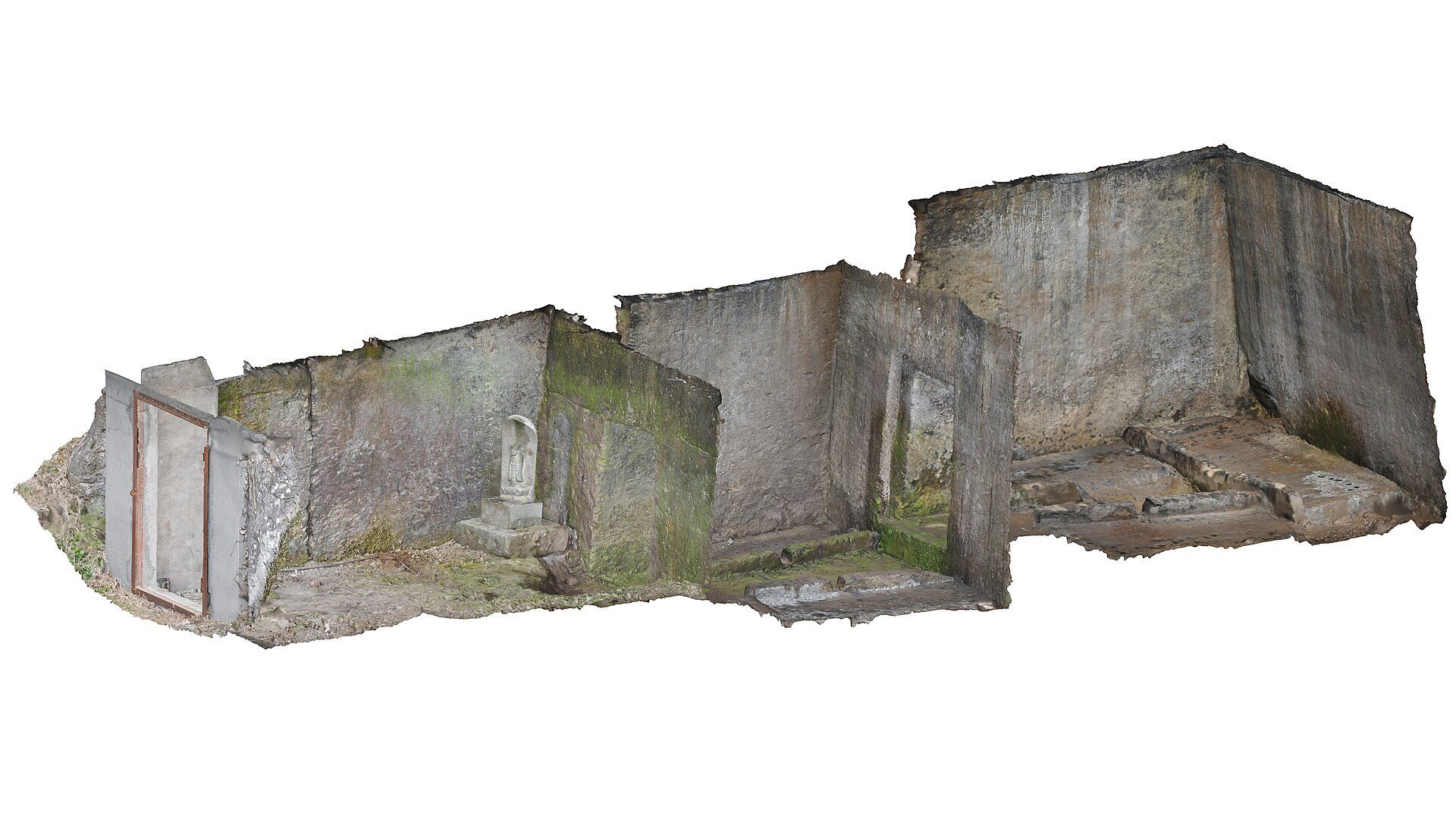
The mound contains a horizontal stone burial chamber, a tomb entered through a passage cut into the side of the mound, opening toward the south-southeast. The chamber is divided into a rear chamber, a front chamber, and a passageway, with a total length of approximately 9 meters. The rear chamber is 2.6 meters long, 2.3 meters wide at the front and 2.5 meters at the rear, and 2.3 meters high. Its second passage gate is 0.60 meters wide and 1.0 meter high.
The front chamber is 1.7 meters long, 2.0 meters wide at the front and 2.3 meters at the rear, and 1.8 meters high. Its first passage gate is 0.70 meters wide and 1.1 meters high. The passageway is 3.5 meters long, 1.9 meters wide at the front and 2.1 meters at the rear, and 1.8 meters high.
Stonework and gates
The chamber was built from carefully cut blocks of welded tuff from Mount Aso. The rear chamber uses a single stone for each of its rear and side walls and for its ceiling. The front chamber likewise has single stones forming its side walls and ceiling, while the passageway has two stones for each side wall and for its ceiling. The ceiling stone in the rear chamber has a dish-shaped recessed surface.
Each passage gate was made by cutting a rectangular opening through the centre of a single stone. The front of the second gate has a decorative frame approximately 0.90 meters wide, 1.2 meters high, and 0.10 meters deep.
Platforms and decoration
Three funerary platforms form a U-shaped arrangement in the rear chamber. The rear platform is 0.8 meters wide, while the two side platforms are each 0.7 meters wide. Two further platforms stand along the sides of the front chamber, measuring between 0.5 and 0.6 meters wide. Each platform consists of a single stone extending from the floor to the dividing elements.
Fires burned in the rear chamber for many years, coating both the rear and front chambers with soot and making their wall decoration difficult to examine. Red-pigment patterns survive in the passageway, showing that the tomb was originally a decorated kofun.
Grave goods
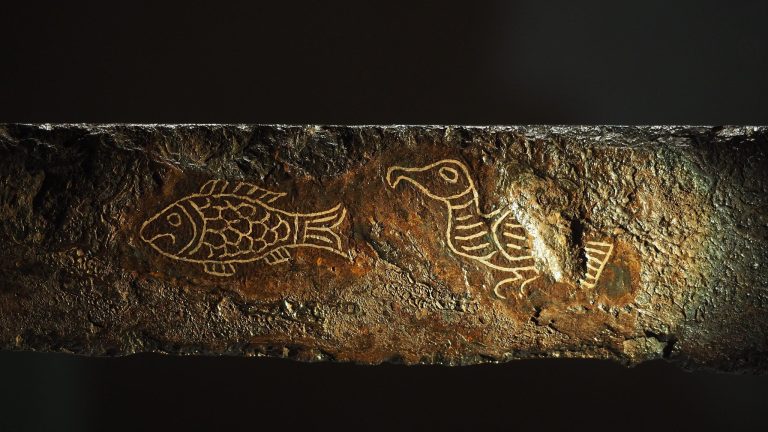
The grave goods include a gold ring, a glass magatama bead, two heart-shaped gilt-bronze pendants from horse harnesses, and fragments of Sue ware from a large jar. Sue ware was a high-fired gray pottery made in ancient Japan, while a magatama was a curved, comma-shaped bead used in prehistoric and early historic East Asia.