Esrum Abbey: A Medieval Cistercian Monastery in Denmark
Site at a Glance
- Popularity
- Medium
- Country
- Denmark
- Primary era
- Medieval
- Eras represented
- Medieval
- Civilizations
- Danish
- Site type
- Religious
- Remains
- Monastery
On this page9 sections
History
Esrum Abbey is a medieval monastery on the north side of Lake Esrum on Zealand, Denmark. Probably founded around 1140 as a Benedictine monastery, it was taken over in 1151 by Cistercians, a Catholic monastic order developed from the Benedictine tradition, with the approval of Archbishop Eskil of Lund. Esrum became the second Cistercian foundation in medieval Denmark and, after Herrevad Abbey became part of Sweden, the oldest Cistercian abbey in present-day Denmark.
Foundation and Cistercian expansion
Esrum became a daughter house, an affiliated monastery, of Clairvaux, a major Cistercian abbey. Fires in 1194 and 1204 led to rebuilding, including a new church and a brick monastery. In time, Esrum itself became a mother house, founding or supervising other Cistercian communities.
Its foundations included Vitskøl Abbey in 1158, Sorø Abbey in 1161, Dargun Abbey in 1172, Ryd Abbey in 1192, and Kołbacz Abbey, established during the 12th century. Monks from Esrum founded Dargun in Mecklenburg. Hostile military action led to its abandonment in 1198, and monks from Doberan refounded it in 1208. The former Dargun community later founded Eldena Abbey, while Kołbacz went on to establish Oliva Abbey near Danzig.
Royal patronage, records, and legends
Esrum grew into a wealthy spiritual, cultural, and economic centre. In 1355, Queen Helvig of Schleswig entered the community as a lay sister, a woman affiliated with a religious house who undertook practical duties rather than the full liturgical life of choir nuns. She had been displaced at court by King Valdemar IV’s mistress. Helvig was buried in the abbey church, and royal gifts of property followed. Her daughter, Margaret I of Denmark, continued the royal patronage, bringing further gifts from noble families on Zealand.
The abbey’s letter-book, the Codex Esromensis, gathered copies of papal, episcopal, and royal privileges, along with records of the abbey’s possessions. Work on it began in 1496. After the monastery’s dissolution, the book passed through private hands before entering the Royal Library in Copenhagen in 1731.
Legends linked Esrum’s spring with the healing of Brother Daniel, a sick monk who, according to the story, recovered after Abbot Vilhelm of Æbelholt told him to drink its water. The spring was then believed to relieve gout, rashes, and headaches. Another tale said that Satan entered the community disguised as a cook called Brother Rus, winning the monks’ favour by bringing women into the enclosure and serving them meat. A further legend claimed that King Valdemar I made Esrum’s monks work on Gurre Castle against the abbot’s wishes, and that after the king died there his soul was condemned to hunt the surrounding fields.
Reformation and dissolution
In 1536, Lutheranism became Denmark’s state religion under Christian III. The State Council approved a Lutheran church ordinance in 1537, prepared by Danish theologians with the Lutheran reformer Johannes Bugenhagen. It drew on the Augsburg Confession, a foundational Lutheran statement of faith, and Luther’s Small Catechism, a short guide to Christian doctrine. Christian III signed the revised ordinance on 2 September 1537. The Crown took possession of Catholic church property, including Esrum’s, although the monastery continued operating until 1559.
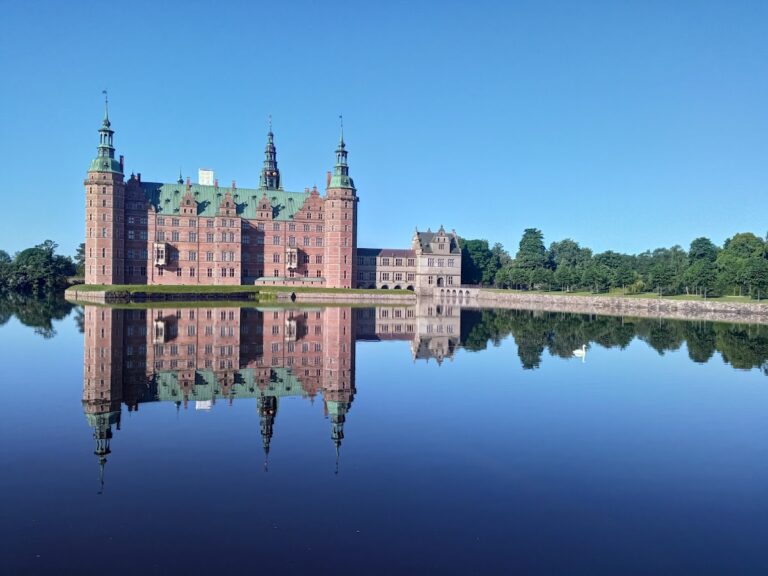
In 1559, Esrum’s abbot and the 11 remaining monks were transferred to Sorø Abbey. Under King Frederick II, most of the buildings, including the church, were dismantled over the following years, and their materials were used to build Frederiksborg and Kronborg castles. The abbey’s lands became part of the Kronborg estate.
Later uses and modern legacy
During the 17th century, surviving buildings were adapted as a hunting lodge for the king and his court. The site also served as a stud farm until 1717 and as a barracks for dragoons, soldiers associated with mounted service, until 1746. Later it housed military and civil administrative offices and became property of the local government of Frederiksborg County.
During the Second World War, the site was used temporarily for secure storage of the Danish National Archives. Latvian refugees were housed there after the war. The surviving buildings underwent thorough restoration in 1996 and have protected status as a national historic monument. They are used as a museum and a school for the study of nature and the environment.
The cheese known as Esrum or Esrom takes its name from the abbey. It is associated with a monastic recipe dated 1559; production began in 1930, and the official name has been used since 1962. Esrom is a Trappist-style cheese, a style associated with monastic cheese-making, and has Protected Geographical Indication status, which links a product to a particular region and its characteristics.
Remains
The church and cloister formed the core of a brick monastic complex, with the other monastery buildings arranged around the cloister. Excavations in 1996 made it possible to reconstruct the complex’s original layout.
The abbey church
The rebuilt church was made of red brick and measured more than 100 metres in length. It was a three-aisled basilica, a long building organized around a central nave, with transepts, the crosswise arms of its main axis, and a rectangular choir, the area reserved for clergy. The choir ended at a flat east wall, and each transept had three chapels with flat ends. The church was the largest in Denmark and, alongside St. Bendt’s Church in Ringsted and Sorø Abbey Church, among the country’s earliest brick-built churches.
Monastic plan and Esrum Spring
The cloister lay south of the church, with the monastery’s buildings arranged around it. The abbey stood near a pre-Christian religious site later called Esrum Spring. A small wooden chapel made with upright posts may have stood there before the monastery was founded.
Surviving buildings
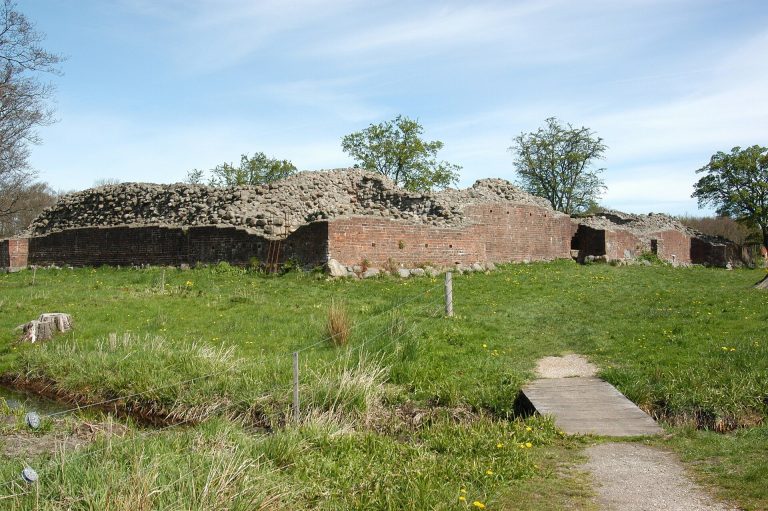
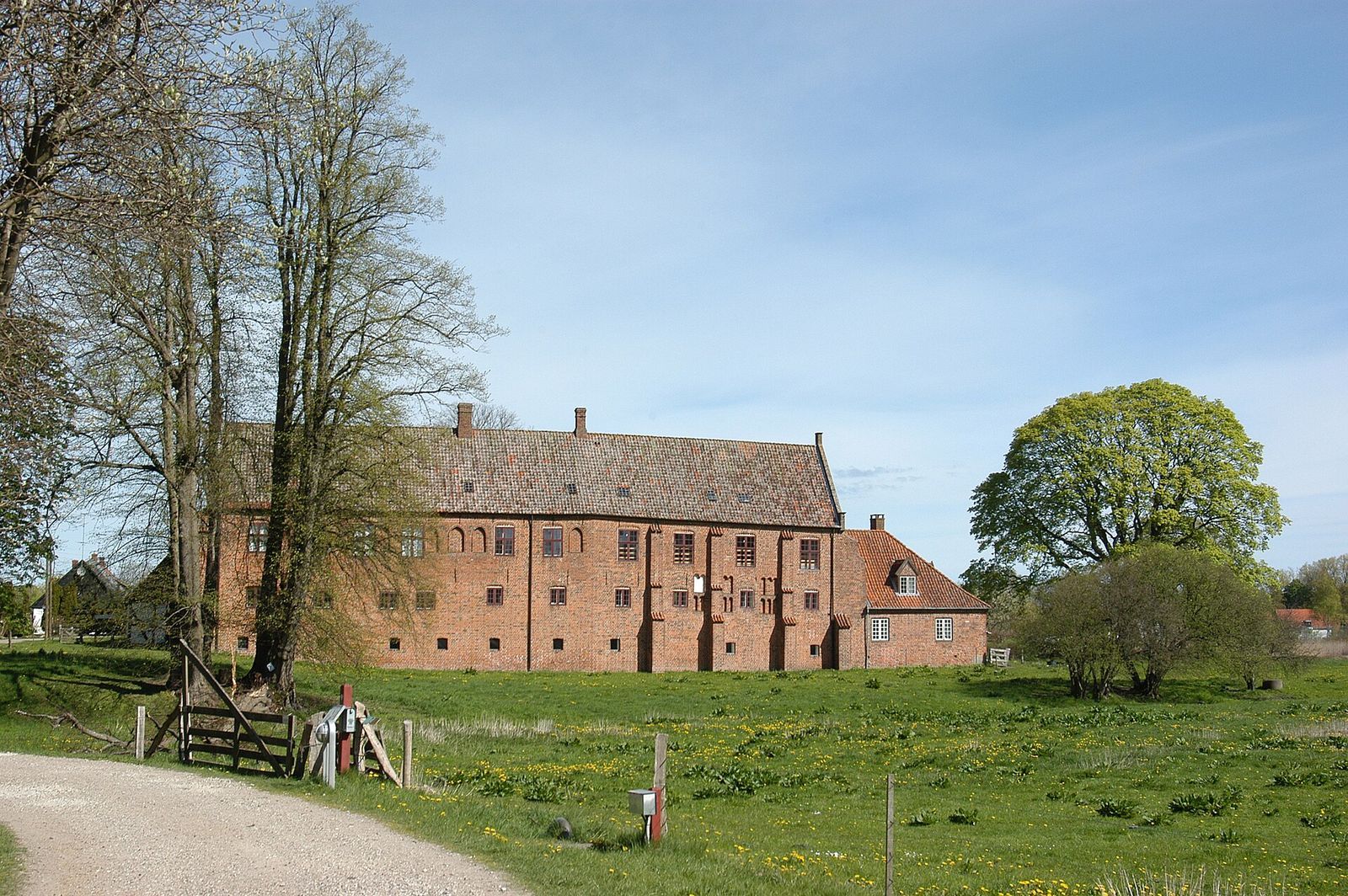
The surviving medieval complex includes the south wing and a watermill. A service building within the former south wing dates from 1350 to 1450.