Schlossmühle (Hallwyl): The Historic Grain Mill of the Castle Precinct
Site at a Glance
- Popularity
- Very Low
- Country
- Switzerland
- Primary era
- Early Modern
- Eras represented
- Early Modern, Modern
- Civilizations
- Holy Roman Empire, Swiss
- Site type
- Economic
- Remains
- Watermill
On this page7 sections
History
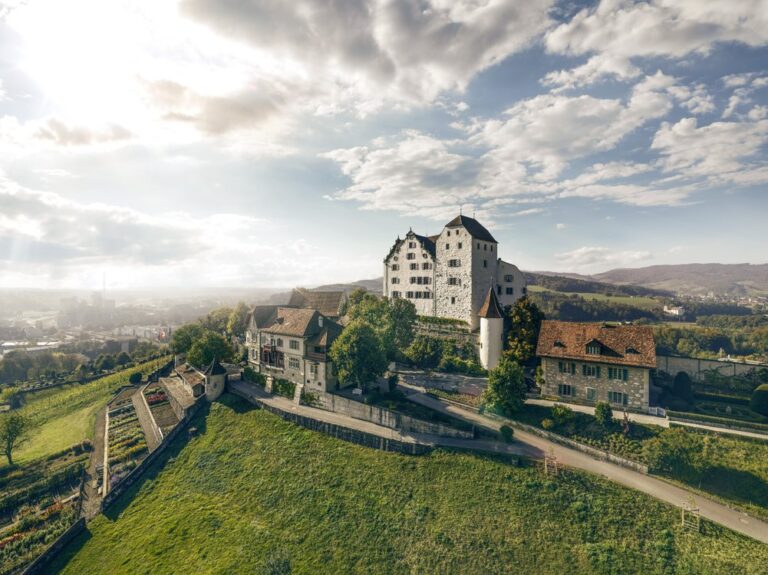
Schlossmühle (Hallwyl) is a historic grain mill on a small island in the Aabach at Seengen, Switzerland. First recorded in 1346, it was probably built earlier and became the oldest and economically most important part of the Hallwyl castle precinct.
Medieval origins and family management
The Hallwyls, a Swiss noble family, held the mill as freehold property. It fell within Seengen’s jurisdiction, but its tithes were owed to the village of Hallwil. In 1474, Hans and Walter von Hallwil allowed the mill’s lease to end and the family operated it directly. They leased it again to a miller in 1516. Between 1521 and 1523, Kaspar von Hallwil recorded an expense of six gulden for a new millstone.
The mill’s compulsory-milling privilege required people within its reach to use a designated mill, giving its owners an economic advantage. That privilege lasted until the Helvetic Revolution of 1798, which overturned the Old Swiss Confederacy and led to the creation of the Helvetic Republic.
Changing ownership and water power
In 1801, Johann von Hallwyl proposed enlarging the mill, but the Helvetic authorities refused permission. For financial reasons, Karl Franz Rudolf von Hallwyl sold it on 28 November 1833 to Uster industrialists Johann Jakob Corrodi and Heinrich Pfister. After several years of dispute with the castle lord over the contract, the industrialists sold it in 1839 to the miller Jakob Fischer.
The Aabach Association acquired the mill and its water rights on 17 February 1858. Its poor condition made it difficult to find a new tenant in 1863; the previous tenant returned at a reduced rent despite having unpaid rent. An expert report in 1874 proposed rebuilding the mill, replacing three waterwheels with one and repairing the machinery, or leaving it unimproved and closing it when the lease ended. The association initially chose closure, but three years later reversed that decision out of consideration for the tenant.
In 1898, the waterwheels were replaced by a turbine to supply more power to the expanded brickworks, built around 1803 as part of the castle precinct. The sawmill and grain mill were connected to the power supply, while the mill itself remained largely unchanged. On 14 October 1911, Count Walter von Hallwyl bought the mill, barn, shed and sawmill from the association, returning the mill to the family after 78 years under other ownership. The association kept the water rights, weir, impoundment works and turbine, retaining control of the lake outflow. The mill was the only commercial operation in the precinct allowed to continue.
From working mill to museum
The mill began operating as a museum in 1920 and stopped milling on 2 February 1925. Wilhelmina von Hallwyl transferred it to the Hallwyl Foundation and directed that the mill and its fixed inventory be preserved in their then-current state, without further milling. In 1926, the Aabach Association leased the water-power installation to the foundation for 100 years. The following year, the foundation removed the turbine, installed a large waterwheel and reconstructed the milling room.
The Hallwyl Foundation transferred the castle and mill to the Canton of Aargau in 1994. From 1998 to 2004, the mill underwent extensive restoration because it was in very poor condition and at immediate risk of decay. The work strengthened its walls and foundations, renewed interior floors, walls and ceilings, and repaired and restored historic milling equipment. The waterwheel was replaced again in 2016. Since 2007, the mill has formed part of Museum Aargau.
Remains
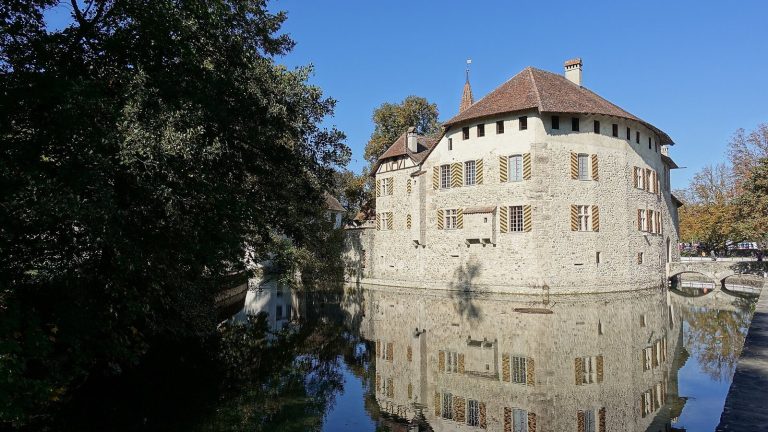
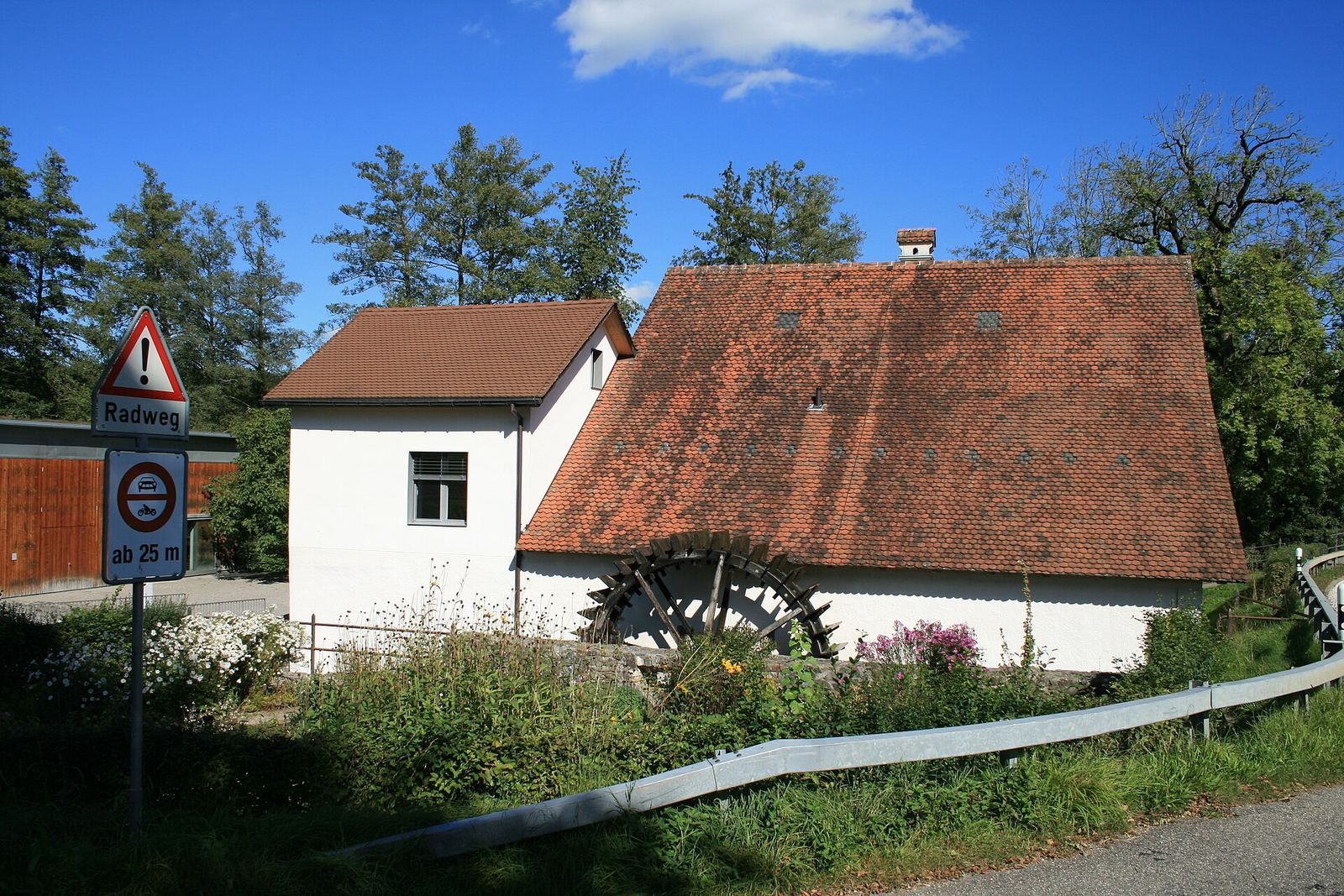
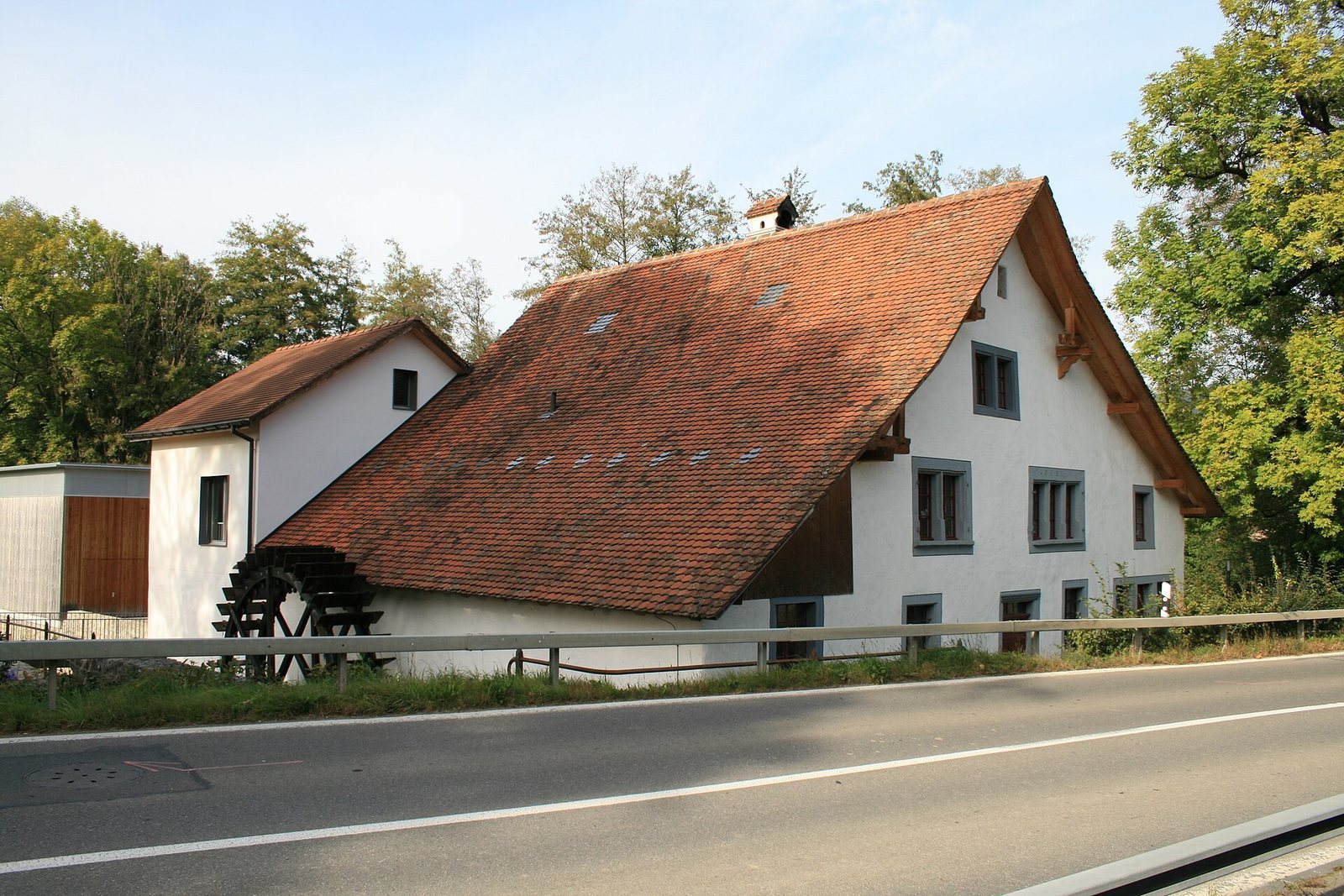
The mill stands below a waterfall and north of Hallwyl Castle, on a small island in the Aabach. Its substantial rectangular structure is built of natural stone, rises three storeys and has a prominent gabled roof covered with traditional tiles. The ground floor is more heavily built than the upper storey.
Building and extensions
The core of the present building dates to 1636–1638. A southern extension followed between 1820 and 1830, and a northern extension was added in 1860. The northern part was rebuilt during the 2003 renovation.
Rooms and milling equipment
The ground floor served for storage and machinery and contains the mill room, the building’s largest room. It has four separate sets of machinery for grinding grain, a flood channel and a distinct channel that housed the turbine. The upper floor contained a kitchen, several bedrooms and chambers, and a workshop. The waterwheel is a breastshot type, meaning water drives it near the middle of the wheel. The large wheel installed in 1927 could not power a grinding set.