Søborg Castle: A Medieval Fortress and Royal Prison in Denmark
Site at a Glance
- Rating
- 4.1
- Popularity
- Low
- Country
- Denmark
- Primary era
- Medieval
- External website
- Open
- Eras represented
- Medieval
- Civilizations
- Danish
- Site type
- Military
- Remains
- Castle
On this page9 sections
History
Søborg Castle is a ruined medieval castle in Denmark south of Gilleleje, first mentioned in the twelfth century and associated with an early phase of Danish brick construction. The fortress became one of Denmark’s strongest castles and served both as a royal residence and a prison. Its history also includes the birth of Margaret Valdemarsdatter, later regent over the Nordic realms, in March 1353.
Origins and the disputed role of Archbishop Eskil
Ownership of Søborg passed from the king to the Bishop of Roskilde through an exchange recorded in the twelfth century. Tradition attributes the expansion of earlier buildings into a fortified castle to Eskil, the twelfth-century archbishop of Lund. The proposed complex had a continuous defensive wall and a moat enclosing the site. Eskil’s close association with Esrum Abbey, a prominent Cistercian monastery in North Zealand, has led to the suggestion that he may have lived at Søborg, but neither archaeological finds nor written evidence establishes such a connection.
The medieval chronicler Saxo Grammaticus wrote that Eskil built a castle in “the Lejre marsh.” It remains uncertain whether he meant Søborg. Another interpretation places the castle at the royal settlement of Lejre, at the site now called Ledreborg, which was formerly known as Lethreborg. Excavations at Søborg indicate that its principal residential building, the palatium, was built later than the earliest enclosure and may date only from the late thirteenth century. If so, Eskil, who died in 1181, could not have built that part of the castle.
A fortress used as a prison and royal site
Søborg’s strength made it a suitable place of confinement. Buris Henriksen, a medieval Danish nobleman, was imprisoned there from 1167 and probably remained captive until his death. Bishop Valdemar was held at the castle from 1198 to 1206, and Valdemar IV, Duke of Schleswig, was confined there in 1285 and 1286. Jens Grand, the archbishop of Lund, was imprisoned at Søborg from 1294 until his dramatic escape about a year and a half later.
The castle was also used by the Danish kings Erik Menved and Valdemar Atterdag. Margaret Valdemarsdatter was born there in March 1353. Her mother, Helvig of Schleswig, had been imprisoned at Søborg by her father, King Valdemar IV of Denmark.
Destruction and later change
Søborg remained inhabited until the Count’s Feud, a Danish civil war fought during a succession crisis and a conflict between Catholic and Protestant forces. The castle was destroyed during the fighting in 1534 and 1535. In 1577 it was placed under Kronborg, the royal castle at Helsingør that served as an administrative centre for surrounding royal holdings. The official responsible for the estate was then permitted to quarry stone from Søborg’s ruins.
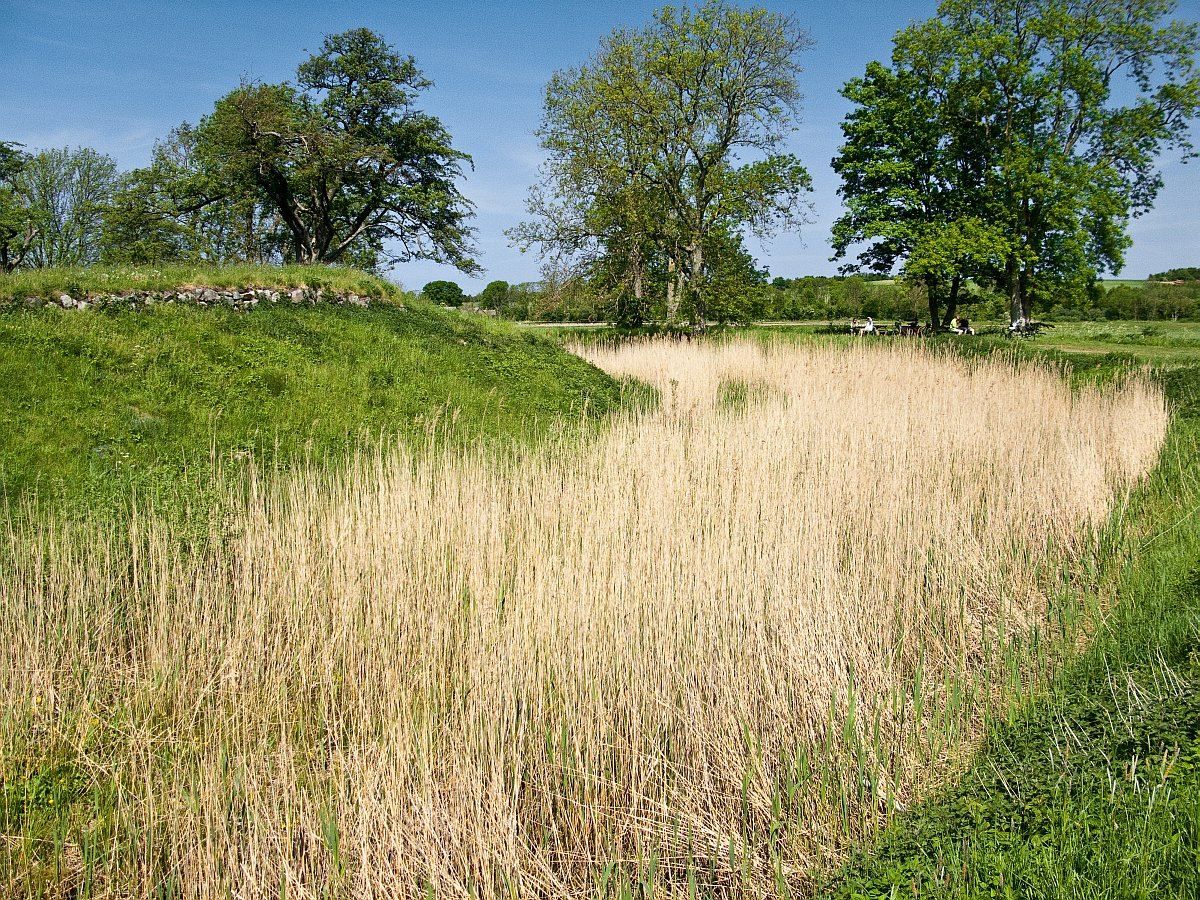
In the Middle Ages, the castle stood on an island in a fjord connected with the Kattegat near Gilleleje. The fjord later became Søborg Lake. Between 1872 and 1896, the lake was drained by digging Søborg Canal, which flows toward Gilleleje like the former fjord. Restoration of the lake was decided upon, but by 2025 it had been only partly implemented. Søborg is also associated with Søborg Church, built around 1180 as a town church connected with the castle. In 1985, Robert Egevang and Søren Frandsen arranged two trial trenches to clarify the relationship between the octagonal tower and the palatium.
Remains
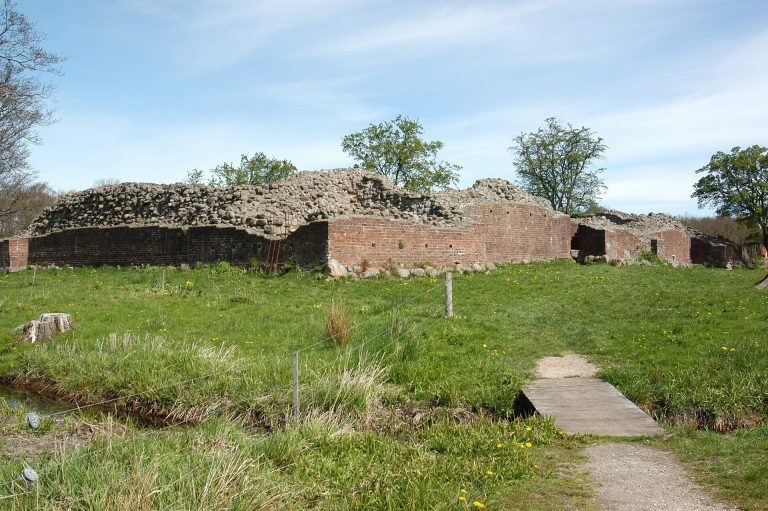
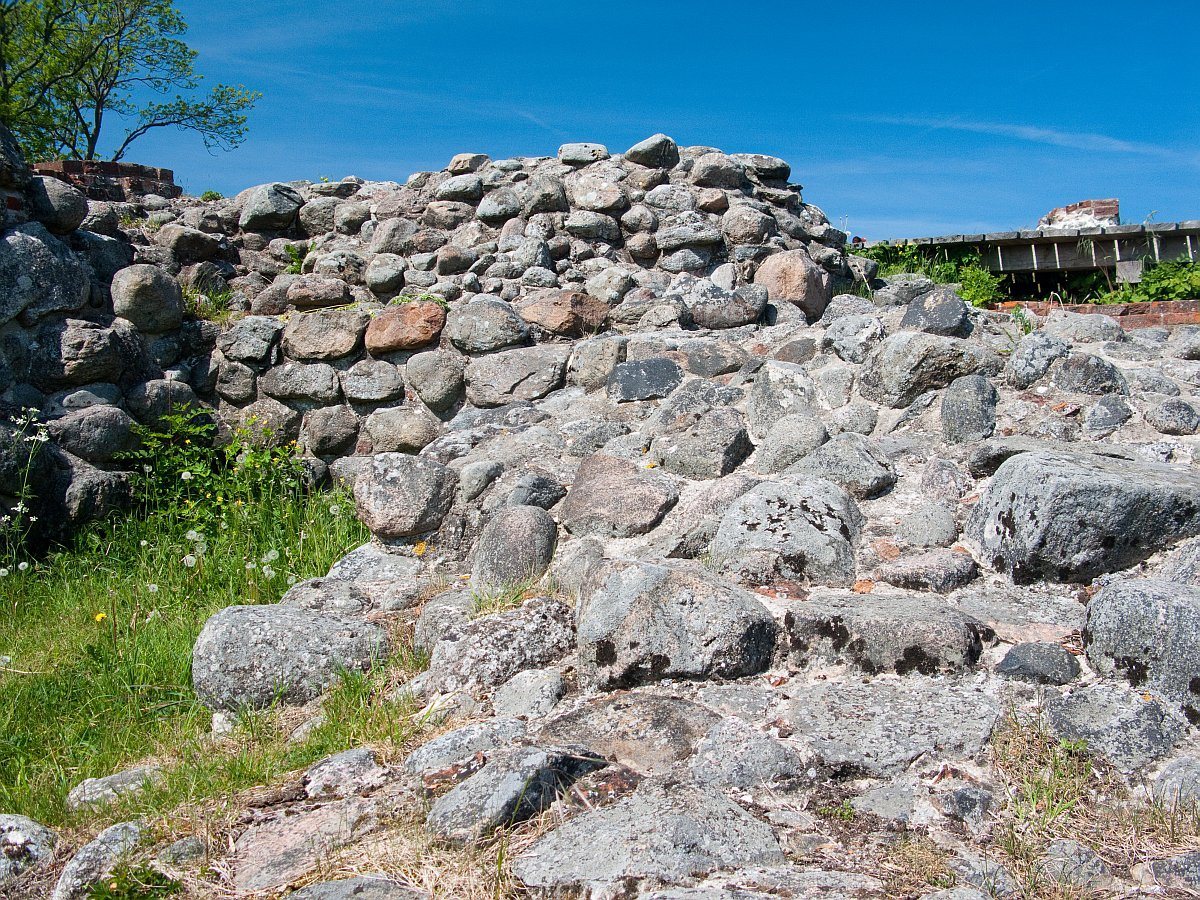
Søborg survives as a castle ruin rather than an intact inhabited complex. Its earliest defensive works formed an enclosure on an island in the medieval fjord, with an approximately 11-metre-wide earth rampart, an octagonal tower, and later residential construction. Brick appears in both the rampart and the tower, while the surviving masonry also reflects the later use of the ruins as a quarry.
Fortifications and principal buildings
Rampart and octagonal tower
The oldest enclosing earthwork was an approximately 11-metre-wide rampart belonging to the castle’s early defensive phase. An octagonal tower stood within the enclosure and was built at the same time as the rampart. Bricks occur in both structures, linking the tower to this early stage of the castle. Their small and very uneven shapes reflect an early period of brickmaking in Denmark, when brickmaking facilities were established near building sites and workers from Lombardy helped introduce the technique. Standardized brick sizes developed only later.
The palatium
The castle’s palatium, the principal residential or representational building in a medieval castle, was erected after the rampart and octagonal tower. It probably dates from the late thirteenth century. The two trial trenches opened in 1985 by Robert Egevang and Søren Frandsen examined the relationship between this building and the octagonal tower, helping clarify the sequence of construction within the complex.
Island setting and surviving fabric
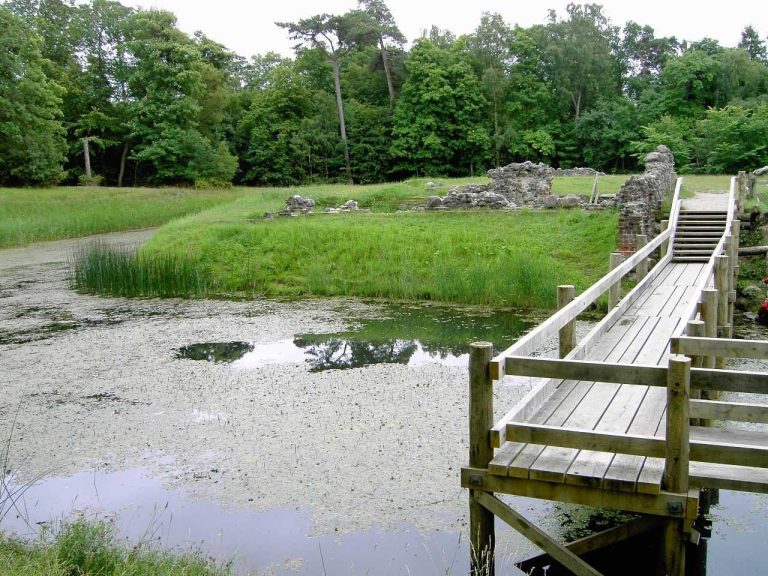
The castle originally occupied an island in a fjord leading toward the Kattegat near Gilleleje. When the fjord became Søborg Lake, the surrounding setting changed again through the drainage works carried out between 1872 and 1896. Søborg Canal carried water toward Gilleleje, and the planned return of the lake had only been partly completed by 2025. The ruin’s present fabric also bears the consequences of the 1577 permission to quarry masonry, when the castle was placed under Kronborg.