Enoki-sha: A Shinto Shrine Marking Sugawara no Michizane’s Exile


Site at a Glance
- Rating
- 4.2
- Popularity
- Low
- Country
- Japan
- Primary era
- Medieval
- Eras represented
- Medieval
- Civilizations
- Unclassified
- Site type
- Religious
- Remains
- Sanctuary
On this page6 sections
History
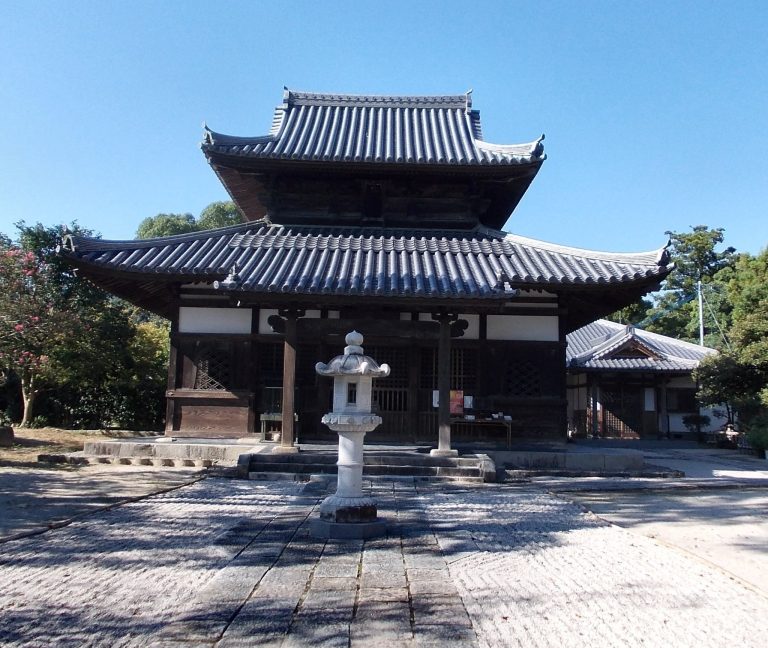
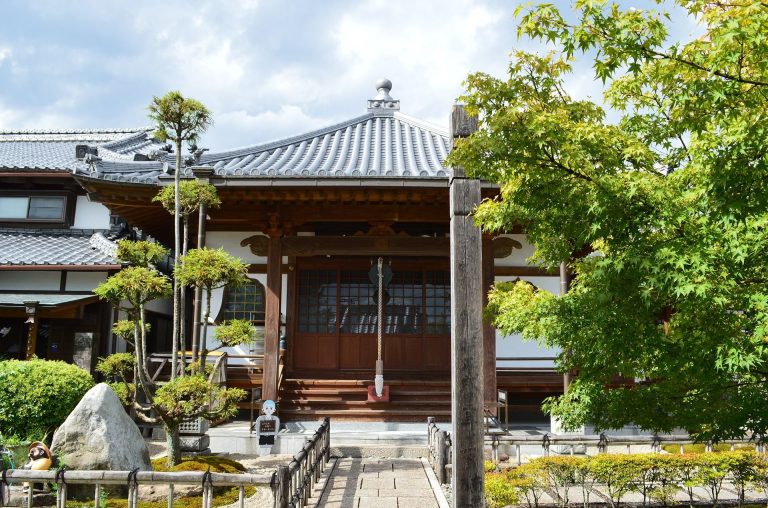
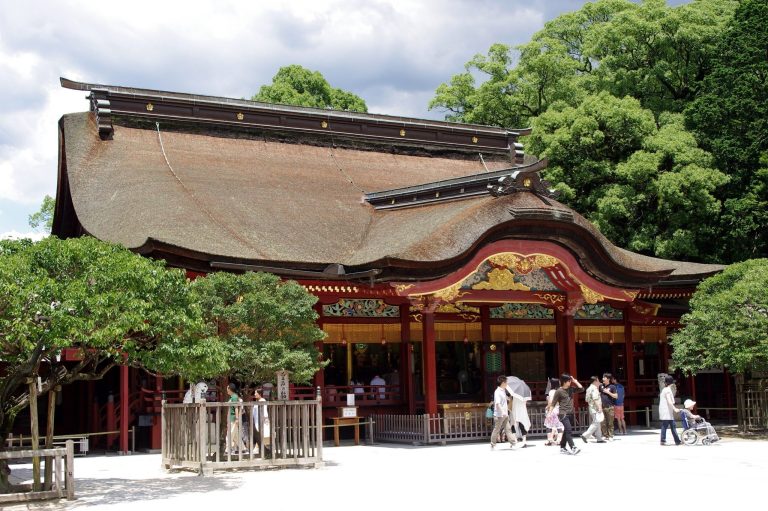
Enoki-sha is a Shinto shrine in Japan, in the city of Dazaifu, marking the place where Sugawara no Michizane lived during his exile from 901 until his death in 903. The site stood south of the Dazaifu government, the regional administration headquartered in northern Kyushu, and was traditionally regarded as the government’s southern residence. The grounds were originally associated with Tenharuyama Anrakuji and now form a detached part of Dazaifu Tenmangu.
Michizane’s exile and memorialization
Michizane was a Heian-period court scholar and official who was demoted and sent to Dazaifu in 901. He remained there through the final years of his life. At this place, he expressed the isolation of exile in a poem describing the government office as barely visible through its roof tiles and Kanzeonji as audible only through its bells. The poem adapts a passage from a seven-character regulated verse by Bai Juyi, a major Tang-period Chinese poet who also wrote about exile in Jiangzhou. A similar anecdote appears in The Pillow Book, a classical Japanese miscellany traditionally attributed to Sei Shonagon.
In 1023, the Dazai no Daini, the vice governor of Dazaifu, established Jomyo-in to commemorate Michizane’s spirit. A large enoki tree on the grounds led the institution to acquire the name Enoki-dera. It was also known as Jomyo-ji, Jomyo-ni-ji, and Jomyo-ni-sha. Enoki-dera remained in use until the nineteenth-century anti-Buddhist movement, a state policy and associated campaign that sought to separate Buddhist institutions from Shinto and led to the abandonment or renaming of many Buddhist establishments.
Later traditions and historical associations
A small shrine on a nearby low hill is identified as the tomb of Kumamaro. Within the Enoki-sha grounds stands a memorial tower for Kurenai-hime, while another stone monument associated with her was moved to a children’s park in Chikushino City during apartment construction. The ruins of a guesthouse near the shrine are thought to have accommodated foreign envoys visiting Dazaifu between the middle of the eighth and the middle of the ninth century.
In 2019, the area around Enoki-sha and the vicinity of Sakamoto Hachimangu were identified as possible locations for the residence of Otomo no Tabito, an early eighth-century court official and poet. The proposal followed the announcement of the name “Reiwa.” Another local tradition links the nearby Seimei Well with Abe no Seimei, a renowned onmyoji, or specialist in divination, calendrical calculation, and protective rites. The tradition says that Seimei opened the well. Its water is associated with safe childbirth, and the well is believed to remain dependable even during severe droughts. The association is traditional rather than a confirmed account of Seimei’s visit.
Remains
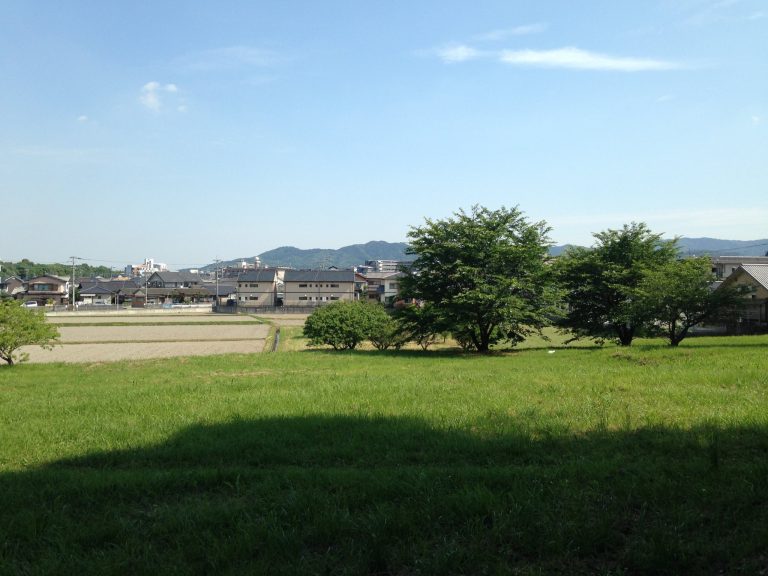
Enoki-sha stands in the Suzaku area directly south of the ruins of the Dazaifu government office. Its torii is near the Nishitetsu Tenjin Omuta Line and a railway crossing. The shrine landscape includes archaeological remains, memorial features, and small sacred structures that preserve several layers of local tradition.
Archaeological remains
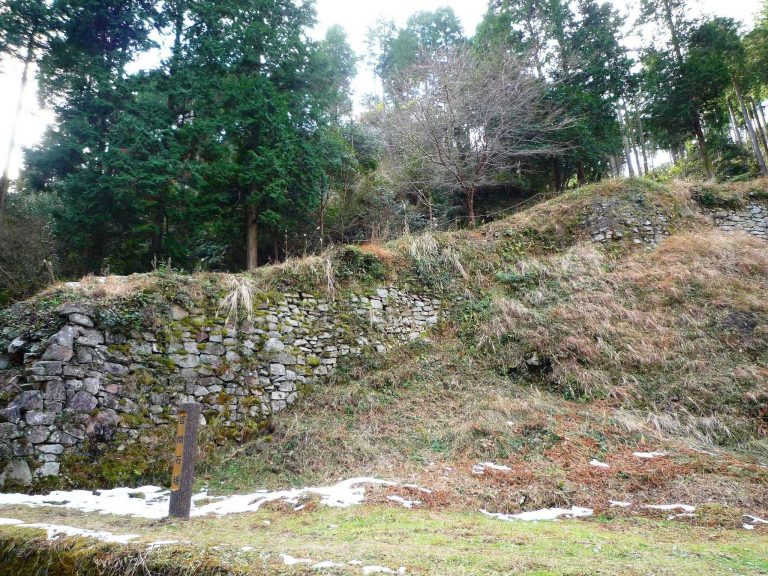
An excavation in 2016 exposed post-built building remains dating from the latter part of the ninth century to the beginning of the tenth century. Their period broadly corresponds with Michizane’s final years, and their possible connection with buildings from the time of his residence drew attention to the site’s archaeological interpretation.
Memorial stones and sacred features
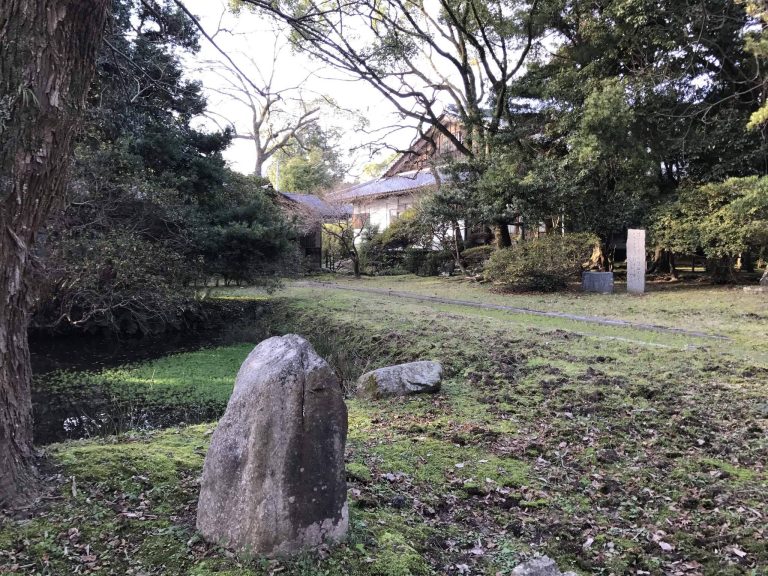
Near the torii is an approximately 1.2-metre-high oval natural stone called the “Crane Grave.” A legend says that a wooden crane once flew through the air from this location, giving the surrounding small district the name Tsuruhata. The memorial tower for Kurenai-hime stands within the shrine grounds. A separate stone memorial tablet associated with her was formerly located east of Kumamaro’s tomb before being relocated to a nearby children’s park in Chikushino City.
The nearby Seimei Well is enclosed by a small shrine. Inside it is a triangular, slab-like stone representing a deity believed to protect water. The well’s traditional connection with Abe no Seimei and safe childbirth forms part of the continuing religious interpretation of this feature.