Mesuriyama Kofun: An Early Kofun-Period Burial Mound in Japan

Site at a Glance
- Rating
- 3.7
- Popularity
- Very Low
- Country
- Japan
- Primary era
- Classical
- External website
- Open
- Eras represented
- Classical
- Civilizations
- Yamato
- Site type
- Burial
- Remains
- Burial Mound
On this page8 sections
History
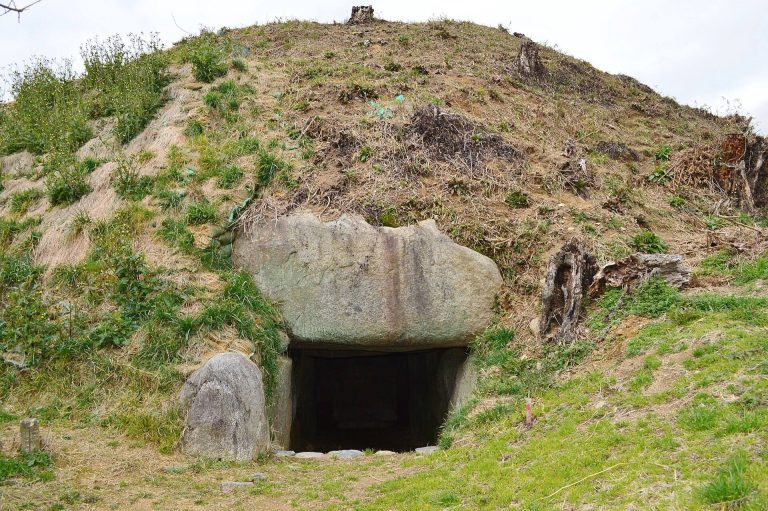
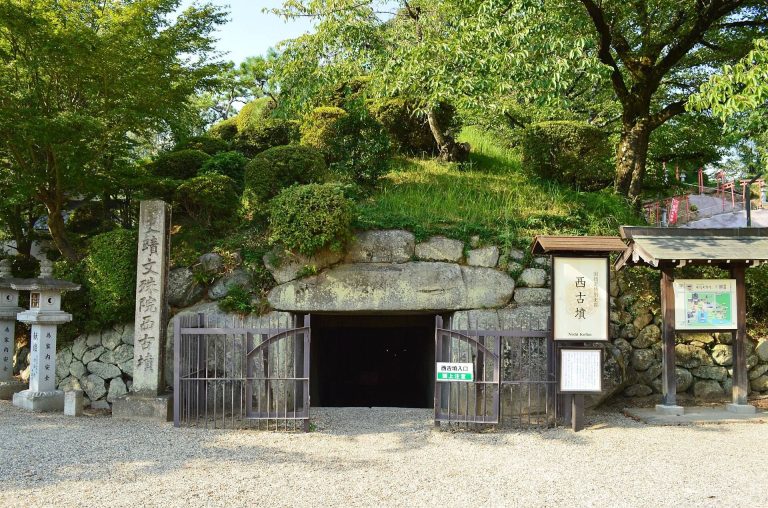
Mesuriyama Kofun is a monumental Japanese burial mound in Japan, built around the beginning of the fourth century during the Kofun period. Located on the left bank of the Hatsuse River beside the area of Iware, it forms part of the Torimiyama Kofun Cluster with Sakurai Chausuyama Kofun. The mound is also known as Hachimakiyama Kofun and Higashidezuka Kofun.
A kofun is a monumental Japanese burial mound, particularly associated with the Kofun period. Mesuriyama Kofun’s size, exceptionally large haniwa, burial facilities, storage chamber, and rich grave goods indicate the tomb of a highly powerful regional chief, with a scale of authority comparable to that represented by a ruler’s tomb. The Kojiki and Nihon Shoki, major early Japanese historical and mythological chronicles, do not identify the burial as a royal tomb. Nor does the Engishiki, a tenth-century compilation of court regulations and ritual procedures, preserve such a tradition.
Grave robbing had taken place by 1950, severely disturbing the principal burial. Archaeological excavation followed between 1959 and 1962. The investigation resulted in the mound’s designation as a National Historic Site on March 14, 1980. A National Historic Site is a place protected within Japan’s national cultural-property system because of its importance to the country’s history.
The objects recovered from Mesuriyama Kofun were designated collectively as an Important Cultural Property in 2005. This status protects nationally recognized cultural assets for their historical, artistic, or archaeological value. The excavated collection is kept by the Museum of the Nara Prefectural Kashihara Archaeological Institute.
Remains
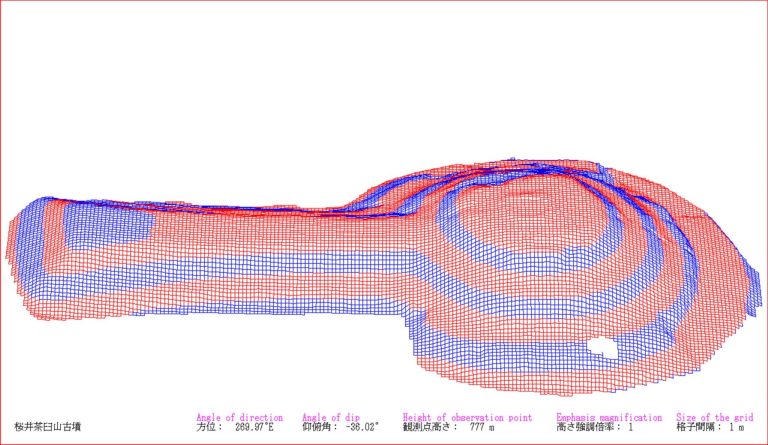
Mesuriyama Kofun is a west-oriented keyhole-shaped mound, a form that combines a rectangular front section with a circular rear section. Its measured length is 224 meters, while a reconstruction proposing a length of 250 meters has also been suggested. The mound’s substantial scale, carefully arranged haniwa, stone surfacing, and two separate stone chambers create a complex funerary monument.
Mound Layout
Circular Rear Section
The circular rear mound is 128 meters in diameter and rises 19 meters high. It was constructed in three tiers, with each tier bordered by rows of cylindrical haniwa. The sloping surfaces were covered with fukiishi, stones approximately the size of a human head that protected and stabilized the earthen mound.
Haniwa, clay funerary objects placed on and around burial mounds, were densely arranged in two rows across the summit of the circular section and around a rectangular platform. The platform measures about 11.3 meters along its longer sides and 4.8 meters along its shorter sides, with an estimated height of at least 1 meter. Cylindrical haniwa about 1 meter in diameter stood at its corners and at evenly divided points along the sides of the innermost row. The intervals between the two summit rows were staggered.
Rectangular Front Section
The rectangular front section has two tiers, is 80 meters wide at the front, and reaches 8 meters in height. Haniwa were placed at intervals outside the rectangular platform. The arrangement included pedestal-shaped examples measuring 2.4 meters high and 1.3 meters in diameter, the largest haniwa of this type in Japan. Asagao-shaped haniwa, formed from a jar-shaped element set on a cylindrical one, were also recovered.
Stone Chambers and Burial Goods
Main Burial Chamber
At the center of the rear mound’s summit lies the principal pit-style stone chamber. A pit-style chamber is sunk into the mound rather than reached through a horizontal passage. The chamber measures approximately 8.06 meters long, 1.18 meters wide, and 1.76 meters high, and was covered by eight ceiling stones. It held a wooden coffin, but grave robbing left almost no remains in place.
Among the disturbed objects from the main chamber were fragments of a bronze mirror with an inward-facing floral design and a triangular-rimmed mirror decorated with divine-animal imagery. Other finds included jadeite magatama, jasper tubular beads, stone bracelets modeled on shell rings, miniature stone chairs, stone combs, stone lidded containers, additional beads, and swords or blades. Their severe disturbance preserves evidence of the intensity of the robbery.
Secondary Repository Chamber
A second stone chamber beside the main one measures 6 meters long, 70 centimeters wide, and between 60 and 70 centimeters high. Its walls were made from natural stones that gradually projected inward toward a gabled ceiling. The chamber contained no human remains and escaped the robbery. Its concentration of weapons indicates that it served as a storage or repository space for grave goods rather than as a burial chamber.
The repository held 212 iron spears with pointed ends. About half were arranged toward one another from opposite ends of the chamber. They were probably fitted with long shafts and represented weapons used in group combat. The same kind of sword-shaped spearhead is known from southern Korea and northern Kyushu, while its distribution demonstrates the importance of this weapon across the Japanese archipelago. The spears were manufactured in Japan using ironworking techniques.
Further objects from the chamber included 236 bronze arrowheads, 50 stone arrowheads, an iron bow measuring 182 centimeters, an iron string, five iron arrows about 80 centimeters long, and a lacquered shield. The bow and arrows are interpreted as intimidating symbols rather than as practically useful weapons. Other grave goods comprised an iron sword, an iron blade, 14 iron axes, 19 hand sickles, chisels, 51 adzes, awls, knives, saws, and stone objects resembling beads. Together, these weapons, tools, ornaments, and related objects form the collection preserved as an Important Cultural Property.