Chikuzen Kokubun-ji Temple: Successor to a Provincial Monastery
Site at a Glance
- Rating
- 4.3
- Popularity
- Very Low
- Country
- Japan
- Primary era
- Medieval
- Eras represented
- Medieval, Modern
- Civilizations
- Yamato
- Site type
- Religious
- Remains
- Monastery
On this page11 sections
History
Chikuzen Kokubun-ji Temple is a Buddhist temple in Japan, located in Dazaifu, and the successor institution of the provincial monastery established in Chikuzen Province during the eighth-century Nara period. Its foundation followed Emperor Shōmu’s policy of creating a monastery and a nunnery in every province. This programme formed part of the Ritsuryō system, Japan’s ancient centralized government based on detailed administrative and legal codes, and supported state-sponsored Buddhism while extending imperial authority.
Foundation and early records
The monastery’s exact foundation date is unknown. The earliest surviving reference comes from 801, when Buddhist statues and ritual implements were moved from Shiō-in to a temple identified as Chikuzen Konkomyō-ji. They were returned in 807. The temple also appears in the Engishiki, a tenth-century compendium of court procedures and regulations, which records an annual allocation of 32,293 bundles for Chikuzen Kokubun-ji.
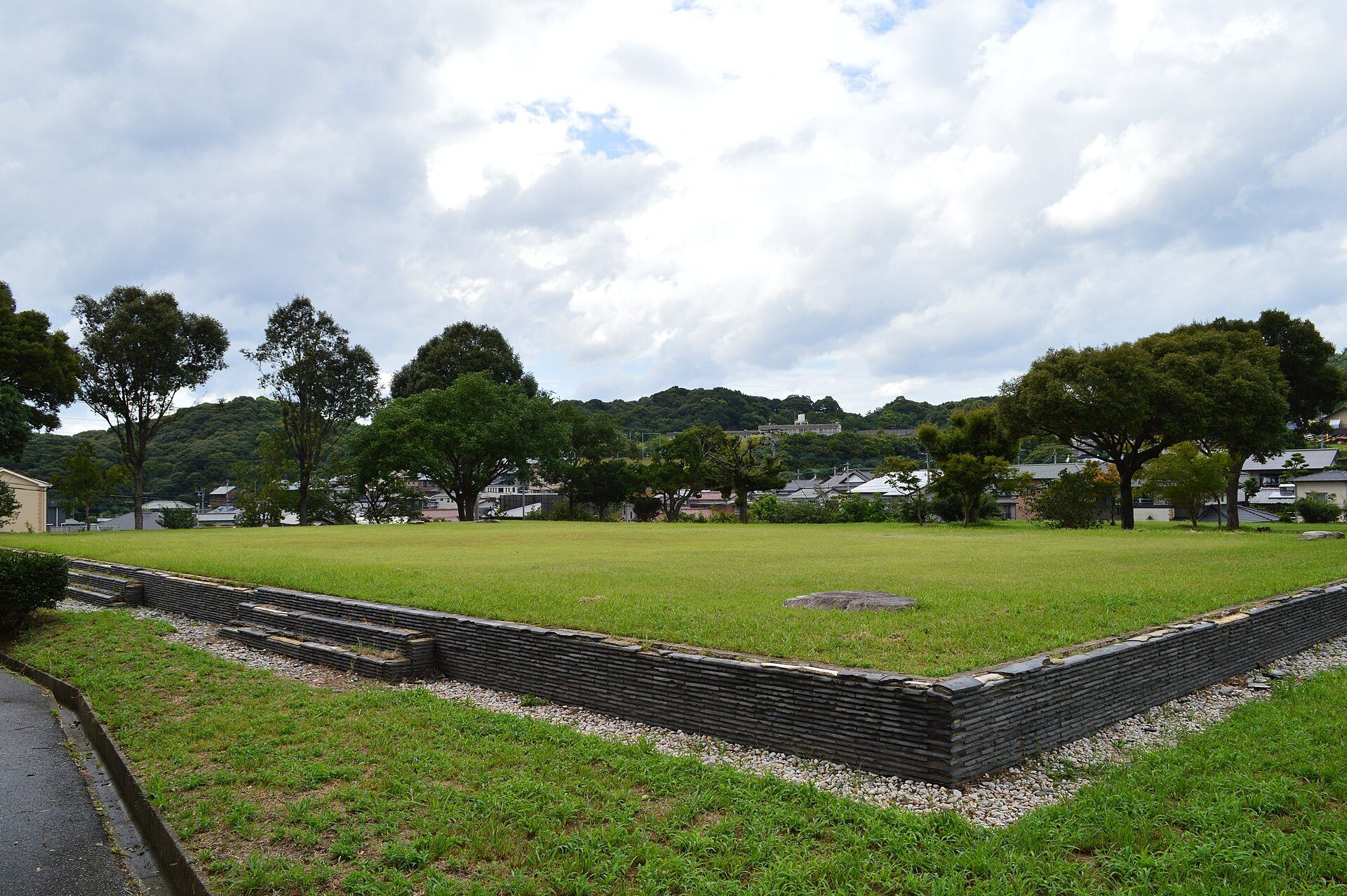
The archaeological plan indicates that the monastery developed as a formal provincial Buddhist complex, with a Main Hall, lecture hall, pagoda, gate, and cloisters. Its arrangement placed the pagoda inside the cloister enclosure, a form associated with temples in Kyushu and with foundations dating from before the Nara period. The pagoda and lecture hall later underwent substantial changes. Their tile-laid platforms were altered to rough-stone platforms in the ninth century, the pagoda ceased to be used in the tenth century, and the lecture hall was abandoned in the eleventh century. The Main Hall appears to have continued afterward in a simpler hall-like form.
Decline and revival
The monastery eventually disappeared from the historical record. By the middle of the Edo period, the original institution had been abolished and reduced to a small hermitage containing a statue of Yakushi Nyorai, the Buddha associated with healing and protection from illness. A tradition says that a Buddhist ascetic from Edo rebuilt the hermitage. Further efforts to restore and revive the institution relied on fundraising during the Genbun era, from 1736 to 1741, and the Tenmei era, from 1781 to 1789.
The Main Hall burned in 1827, and the monastery’s living quarters were rebuilt in 1833. The present temple belongs to Kōyasan Shingon-shū, a branch of the Shingon tradition of esoteric Buddhism associated with Kōyasan. Yakushi Nyorai remains its principal object of worship, and the temple is the first station of the Kyushu Forty-nine Yakushi Pilgrimage.
Archaeological recognition
The Chikuzen Kokubun-ji ruins became a National Historic Site in 1922. The designated area was enlarged in 2007, 2011, 2016, and 2018. The associated Kokubu Tile Kiln ruins received a separate National Historic Site designation in 1922, while the nunnery ruins west of the monastery are outside that designation. Archaeological investigations established the former monastery’s plan and traced successive changes in its buildings. The modern temple and the excavated remains now form part of a related group of sites on a plateau northwest of the Dazaifu Government Office ruins.
Remains
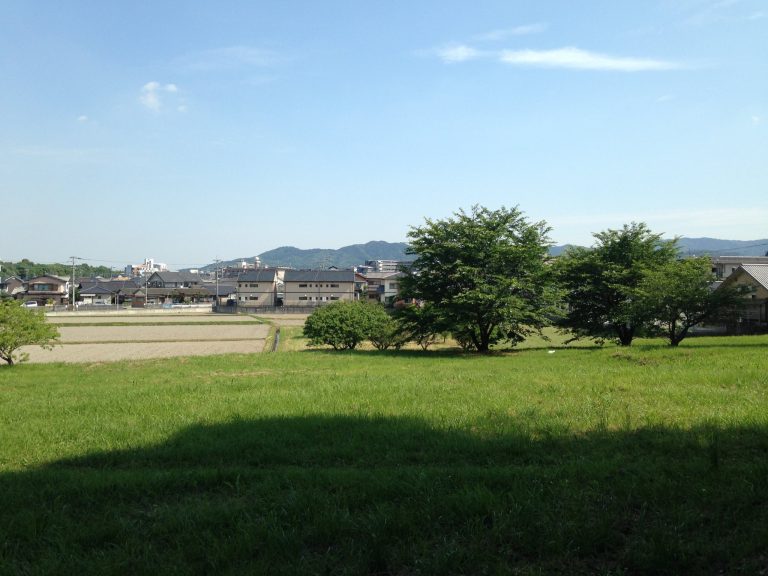
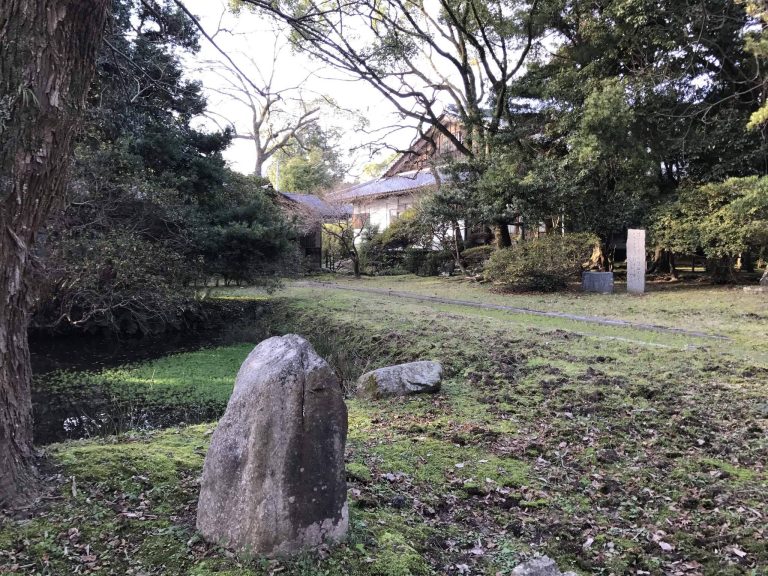
The modern temple overlaps the ancient monastery, with its Main Hall standing above the foundations of the former Main Hall, or Kondō. The ancient complex covered approximately 192 meters square. Its central gate, Main Hall, and lecture hall formed a straight central axis, while cloisters ran from both sides of the gate toward the Main Hall. The pagoda stood within this enclosed area. Around the present temple, the positions of the ancient lecture hall, pagoda, and cloisters have been reconstructed to indicate the former arrangement.
Monastery buildings
Main Hall and present compound
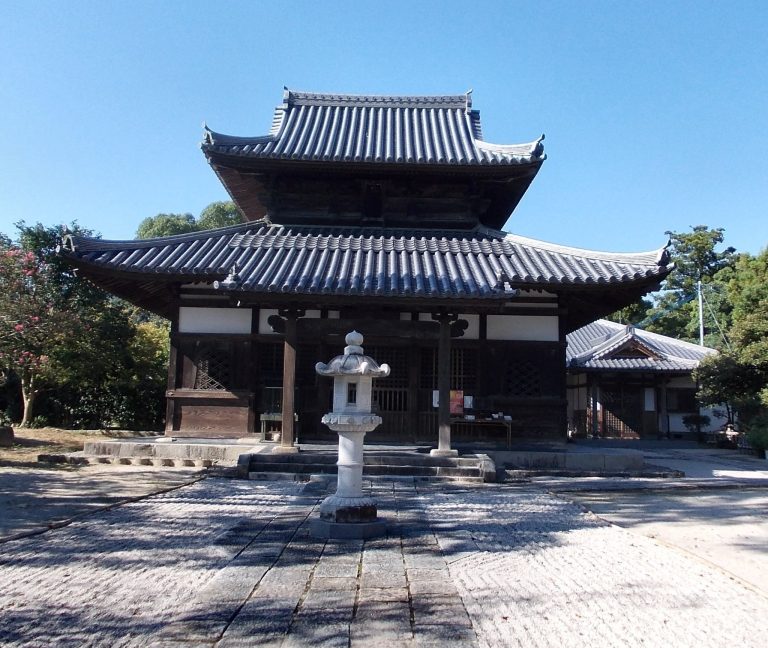
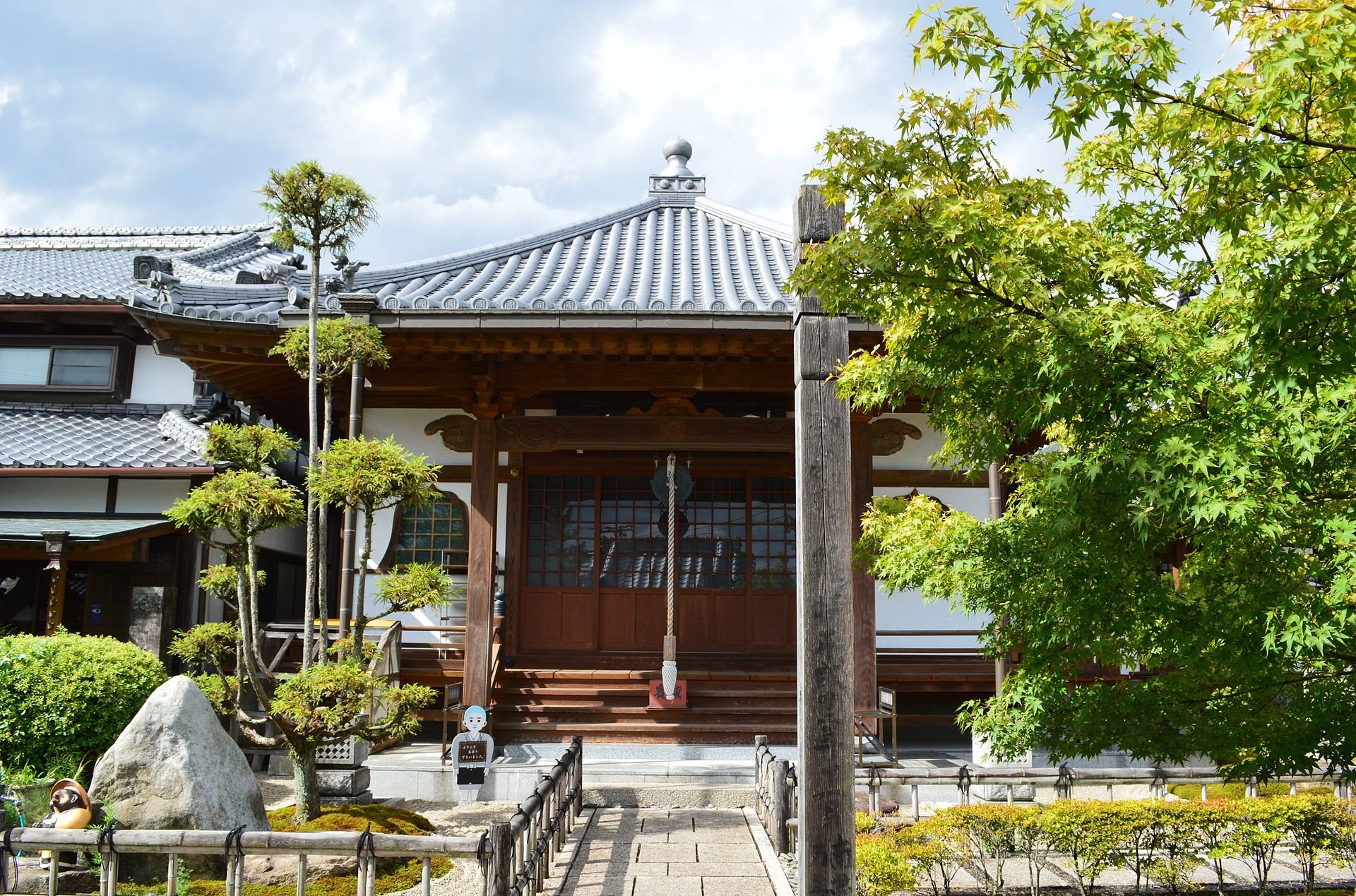
The present compound contains a Main Hall, worship hall, Kannon Hall, and living quarters. The Kannon Hall is dedicated to Kannon, a Buddhist bodhisattva associated with compassion. The modern Main Hall occupies the location of the ancient hall’s foundations, linking the surviving religious institution with the archaeological remains of the provincial monastery.
Pagoda
The pagoda was probably seven stories high, based on the dimensions of its foundations. Its position inside the cloister distinguished the monastery’s plan from the arrangements at Tōdai-ji and at provincial monasteries in eastern Japan, where the pagoda stood outside the cloister. A one-tenth-scale reconstruction model is displayed outdoors at the Dazaifu City Cultural Fureai Museum.
Associated nunnery
The paired nunnery, known as a kokubun-niji, stood approximately 100 meters west of the monastery. Excavation has revealed a post-hole building thought to have been the South Gate and a ditch interpreted as part of the eastern outer boundary. Two foundation stones believed to have belonged to central buildings were moved to other locations, one at the Kokubun Common Use Facility south of the site and the other in the garden before Dazaifu City Hall.
The nunnery was in use from approximately the late eighth century through the late ninth century. In 2015, an earthenware fragment bearing an ink inscription translated as “Flower Temple” was found there. This was the first physical evidence identifying the location as the associated nunnery. The ruins remain undeveloped as a historic-site installation.
Kokubu Tile Kiln ruins
The Kokubu Tile Kiln ruins lie east of the monastery in a mountain valley. During the Edo period, the valley was dammed and turned into a pond. Nine or more kilns were once identified, while two were excavated and later reburied. The kilns operated over an extended period from the beginning of the Nara period into the Heian period.
Roof tiles fired at the kilns were transported to Chikuzen Kokubun-ji, the Dazaifu Government Office, and Kanzeon-ji. Their production therefore formed part of the building history of several nearby religious and administrative complexes.
Religious objects and later additions
The temple possesses a wooden seated statue traditionally identified as Yakushi Nyorai. The statue dates from the Muromachi period and is a nationally designated Important Cultural Property. It is not the original principal image from the Nara period.
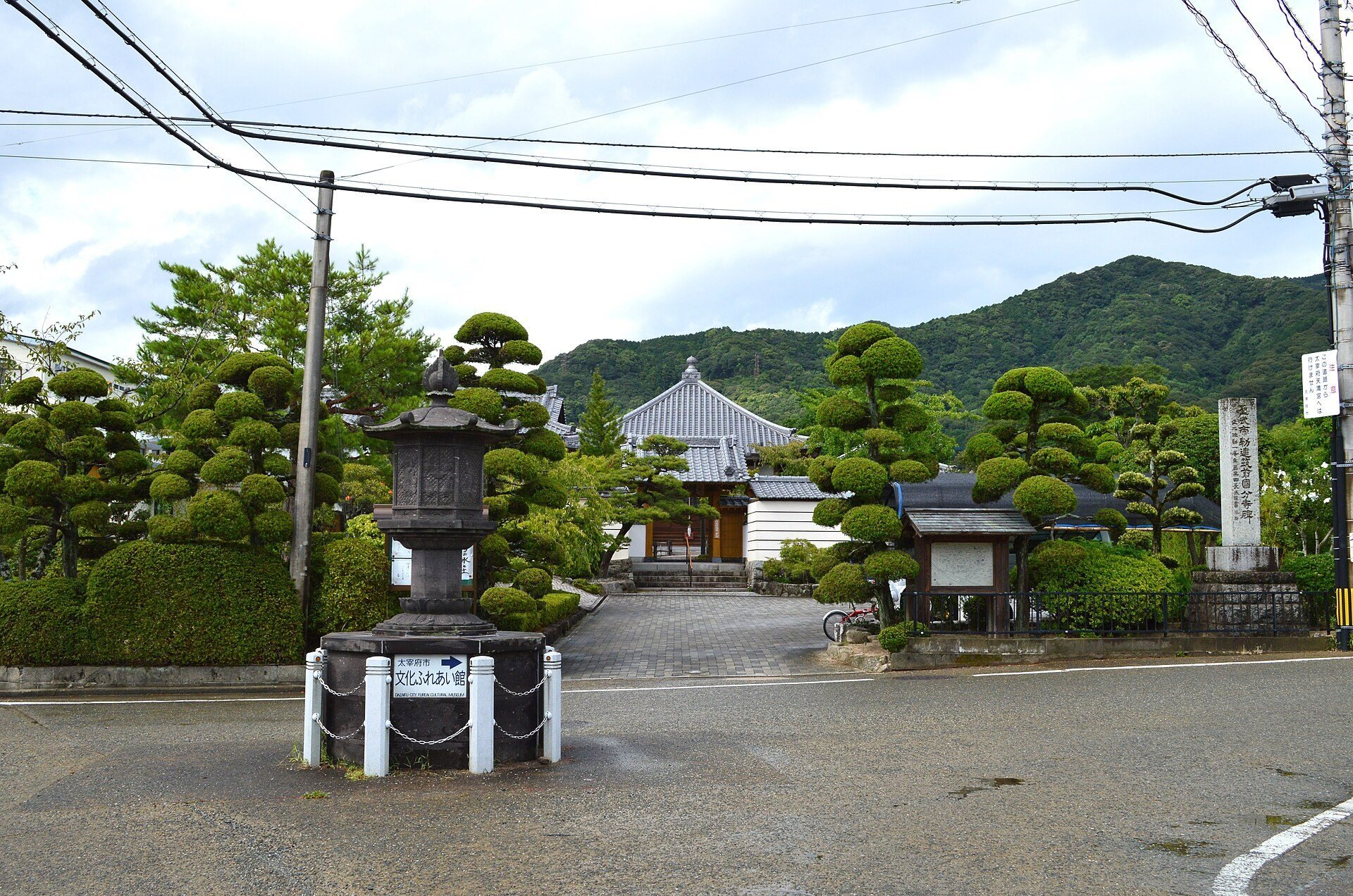
An octagonal lantern in front of the modern temple was made in recent times as a model of the lantern before the Great Buddha Hall at Tōdai-ji. It is a later addition to the temple grounds rather than a surviving object from the ancient monastery.